
What Should a Leak Detection Report Include? (Kyle, TX Checklist)
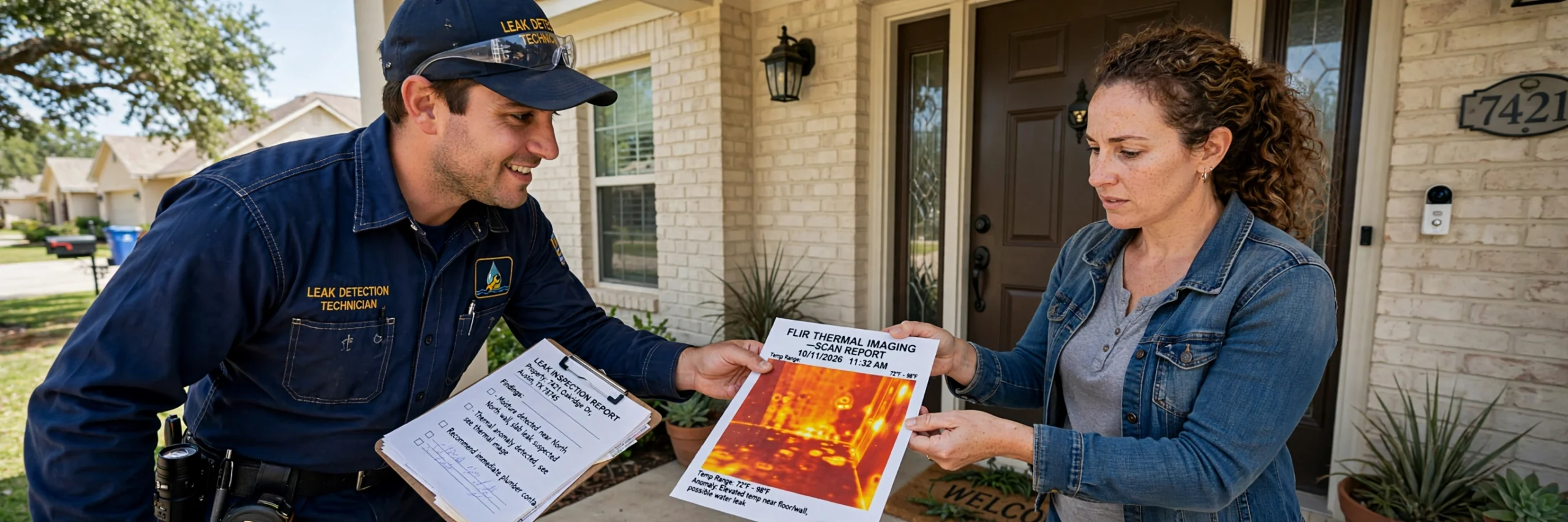
A leak detection visit ends, the technician packs up, and you are left with the most important question: what exactly did they find? If the answer is a verbal “it’s somewhere under the bathroom,” you have a problem — not with the leak, but with the documentation. A proper leak detection report is what turns…
A leak detection visit ends, the technician packs up, and you are left with the most important question: what exactly did they find? If the answer is a verbal “it’s somewhere under the bathroom,” you have a problem — not with the leak, but with the documentation. A proper leak detection report is what turns a service visit into something useful. It is your proof of what was found, your basis for repair quotes, and your evidence if insurance gets involved. Here is exactly what a complete leak detection report should include — and the red flags that tell you the job was not finished properly.
New to the process? Here is what happens during a leak detection visit before the report is even written.
1. The Exact Location of the Leak
This is the whole point of leak detection. A leak detection report should state the leak’s location as precisely as possible — not “the bathroom area” but “the hot-water supply line under the slab, approximately 3 feet from the north wall of the master bathroom.”
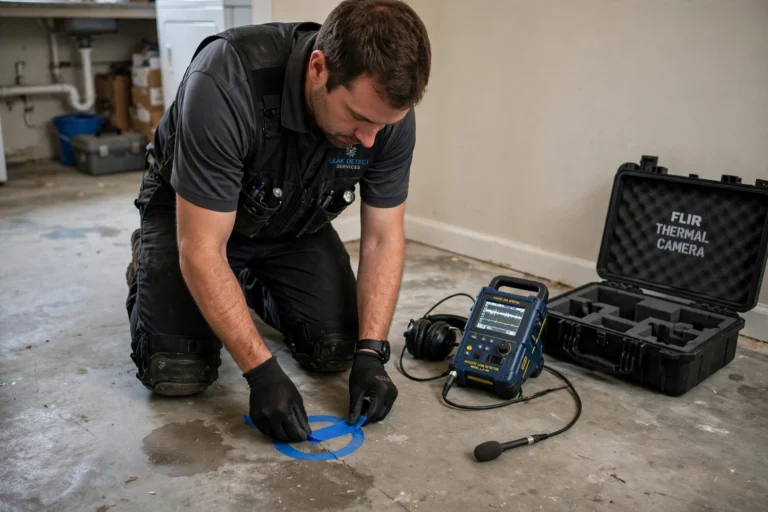
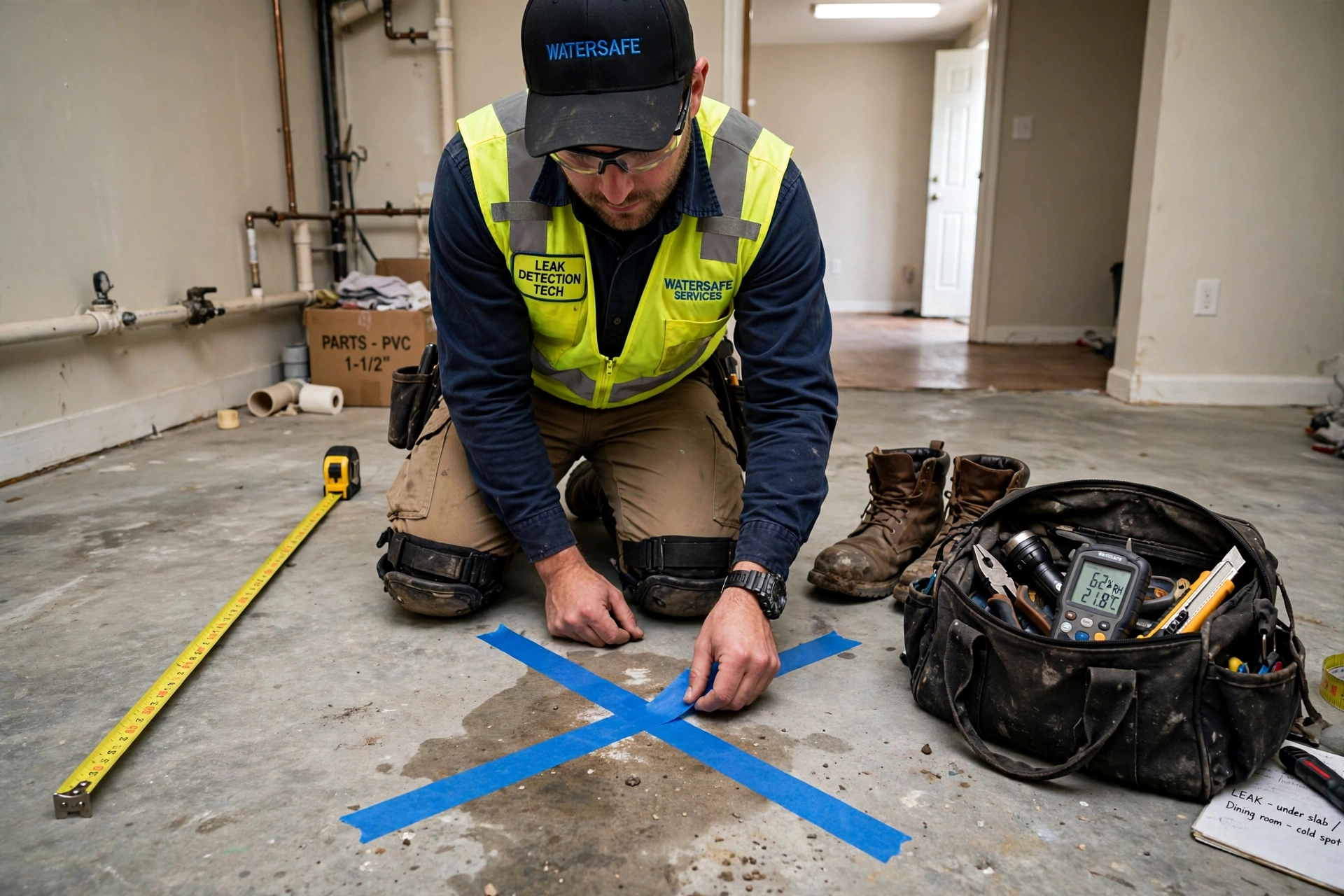
For slab leaks, which are common in Kyle’s slab-on-grade homes, the leak detection report should note the marked spot on the floor. Many technicians mark the location directly on the slab or flooring with tape or paint so the repair crew can find it later. If your report does not pin the location down to a specific spot, ask why.
2. The Detection Method Used
The leak detection report should say how the leak was found — acoustic listening equipment, thermal imaging, tracer gas, pressure testing, or a combination. This matters for two reasons. First, it tells you how confident you can be in the result. Second, if a second opinion ever becomes necessary, the next technician needs to know what was already tried. A one-line “we used our equipment” is not enough detail for a professional leak detection report.
3. Photos and Test Evidence
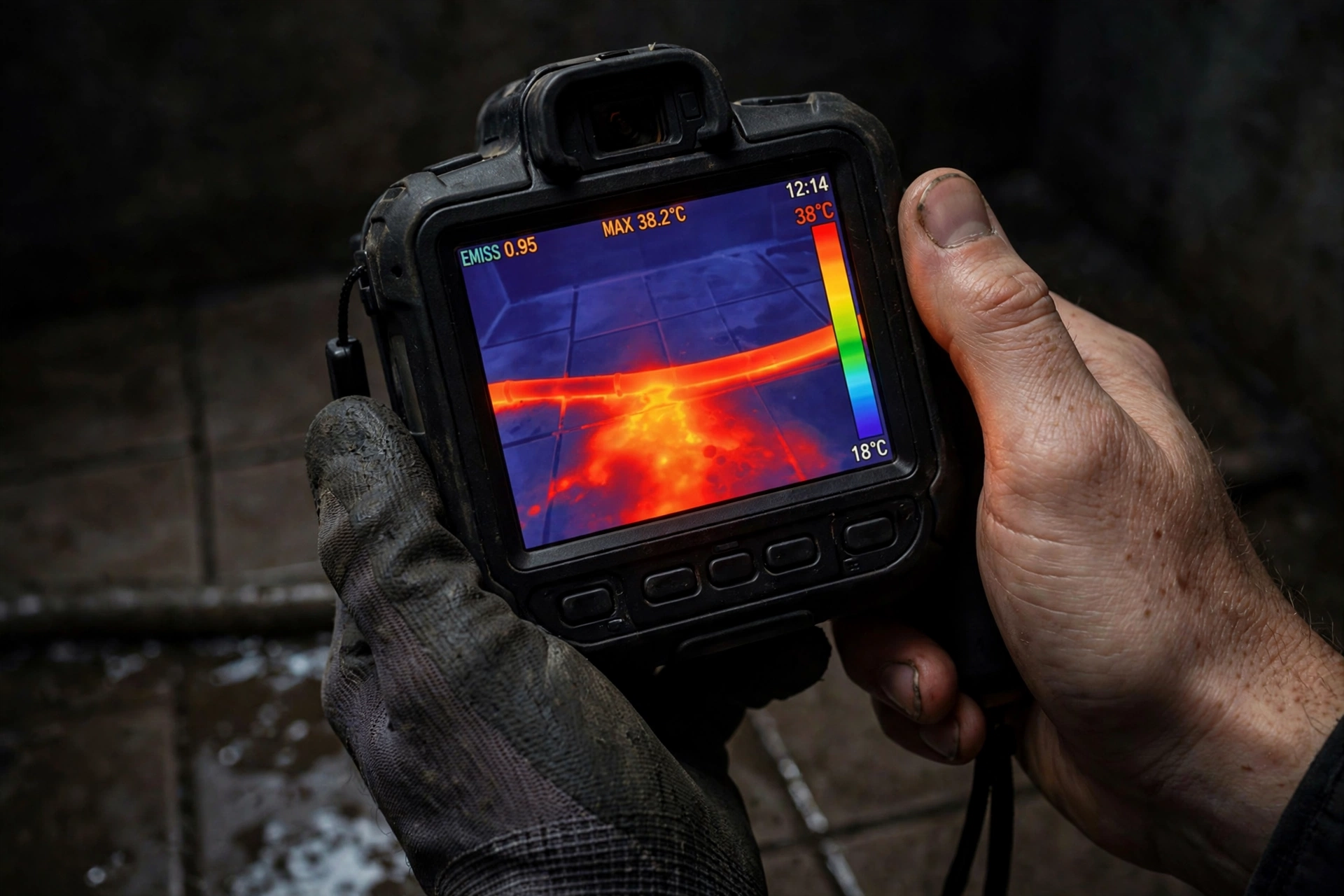
A strong leak detection report includes photos: thermal camera images showing the temperature anomaly, photos of the marked location, and images of any visible damage such as stains or damp areas. This visual evidence is what makes the report credible to a plumber giving you a repair quote — and to an insurance adjuster, if you file a claim. No photos at all is a red flag.
4. A Severity Assessment
Not every leak is an emergency, and your leak detection report should say which one you are dealing with. A slow seep under a slab is a different situation from an active pressurised line break. The assessment should cover roughly how significant the water loss is and whether the situation is stable or getting worse. This is what lets you decide whether to schedule the repair this week or treat it as urgent.
5. Clear Next Steps
Your leak detection report should recommend what happens next: which type of repair is likely needed (spot repair, reroute, repiping section), whether walls or flooring will need to be opened, and whether a retest after repair is advised. It should not pressure you into booking the repair with the same company on the spot — a good report informs your decision; it does not make it for you.
Fixing a confirmed leak promptly also stops ongoing water waste — the EPA’s WaterSense programme explains how much water household leaks can waste.
6. Retest or Verification Notes
If pressure tests were run before and after isolation of sections, the leak detection report should record the readings. These numbers are the objective proof behind the conclusion. When a repair is completed later, a follow-up test against these baseline readings confirms the fix actually worked — this is the step that prevents paying for the same leak twice.
7. Company Details, Date, and Technician Name
Basic but essential: the company name, the date of the visit, and who performed the work. Without this, the leak detection report is just a piece of paper. With it, it is a professional record you can hand to a plumber, an insurer, or a home buyer.
Red Flags: When the Leak Detection Report Is Not Good Enough
Watch for these warning signs that your leak detection report — and possibly the detection work — fell short:
- No written report at all. A verbal summary is not a report.
- Vague location. “Somewhere in the kitchen wall” is not a finding; it is a guess.
- No method described. You cannot judge confidence without knowing the method.
- No photos. In 2026 there is no excuse for a report without images.
- Pressure to repair immediately. The report should end with information, not a sales pitch.
If you received a thin leak detection report, you are entitled to ask for a proper one — or to get a second opinion before authorising leak repair work.
How to Use Your Leak Detection Report
Once you have a complete leak detection report, it does three jobs for you. First, send it to plumbers when requesting repair quotes — comparable quotes require comparable information, and a precise location keeps every bid honest. Second, keep it with your home records; if you ever sell, documented leak history with professional reports reassures buyers. Third, if you file a homeowners insurance claim, the report is the core of your evidence file.
In Kyle specifically, keep reports for slab leaks permanently. Black clay soil movement means a home can develop more than one slab leak over the years, and a history of precise locations helps every future technician work faster.
Frequently Asked Questions
Should I get a written leak detection report every time?
Yes. Even for a minor find, a written leak detection report with the location, method, and photos protects you. It costs the company nothing extra to produce and it is standard professional practice.
What if the technician only gave me a verbal summary?
Ask for the written report — call the office and request it. If they cannot produce one, treat the visit as incomplete and consider a second opinion before paying for repairs.
Can I use the report to get repair quotes?
Absolutely — that is one of its main purposes. Send the leak detection report, especially the location details and photos, to each plumber quoting the repair so every bid is based on the same findings.
Does a leak detection report help with insurance claims?
Yes. Insurers want documented evidence of the leak’s location and cause. A professional leak detection report with photos and test readings is far stronger than a homeowner’s description alone.
How long should I keep old leak detection reports?
Keep them indefinitely. They form a history of your plumbing system that helps future technicians, supports warranty claims, and reassures buyers if you sell the home.
Get a Leak Detection Report You Can Actually Use
A leak detection visit should end with answers, not more questions. Kyle Leak Detection Pros provides a complete written leak detection report with every detection — precise location, method, photos, and clear next steps. Wondering what the visit itself costs? Here is how the diagnostic fee works. Call (512) 729-5265 and know exactly what you are dealing with.