

What Happens During a Leak Detection Visit?
Booking a leak detection visit Kyle TX homeowners keep asking us about can feel like a mystery. You are paying someone to find a problem you cannot see, hidden somewhere you cannot reach. Most of our calls in Kyle start with the same honest questions: “Will you find the leak?” “Is this really necessary?” “What…
Booking a leak detection visit Kyle TX homeowners keep asking us about can feel like a mystery. You are paying someone to find a problem you cannot see, hidden somewhere you cannot reach. Most of our calls in Kyle start with the same honest questions: “Will you find the leak?” “Is this really necessary?” “What happens next?” Here is exactly what happens during a leak detection visit, step by step, so you know what you are agreeing to before the technician ever knocks on your door.
Knowing what to expect matters more than you might think. A proper leak detection visit Kyle TX runs in a clear order: your symptoms, a careful walkthrough, the meter check, systematic narrowing, and then the tracing work that pinpoints the source. Nothing is guessed at, and nobody starts cutting into your walls on a hunch. Whether you live in Plum Creek, Six Creeks, Crosswinds, Steeplechase or Waterleaf, or over in Buda or San Marcos, the process is the same: careful, methodical and respectful of your home.

What to Mention When You Book
Everything starts with the booking call. You do not need to diagnose anything yourself, but the more you can tell us about what is happening, the faster the visit goes.
Start with the symptom in plain language: the water bill that suddenly jumped, the meter that spins when everything is off, the warm spot on the floor, the sound of water running when nothing is on, the damp smell under a sink, or the patch of lawn that stays wet no matter the weather. Mention when you first noticed it, and whether it is getting worse.
Tell us about your home too. The age of the house, whether the pipes run under the slab or through the walls, and any recent work such as a remodel, a new appliance or foundation work all shape where the technician looks first. If a plumber already tried to find the leak and came up short, say so: that context is genuinely useful. If a previous visit left you with an expensive quote you do not trust, our guide to getting a second opinion on an expensive leak repair is worth a read before you book.
Finally, ask anything you want. “What are my options?” “What happens if you cannot find it?” “Will you make a mess?” No question sounds silly. We hear these questions every single day, and answering them is part of the job.
The Arrival: A Conversation Before Any Checks
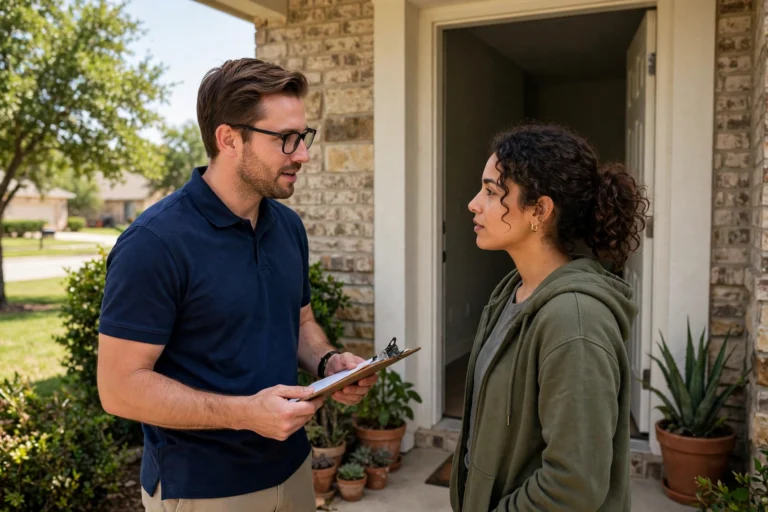
When the technician arrives, the first thing that happens is talking, not testing. You will walk them through what you have noticed: where, when, and what changed.
Expect specific questions. Which fixtures do you use most? Is the water heater running more than it used to? Have you noticed any drop in water pressure? Are there stains on ceilings or baseboards, even old ones? Did the bill rise gradually or jump overnight? These details point the technician toward the right area before any equipment comes out of the bag.
This is also when you will hear what the visit includes and what it does not, which we cover in full below. A straightforward leak detection visit Kyle TX starts with honest expectations, and we would rather you ask now than wonder later.
The Walkthrough: Fixtures, Appliances and Accessible Pipe
Next comes a slow visual walkthrough of the areas that matter. The technician checks every fixture and appliance that uses water: taps, toilets, showers, the washing machine, the dishwasher, the water heater, the fridge ice-maker line, outdoor spigots and the irrigation connection.
They will look under sinks, around toilet bases, behind accessible panels, in the laundry room and around the water heater. They are checking for the visible clues: mineral build-up, damp cabinet wood, warped flooring, musty smells, corrosion on fittings, or water staining that tells a story about how long something has been leaking.
Nothing gets opened up at this stage. The point is to map the symptoms, matching what you described on the phone to what the house is actually showing. Many hidden leaks leave a visible hint somewhere if you know where to look, and a patient walkthrough finds them.
The Water Meter Check: Confirming Something Is Really Wrong
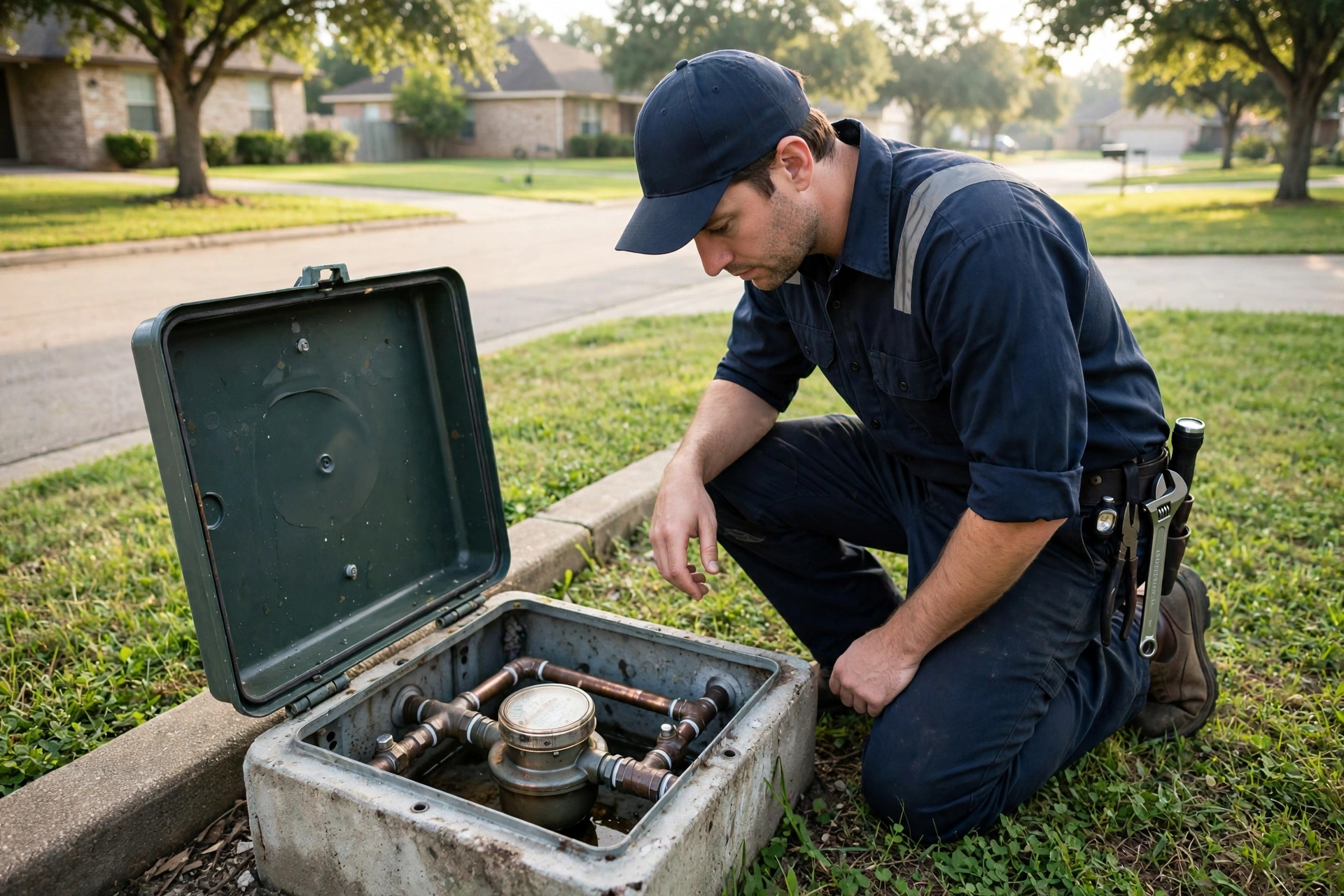
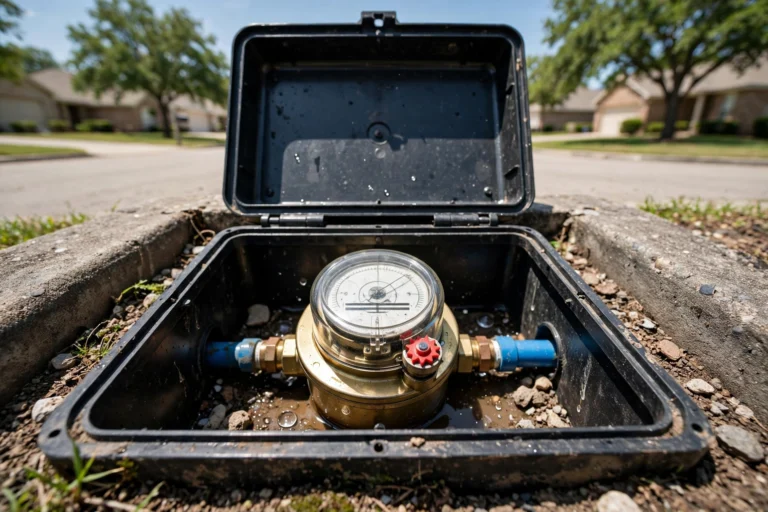
This step settles the “is this really necessary?” question with hard evidence. The technician heads to your water meter, usually at the curb, and watches the dial with everything in the house turned off.
If the meter is moving with no water running, water is escaping somewhere between the meter and your fixtures. If it is still, the picture is different, and both answers are useful. The technician may also isolate sections of the house, shutting off valves one at a time to see whether the meter keeps moving, which starts to separate a service-line leak from a leak inside the house.
It is a simple check, but it is the foundation everything else rests on. You can run a basic version of this yourself, as our guide on how to check your water meter for a leak explains, though a professional reading is more precise. For more on household leaks, the EPA’s WaterSense program is a useful reference.
Narrowing It Down: Testing Fixtures and Sections One by One
Once the meter confirms water is going missing, the technician starts ruling things out. This is the systematic part of the visit, and it is what separates a professional find from guesswork.
Fixtures are tested one at a time. Toilets get checked for silent running. Shut-off valves are worked through section by section. The water heater is isolated to see if the loss stops. Hot and cold lines are separated, because a hot-side leak behaves differently: it can warm the slab and change your energy usage, and that distinction narrows the search area dramatically.
This is also where your earlier answers pay off. A symptom you mentioned casually, like a tap that sputters sometimes or a guest bathroom that has not been used in months, can point straight at the section that tests positive. That is why the symptom chat at the start of your leak detection visit Kyle TX matters: it focuses the narrowing instead of leaving it to chance.
Pinpointing the Leak During a Leak Detection Visit Kyle TX
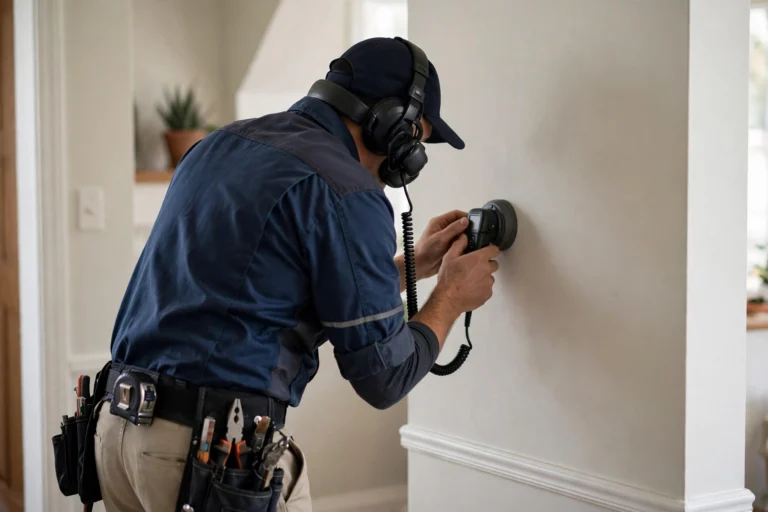
With the search narrowed to one area, the tracing work begins. This is the part that takes real skill: listening through walls and floors with sensitive equipment, taking moisture readings across surfaces, and watching how pressure behaves in an isolated section of pipe.
The goal is to get the location down to a small, specific area so that any repair work needed later is as small and clean as possible. The technician will mark the spot and show you exactly where the evidence points: the damp reading on this wall, the sound pattern along this run of floor, the way the pressure drops when this section is isolated.
No random wall-cutting happens during a leak detection visit Kyle TX. A leak detection visit finds and documents; it does not open things up. If a plumber later needs a small access point to repair the line, they will know exactly where to make it, which is precisely the value of pinpointing. A typical visit moves through a clear sequence without rushing: our guide on how long leak detection takes walks through the timing in more detail.
The Plain-Language Explanation: Your Findings, No Jargon
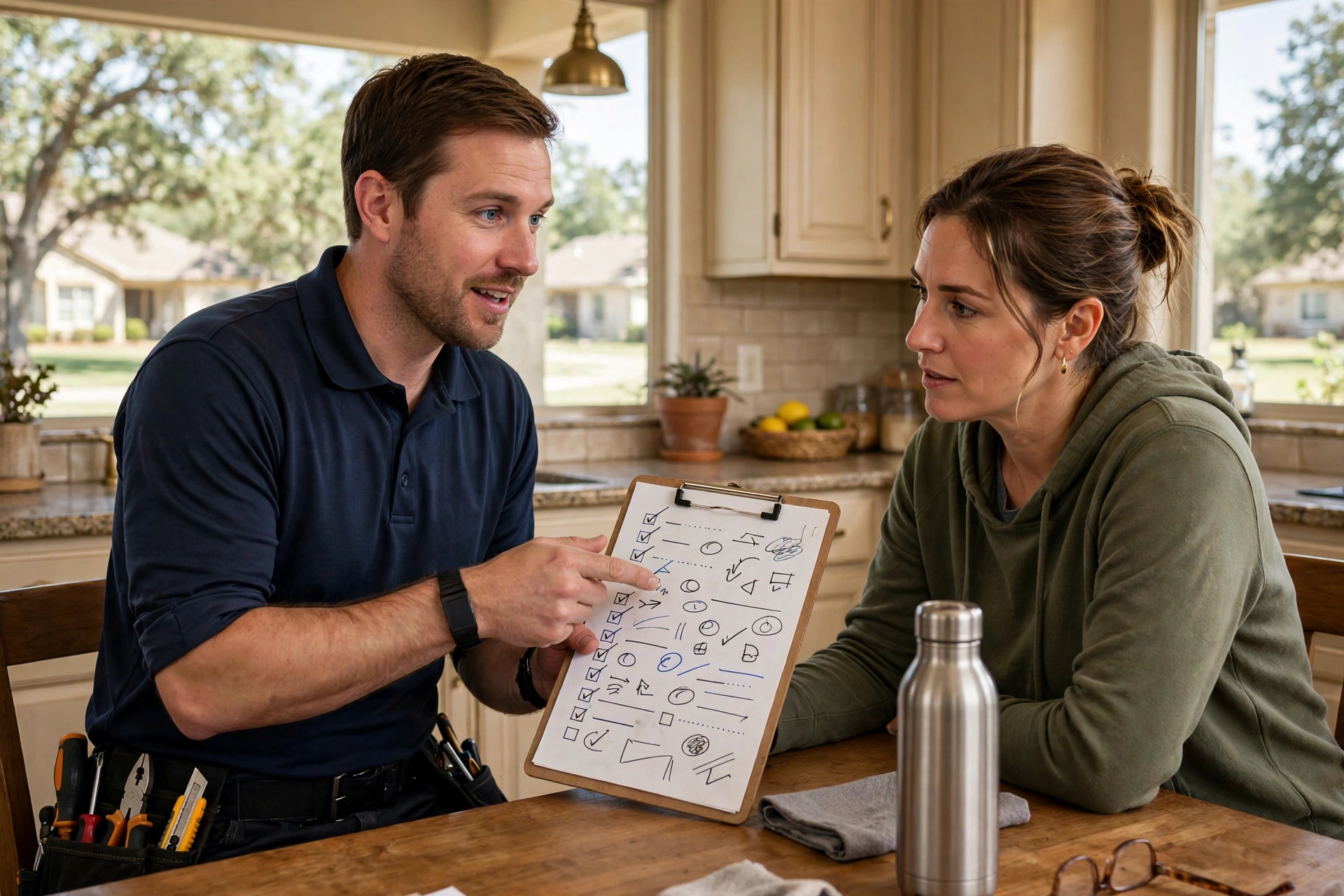
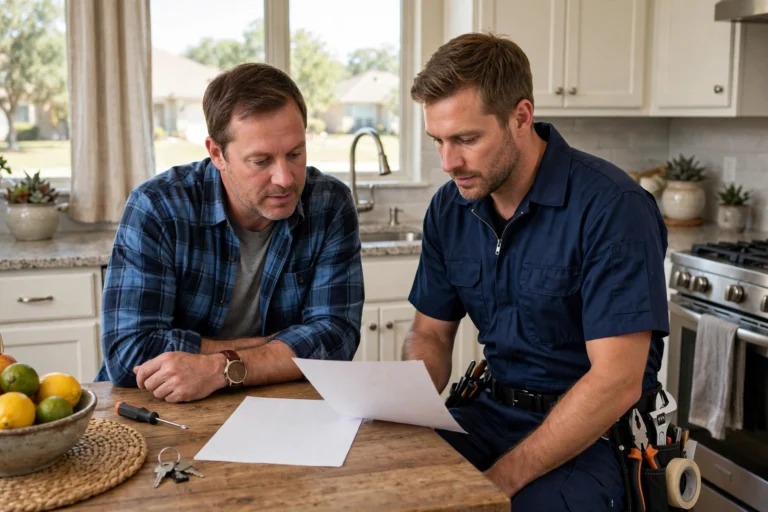
Once the tracing is done, the technician sits down with you, often at your kitchen table, and explains what was found in plain language. This is the “what happens next?” moment, and it is the most important part of the visit.
You will hear where the leak is, what kind of leak it appears to be, how confident the technician is in the finding, and what the evidence was. If the visit ruled a leak out, sometimes the answer is that there is no leak at all, just a running toilet or a misread meter, you will hear that too, honestly. Not every leak detection visit Kyle TX ends with a leak found, and a specialist who tells you “nothing is leaking” has still done you a real service.
Bring your questions: “What are my options?” “How urgent is this?” “What should I do first?” Write the answers down if it helps. This conversation exists so you leave informed, not pressured.
The Written Summary and Your Next Steps
Before leaving, the technician provides a written summary of the visit: what was checked, what was found, the location of the leak if one was identified, and the recommended next steps. Keep this document. If you get quotes from plumbers later, it shows them exactly what needs repairing, with no re-diagnosis and no starting from scratch.
Here is the key distinction: Kyle Leak Detection Pros pinpoints the leak and documents the findings. The repair itself, opening the wall, replacing the section of pipe, patching and refinishing, is done by trusted local plumbers we refer you to. Detection and repair are different trades with different skills. Our guide to leak detection vs leak repair explains why keeping them separate protects you.
With the summary in hand, your next steps are straightforward. Get a repair quote from the referred plumber, or get a second one if the first seems off, as our second opinion guide explains. If you found standing water or active damage, our emergency steps for a found water leak tell you what to do right now. You can also reach us on (512) 729-5265 at any point in the process.
What a Leak Detection Visit Does NOT Include
Straight talk, because “will you make a mess?” is one of our most-asked questions. A leak detection visit Kyle TX is non-invasive. No walls are cut, no floors are pulled up, no trenches are dug. The technician’s job is to find and document, not to demolish.
The visit does not include repairs, and anyone who finds a leak and immediately quotes a repair on the spot is combining two jobs that should stay separate. It also does not include restoring anything cosmetic, because nothing cosmetic is disturbed.
What you leave with is clarity: a documented finding, a marked location, and a written summary. Those three things turn an invisible problem into a repair job any plumber can price fairly.
How to Prepare Your Home Before a Leak Detection Visit Kyle TX
A little preparation makes your leak detection visit Kyle TX faster and the findings sharper. Clear access under sinks and around the water heater, the washing machine and the toilets. The technician needs to reach these areas, not rearrange your storage for half an hour.
Make sure the water meter is accessible by clearing anything piled over the curb box, and make sure someone who knows the house is present to answer questions about symptoms and history. Write down your symptom list beforehand: when you noticed what, and whether it is changing. Photographs of stains or wet spots, even from days ago, can help too.
If you have pets, plan for where they will be during the visit. If anyone in the household is sensitive to noise, mention it, since some of the tracing work involves listening equipment used against walls and floors.
Frequently Asked Questions
Will you find the leak?
Usually, yes. The systematic process above is designed to narrow the search to a pinpointed area. Occasionally a visit rules a leak out entirely, which is also a valuable answer. What is guaranteed is a thorough, methodical process and an honest report of what was found.
What are my options after the visit?
Your written summary goes to a referred local plumber for a repair quote. You are free to get more than one quote, especially if the first one feels high. Detection gives you the documented evidence to shop fairly.
Is this really necessary? Can’t my plumber just find it?
Some plumbers do detection work, but many do not, and will tell you so honestly. Pinpointing takes different methods and different patience than repair. If your symptoms match the signs of a hidden water leak and nobody can say where it is, a dedicated leak detection visit Kyle TX homeowners can rely on is the fastest route to certainty.
Will you make a mess?
No. Detection is non-invasive: no cutting, no digging, no dust. The only marks left behind are the technician’s notes, and the relief of finally knowing what is wrong.
What happens next if a leak is confirmed?
You get the written summary with the marked location, we refer you to trusted local plumbers for the repair, and you move forward with documented evidence instead of guesswork. If you suspect active damage right now, call (512) 729-5265 and we will talk you through your immediate steps.
If you are hearing water when nothing is on, watching the meter move, or staring at a bill that makes no sense, do not wait for the damage to get expensive. Call (512) 729-5265, Kyle Leak Detection Pros, and book your leak detection visit Kyle TX. We will find the leak, show you the evidence, and tell you exactly what happens next.