
Leak Detection Diagnostic Fee Explained: What You’re Actually Paying For
You have a suspicious water bill, a damp patch that keeps coming back, or a water meter that creeps forward when every tap is off. You suspect a hidden leak — and then you see the words leak detection diagnostic fee. Your first reaction is completely reasonable: why should you pay someone just to look…
You have a suspicious water bill, a damp patch that keeps coming back, or a water meter that creeps forward when every tap is off. You suspect a hidden leak — and then you see the words leak detection diagnostic fee. Your first reaction is completely reasonable: why should you pay someone just to look at it?
Here is the plain-English answer: what the fee pays for, what a proper visit includes step by step, when it is sometimes credited toward the repair, and the questions to ask before you book.
Once you understand what the leak detection diagnostic fee covers, you can judge whether a company’s price is fair — and spot the ones cutting corners.
What a Leak Detection Diagnostic Fee Actually Pays For
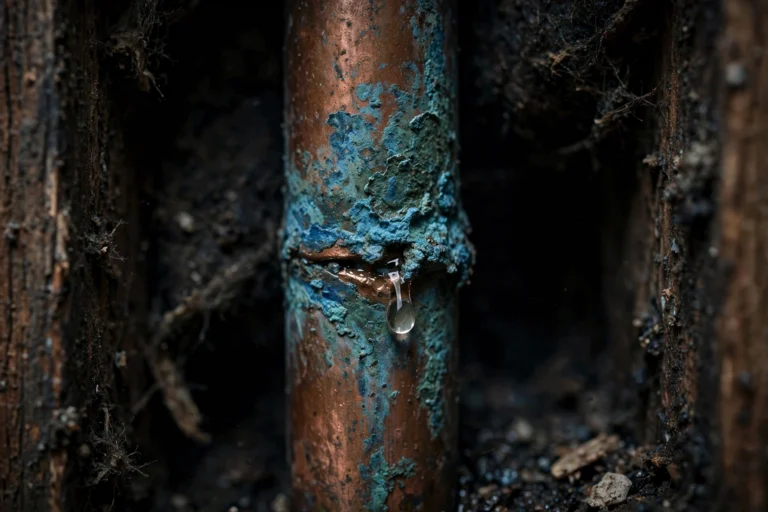
A diagnostic fee is not a fee for “looking at it”. A glance at a damp wall takes thirty seconds and tells you nothing. Finding the actual source of a hidden leak — reliably, the first time — is roughly half the whole job, and in many Kyle homes it is the harder half.
Most newer homes around Kyle — including the builds around Plum Creek, Six Creeks, and Crosswinds — sit on slab foundations. A leak under a slab hides under concrete with no crawl space to inspect, so locating it accurately before anyone cuts is the difference between a targeted repair and an expensive hole in the wrong place.
The travel and set-up time
Part of the leak detection diagnostic fee covers the basics of any home visit: travel, scheduling, and a trained technician’s time on site. A company that charges nothing for the visit must recover that cost somewhere — usually inside a repair quote that is harder to compare.
The systematic testing
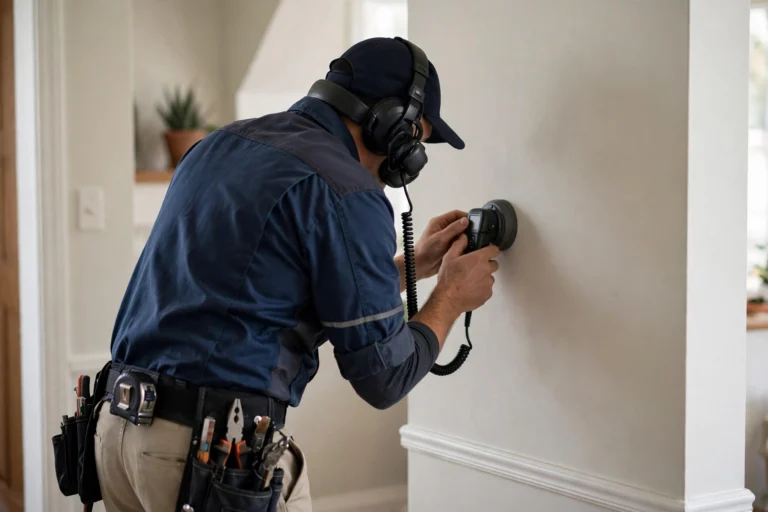
The core of the visit is methodical testing, not guesswork. The technician works through your plumbing in order — meter checks, isolating fixtures, specialised non-invasive tests to narrow down the leak. Each test rules something out. That systematic process is what the leak detection diagnostic fee pays for.
The expertise
You are also paying for pattern recognition that only comes from having seen hundreds of leaks. A damp baseboard, a faint hiss, a warm spot on a floor — each could mean several things. An experienced technician knows which tests to run and which would waste your money. See how professionals find hidden water leaks without tearing a home apart.
The written findings and options
A proper diagnostic fee buys you something you can hold: a clear, written account of what was found and what your options are. That document is what lets you get a fair second opinion instead of starting from zero.
What a Proper Leak Diagnostic Visit Includes, Step by Step
Knowing the shape of a thorough diagnostic lets you tell a real investigation from a sales call with a clipboard. Here is the sequence a serious technician follows:
Step 1: The conversation
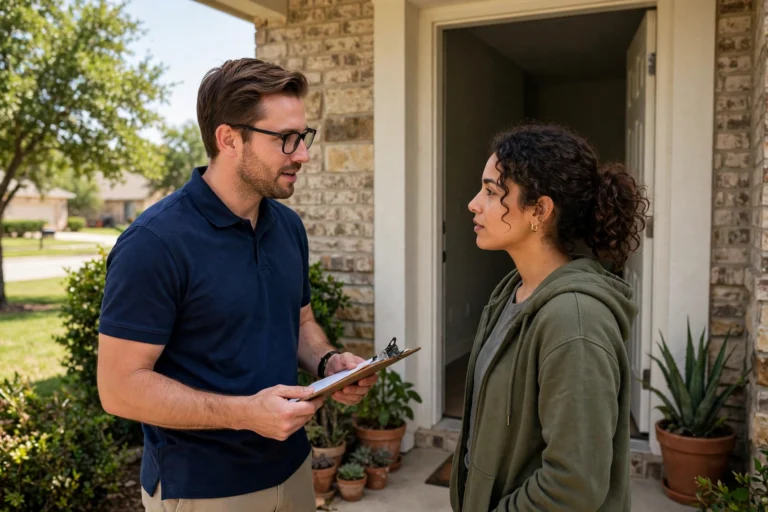
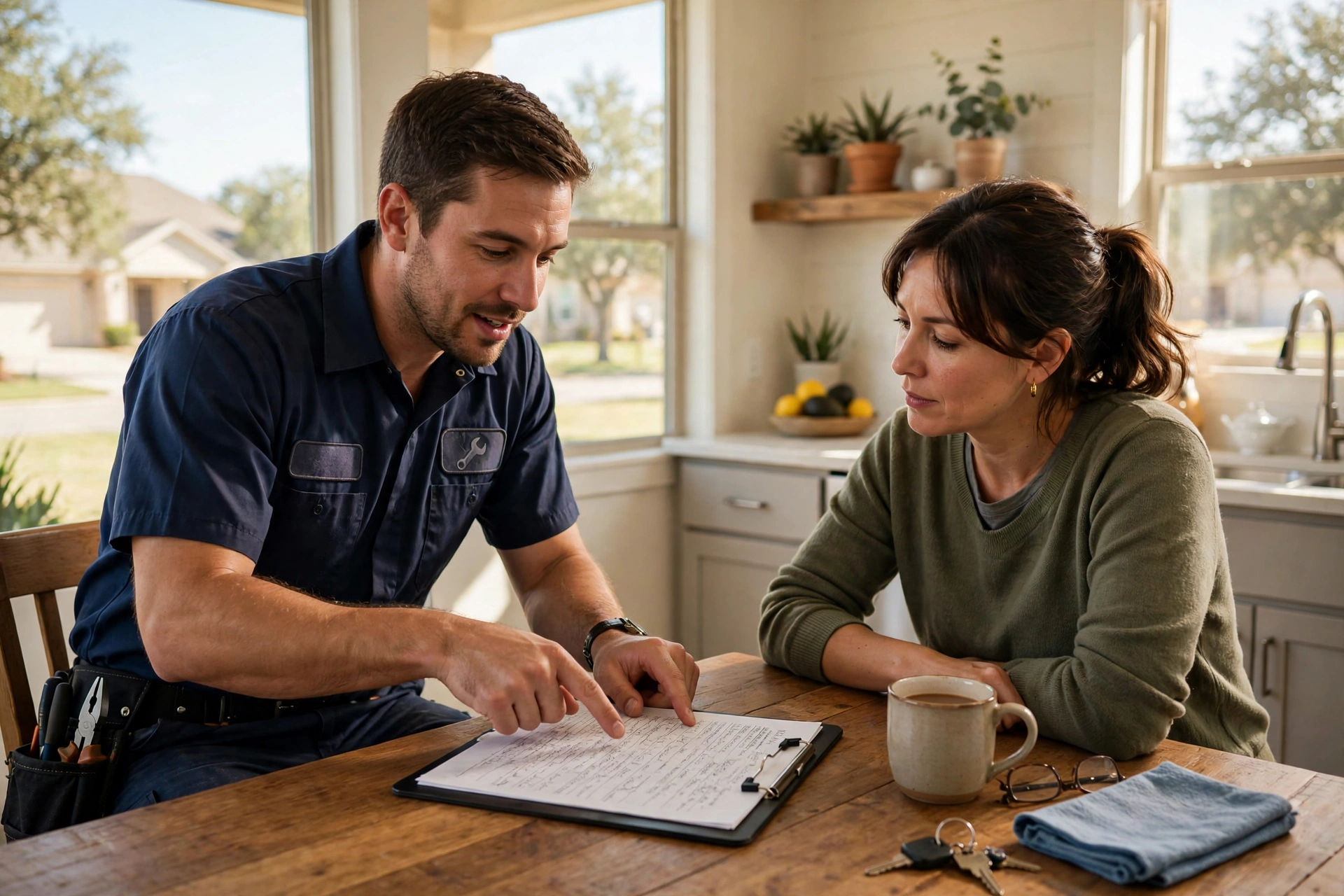
Before touching anything, the technician asks questions: when did you first notice the problem, how has the water bill changed, any damp smells, any recent plumbing work? Your answers narrow the search area. A technician who skips this and heads straight for a tool is working blind.
Step 2: The meter check
With every tap, appliance, and irrigation zone confirmed off, the water meter should sit perfectly still. If it is moving, water is going somewhere — and that reading turns a suspicion into a fact. Read more about what happens during a leak detection visit.
Step 3: The systematic walk-through
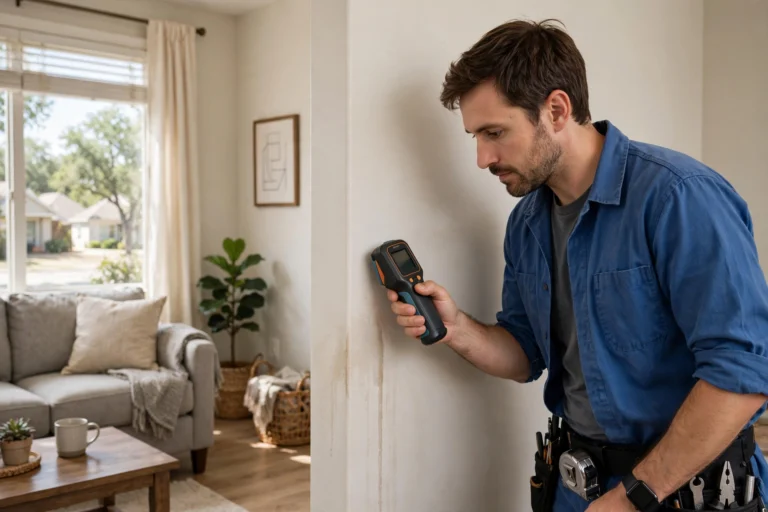
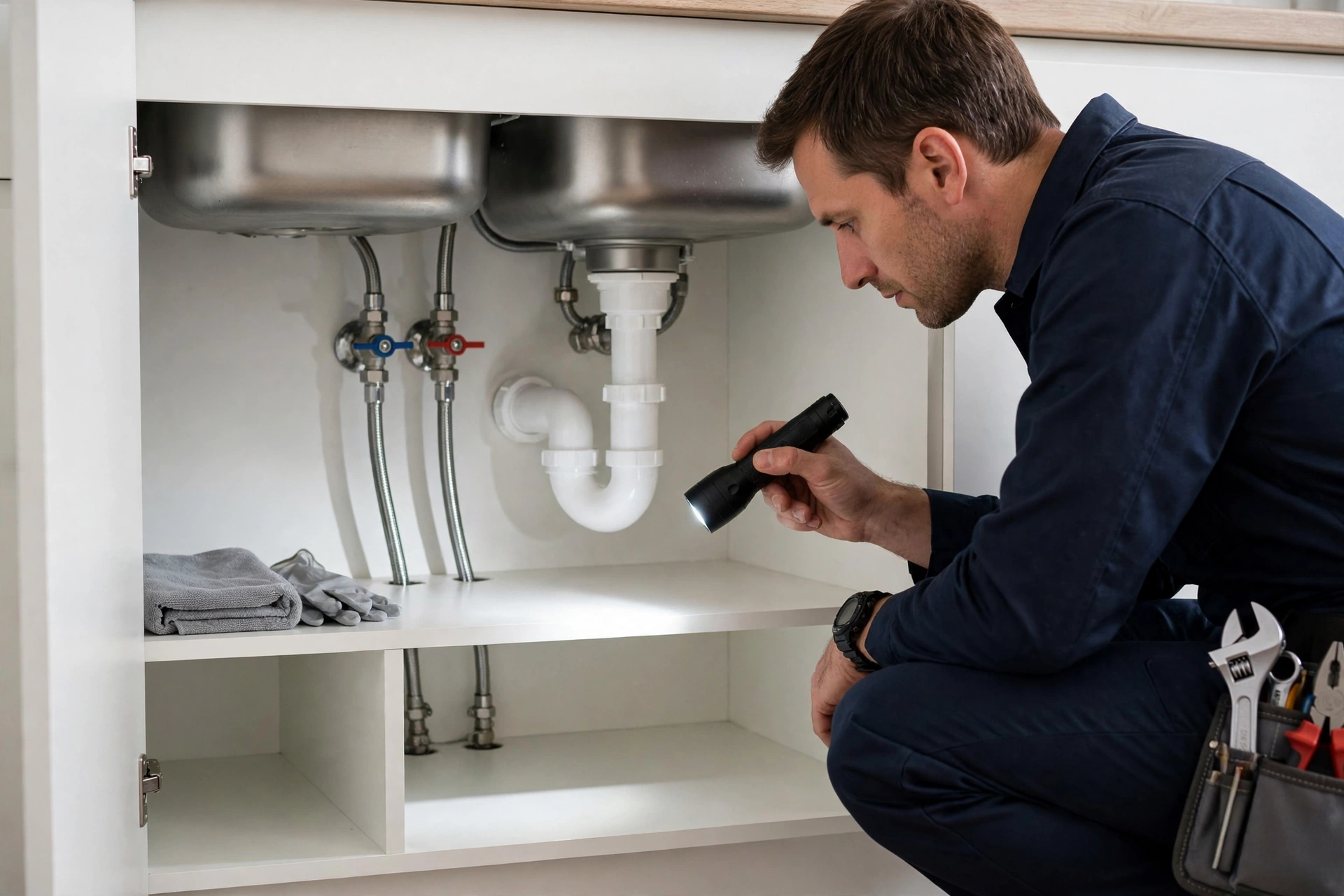
Next comes a methodical tour: fixtures, supply lines, the water heater, visible plumbing, and the areas where you noticed symptoms. The technician checks the easy answers first — a running toilet, a sweating supply line, an outdoor leak — because ruling out the simple explanations early saves everyone time.
Step 4: Focused testing
If the easy answers do not pan out, the visit moves to focused testing of the suspected area using specialised, non-invasive methods. The goal is to locate the leak precisely enough that any repair can be planned with confidence. See how long leak detection takes for a realistic picture of visit length.
Step 5: The plain-language report
The visit should end with three things clear: what was found, how confident the technician is, and what your options are. A repair price with no explanation of how it was reached is a quote dressed up as a diagnosis.
Leak Detection Diagnostic Fee vs Free Estimate: Why Both Exist
A free estimate and a diagnostic visit solve two different problems — and both are legitimate when used for the right job.
A free estimate answers: “I know what the job is — what will it cost?” If the problem is visible, quoting the repair free of charge is reasonable, because there is nothing to investigate.
A diagnostic fee answers a harder question: “Something is wrong, but nobody knows what or where.” Investigation is skilled labour of uncertain duration, done before any repair is defined. Charging for it is how a company can afford to diagnose honestly — including telling you the repair is smaller than you feared.
Be cautious of the middle ground: a “free estimate” for a hidden leak with no investigation behind it. That number is a guess — and a guess that becomes a repair is how homeowners pay twice: once for the wrong fix, again for the right one. When a quote is large or the diagnosis feels thin, a second opinion on an expensive leak repair is money well spent.
The Questions to Ask Before You Book
Most fee anxiety comes down to not knowing the rules of the game. Ask these before the technician is in your hallway — any honest company answers them clearly, in advance.
- Is the fee credited toward the repair if I hire you for the work? Some companies apply it to the final invoice; others treat diagnosis and repair as separate charges. No single standard exists — ask before you book, not after.
- If I decline the repair, do I still pay the fee? The question most homeowners fear asking, and the most important one here. An honest company states its policy plainly, up front. A vague answer is information.
- What exactly does the fee include — in writing? You want written findings: the diagnosis, how it was reached, and your options. “The fee covers the visit” is not an answer; a written report is.
- How will you actually diagnose the leak? Listen for investigation, not assumption. You want a systematic process — testing, isolation, verification — not “we’ll take a proper look”.
- How long will the visit take? A company that does this routinely gives a realistic range — see how long leak detection takes.
- Will I have time to decide afterwards? Diagnosis and the repair decision should be separate moments. Good companies hand you the written findings and let you sleep on a large decision. On-the-spot pressure is a red flag.
Red Flags to Watch For
Knowing what a good visit looks like also reveals a bad one. If you see any of these, slow down — or call someone else.
- Vague pricing. If the fee cannot be explained in one clear sentence before booking, the invoice will be vague too.
- Pressure to decide on the spot. A diagnosis you cannot think about is designed to bypass your judgment. Legitimate repairs do not expire if you take a day to think.
- A diagnosis that feels like a sales pitch. If the visit spends more time on financing, scare stories, or upsells than on testing, the “diagnosis” was theatre. Leak detection is investigation — if nobody investigated, nothing was detected.
- Reluctance to put anything in writing. Findings, options, and costs should all be written down. Verbal-only keeps your options vague on purpose.
- A repair quote with no testing behind it. “It’s probably the…” is not a diagnosis, and repairs priced on probabilities are gambles with your money.
How the Diagnosis Connects to the Repair Decision
A proper visit ends with findings — and options. An accessible supply-line leak might be a straightforward repair; a slab leak might offer choices between spot repair and rerouting, each with different costs and disruption.
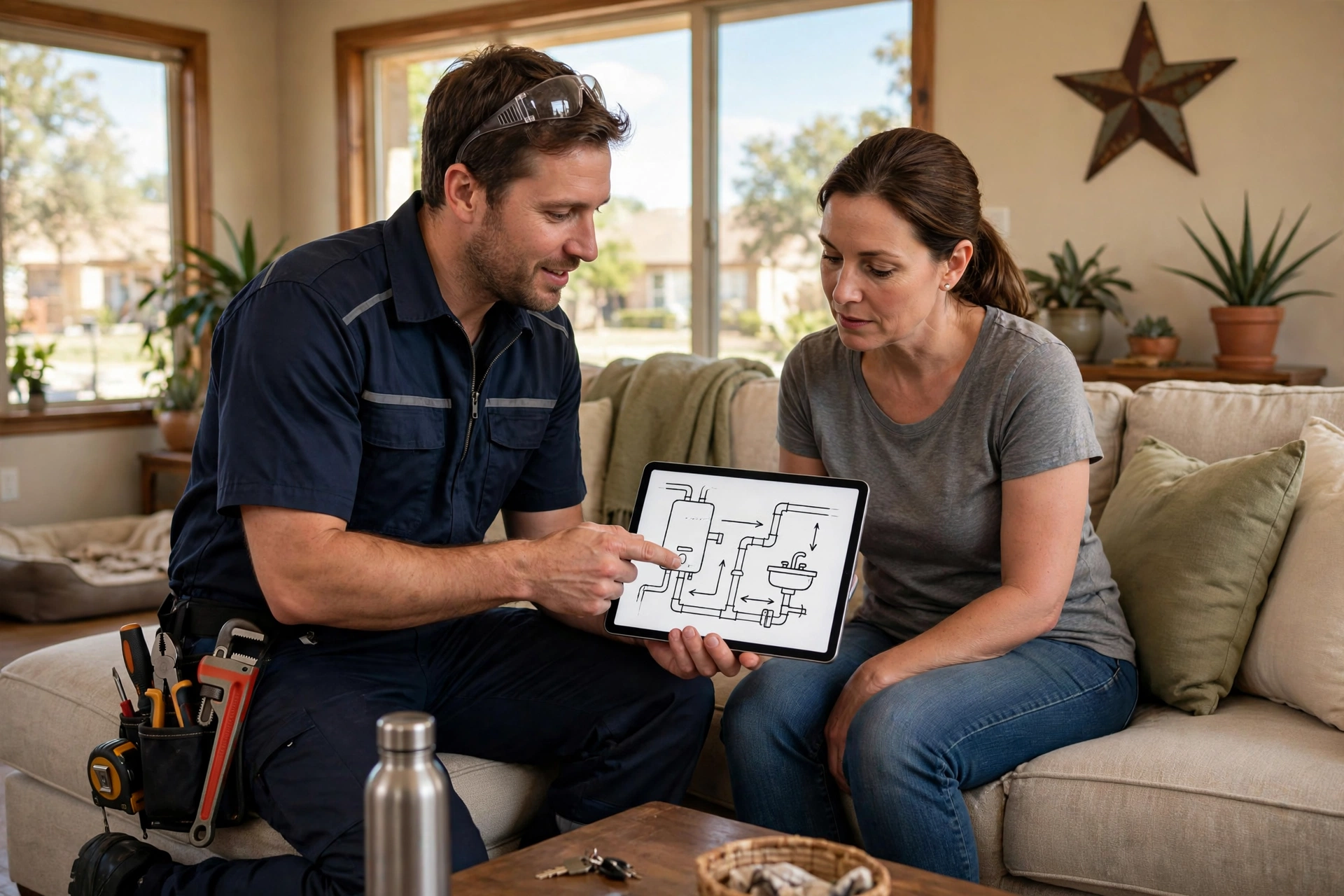
That written diagnosis makes everything else possible: a meaningful second opinion without paying for the investigation twice, a quote you can compare like for like, and the confidence that anyone cutting into a wall or slab knows what they are going in for.
Think of the leak detection diagnostic fee as the cheapest insurance in the repair process. It converts a gamble — “let’s open this up and see” — into a plan. Everything downstream, from the repair method to the final price, depends on the quality of the diagnosis.
Frequently Asked Questions
What does a leak detection diagnostic fee actually cover?
It covers the skilled work of finding the problem: travel and on-site time, systematic testing with specialised, non-invasive methods, the expertise to interpret the results, and a written report of the findings with your options. The repair itself is a separate service.
Is the diagnostic fee applied toward the repair?
Sometimes. Some companies credit part or all of the fee against the repair invoice; others keep the two as separate charges. There is no universal rule — ask before you book and get the answer in writing.
Do I still have to pay if I don’t approve the repair?
That depends on the company’s policy — which is why you ask up front. The testing and written findings were still delivered, but honest companies state before the visit whether the fee stands regardless of your decision.
Why do some companies charge a diagnostic fee and others give free estimates?
They quote different things. A free estimate prices a known, visible job with nothing to investigate. A diagnostic fee pays for investigation when the problem is hidden. Beware “free estimates” for hidden leaks with no real diagnosis — without investigation, the price is a guess.
Does the diagnostic fee include the repair quote?
Usually, yes — a proper visit ends with a written repair quote based on the findings. The fee does not cover the repair work itself; approving the repair is a separate decision, and you should have time to think it over.
Get a Diagnosis You Can Actually Trust
If something has been nagging at you — the bill that will not come down, the patch that will not stay dry, the meter that will not sit still — do not let fee uncertainty stop you from finding out. If water is actively flowing, follow these emergency steps first.
Kyle Leak Detection Pros will walk you through the process before we book anything: what the visit includes, how the findings are delivered, and what your options look like. Call (512) 729-5265 and ask your questions first — you will get straight answers.