

POOL LEAK DETECTION IN KYLE, TX
Losing Water From Your Pool?
A Kyle pool can lose a visible amount of water to evaporation through the summer — but if you are topping up every couple of days in ordinary weather, water is escaping somewhere it should not.
Kyle Leak Detection Pros pinpoints the exact source of pool water loss: the shell, skimmer, fittings, equipment, or underground plumbing. For pool leak detection Kyle TX homeowners trust, call (512) 729-5265.
Serving Kyle, TX 78640 & Hays County
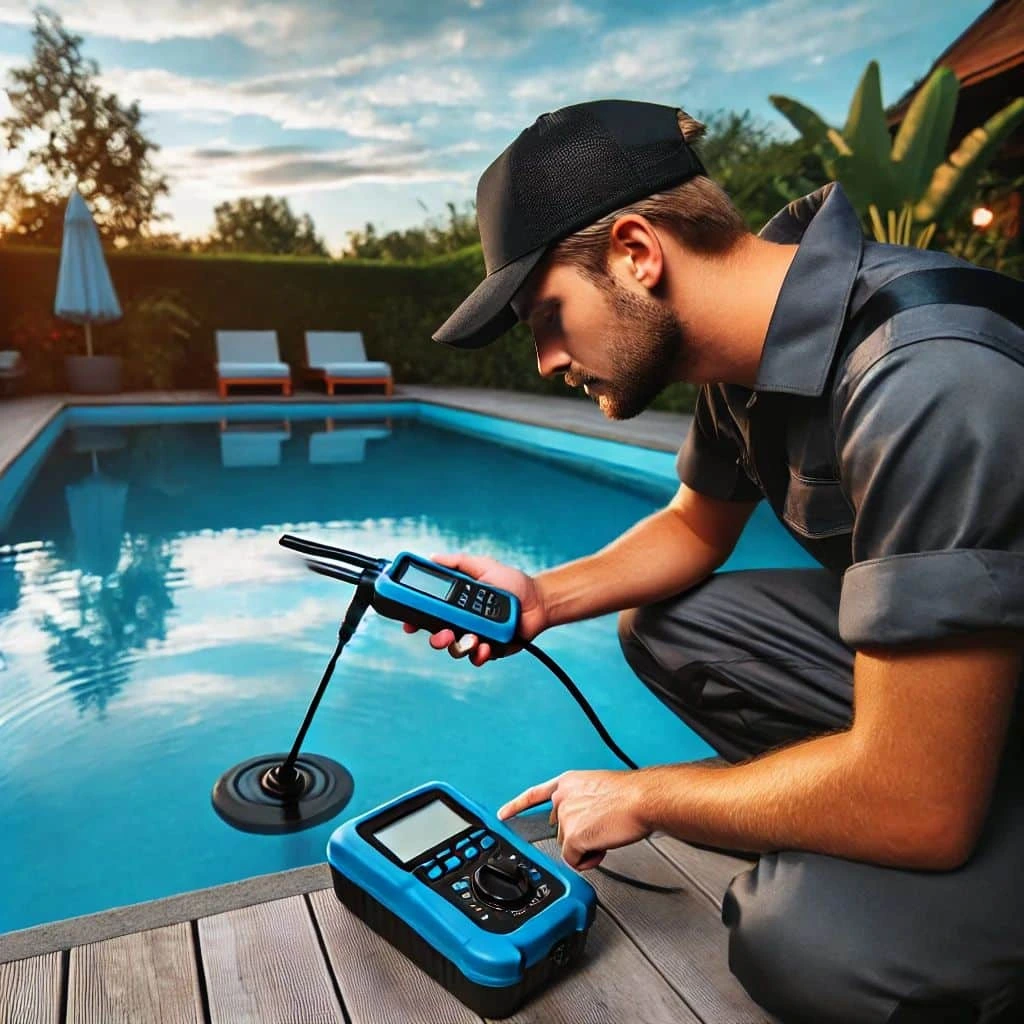
Signs Your Pool May Be Leaking
Some water loss is normal in a Kyle summer. These signs point past evaporation and toward a real leak:
Water Level Dropping
The waterline falls day after day, faster than heat and wind explain — even in mild weather.
Excessive Evaporation
You are dragging the hose out every couple of days. Occasional top-ups in August are normal in Kyle; constant refilling in spring or fall is not.
Wet Areas Around Pool
Soggy soil, puddles that never dry, or fresh cracks in the deck — especially the strip of ground between the pool and the equipment pad.
Air in the System
The pump basket keeps filling with air, the pump loses prime, or the returns bubble. Classic signs of a suction-side plumbing leak.
Unexplained Water Loss
The autofill runs far more than it used to, or the water bill climbs with no other explanation.
Normal Evaporation or a Real Leak?
Kyle summers are brutal on pools — heat, wind, and long stretches of sun. Here is how to tell which one you are dealing with:
NORMAL WATER LOSS
- Gradual — fastest in peak summer
- Weather related — more on hot, windy days
- No wet areas around the pool
Through the hottest months in Central Texas, an uncovered pool loses a visible amount of water to evaporation. If the waterline drops at a steady pace through peak summer and holds steadier in the milder months, evaporation is the likely explanation — it affects every pool in the neighbourhood in roughly the same way.
For general water-saving ideas around the pool, the EPA’s WaterSense programme is a solid reference.
POSSIBLE LEAK
- Faster loss, in any weather
- Unexplained — more than nearby pools lose
- Wet areas, or air in the system
If your pool is losing noticeably more water than similar pools nearby, or you are adding water every couple of days even in mild weather, the pattern points away from evaporation. The bucket test settles it: fill a bucket with pool water, set it on a pool step, mark both levels, and compare after 24 hours with the pump running normally. If the pool dropped noticeably more than the bucket, you likely have a leak.
Step by step: read our pool leak signs and bucket test guide.
Where Pool Leaks Usually Start
Pool Shell
The skimmer throat and mouth — the most common structural leak point — plus cracked waterline tile, missing grout, and gaps around the light niche and return fittings.
Plumbing
The circulation lines between the pool and the equipment pad, especially at joints and elbows. A second bucket test with the pump switched off helps separate plumbing leaks from shell leaks.
Equipment
Pump, filter, and heater connections at the equipment pad. Drips, air in the pump basket, or odd filter pressure point here.
Underground Lines
Buried pipes you cannot see — often revealed by a persistently damp strip of ground along the pipe run. These need professional detection, not more guessing.
One more clue: if the water level stops dropping once it reaches a certain point, the leak is probably sitting right at that line — a cracked skimmer throat or a gap in the tile line lets the level fall only until the water drops below the damaged spot.
Our Pool Leak Detection Process
We review your bucket-test results
Your notes — pump on versus pump off, whether the level stabilises, how often you top up — tell us where to look first.
We inspect the equipment and pump area
A visible check of the pump, filter, heater, and connections for drips, air intrusion, and pressure problems.
We pressure-test the lines
Each plumbing line is isolated and pressure-tested to confirm which one is actually losing water.
We pinpoint the leak
Acoustic listening and targeted checks narrow it to a marked spot — so repairs are targeted, with no unnecessary digging.
What You Get After the Visit
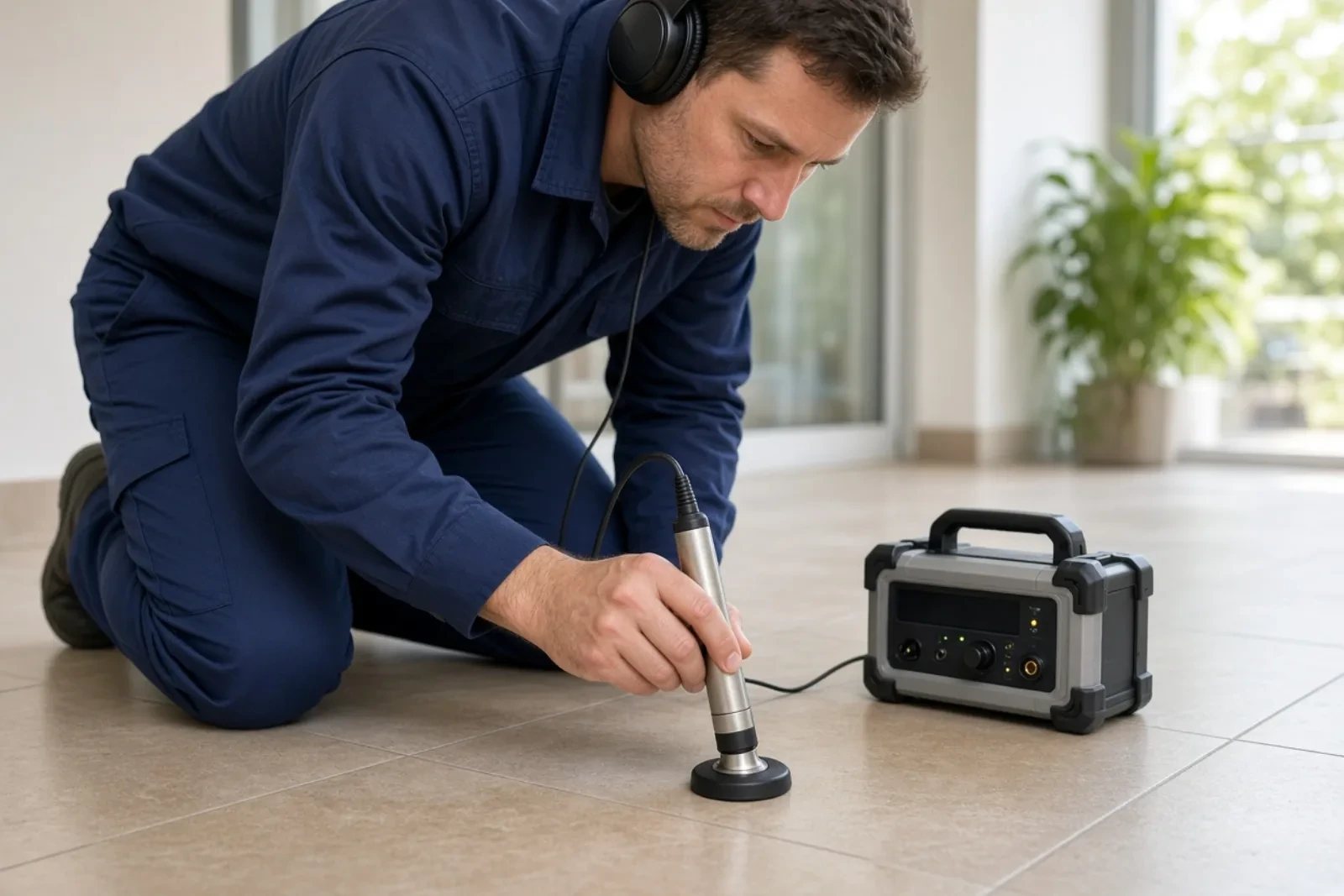
When the visit is done, you get a marked location — the exact spot, not a general area — and a plain-English explanation of what we found: what it is, what it likely means for repair, and what to do next.
The actual repair is handled by your pool contractor or plumber, working from our marked spot. No guesswork, no exploratory digging across the yard.
Pool Leak Detection Kyle TX FAQs
Losing Pool Water? Get It Located.
Every week a pool leak runs, it costs you water and money — and can damage the soil around the pool. One call gets you a straight answer and a marked location.
Call Kyle Leak Detection Pros: (512) 729-5265 — Serving Kyle, TX 78640 & Hays County