Sewer Line Leak Warning Signs Kyle, TX Homeowners Should Never Ignore
Sewer Line Leak Warning Signs Kyle, TX Homeowners Should Never Ignore Your sewer line is the hardest-working pipe on your property, and it is also the one you think about the least. It carries every litre of wastewater away from your home, day and night, buried out of sight beneath your yard. When it starts…
Sewer Line Leak Warning Signs Kyle, TX Homeowners Should Never Ignore
Your sewer line is the hardest-working pipe on your property, and it is also the one you think about the least. It carries every litre of wastewater away from your home, day and night, buried out of sight beneath your yard. When it starts to fail, it rarely fails without warning — which is why learning the sewer line leak signs Kyle TX homes typically show can save you from a repair bill that keeps growing the longer you wait.
In Kyle, buried sewer lines face a particular set of challenges. The expansive clay soil that underlies much of the area swells after heavy rain and shrinks during long, hot dry spells, and that constant movement stresses pipes and pulls at their joints. Mature trees send roots hunting for moisture, and even a hairline crack in a pipe is all the invitation they need. Knowing what to watch for puts you ahead of the damage instead of behind it.
This guide walks through the eight most common warning signs, what each one usually means, and what to do when you spot one. If any of these sound familiar, it is worth getting a professional opinion sooner rather than later — sewer problems never improve on their own, and early action almost always costs less than late action.

Why Sewer Lines Fail Beneath Kyle Homes
The biggest enemy of a buried sewer pipe in Kyle is the ground itself. Clay soil moves with the seasons, expanding when it soaks up rain and contracting as it dries out. Each cycle tugs at pipe joints and can leave sections of pipe poorly supported, creating low spots — bellies — where wastewater slows down and solids begin to settle.
Tree roots make the picture worse. Roots naturally grow towards moisture, and a tiny crack or slightly loose joint gives off just enough dampness for them to find. Once a root hair works its way inside, it thickens over time and starts catching paper and waste, until the obstruction grows into a stubborn blockage that keeps coming back no matter how often the line is cleared.
Older pipe materials bring their own weaknesses. Cast iron corrodes from the inside out over the decades, and clay or concrete pipes can crack or shift at their joints as the soil moves. Even modern plastic pipe can develop offset joints or sagging sections when the ground around it settles unevenly. None of this is the homeowner’s fault — it is simply what happens to buried infrastructure over time, and the EPA’s WaterSense programme reminds homeowners that finding household leaks early is one of the simplest ways to protect both your home and your water bill.
The 8 Sewer Line Leak Signs Kyle TX Homeowners Should Watch For
Here are the warning signs, roughly in the order homeowners usually notice them. Any single one deserves your attention; two or more together should move you to act quickly. Reading through this list of sewer line leak signs Kyle TX properties tend to show is the fastest way to tell a minor issue from a developing emergency.
- Sewage smells around the house or yard. A sealed sewer line keeps odours out of your living space. A persistent sewage smell from drains, near an outdoor cleanout, or across the yard means wastewater is escaping or backing up somewhere it should not be.
- Multiple drains running slowly at the same time. One slow sink is usually a local clog. When the shower, the toilet and the kitchen sink all drain slowly together, the restriction is almost certainly in the main sewer line rather than in any single fixture.
- Gurgling sounds from drains or toilets. Air trapped behind a blockage escapes as bubbles through the water sitting in your traps. That gurgling or bubbling noise is the sound of your sewer line struggling to breathe, and it often shows up before a full backup.
- Unusually green or lush patches in the yard. Wastewater is rich in nutrients. A strip of grass that grows faster and greener than everything around it, following a straight or gently curving path, often marks the buried route of the sewer line feeding the soil above it.
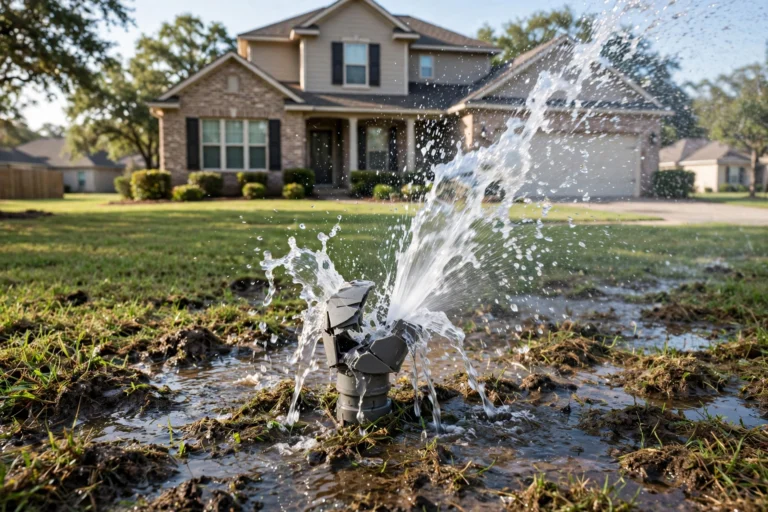
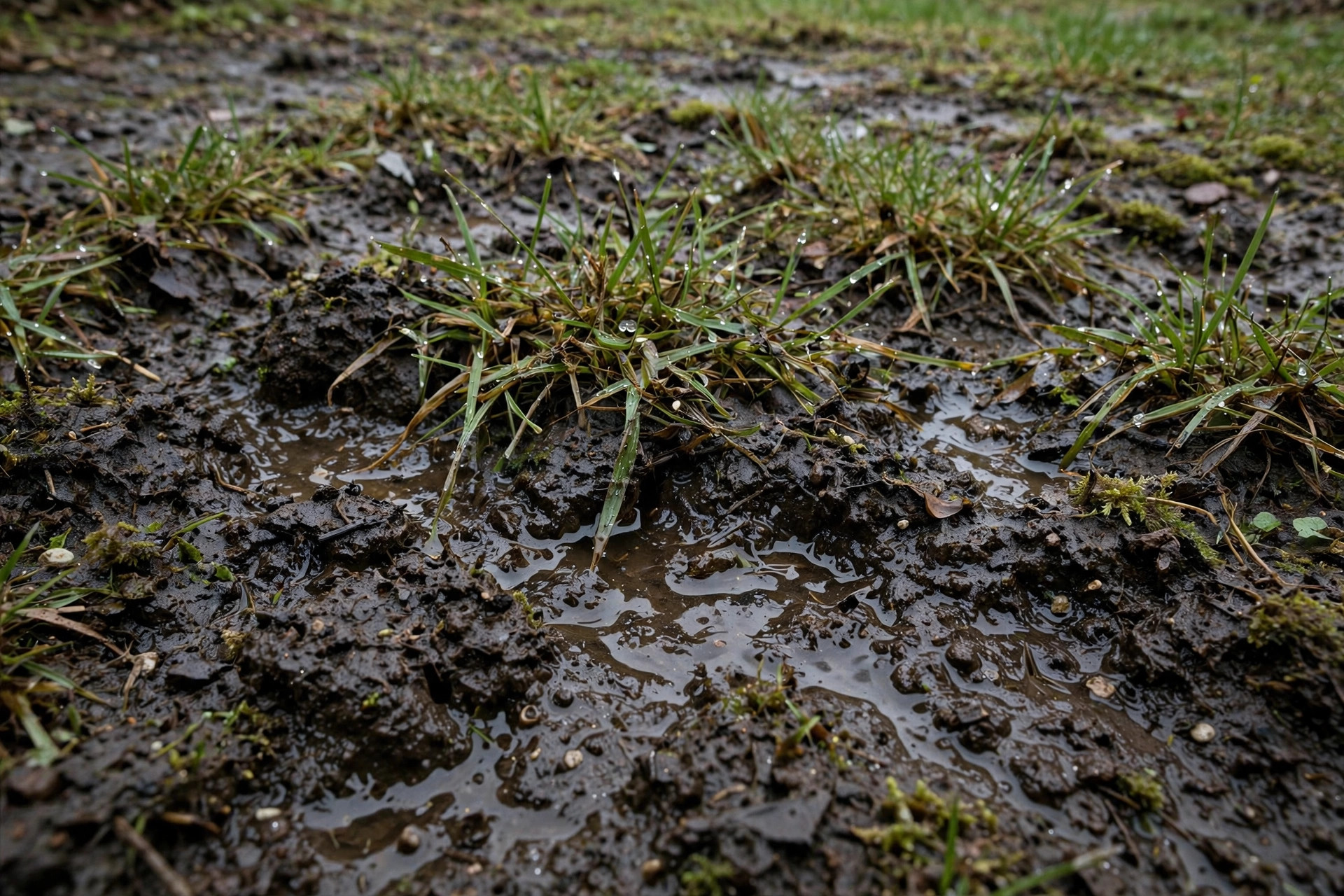
- Soggy spots or standing water despite dry weather. When a cracked pipe leaks steadily into the soil, the ground above it stays wet long after the last rain. Soft, spongy areas underfoot or puddles with no obvious source are classic sewer line leak signs.
- Repeated backups in the lowest fixtures. Because wastewater flows downhill, the first place a struggling main line backs up is the lowest drain in the house — often a shower, a tub or a floor drain. If backups keep returning after clearing, the problem is the line itself.
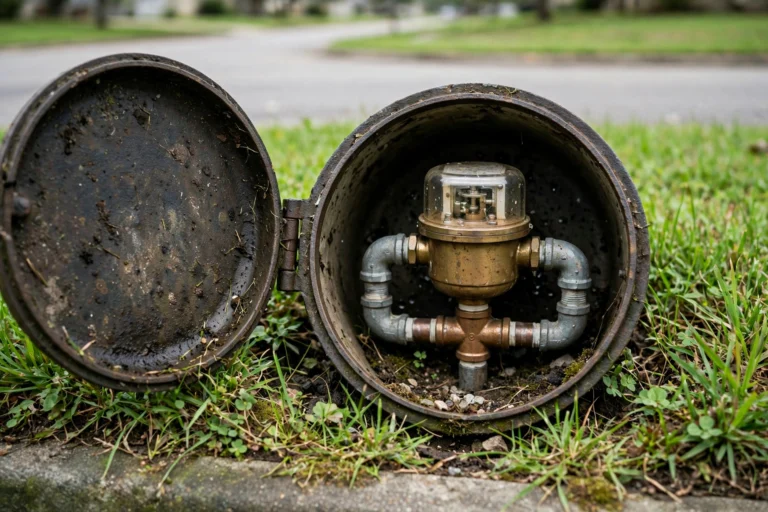
- A sudden, unexplained jump in the water bill. Sewer leaks do not always push water usage up the way a supply-line leak does, but groundwater infiltrating a cracked pipe can push metered water through faster in some setups. Any bill spike with no change in your habits deserves investigation — see our high water bill leak guide for how to check.
- Flies, gnats or rodent activity near the line. A cracked sewer pipe leaks moisture and organic material into the soil, and that attracts pests. An unusual concentration of drain flies around a particular area of the yard or home is worth treating as a clue, not just a nuisance.
If you are seeing more than one of these, do not wait for the situation to resolve itself. Sewer line problems are progressive: a partial blockage becomes a full blockage, a small crack becomes a collapsed section, and a slow seep becomes a yard full of wastewater. The earlier a professional pinpoints the trouble, the smaller the repair tends to be.
How to Tell a Main Line Problem from a Single Fixture Clog
This distinction matters, because it tells you whether you need a plunger or a professional. A clog affecting one sink, one toilet or one shower is almost always local — something is stuck in that fixture’s branch of the system, and it can usually be cleared at that spot.
A problem in the main sewer line behaves differently. Because every drain in the house feeds into that one pipe, a main-line restriction affects everything at once: multiple fixtures slow down together, the lowest drains back up first, and odd symptoms like gurgling appear in rooms you are not even using. When the symptoms are house-wide, the trouble is almost certainly in the main line, and that is exactly what professional sewer leak detection in Kyle is designed to locate. That is why recognising the sewer line leak signs Kyle TX homes display matters: it tells you when the trouble is bigger than any single fixture.

What to Do When You Spot a Sewer Line Warning Sign
First, ease off your water use. Avoid running the dishwasher, the washing machine and long showers back to back, because every litre you send down the drains adds pressure to a line that is already struggling. If a fixture has already backed up, stop using water in that part of the house until the situation is assessed.
Second, resist the urge to pour chemical drain cleaners down the line. They rarely clear the kind of blockages roots and collapsed sections cause, they can damage older pipes, and they create a hazard for whoever eventually opens the line to repair it. For a suspected main-line issue, chemicals are money down the drain in the most literal sense.
Third, call a professional rather than guessing. Locating a sewer line problem from the surface is a job for trained eyes and proper process — digging up the yard on a hunch is how a manageable repair turns into a landscaping project. A proper diagnosis finds the exact location and nature of the fault first, so any repair work is targeted instead of exploratory. If the situation feels urgent — active sewage backup, flooding, or strong odours inside the home — treat it as an emergency and see our emergency leak detection guidance.
It also helps to know where things stand financially before work begins. Sewer line repairs vary widely depending on what is wrong and where it is, so reading through what leak detection costs in Kyle can give you a realistic picture of the diagnostic step before any repair quote lands on the table.
How Professional Leak Detection Pinpoints the Problem
The hardest part of a sewer line leak is that everything important is buried. You cannot see the pipe, so the temptation is to dig — but random digging is slow, destructive and expensive. Professional leak detection works the other way around: it gathers evidence from the surface first, narrows the fault down to a specific section of line, and only then does any ground get opened.
That precision matters more than most homeowners realise. The difference between “somewhere along the back forty” and “six feet left of the cleanout” is the difference between tearing up half the yard and digging one neat hole. When the diagnosis is accurate, the repair is faster, the disruption is smaller, and you are not paying for exploratory excavation that found nothing.
Do Not Wait on Sewer Line Leak Signs
Sewer line damage is one of those problems where time is never on your side. Every week a cracked pipe keeps leaking is another week of soil erosion under your yard, another week for roots to grow thicker, and another week closer to a backup that arrives at the worst possible moment. The warning signs above are your early notice — use them.
If these sewer line leak signs Kyle TX homeowners so often miss sound familiar — sewage smells, slow drains across the house, gurgling fixtures, or soggy patches in your yard — get a professional assessment before the problem escalates. Call Kyle Leak Detection Pros at (512) 729-5265 — we will help you find out exactly what is going on beneath your property so the right fix can happen fast.