
How to Check Your Water Meter for a Leak in Kyle, TX: A 10-Minute DIY Test
How to Check Your Water Meter for a Leak in Kyle, TX: A 10-Minute DIY Test There is a free leak detector already installed at your property, and you have probably walked past it hundreds of times without a second thought. It is your water meter. This guide walks you through how to check water…
How to Check Your Water Meter for a Leak in Kyle, TX: A 10-Minute DIY Test
There is a free leak detector already installed at your property, and you have probably walked past it hundreds of times without a second thought. It is your water meter. This guide walks you through how to check water meter for leak Kyle TX homeowners can handle in about ten minutes, with no plumbing experience and nothing more than a screwdriver and a quiet hour.
In Kyle, where summer irrigation and long dry spells swing water bills up and down, it is easy to blame a high bill on the sprinklers. But a meter that keeps turning when every tap is off tells a different story: water is leaving your plumbing somewhere you cannot see. Confirming that with your own eyes changes the conversation from guessing to knowing. Learning to check water meter for leak Kyle TX homes the right way is the fastest route from suspicion to certainty.
The test itself is simple, it costs nothing, and it gives you evidence you can act on — or hand to a professional so the diagnosis starts a step ahead. Here is exactly how to run it, how to read what the meter tells you, and how to narrow down where the leak is hiding. Follow these steps to check water meter for leak Kyle TX homeowners trust — methodical and documented.

Why the Water Meter Test Works So Well
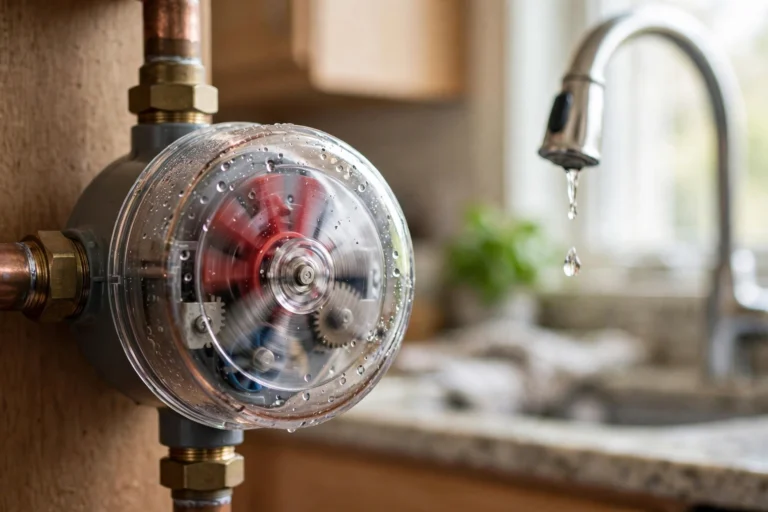
Your water meter measures every litre that enters your property from the city supply. When every tap, toilet, appliance and irrigation zone is switched off, the honest reading should be zero movement. Any movement at all means water is flowing somewhere — and since nobody is using it, that somewhere is a leak. That simple logic is why leak professionals check the meter first, and why the EPA’s WaterSense programme counts checking household plumbing for leaks among the smartest habits a homeowner can build.
Kyle homes add one wrinkle: many properties run irrigation off the same supply, and a stuck irrigation valve can weep quietly for months. The meter test — and the isolation steps below — separate an irrigation problem from a genuine pipe leak. When you check water meter for leak Kyle TX irrigation quirks accounted for, the result is far more reliable.
What the Meter Can and Cannot Tell You
The meter test confirms whether water is escaping, not where. A moving dial with everything off is a definitive “yes, there is a leak” — the fault could be under the slab, inside a wall, or in a toilet flapper.
How to Check Water Meter for Leak Kyle TX: The Step-by-Step Test
Before you start, pick a one to two hour window when nobody in the house needs water — no showers, no laundry, no dishwasher, no ice maker cycles, and no irrigation running. The longer the quiet window, the more clearly a slow leak shows itself on the dial. Gather what you need first so you are not hunting for things mid-test:
- A flat-head screwdriver or a sturdy key, for lifting the meter box lid
- Your phone, for photographing the dial before and after
- A small towel or rag, for wiping dirt off the dial face
- A pen and paper, or a notes app, for writing down the reading and the time
Work through the steps below in order. When you check water meter for leak Kyle TX homes the professional way, the leak indicator on the dial is the star of the show — the next section explains exactly how to read it.
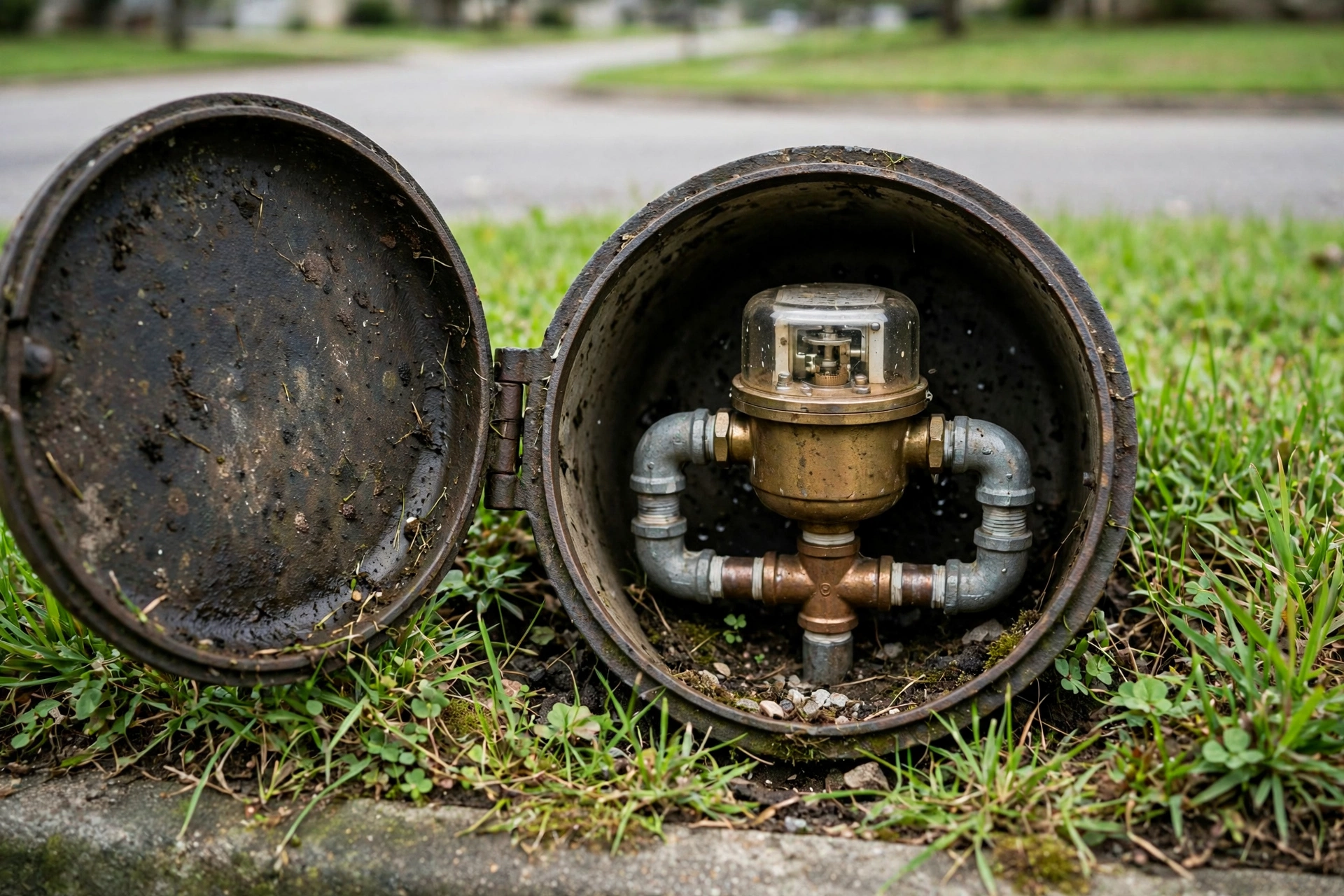
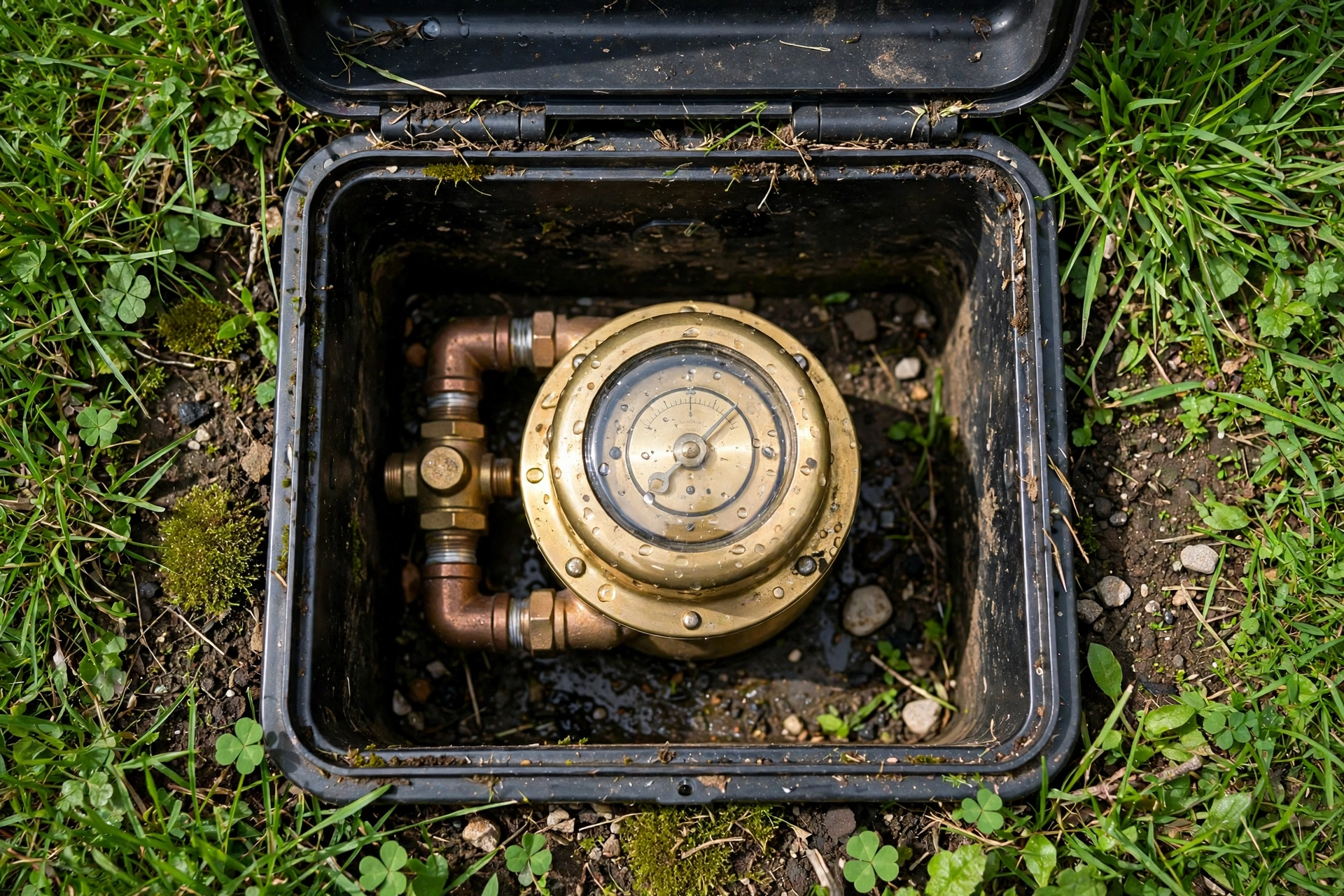
- Find your meter. In most Kyle neighbourhoods the water meter sits in a round or rectangular box at ground level near the kerb, close to the footpath in front of your property. The lid is usually metal or heavy plastic and may be stamped with a water marking. Lift it with your screwdriver — it can be heavy, and there may be spiders, so gloves are a good idea.
- Clear the dial. Brush away soil and sand so the dial face is fully readable. The inside of these boxes collects grit over time, and a smeared dial makes a slow leak impossible to spot.
- Record the starting reading. Photograph the dial with your phone and note the exact time. Write the numbers down too — photos are your backup, not your only record.
- Shut everything off. Walk the house and confirm every fixture is off: taps closed, toilets not refilling, dishwasher and washing machine idle, water softener not cycling, and every irrigation zone switched off at the controller. Toilets are the classic trap — listen for a faint hiss or running sound in the bowl.
- Wait one to two hours. Do not use any water at all during this window. This is the part that requires patience rather than effort.
- Read the meter again. Photograph the dial a second time and compare it with the first photo. If the numbers have moved, or the leak indicator has shifted position, water has been flowing through the meter while everything was off — and that means a leak.
Side-by-side photos make even tiny dial changes obvious — far more reliable than memory.
Reading the Leak Indicator: the Little Triangle That Tells the Truth
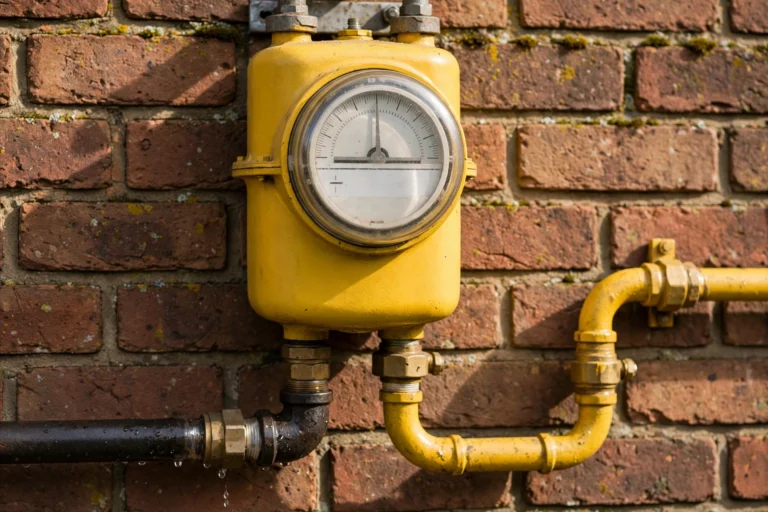
Most residential meters serving Kyle homes carry a small leak indicator on the dial — a little triangle, star, or asterisk-shaped marker that spins with even tiny flows. It is the meter’s early-warning light, designed to catch low flows the main sweep hand would barely register — perfect for spotting the slow, silent leaks that do the most hidden damage.
After everything is shut off, watch the indicator for a full minute. Completely still means no measurable flow. Slowly creeping around means a small leak; spinning steadily means a significant one. Do not confuse the main sweep hand with the indicator — the indicator is the small marker built specifically to catch low flows.
The Toilet Dye Trick: Ruling Out the Usual Suspect
Before you conclude the leak is underground or in a wall, rule out the single most common household culprit: the toilet flapper. A worn flapper lets tank water seep silently into the bowl around the clock, and it is easily loud enough on the meter to look like a real pipe leak.
Put a few drops of food colouring in the toilet tank, do not flush, and wait fifteen minutes. Colour in the bowl means the flapper is leaking — a cheap fix that often ends the whole mystery. A clear bowl means the toilet is innocent and your leak is elsewhere.
Isolating the Leak: House, Irrigation, or Supply Line?
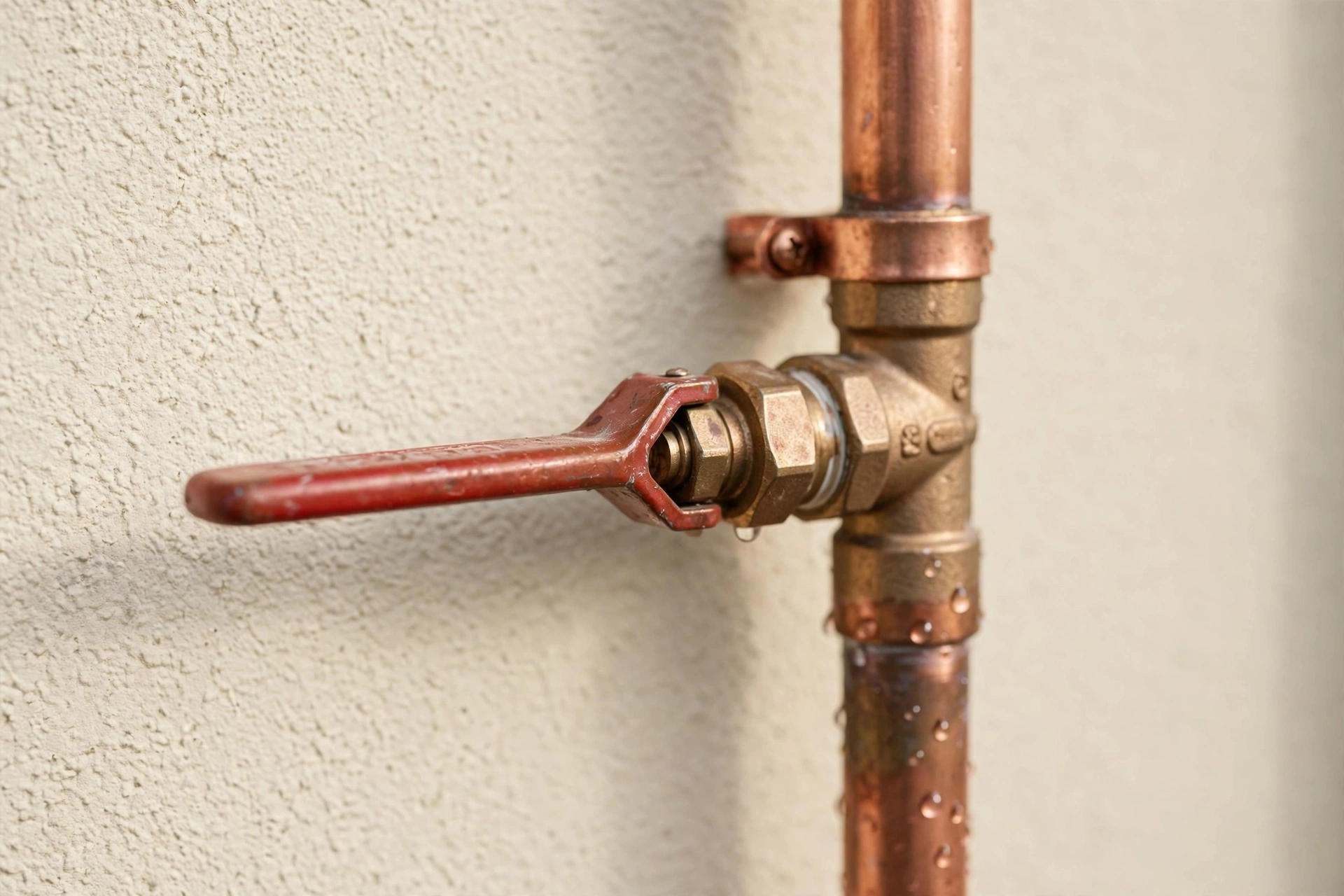
A moving meter tells you water is escaping, but not where. The isolation test narrows the zone, and you need nothing beyond the main shutoff valve on your house. In most Kyle homes that valve sits where the water line enters the building — on an exterior wall near the front, inside the garage, or just inside a utility area. Turn it fully closed, then watch the meter.
If the dial goes still with the house valve closed, the leak is on your side of the valve: inside the home or in the irrigation system. If the dial keeps moving with the house valve closed, the leak is in the supply line between the street meter and your house — buried underground, and almost always a job for a professional with proper locating equipment. After you check water meter for leak Kyle TX style and confirm movement, this single test is the most valuable thing you can do next.
If the house-valve test points inside, split the zones further. Close the irrigation shutoff, rerun the quiet-window test: if the meter settles, the leak is in the irrigation lines or a valve that is not closing properly. If it still moves, the leak is inside the home — under the slab, behind a wall, or in a fixture you would not suspect. Slab leaks in particular deserve respect on Kyle’s clay soil, which shifts with the seasons and stresses buried pipework.
When the Test Confirms a Leak: Your Next Moves
A confirmed leak is not a reason to panic, but it is a reason to act. Start by understanding the bill impact — our high water bill leak guide explains how to read usage spikes and what they usually mean for Kyle households. Knowing the scale helps you prioritise: a slowly creeping indicator is a “schedule it this week” situation, while a steadily spinning one is a “do not wait” situation.
It also helps to know what the diagnostic step involves before you call anyone. Every situation is different, but reading through what leak detection costs in Kyle gives you an honest picture of a professional assessment, so there are no surprises when you pick up the phone.
Keep your evidence, too. Those timestamped meter photos show the flow trend and the zones you have already ruled out — mention the isolation results when you call, and the diagnosis starts a step ahead instead of from zero.
What a Professional Does Differently
The meter test tells you a leak exists and roughly which zone it is in. A professional goes further: they pinpoint the exact location so any repair is surgical rather than exploratory. Our water leak detection service in Kyle works from the evidence you have gathered — the meter readings, the toilet dye result, the isolation outcome — and narrows the fault down before any ground is opened or any wall is touched.
That precision is what turns “there is a leak somewhere” into “the leak is at this spot” — a smaller repair, less disruption, and no paying for exploratory digging that found nothing.
Do Not Let a Spinning Meter Sit: Check Water Meter for Leak Kyle TX
A water meter that moves when everything is off is your home speaking plainly. You now know how to check water meter for leak Kyle TX homes deal with — the ten-minute test, the leak indicator, and the isolation steps that narrow the zone. Do not file that knowledge away: every week a hidden leak runs is another week of water disappearing into the ground.
If your meter confirmed a leak, or the test raised more questions than it answered, call Kyle Leak Detection Pros at (512) 729-5265. Bring your before-and-after meter photos — we will take it from the meter reading to the exact location, so the right repair can happen fast.