Tenant Leak Report? A Property Manager’s Guide for Kyle, TX Rentals
A tenant leak report lands differently from a homeowner’s call. You are not the one standing in the puddle — the tenant is. You have to triage someone else’s emergency from a text message, decide how fast to act, and protect the owner’s asset at the same time. In Kyle, that is harder than it…
A tenant leak report lands differently from a homeowner’s call. You are not the one standing in the puddle — the tenant is. You have to triage someone else’s emergency from a text message, decide how fast to act, and protect the owner’s asset at the same time.
In Kyle, that is harder than it sounds. Much of the rental stock sits on slab-on-grade foundations over black clay soil, so under-slab leaks are a real scenario. Tenants often report leaks late, or describe them badly — a small issue can become a mould problem before anyone sees it. This guide is your calm, repeatable playbook for every tenant leak report: what to ask, how fast to act, what to tell the tenant, and how to document everything.

The First 5 Questions in Every Tenant Leak Report
When a tenant leak report comes in, the tenant’s description is usually the weakest link. “There’s water in the kitchen” could mean a fridge drip or a burst supply line. Before you dispatch anyone, run through these five questions — by phone, because tone and hesitation tell you a lot.
1. Where exactly is the water, and is it still coming?
This is the single most important question. A leak actively flowing right now is a different emergency from a damp patch noticed yesterday. Ask whether the water is spreading, dripping, or just staining.
2. Is any electrical fixture, outlet, or the breaker panel involved?
Water through a ceiling light fitting or near a panel changes everything. If the answer is yes, tell the tenant to stay out of that room and treat the call as an emergency immediately.
3. How long has it been like this, as far as you know?
Tenants under-report duration. “Just noticed” often means “noticed a while ago, said nothing”. Ask directly, because duration determines whether you are dealing with a plumbing call or a potential mould situation.
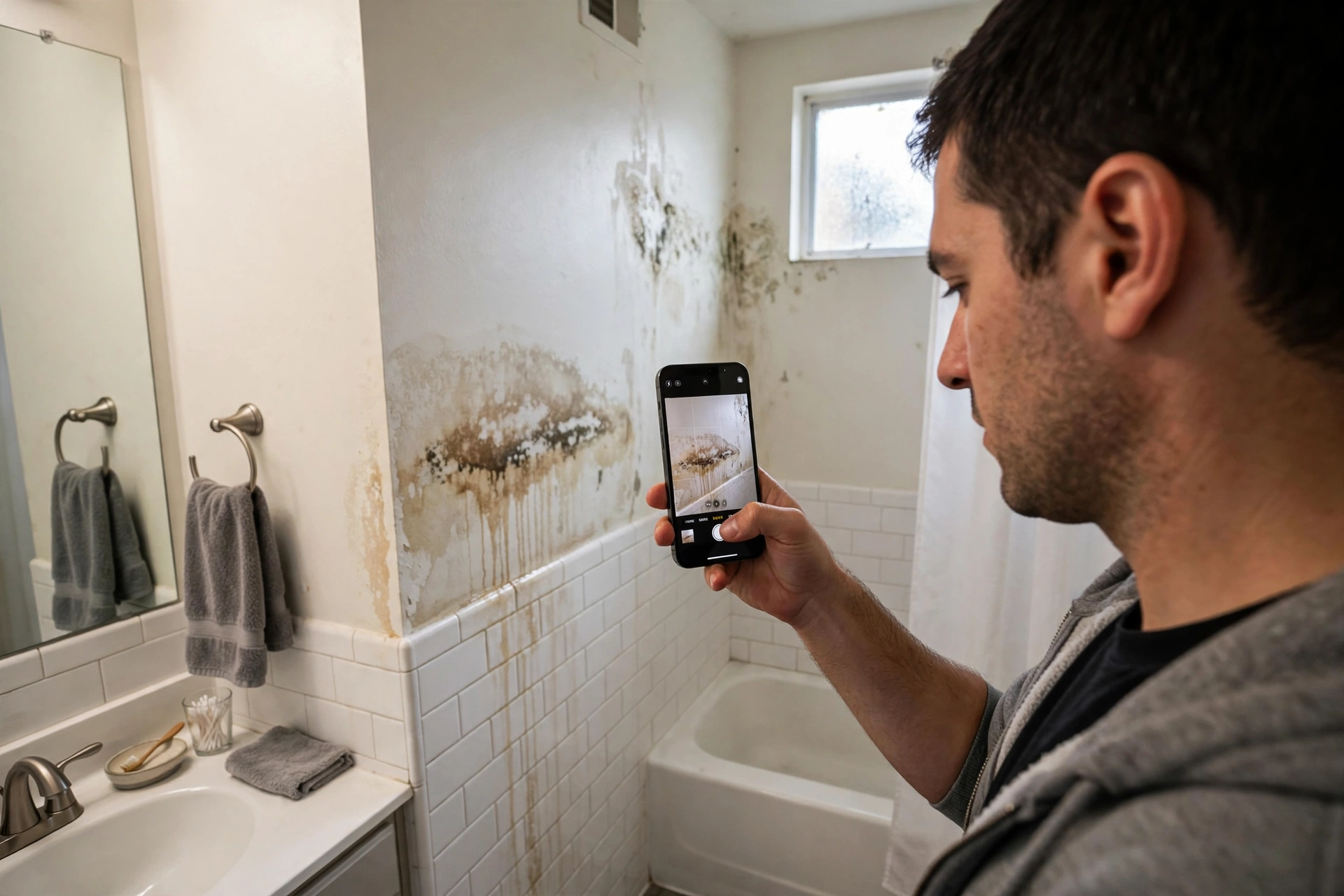
4. Can you send photos or a short video right now?
Photos collapse the distance between the tenant’s words and reality. Ask for a wide shot, a close-up of the water or stain, and updates if anything changes — the photo thread becomes part of your incident record.
5. Have you touched anything — a valve, a breaker, or tried to fix it?
You need to know what state the unit is in. If the tenant has shut a valve, that is helpful — but if they have attempted their own repair, tell your vendor before they arrive, because tenant DIY can complicate the diagnosis. Be neutral, not accusatory; you want honesty, not defensiveness.
If the leak sounds serious but unclear, point them to these emergency steps to follow while you are deciding what to dispatch.
Emergency vs Urgent vs Routine — How Fast to Act
Over-dispatching on every drip burns vendor goodwill and owner money; under-dispatching on a flood risks habitability. Use this three-tier classification consistently for every tenant leak report.
Emergency — act within hours
- Active flooding or water flowing and not stopping.
- Water through a ceiling, especially near lights or electrical fittings.
- Sewage backing up into tubs, toilets, or floor drains.
- A burst or visibly broken pipe.
For a suspected sewage issue at a rental, these sewer-line warning signs help you confirm what you are dealing with before your vendor arrives.
Urgent — act within a day
- A steady minor leak that continues when fixtures are used.
- A water stain on a ceiling or wall that is growing.
- The water meter moving when everything in the unit is off — walk the tenant through this water meter leak check on the phone.
- A musty smell suggesting water is hiding somewhere — these musty-smell clues are worth sharing with the tenant.
Routine — schedule promptly
- A running toilet that can be isolated with its own valve.
- A slow tap drip or a dripping showerhead.
- A small, stable stain that has not changed in weeks.
Speed is cost control, not just customer service. A delayed response turns a plumbing call into a mould call, and mould remediation costs an owner far more than a prompt dispatch. When in doubt between two tiers, choose the faster one.
What to Tell the Tenant While You Dispatch
Your instructions to the tenant in the first ten minutes matter as much as the vendor you choose. Keep them short, clear, and consistent.
- Shut the valve if it is safe. Tell the tenant where the nearest shut-off is — the fixture valve, or the main — but add “only if you can reach it safely”. Never instruct a tenant to wade through standing water near electrics.
- Send photos and video. Ask for the wide shot, the close-up, and updates if anything changes. This is your evidence trail as well as your diagnostic aid.
- Do not attempt a fix. Say it plainly and kindly: no sealants, no tightening, no opening walls. Tenant DIY can turn a simple repair into a complicated one, and it muddies responsibility if something goes wrong.
- Move valuables and electronics away from the water. One line, big payoff.
If the tenant mentions a stain on a ceiling, these water stain clues can help you judge severity from their photos before the vendor arrives.
Finding the Source Before Authorising Repairs
Here is where managers lose owner money without realising it: authorising a repair based on where the water appears rather than where the leak is. Water travels — a living-room ceiling stain can start at a bathroom supply line one room over. Cutting open the wrong wall twice is an avoidable expense.
Before you approve any destructive work, make sure the source has actually been located. Kyle Leak Detection Pros uses specialised, non-invasive testing methods to pinpoint where a leak originates before anyone opens walls or flooring. Locate first, repair second — the repair bill stays at what is genuinely needed, which is exactly what an owner wants to hear from their manager.
This is especially worth insisting on with Kyle’s slab-on-grade rentals. A warm spot on a slab floor or a meter that moves with everything off can point to an under-slab leak — see these slab leak warning signs. Catching one early is dramatically cheaper than finding it after the soil shifts and the flooring buckles.
Documenting for the Owner and the Insurance Company
Documentation is where good managers separate themselves when handling a tenant leak report. Keep one incident record per leak — a single folder per tenant leak report — containing:
- Timestamp of the first report and the channel (call, text, email).
- Unit address and tenant name.
- The tenant’s description in their own words, plus your triage questions and their answers.
- All photos and videos, in order.
- Which vendor you dispatched, when, and the ETA given.
- Diagnosis, work authorised, and resolution notes.
- Follow-up: confirmation the tenant is satisfied and the area is dry.
This record does three jobs at once. It shows the owner you acted promptly and proportionately. It supports any insurance claim with a clean timeline. And it defuses the classic high-water-bill dispute — the landlord typically repairs the leak, while billing responsibility depends on the lease, and a documented timeline of report, dispatch, and repair is what settles those arguments.
On the legal side, keep it general: landlords are generally responsible for repairing leaks affecting habitability in Texas. This guide is not legal advice — for specific disputes, a Texas property-management attorney is the right call. But a manager who documents fast and thoroughly rarely needs one over a leak.
Preventing the Next One: Turnover Walkthrough Checks
The cheapest leak to fix is the one caught at turnover, when the unit is empty and nobody is upset. Add these checks to every walkthrough:
- Run every tap and flush every toilet; watch the base of each fixture and the cabinet floors beneath.
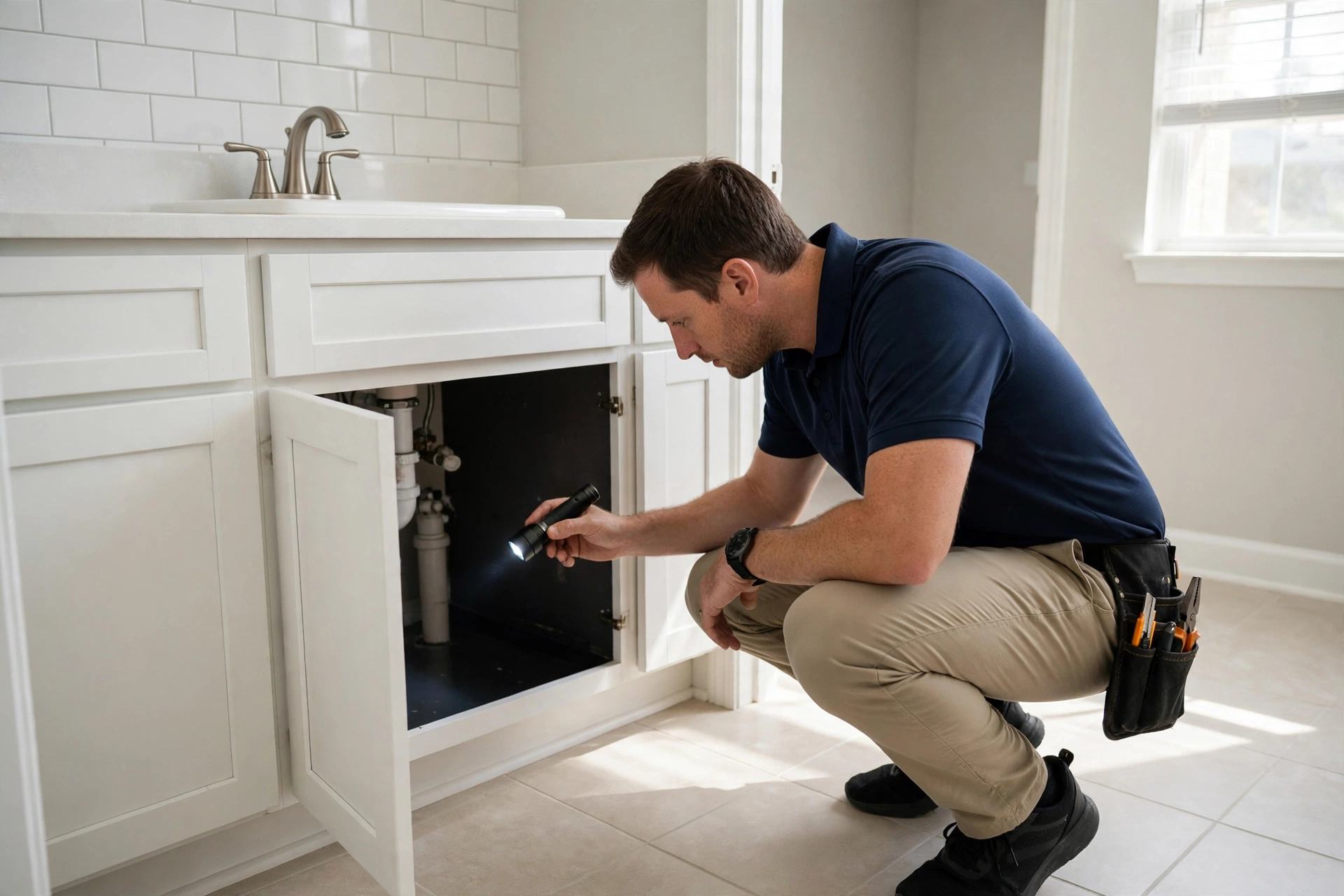
- Look under every sink with a torch — check supply lines, traps, and shut-off valves for weeps and corrosion.
- Check ceilings in rooms below bathrooms and the water heater closet for stains.
- Test the water heater’s drain pan and temperature-pressure relief line.
- Read the water meter, wait fifteen minutes with nothing running, and read it again — any movement means a hidden leak.
- Walk the irrigation system in summer. Summer irrigation leaks at rentals are common in Kyle, and a broken lateral line can run for months if the tenant never looks at the bill.
In the newer subdivisions — Plum Creek, Six Creeks, Crosswinds, Steeplechase, Waterleaf — watch for slab clues: unexplained warm patches on tile, damp carpet edges, or a water bill that jumps without a change in occupancy. Black clay soil movement around Kyle makes early detection the whole game.
Frequently Asked Questions
How fast must a property manager respond to a water leak in Texas?
There is no single statutory clock, but landlords are generally responsible for repairing leaks affecting habitability, and unreasonable delay can turn a plumbing repair into a mould remediation. A practical standard: emergencies within hours, steady leaks within a day, minor drips scheduled promptly — and document your response time.
Who pays for a high water bill caused by a leak — landlord or tenant?
There is no one-size-fits-all answer. The landlord typically repairs the leak, while who absorbs the excess charge depends on the lease and the circumstances — for example, whether the leak was reported promptly. A documented timeline of report, dispatch, and repair is the strongest basis for a fair resolution. This is general information, not legal advice.
What should I ask the tenant before sending a plumber?
Where the water is and whether they can send photos, and whether they have touched anything. These five answers let you classify the call as emergency, urgent, or routine before spending the owner’s money on a dispatch.
When is a leak an emergency vs urgent vs routine?
Emergency: active flooding, water through a ceiling, sewage backup, or a burst pipe — act within hours. Urgent: a steady leak, a growing stain, or a meter moving with everything off — act within a day. Routine: an isolatable running toilet or slow drip — schedule promptly.
What documentation should I keep for the owner or insurance?
One incident record per leak: the timestamp and channel of the first report, the tenant’s own words, your triage questions and answers, dated photos and video, the vendor dispatched with ETA, the diagnosis and authorised work, and the resolution confirmation. Keep everything in one folder per incident.
One Call Handles the Tenant Leak Report
Leaks will land on your desk — the only question is how cleanly you handle them. A tight triage script, a clear speed classification, firm tenant instructions, locate-before-you-repair, and one incident record per leak: that is the whole playbook.
When a tenant leak report needs the source found before repairs are authorised, Kyle Leak Detection Pros can help. Call (512) 729-5265 — we will pinpoint the leak with specialised, non-invasive testing so your vendor fixes the right thing, the first time.