
7 Slab Leak Warning Signs Kyle Homeowners Should Never Ignore
Most homes in Kyle sit on concrete slab foundations, and many of the water lines serving those homes run underneath or through that slab. When one of those lines starts leaking, there is no puddle to spot and no dripping tap to hear — the leak is hidden under concrete. That is what makes slab…
Most homes in Kyle sit on concrete slab foundations, and many of the water lines serving those homes run underneath or through that slab. When one of those lines starts leaking, there is no puddle to spot and no dripping tap to hear — the leak is hidden under concrete. That is what makes slab leaks so costly: they can run for weeks or months before anyone notices. EPA WaterSense Many homeowners searching for Slab Leak Warning Signs start by checking the signs listed above.
The good news is that a slab leak almost always leaves clues. Learning the slab leak warning signs below helps you catch the problem while it's still small. Here are seven warning signs every Kyle homeowner should watch for — and what to do when you spot one.
Slab Leak Warning Signs: What exactly is a slab leak?
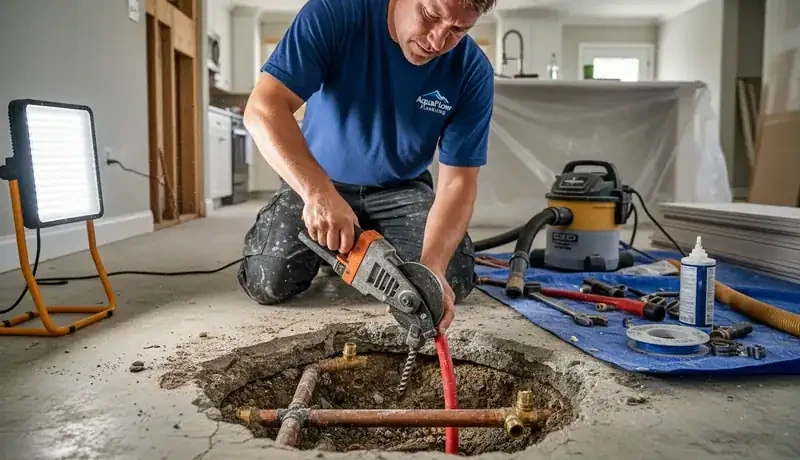
A slab leak is a leak in a water line located under or inside your home's concrete foundation. Hot water lines are often the culprits, because heat and pressure wear fittings out over time. Central Texas soil also swells and shrinks with wet and dry spells, which can stress buried pipes — Kyle's expansive clay soil is particularly hard on underground lines. The result: water escaping into the ground or slab where you cannot see it. If you need Slab Leak Warning Signs, calling early usually saves money compared to waiting.
Slab leaks come in two basic varieties: pressure leaks in the supply lines (the ones that drive your water bill up) and drain-side leaks in the waste lines (the ones that show up as dampness and smells without moving the meter). The signs below cover both, because either one can do real damage if left alone. For more on why Kyle's soil makes this problem so common here, see our guide to slab leaks and clay soil in Kyle. Our Slab Leak Warning Signs process is straightforward and explained in plain language.
1. Warm or hot spots on your floor
Walk barefoot across your ground floor. If a patch of flooring feels noticeably warmer than the area around it — especially over tile or laminate — hot water may be leaking under the slab and warming the concrete from below. This is one of the most telling slab leak clues there is. For Slab Leak Warning Signs, the first step is always understanding your symptoms.
To check properly, compare several rooms and several spots in the same room. A warm patch that stays warm day after day, regardless of sunlight or heating, is the one to take seriously. Note where it is and how large it feels — that location detail matters later. Cold spots can matter too, though they're harder to distinguish from normal slab temperature; the warm, persistent patch is the classic sign. We provide Slab Leak Warning Signs for homes across the Kyle area.
2. The sound of running water when everything is off
Turn off every tap, appliance, and sprinkler zone, then stand quietly in a hallway or bathroom. If you can hear water hissing or running, water is moving through your pipes — and with nothing switched on, it is likely escaping somewhere it should not. Questions about Slab Leak Warning Signs? The sections above cover the most common ones.
The best time for this check is late at night, when the house is silent and you can rule out normal background noise. Press your ear lightly against a ground-floor wall or the floor itself; slab leaks often sound louder through the concrete. If the sound is steady and continuous rather than occasional, that's more consistent with a pressurized supply leak than with normal plumbing settling. Professional Slab Leak Warning Signs helps you avoid guesswork and unnecessary repairs.
3. A water bill that keeps climbing
Compare this month's bill with the same month last year. A steady rise with no change in your household's habits is one of the classic signs of a hidden leak. Our guide to diagnosing a sudden water-bill spike walks through the checks step by step. When it comes to Slab Leak Warning Signs, experience with local homes makes a difference.
A supply-side slab leak flows continuously, so it tends to show up as a month-over-month climb rather than a one-time jump. If your usage is growing while your watering schedule, household size, and habits haven't changed, water is leaving the system somewhere you can't see — and under the slab is one of the places to look. Pair the bill comparison with the 20-minute meter test to confirm before drawing conclusions. Reliable Slab Leak Warning Signs starts with a clear diagnosis, not a sales pitch.
4. Damp spots, musty smells, or buckling floors
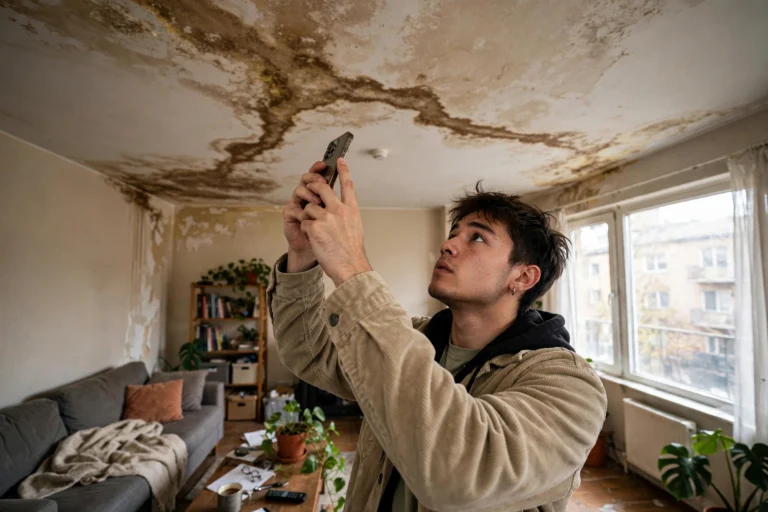
Moisture from a slab leak can work its way up through flooring. Watch for unexplained damp patches on ground-floor floors, a musty smell that cleaning cannot shift, or laminate and wood starting to warp or buckle.
These moisture signs can take weeks to appear, so they're often later-stage clues — which makes them especially worth acting on. Check along baseboards and in closets on exterior walls, where dampness hides longest. A musty smell concentrated in one room, or flooring that cups and warps in a defined area, points to moisture coming from below rather than from a surface spill. If you find active dampness, note the exact spot and its size, and don't cover it up — observations like these help narrow the search later.
5. Cracks in walls or flooring
Fine hairline cracks are a normal part of a house settling. But new or widening cracks — especially ones appearing alongside the other signs on this list — can point to soil movement caused by water escaping under the slab.
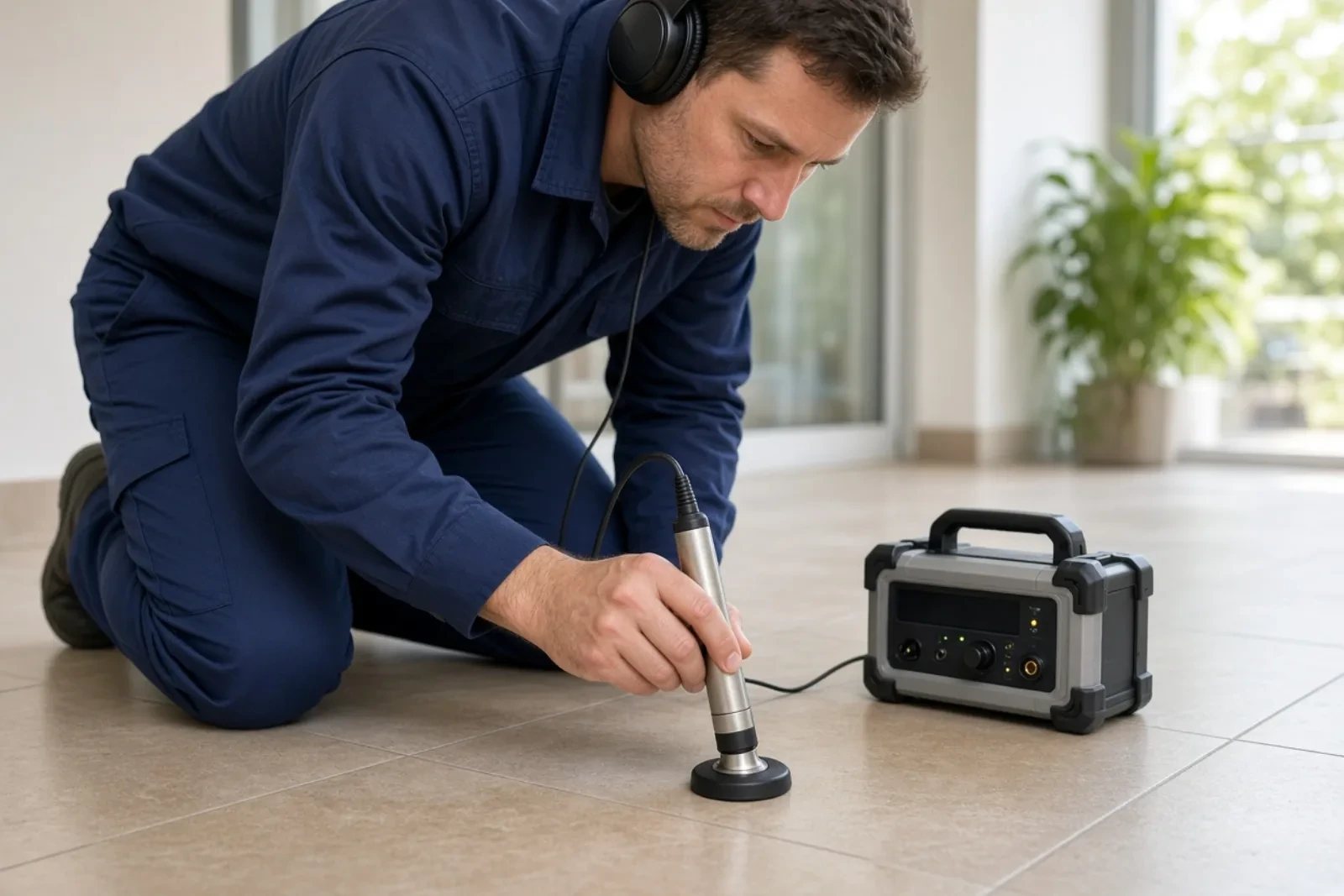
The cracks to watch are the ones that change: a hairline that widens over weeks, a crack that appears suddenly in a previously smooth wall, or tile that cracks in a line across several tiles. A single settling crack with no other symptoms is usually nothing. A new crack plus a climbing water bill, or a new crack plus a warm floor spot, is a pattern — and patterns are what you're looking for.
6. Low water pressure
If showers and taps have lost pressure and there is no obvious reason, water may be escaping from a line before it ever reaches your fixtures.
Before assuming the worst, rule out the simple causes: a partially closed main valve, a clogged aerator, or a pressure regulator that's failing. Check whether the pressure drop affects the whole house or just one fixture — a whole-house drop with no valve explanation fits a supply-line leak, since the water is being diverted before it reaches your taps. If only hot water pressure dropped, that points toward the hot-water side, which is also the side most associated with under-slab leaks.
7. Your water meter will not sit still
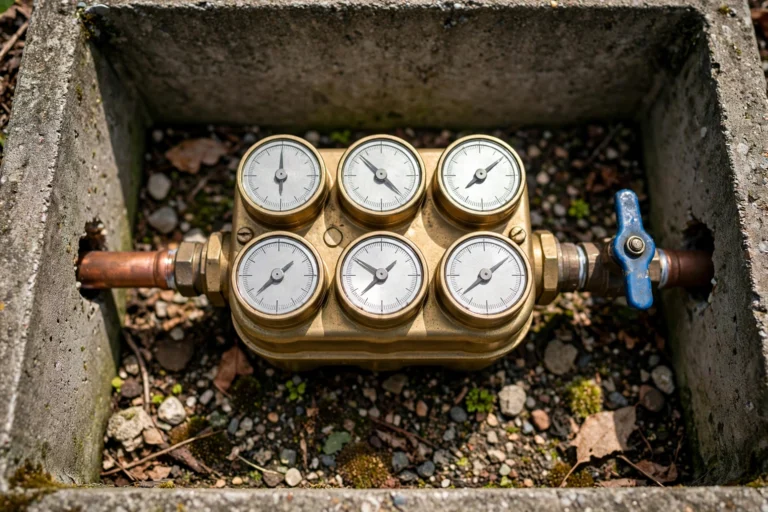
This is the simplest DIY test of all. Turn off everything that uses water, then look at your water meter. If the dial or the low-flow indicator keeps moving, water is flowing somewhere — and you have a leak. It is the same principle behind finding hidden water leaks before they cause real damage.
For a definitive result, run the full test: note the exact reading, wait 15–20 minutes without using any water, and read it again. Any movement at all confirms flow. Just remember that drain-side slab leaks won't move the meter, so a still meter doesn't clear you if the moisture signs above are present — it only rules out a pressurized supply leak.
What to do if you spot these signs
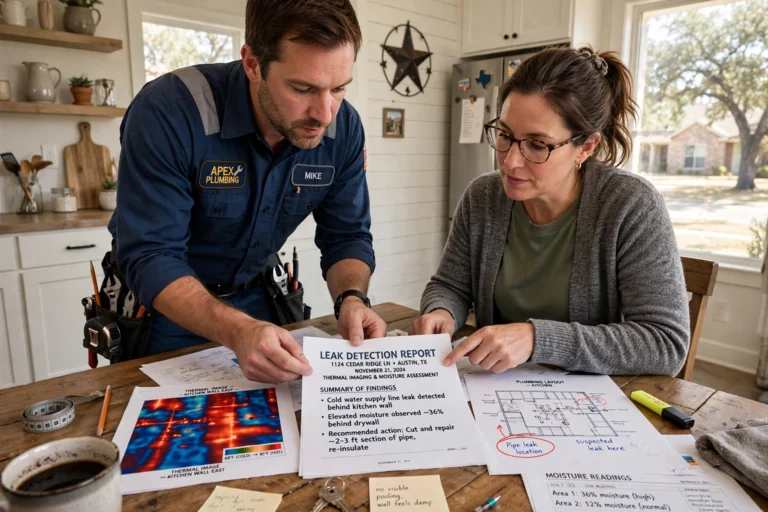
Do not wait and hope it goes away. A slab leak only gets more expensive with time — wasted water, foundation damage, and the risk of mould growth all compound. Write down everything you've observed: which signs you found, where, and when they started. That summary is genuinely useful whether you call a plumber or a detection specialist, because it narrows the search from the first conversation.
Spotted one or more of these signs? Call Kyle Leak Detection Pros at (512) 729-5265 to discuss your situation. Describe what you're seeing, and we'll help you figure out the right next step. If you'd like to understand what a professional assessment involves, read more about slab leak detection in Kyle.
Wondering what a visit involves? See our leak detection cost guide for Kyle for what affects the price of finding a hidden leak.
Can you prevent slab leaks?
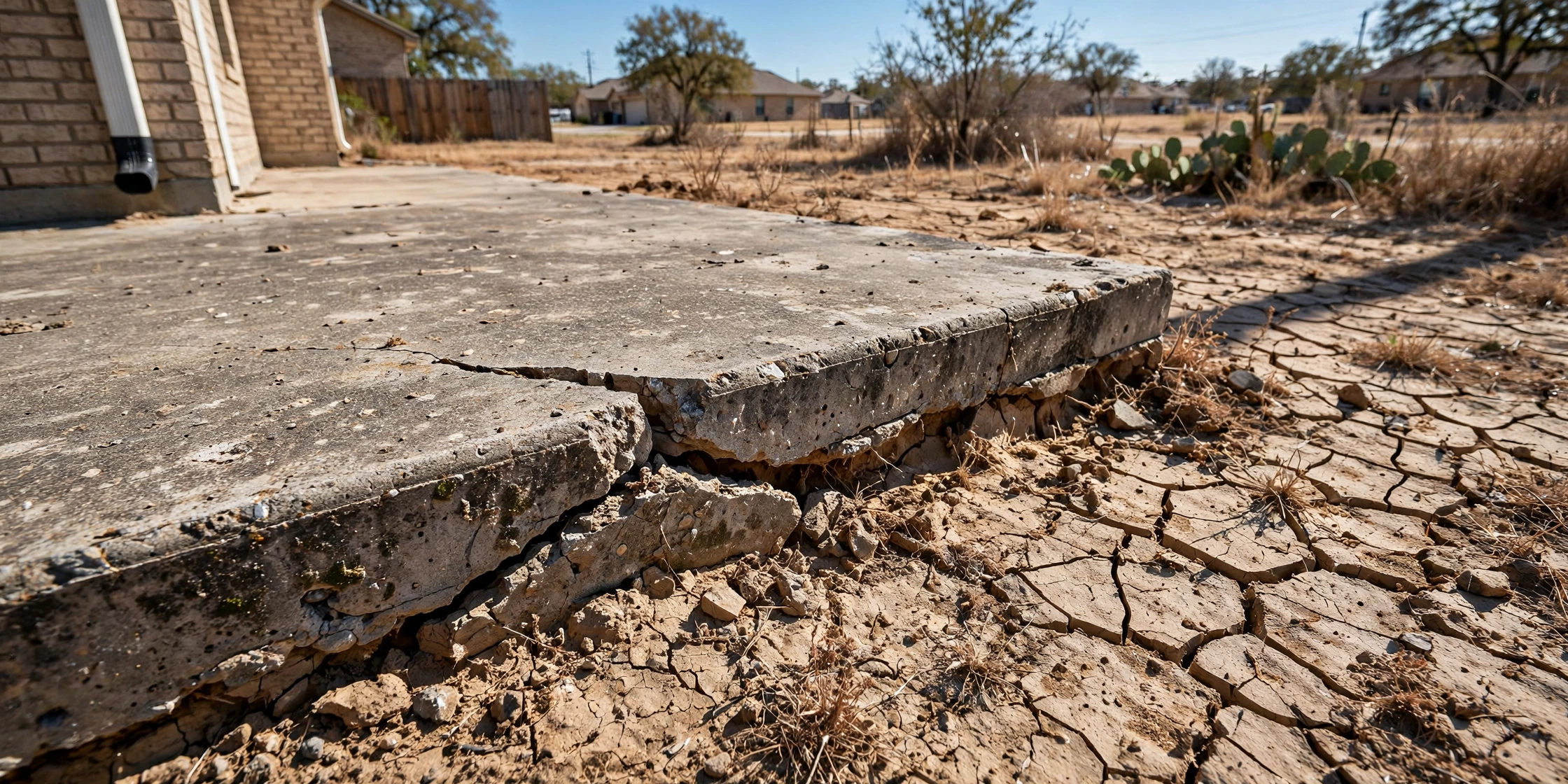
You cannot stop pipes ageing, but you can lower the risk: keep an eye on your home's water pressure, watch how water drains around your foundation after heavy rain, and act quickly on any of the seven signs above. Catching a slab leak early is always cheaper than repairing the damage it causes later.
Two habits make the biggest difference in Kyle. First, manage water around the foundation — gutters and grading should move rain away from the slab, since standing water and saturated soil stress both pipes and the foundation itself. Second, pay attention to your water pressure: chronically high pressure wears fittings faster, so if your fixtures seem unusually forceful, it's worth having the pressure checked. Neither habit prevents every leak, but both push the odds in your favor.
Frequently Asked Questions
What is the most common first sign of a slab leak?
Often it’s a water bill that keeps climbing with no change in household habits — a supply-side slab leak flows continuously, so every gallon registers on the meter. Warm floor spots and the sound of running water with everything off are the other early clues most homeowners notice first.
Can a slab leak damage my foundation?
Over time, yes. Water escaping under the slab can erode or shift the soil supporting the foundation, and that soil movement can show up as new or widening cracks in walls and flooring. That’s why acting on the warning signs early matters — the water damage compounds the longer a leak runs.
Are slab leaks covered by homeowners insurance?
It depends on the policy. Many homeowners policies cover the sudden, accidental water damage a slab leak causes, but not always the cost of finding the leak or repairing the pipe itself. See our guide on whether insurance covers leak detection for the details, and check your own policy’s fine print.
How can I tell a slab leak from an irrigation leak?
The meter test is the divider. A supply-side slab leak keeps the meter moving with the irrigation controller switched fully off; an irrigation leak only moves the meter when the sprinklers run. Slab leaks also tend to show indoor clues — warm floors, running-water sounds, damp spots — that irrigation leaks don’t.
I noticed one of these signs. What should I do first?
Write down exactly what you observed — which sign, where in the house, and when it started — then call (512) 729-5265 to discuss your situation. Don’t wait and hope it goes away: a slab leak only gets more expensive with time, and your notes help narrow the search from the first conversation.