
Tree Roots in Your Sewer Line: Kyle TX Signs, Removal, and Prevention (2026)
Your drains were cleaned six weeks ago. They were fine — and now they’re slow again. The same toilets gurgle. The same backup threatens. You’ve paid for the same cleaning twice, and nobody has explained why the problem keeps coming back. There’s a good chance the answer is underground, and it’s alive: tree roots sewer…
Your drains were cleaned six weeks ago. They were fine — and now they’re slow again. The same toilets gurgle. The same backup threatens. You’ve paid for the same cleaning twice, and nobody has explained why the problem keeps coming back.
There’s a good chance the answer is underground, and it’s alive: tree roots sewer line problems. Roots are the number one cause of sewer line damage in Texas, and they’re the classic explanation for a clog that returns on schedule after every cleaning. This guide explains how roots get in, how to recognize the fingerprint, what actually removes them, and how to keep them out — for Kyle TX homes.
If sewage is backing up right now, don’t wait for a diagnosis article to finish. Call (512) 729-5265 for sewer leak detection in Kyle TX — a camera inspection shows whether roots are your problem in under an hour.
How Roots Get Into a Sealed, Buried Pipe
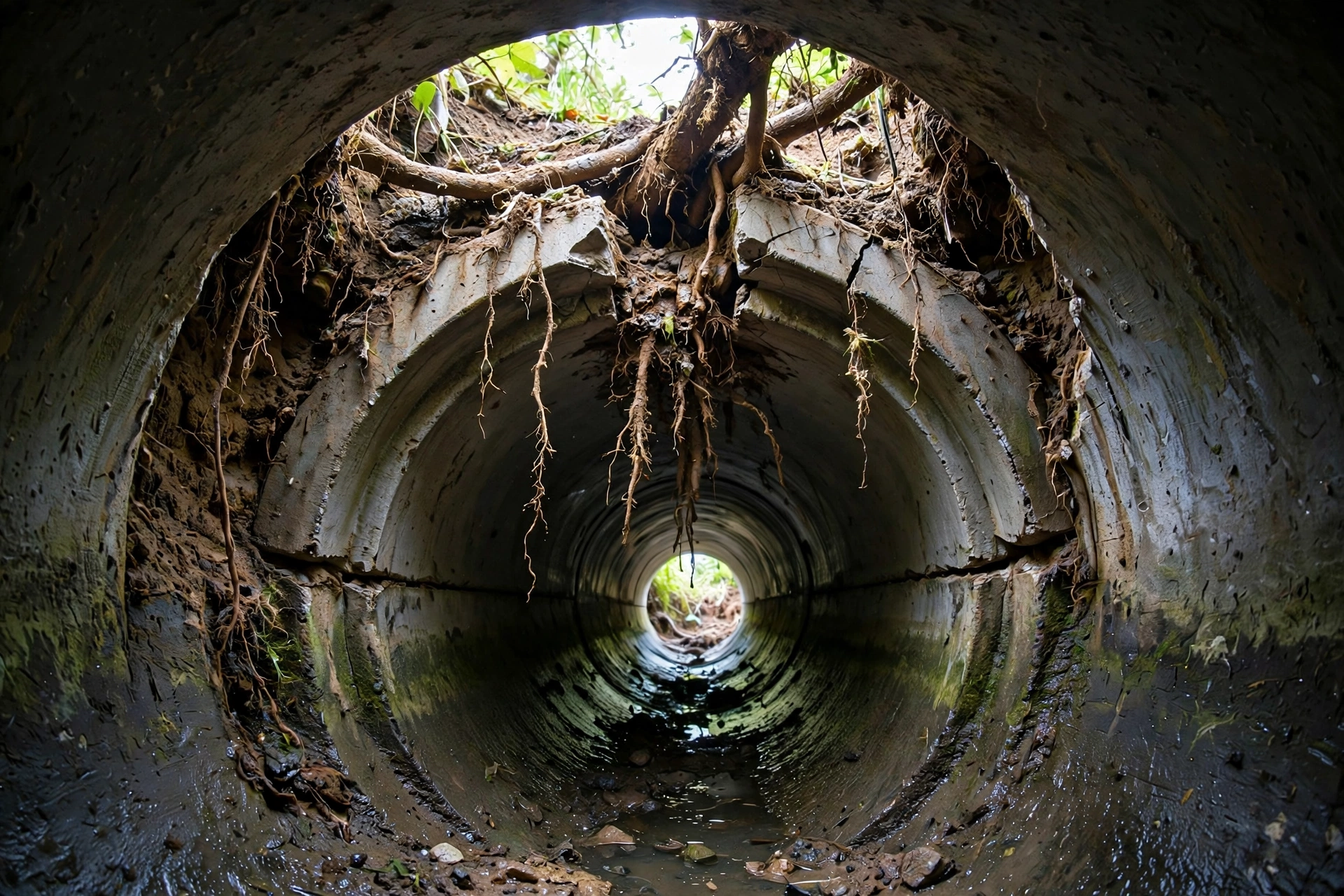
The most common misconception about sewer roots is that they “break into” pipes. They don’t. Roots cannot break into a sound pipe. Here’s what actually happens:
- An opening already exists. A hairline crack, a loose or separated joint, or a connection on an older clay or cast iron line lets a tiny amount of moisture escape into the surrounding soil.
- A root tip finds the moisture. A root tip thinner than a hair follows that moisture gradient to the opening and slips through.
- Inside, conditions are perfect. The pipe offers water and nutrients year-round. The root thickens, branches, and grows into a mass that catches everything flowing past.
- The mass becomes the damage. As roots thicken, they widen the crack or joint they entered through, let in soil, and eventually restrict or crush the pipe section.
This sequence matters because it decides the fix: clearing the roots without closing the opening guarantees their return. Any lasting solution addresses both the mass and the entry point.
The Recurring-Clog Fingerprint: How You Know It’s Roots
Roots have a distinctive pattern. One or two of these signs might be coincidence; the pattern together is diagnostic:
- The problem returns on a schedule. Drains cleared, then slow again in weeks or a few months — the same fixtures, the same symptoms. Local clogs don’t recur like clockwork; root masses do, because cleaning cuts them back without removing the cause.
- Multiple fixtures misbehave at once. Several slow drains, gurgling toilets, and backups that affect the whole house point to the main line. A single slow fixture is usually a local clog — see sewer line leak warning signs for the full whole-house vs single-fixture distinction.
- Gurgling that follows a pattern. Toilets gurgling when the washing machine drains, or a tub gurgling when a toilet flushes, suggest air trapped by a partial main-line blockage — roots are a prime suspect.
- Sewage odor in the yard. Roots widen openings that leak wastewater into the soil; the smell, especially after rain when moist soil traps it, is a tell.
- A lush or soggy strip in the lawn. Wastewater leaking from a root-damaged line feeds the grass above it, producing a greener strip that follows the line’s path.
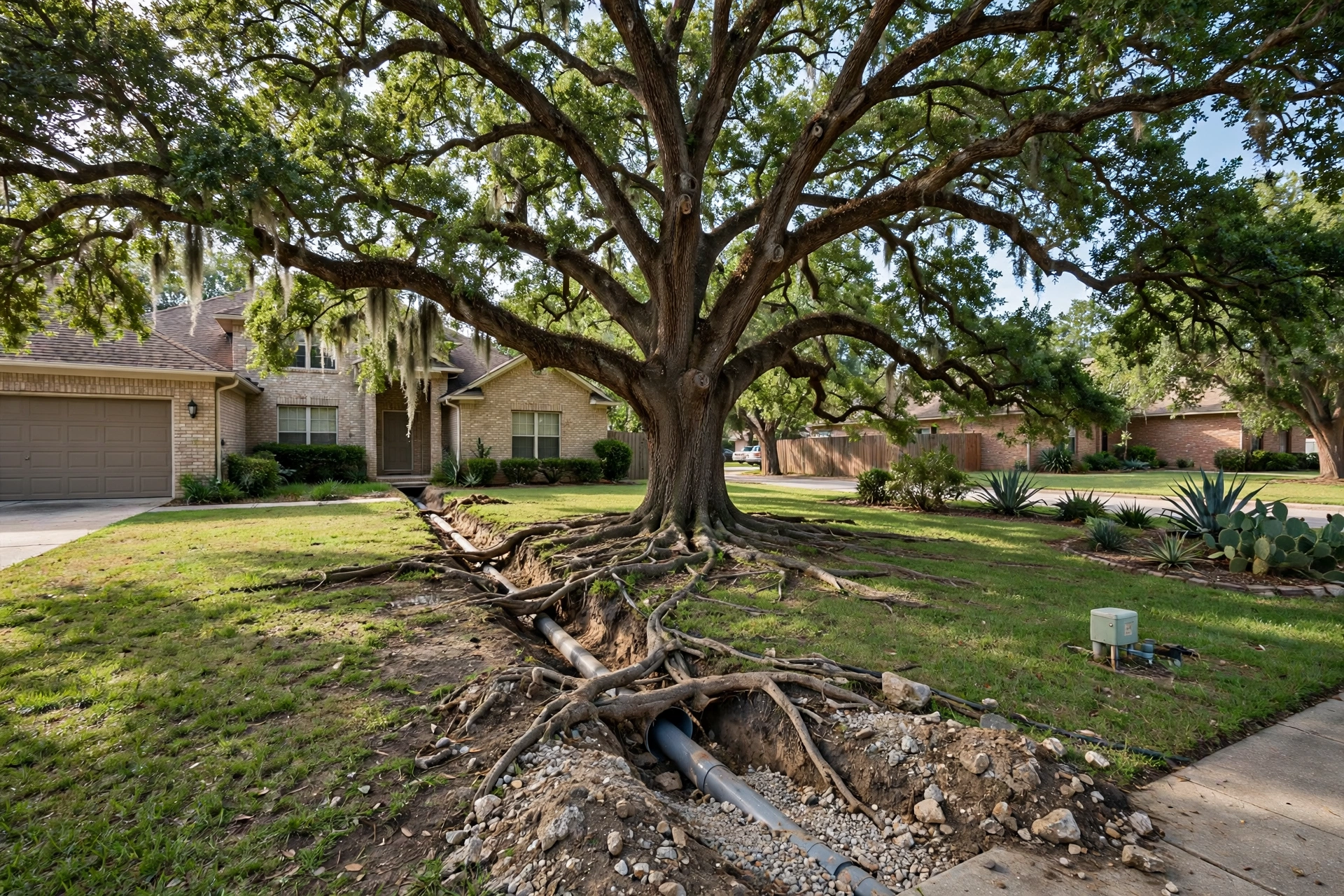
- Mature trees near the line. Oaks, pines, and other large trees near the lateral’s path to the street are the usual suspects. If your home has mature trees and recurring main-line symptoms, roots should be the first hypothesis, not the last.
The definitive confirmation is a camera inspection: roots on camera are unmistakable — fibrous masses filling the pipe, usually at a joint or crack. If you’ve had two or more repeat cleanings without a camera, you’ve paid for the symptom twice while the cause stayed put.
What Actually Removes Roots (and What Doesn’t)
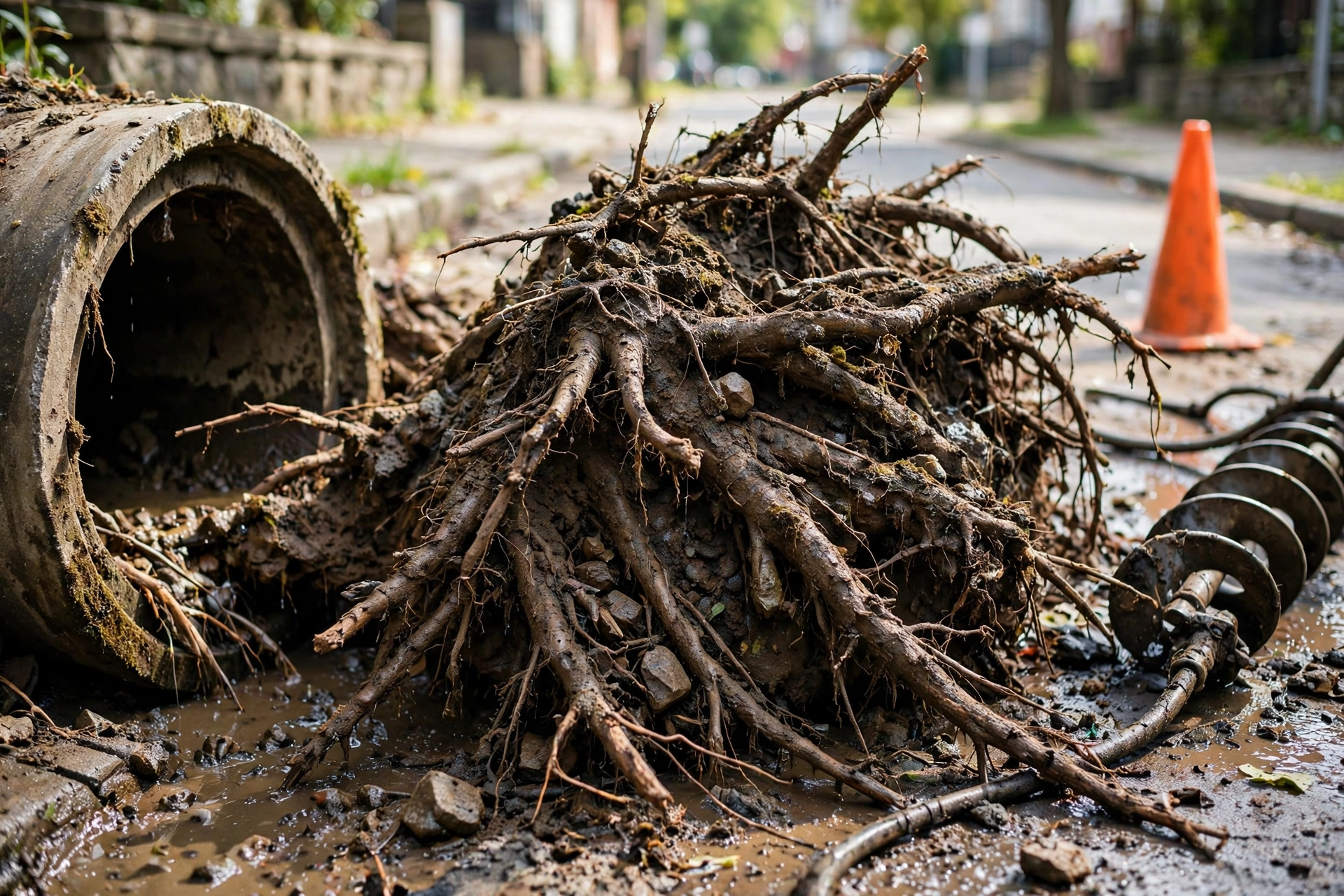
Mechanical removal — the real first step. A root-cutting auger or hydro-jetting clears the mass from the pipe. Borrowed Houston ranges put hydro-jet root removal at roughly $350–$1,400. Jetting is generally more thorough than a cutting auger: it scours the pipe walls rather than just punching a hole through the mass. Either way, mechanical removal is necessary — but on its own, it’s temporary, because the opening remains.
Chemical root killer — useful, but limited. Copper sulfate or foaming root treatments can slow regrowth after mechanical removal. What they cannot do: remove an existing root mass, or close the crack or joint the roots entered through. A chemical treatment sold as a standalone cure for a root blockage is a recurring expense disguised as a fix. Use chemicals, if at all, as maintenance after the structural fix — not instead of it.
The lasting fixes, by severity:
- One intrusion point in an otherwise sound pipe → spot repair. Excavate and replace that section, closing the entry for good.
- Multiple intrusion points or a damaged-but-intact pipe → pipe lining. After roots are cleared, a cured-in-place liner seals every joint and crack along the lined section, removing all entry points at once.
- Roots at many joints, collapsed sections, or end-of-life pipe → replacement. When the pipe is failing broadly, replacement (trenchless bursting or traditional dig) is cheaper than a cycle of spot repairs.
- A healthy pipe with nearby trees → scheduled camera checks. A camera inspection every 1–2 years catches intrusion while it’s still a cleaning job rather than a repair.
The pattern to avoid: paying for cleaning after cleaning while the pipe quietly worsens. If your line has needed root clearing more than twice, the next dollar should go to a camera inspection, not a third cleaning.
Prevention That Actually Works
Know where your line runs. The lateral runs from your house to the street main. Before planting, know that path — your cleanout location is a good clue to its starting direction. The single most effective prevention is not planting large, thirsty trees directly over or beside the line.
Choose and place trees with the line in mind. Oaks, willows, and other vigorous species have the most aggressive root systems. If you’re landscaping, keep large trees well away from the lateral’s path, and favor smaller species near it. For existing trees, this advice is about the next planting, not about removing a healthy mature tree — removal is rarely necessary when the pipe itself is sound and monitored.
Camera on a schedule, not on a crisis. For homes with mature trees near the line, a camera inspection every 1–2 years is the cheapest insurance in sewer work: it catches intrusion at the cleaning stage, before it becomes a repair stage. Older clay and cast iron lines deserve the closest watch, since their joints are the most inviting entry points.
Don’t ignore the early signs. A single gurgling toilet or one slow drain isn’t an emergency — but when whole-house symptoms appear, act on the first occurrence rather than the third. Early root intrusion is a cleaning and a liner; late root intrusion is a replacement.
Be careful with “root-proof” claims. No chemical, additive, or flushable product makes a cracked pipe root-proof. The only root-proofing is a sound, sealed pipe — achieved by repair, lining, or replacement, and verified by camera.
Roots and Your Slab: A Note for Kyle Homes
Sewer lines run under slabs in many Kyle homes, and root damage under a slab raises the stakes: a leaking section under the foundation erodes soil and can contribute to movement over time. If root symptoms coincide with new cracks, sticking doors, or other foundation signs, mention both to your technician — the sewer diagnosis and the foundation picture belong together. For the slab-specific test method, see how a hydrostatic pressure test finds sewer leaks under your slab.
Frequently Asked Questions
How do I know if tree roots are causing my sewer problem?
The fingerprint: recurring clogs on a schedule after cleanings, multiple fixtures affected at once, gurgling toilets, yard sewage odor, and mature trees near the line. A camera inspection confirms it definitively — roots on camera are unmistakable.
Can chemical root killer fix roots in my sewer line?
No, not on its own. Chemicals can slow regrowth after mechanical removal, but they don’t remove an existing root mass and they don’t close the crack or joint the roots entered through. The opening remains, so the roots return.
Will removing the roots mean replacing the whole sewer line?
Not always. One intrusion point in a sound pipe can be spot-repaired. Multiple intrusion points may call for lining, and widespread failure calls for replacement. The camera findings decide — which is why a camera inspection should come before the repair decision.
How often should a sewer line near trees be camera-inspected?
Every 1–2 years is the commonly recommended cadence for lines with mature trees nearby (borrowed Texas guidance). That schedule catches intrusion while it’s still a cleaning job rather than a repair.
Should I cut down a tree that’s invading my sewer line?
Usually not necessary. If the pipe is repaired or lined so the entry points are sealed, the tree and the line can coexist. Removal makes sense only when the tree is causing repeated structural failure that repair can’t economically solve — a rare situation. Fix the pipe first; judge the tree after.
Stop Paying for the Same Clog
Tree roots sewer line problems are solvable — but only when the solution matches the cause. Clearing the mass without closing the opening is a substitution, not a fix. A camera inspection tells you which one you actually need: a cleaning, a spot repair, a liner, or a replacement.
Call Kyle Leak Detection Pros at (512) 729-5265 for sewer leak detection in Kyle TX — camera inspection, yard locate, and a written report, so the next dollar you spend on your sewer line goes to the fix, not another repeat cleaning.