
Irrigation Leak Signs in Kyle, TX: Sprinkler Warning Signs
Your irrigation system does its job quietly — usually in the early hours while you are asleep. That also means a leak in a sprinkler line can run for weeks before anyone notices. In Kyle, where lawns need steady watering through the long hot season, an underground irrigation leak can waste a great deal of…
Your irrigation system does its job quietly — usually in the early hours while you are asleep. That also means a leak in a sprinkler line can run for weeks before anyone notices. In Kyle, where lawns need steady watering through the long hot season, an underground irrigation leak can waste a great deal of water and quietly damage your landscape, your soil, or even the ground near your foundation. Learning the irrigation leak signs below helps you catch the problem early, while it is still a simple fix. EPA WaterSense
Irrigation Leak Signs: 1. Soggy or mushy patches in the lawn
One area of the yard stays wet and spongy long after the sprinklers have finished — or even on days the system did not run. That is water collecting underground where a line or fitting has broken. Press your foot into the suspicious spot: if it squishes while the rest of the lawn is firm, water is pooling below the surface. Mark the spot — it is usually close to the break. Many homeowners searching for Irrigation Leak Signs start by checking the signs listed above.
2. Parts of the lawn are suspiciously greener
A patch of grass growing faster and greener than everything around it is getting extra water from somewhere. An underground leak fertilises by accident, and the lawn shows you exactly where. This is one of the most reliable irrigation leak signs because it persists for weeks: the leak keeps feeding that patch on every watering cycle, so the contrast with the rest of the lawn only grows.
3. Low pressure in one zone
If one sprinkler zone produces weak, dribbling heads while the other zones run fine, water is escaping from that zone's line before it reaches the heads. The key detail is that the other zones still work normally — that rules out a supply problem and points to a break or a partially closed valve in the weak zone's own line. Note which zone is affected; that information narrows the search considerably. If you need Irrigation Leak Signs, calling early usually saves money compared to waiting.
4. Geysers and misting heads
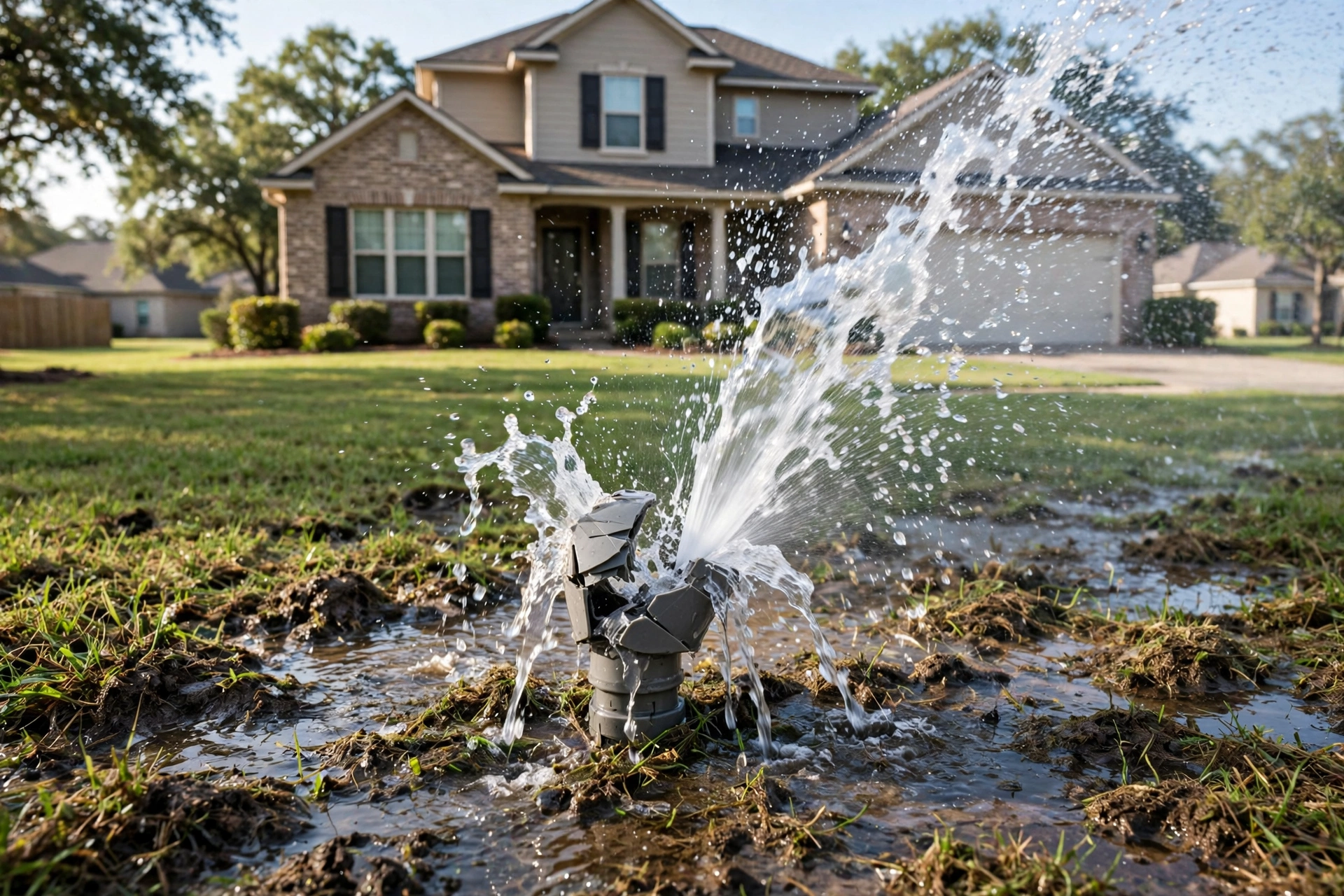
These are the visible ones: a broken head shooting water straight up, or a head spraying a fine mist instead of a clean stream. Walk each zone while it runs and watch every head — this simple check catches a surprising number of leaks. Also watch for heads that fail to pop up at all, heads spraying the sidewalk instead of the lawn, and heads that rotate weakly or not at all. Any of these can mean a damaged head or a pressure problem upstream. Our Irrigation Leak Signs process is straightforward and explained in plain language.
5. Water pooling near valve boxes
Lift the lids on your valve boxes every so often. Standing water inside a valve box, or soggy ground around it, usually means a valve or fitting is leaking. Valve boxes are common failure points because they hold the system's most complex fittings — diaphragms, solenoids, and threaded connections — in one small space. If a box is full of mud and water while the others are dry, you have found your suspect. For Irrigation Leak Signs, the first step is always understanding your symptoms.
6. Your water bill jumped
Irrigation is often the biggest water user in a Kyle home, so a leak here shows up fast on the bill. If your usage spiked without an obvious cause, run through our high water bill leak diagnosis guide before you assume it is just a hot month. Compare the bill against the same month last year, not just last month — seasonal watering changes can mask a leak that a year-over-year comparison reveals. We provide Irrigation Leak Signs for homes across the Kyle area.
7. The meter test
Switch off the irrigation controller and everything else that uses water, then watch your water meter. If it is still moving, water is flowing somewhere — and with the sprinklers off, that points to a supply-side leak. It is the same check at the heart of hidden water leak detection. For a more targeted version, note the meter reading, run one zone for its normal cycle, then check the reading again with the system off — a zone that uses far more water than its size should is the one to investigate.
What causes irrigation leaks in Kyle
Understanding why leaks start helps you prevent the next one:
- Mower and trimmer damage — the most common cause. String trimmers nick exposed heads and risers; mowers clip heads that sit too high. Damaged heads then spray sideways or leak at the base.
- Soil movement — Kyle's expansive clay soil swells and shrinks with moisture changes, shifting buried lines and stressing glued joints until they crack.
- Tree and shrub roots — roots seek out the moisture around drip lines and fittings and can crush or penetrate older pipe.
- Age and wear — seals, diaphragms, and threaded fittings degrade over years of pressure cycles and Texas heat.
- Hard-freeze cracks — a Central Texas hard freeze can crack backflow assemblies, above-ground fittings, and shallow pipe. After any freeze, walk the system before the next watering cycle. See our freeze protection guide for what to check.
How to isolate which zone is leaking
If you suspect a leak but cannot see it, work zone by zone. Run each zone manually for a few minutes while you walk the whole line, watching for geysers, misting, ponding, and heads that fail to pop up. Check the valve boxes for standing water. Then compare zones: the zone with the soggy patch, the weak pressure, or the greener grass is your problem zone. Write down exactly which zone it is and what you observed — a technician can go straight to that zone instead of testing the whole system.
A quick DIY check before you call
Run each zone manually for a few minutes and walk the whole line. Look for geysers, misting, ponding, and heads that fail to pop up. Check the valve boxes for standing water. Make a note of which zone shows the problem — that information helps a technician zero in much faster.
Why irrigation leaks get expensive fast
A small underground leak runs every time the system does — and through a Kyle summer, that is often. A single broken lateral line can soak the same patch of ground on every watering cycle for an entire season, and most homeowners only realise when the bill arrives or the lawn dies back. Beyond the water bill, constant saturation can kill grass and plants, erode soil along the foundation, and contribute to foundation movement over time. Fixing the line early is almost always cheaper than repairing what the water damages.
When to call Kyle Leak Detection Pros
A visibly broken head is easy to spot yourself — but underground line leaks, valve leaks, and pressure problems need a professional to pinpoint. Call Kyle Leak Detection Pros at (512) 729-5265 to discuss your situation and for irrigation leak detection in Kyle, and see our cost guide for what a detection visit involves.
Frequently Asked Questions
Why is one sprinkler zone weaker than the others?
When a single zone has weak, dribbling heads while the rest run fine, water is escaping from that zone’s line before it reaches the heads — or a valve is only partially opening. Walk that zone while it runs and check the valve box for standing water; the problem is usually in that zone’s own pipe or valve.
Can a leaking sprinkler line damage my foundation?
Yes, over time. Constant saturation from an underground leak can erode soil along the foundation and contribute to foundation movement, especially in Kyle’s expansive clay soil. That is why catching irrigation leak signs early matters — the water bill is only part of the cost.
How do I check my irrigation system for leaks myself?
Run each zone manually for a few minutes and walk the whole line, watching for geysers, misting heads, ponding, and heads that fail to pop up. Lift valve box lids to check for standing water, and compare your water meter reading with the system off versus after a zone runs. Note which zone shows the problem before you call.
Does a broken sprinkler head always mean a big water bill?
Not always — a head that sprays the wrong direction wastes water but is cheap to fix once spotted. The expensive leaks are the hidden ones: cracked lateral lines and leaking valves that run underground every cycle for weeks or months. If your bill jumped, work through the high water bill guide to find the real cause.
Can freezing weather damage irrigation lines in Kyle?
Yes. A hard Central Texas freeze can crack backflow assemblies, above-ground fittings, and shallow pipe. After any freeze, walk each zone before the next watering cycle and look for geysers, cracked fittings, and soggy spots. Our freeze protection guide covers the full before-and-after checklist.