
Pool Skimmer Leak in Kyle TX: Signs, Causes and Fixes (2026)
If your pool water keeps dropping and then stops at the skimmer mouth, you may have a pool skimmer leak. That drops-and-stops pattern is a strong diagnostic clue. It points to one part of the pool, not a vague problem everywhere. If your Kyle pool level keeps settling at the skimmer line, or the skimmer…
If your pool water keeps dropping and then stops at the skimmer mouth, you may have a pool skimmer leak. That drops-and-stops pattern is a strong diagnostic clue. It points to one part of the pool, not a vague problem everywhere.
If your Kyle pool level keeps settling at the skimmer line, or the skimmer area looks cracked, call (512) 729-5265 to book pool leak detection. A confirmed skimmer-area leak is not a wait-and-see problem. For full signs and bucket-test detail, see our seed post on pool leak signs.
What a Pool Skimmer Does — and Why It Leaks
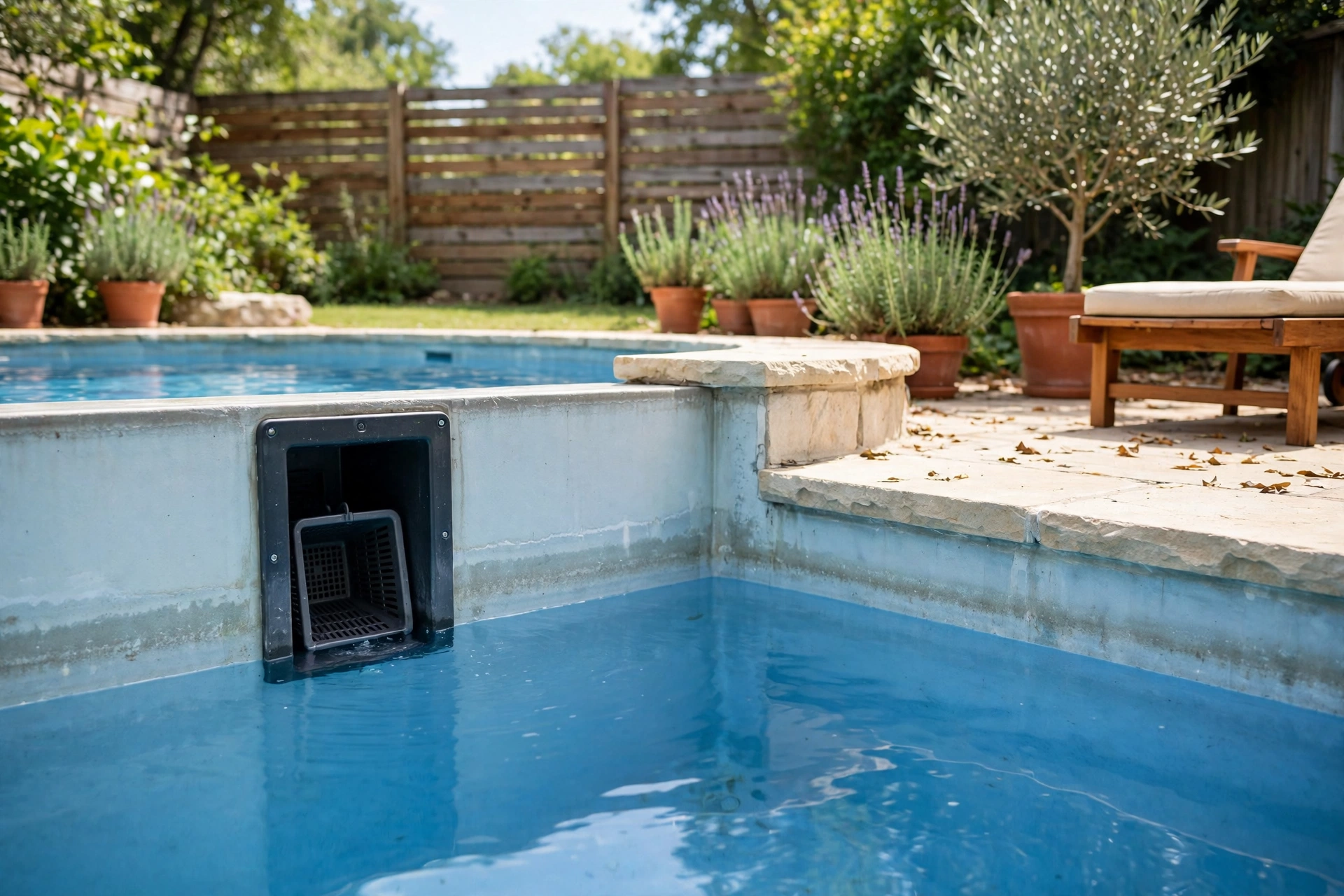
A skimmer is the rectangular opening in the pool wall near the waterline. It pulls surface water into the filtration system. Debris floats in, a weir door traps it in the basket, and the pump sends water to the filter and back.
The housing, or skimmer body, sits in the pool wall. A faceplate and gasket seal it to the wall, the throat links the mouth to the basket, and pipes behind it run to the pump. Age, sun, chemicals, freeze-and-thaw cycles, and ground movement stress these parts. In Texas generally, expansive clay soils swell when wet and shrink when dry, driving ground movement around pools. That is a general Texas factor, not a claim about any specific Kyle property.
The Classic Signature: Water Drops, Then Stops at the Skimmer Line
The signature most homeowners notice first is simple. The level falls day after day, then stops. It does not keep falling toward the pool floor. It settles at or just below the skimmer mouth and stays there.
That pattern makes sense once you picture the leak. While the level is above the leak point, water escapes through the crack or failed seal. Once the level drops below that point, no water presses against the opening, so loss slows or stops. The leak has not healed. It is simply out of the water, and refilling usually restarts the cycle. That stop-at-the-line behaviour is the clearest early sign of a pool skimmer leak.
Skimmer Housing Cracks
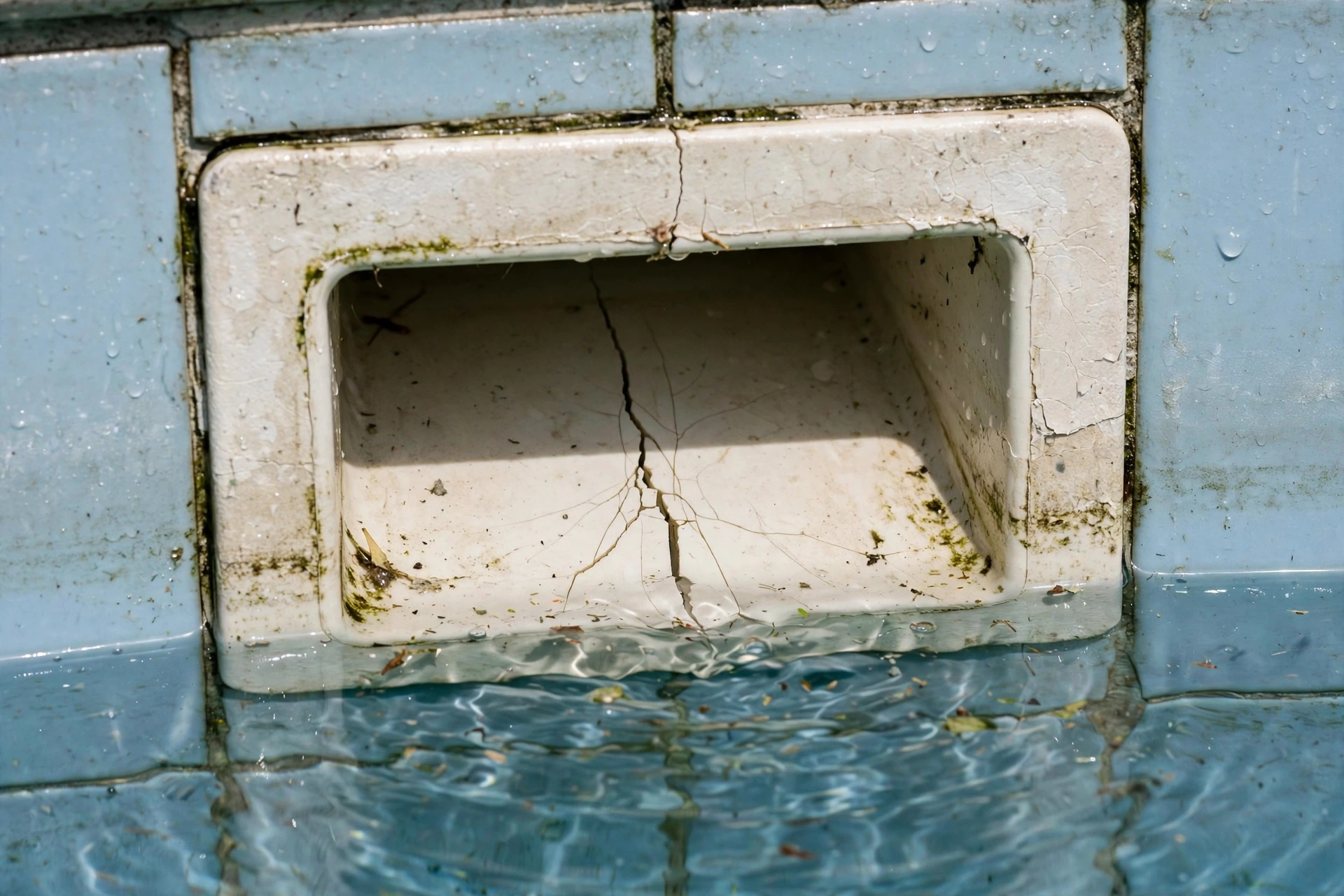
The housing is a rigid body set into the pool wall and deck. It can crack around the mouth, the corners, and the wall joint. Hairline cracks are easy to miss under water or with the basket in place. Larger cracks may show as lines, discoloration, or a rough edge felt by fingertip.
Cracks let water escape behind the pool wall. There it can wash out supporting material or keep soil wet. That hidden loss matters even when the pool still looks usable. You may see no puddle, since water goes into the ground, not onto the deck. A loose basket or sticking weir door, by contrast, hurts circulation but does not drain the pool alone.
The Faceplate Seal: Where the Skimmer Meets the Pool Wall
The faceplate is the frame around the skimmer mouth inside the pool. Behind it, a gasket seals the housing to the pool surface. When that gasket ages, compresses, shifts, or deteriorates, water can slip past the faceplate and behind the wall. The faceplate itself may still look intact.
Signs include loss tracking the skimmer level and dampness or staining near the skimmer outside the wall. A faceplate that moves when pressed gently is another clue. Screws can loosen, the plate can warp slightly, or the gasket can harden and shrink. In vinyl-liner pools, a wrinkle, tear, or poor seating near the opening can also let water through. Faceplate work needs care, since overtightening can crack the plate. Any of those signs, on their own, should raise a pool skimmer leak as the working theory, not a guess.
The Skimmer Throat and Other Skimmer-Area Paths
The throat is the short passage from the mouth to the basket chamber. It is narrower, recessed, and often shadowed, so cracks there are harder to see than cracks at the mouth. Yet they leak the same way, sending water behind the wall.
Plumbing joints behind the skimmer are another path. The pipe to the pump can leak at a joint, especially after ground movement stresses it. Such a leak may not show a clean level-stop pattern. Water can keep escaping below the mouth, depending on where the break sits. The weir door is often blamed first, but it is not a leak source, since its small flap does not hold back the pool.
How the Level-Stop Clue Isolates the Leak
The level-stop clue works by elimination. Water can only leak from a point under water. If the level falls to a line and holds, the leak is at or just above that line.
Use the clue carefully. Mark the level with the date and time, then recheck after 24 hours without adding water, backwashing, or heavy splash-out. If it drops and then holds at the skimmer mouth repeatedly, the skimmer is the prime suspect. If it keeps falling past the skimmer, the leak is lower, such as a light, return, drain, or plumbing run. Evaporation complicates this, especially in hot, windy weather. A bucket test helps: a bucket on a step loses water only to evaporation, while the pool loses evaporation plus any leak. That is the short version only; for full steps, see our pool leak signs post. A repeated stop at the same line is what turns suspicion into a confirmed pool skimmer leak pattern.
Dye Testing: How a Pro Confirms a Skimmer Leak
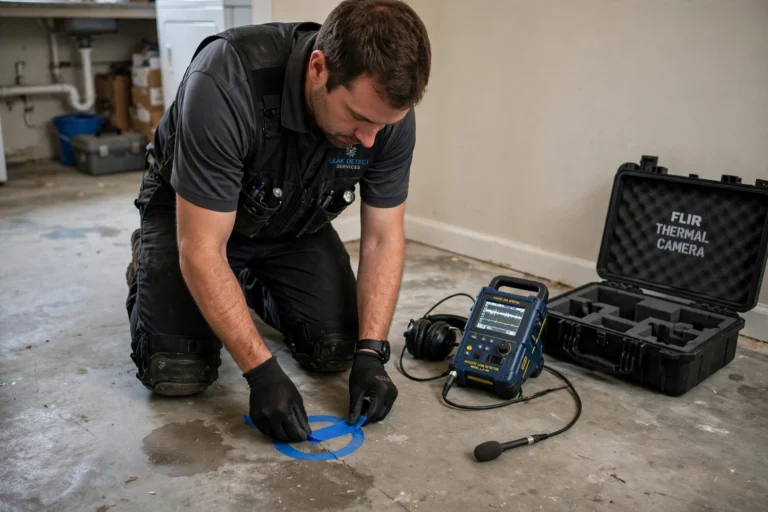
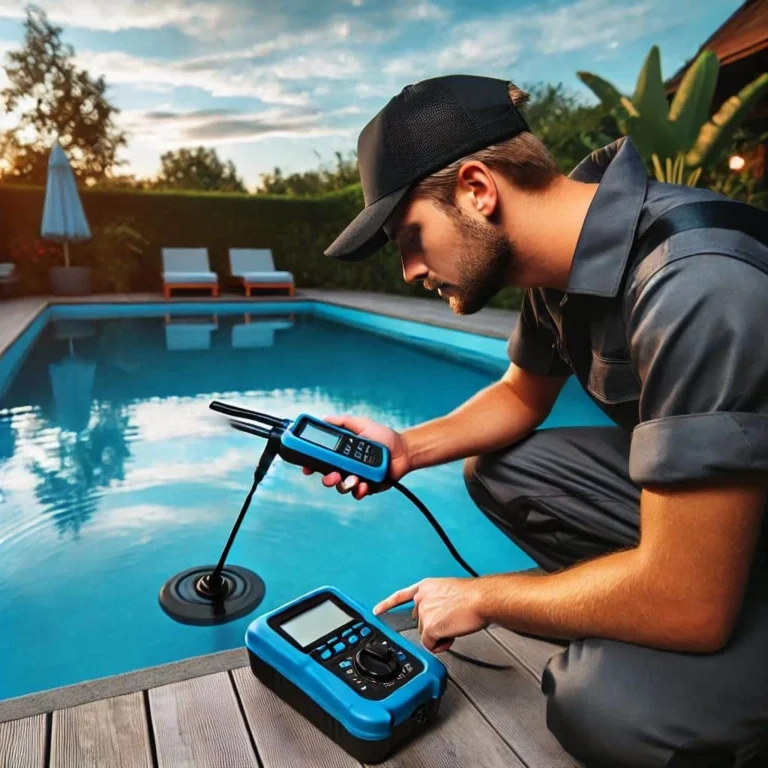
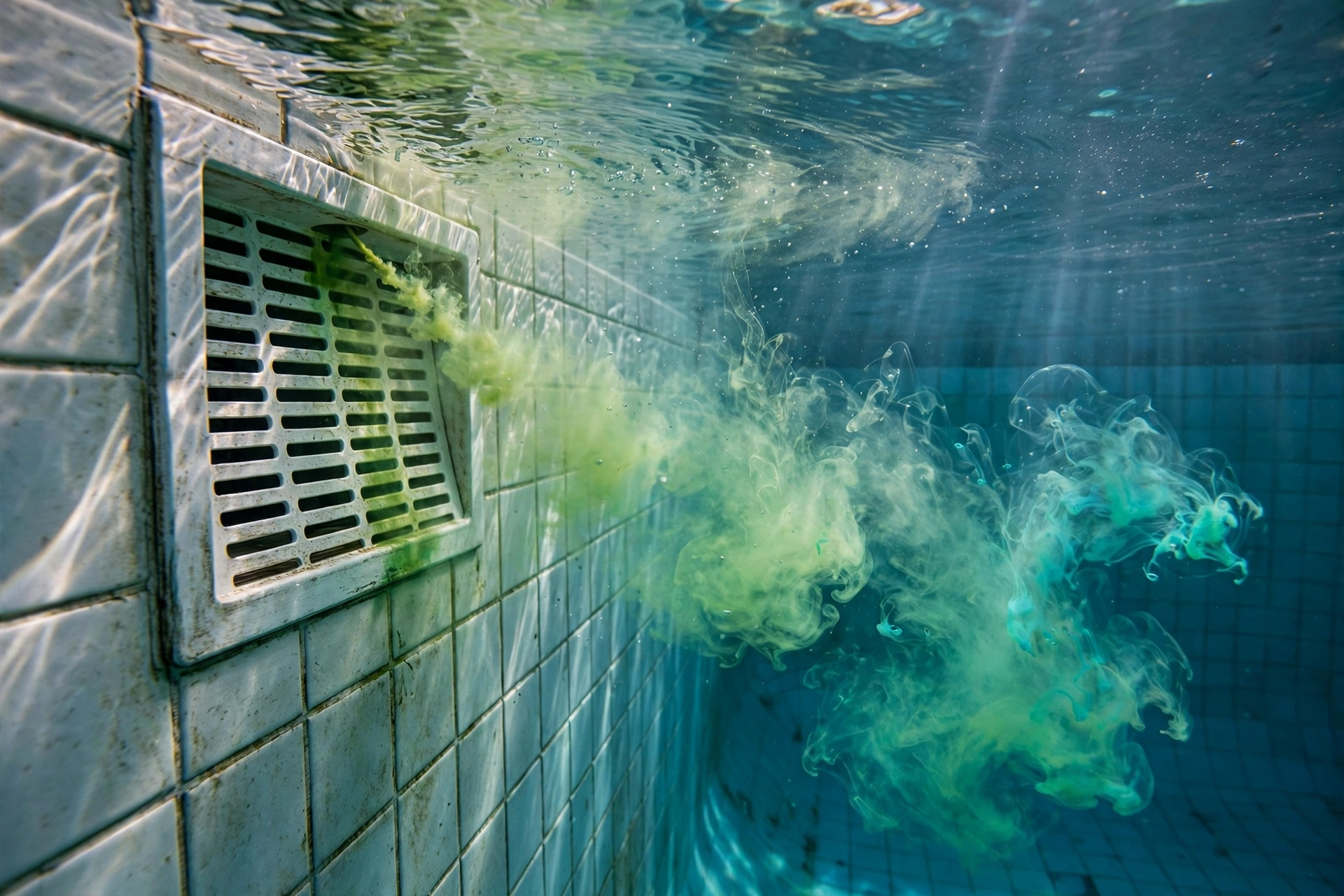
Dye testing confirms a suspected leak without guessing. With the pump off and water still, dye is released near a suspected crack or seal. If water leaks through that spot, dye is pulled toward it and into the opening. If there is no leak there, dye drifts or hangs in place.
Still water matters. A running pump pushes dye around and masks a small leak’s pull. Recent swimming or wind stirring the surface also makes the test unreliable. A careful tester waits for calm water, releases dye close to — not directly into — the suspect spot, and watches patiently. A strong, steady pull into a crack or along a faceplate edge is a clear positive. Dye is checked at the faceplate, throat, and housing corners in turn, so the exact point is found, not just the general area. For a homeowner-friendly walkthrough of the same dye-test method, see Angi’s guide to finding a leak in a pool.
What You Can Check Yourself vs What Needs a Pro
You can safely check the visible parts. With the pump off, lift the lid and basket and inspect the housing for cracks, discoloration, or packed debris. Check the faceplate for loose or missing screws, warping, or edge gaps. Note where the level stops, log readings over a few days, and photograph anything cracked.
Do not seal a suspected crack with caulk as a permanent fix, force a stuck faceplate, or dig around the skimmer from the deck. Sealants can mask the leak point, hinder dye testing, and trap water behind the wall. Digging near buried plumbing without knowing the layout risks breaking an intact pipe. Draining the pool significantly, removing a liner-pool faceplate, or opening skimmer plumbing should wait for a professional. For a complete visit, see our pool leak detection service page.
Why a Skimmer-Isolated Leak Is Ready to Book, Not Wait-and-See
Once the level-stop pattern and a visual or dye check point to the skimmer, waiting rarely helps. The crack or seal gap does not close on its own. Every refill cycle sends more water behind the wall. Over time, that water can erode supporting material, saturate soil, and widen the gap, turning a small seal failure into a larger repair.
A pool repeatedly topped off to the skimmer line also uses extra water. The owner pays for that water whether the pool is used much or not. In the off-season, when a pool may sit unused for weeks, a slow leak can go unnoticed longer. That is exactly why a confirmed pattern deserves a booking, not a note to recheck in spring. Booking means confirming and scoping the leak first, so you learn whether the fix is a gasket, a crack repair, or something larger.
What Pool Leak Repairs Can Cost: Borrowed Ranges Only
No Kyle-specific skimmer repair price is published or verified for this guide. No skimmer-specific repair price is offered here either. Scope varies too much — a gasket is not a housing replacement — for one honest number.
As a borrowed general reference only, pool leak repairs are reported at $150–$5,000 by severity and location (lonestarpoolcleaning.com). That range covers very different jobs, from minor seal work to major structural or plumbing repairs. Read it as broad context, not a skimmer repair quote. Your exact price is confirmed on the call, once the leak point and scope are known. For detection first, borrowed ranges may help planning: Tyler TX detection is reported at $300–$550, and Texas generally at $250–$400. These are borrowed figures from other markets, not Kyle prices.
Closing: Do Not Let the Level Keep Telling the Same Story
A pool skimmer leak announces itself distinctively: water drops, then stops at the skimmer mouth. Behind that pattern may sit a cracked housing, a failed faceplate seal, a throat separation, or a stressed plumbing joint. Only a careful check, including dye testing with the pump off and water still, separates one from another. If your level keeps settling at the skimmer line, or you see cracking around the skimmer, do not just keep topping it off. Call (512) 729-5265 to book pool leak detection and get the skimmer confirmed or cleared, so any repair fixes the right thing first. Book the check and let a dye test confirm the pool skimmer leak before any repair is chosen.
Frequently Asked Questions
How do I know if I have a pool skimmer leak?
The strongest home clue is a level that drops, stops at or just below the skimmer mouth, and falls again after refilling. Visible housing cracks or a loose faceplate add weight, but dye testing confirms the leak point.
Can a pool skimmer leak be fixed without replacing the whole skimmer?
Sometimes. A failed faceplate gasket can often be replaced, and some small housing cracks can be repaired, while a badly cracked housing may need replacement. Dye testing should confirm the exact point first.
Does a dropping water level always mean a pool skimmer leak?
No. Evaporation, splash-out, backwashing, and leaks at lights, returns, drains, or plumbing can all lower the level. The skimmer is the prime suspect when the level consistently stops at the skimmer line rather than continuing past it.
Is it safe to keep swimming if my pool has a skimmer leak?
A small leak does not automatically make the pool unsafe, but a low level can starve the pump, and hidden water loss can worsen damage. Keep the level up and get it checked.
How long should I wait before booking leak detection for a suspected skimmer leak?
Do not wait for a season change. Once the level-stop pattern repeats, or cracking is visible, book so the repair stays scoped to the actual failure point.