

Apartment Leak Detection in Kyle TX: Finding Unit-to-Unit Leaks Fast (2026)
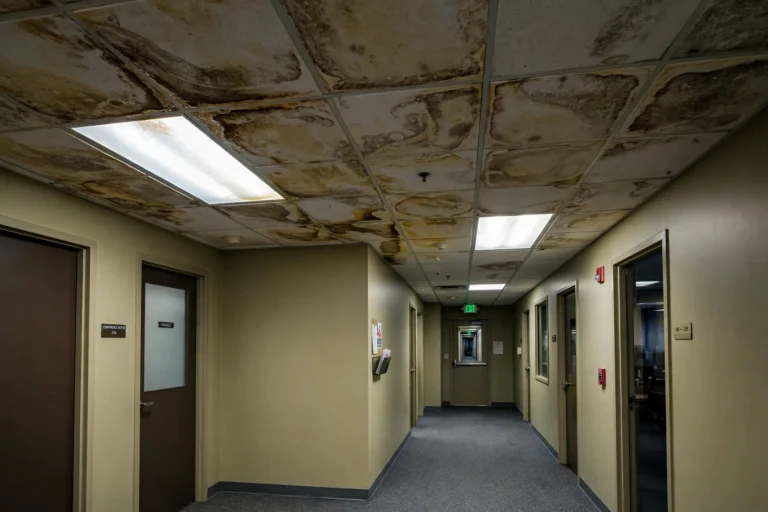
Unit 304’s ceiling is stained. Unit 404 swears nothing is wrong. Maintenance patched the spot twice and it came back both times. Sound familiar? Welcome to the defining headache of multifamily property management: the unit-to-unit leak. Water doesn’t respect floor plans — it travels inside walls, along pipe chases, and across ceiling plenums, surfacing rooms…
Unit 304’s ceiling is stained. Unit 404 swears nothing is wrong. Maintenance patched the spot twice and it came back both times. Sound familiar?
Welcome to the defining headache of multifamily property management: the unit-to-unit leak. Water doesn’t respect floor plans — it travels inside walls, along pipe chases, and across ceiling plenums, surfacing rooms or floors away from its source. Apartment leak detection is the discipline of finding the real source in a building designed to hide it — with minimal disruption to the tenants paying rent around the work.
Chasing a stain that keeps coming back? Call (512) 729-5265 — source-unit pinpointing with a written report.
How Unit-to-Unit Leaks Actually Travel
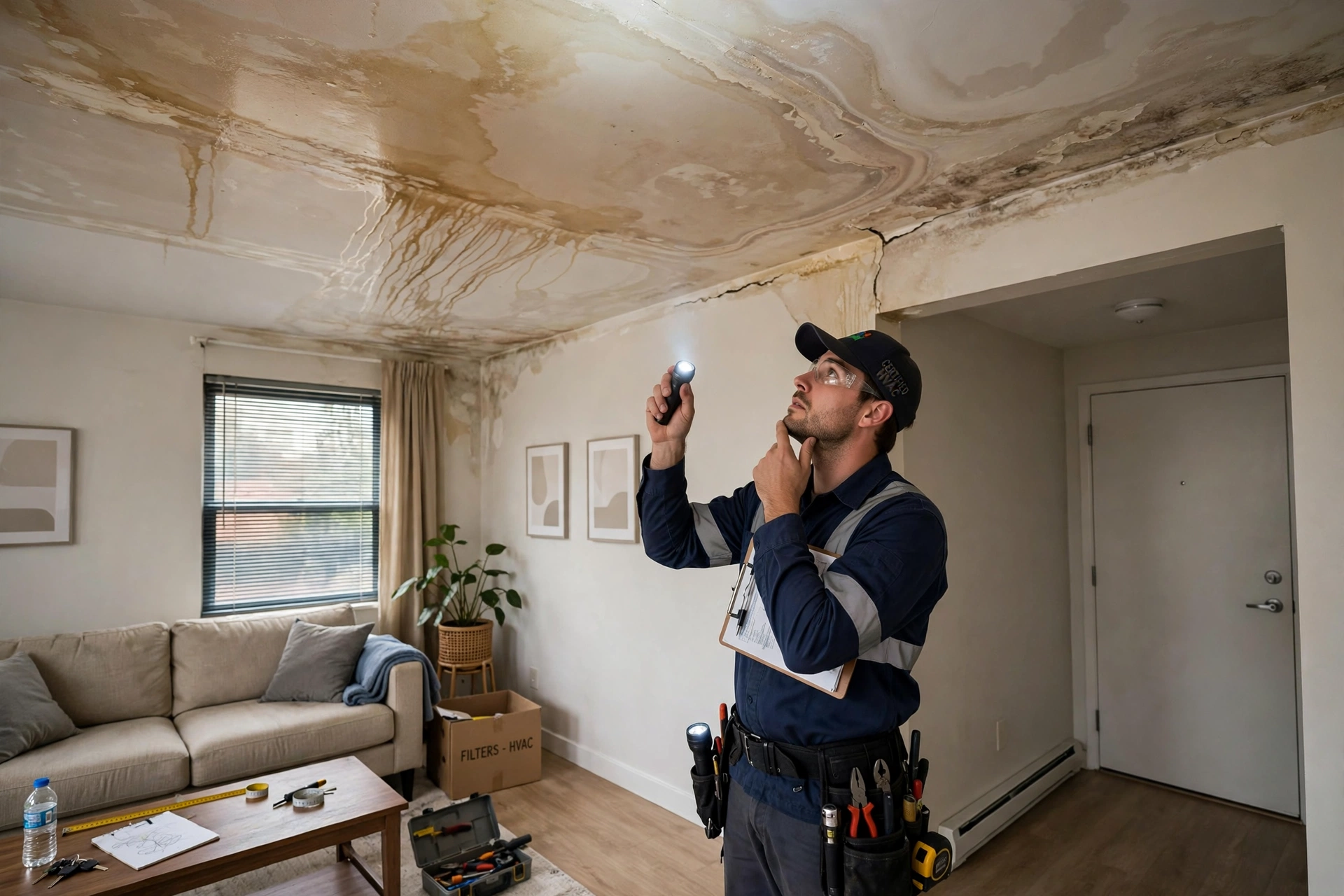
Understanding the migration paths is half the diagnosis:
- Vertically through pipe chases. Stacked bathrooms and kitchens share vertical chases carrying supply lines, drains, and vents. A leaking supply joint on the 4th floor wets the chase, and water emerges on the 3rd-floor ceiling — sometimes two units over from directly below, because chases run horizontally at each floor too.
- Horizontally across ceiling plenums. In buildings with drop ceilings or open plenums, water from a riser leak spreads laterally along the slab above before finding a seam, a light fixture, or a sprinkler escutcheon to drip through. The stain can appear 20 feet from the source.
- Along the slab edge and exterior walls. Water follows gravity and the path of least resistance — which in a slab building often means traveling along the slab edge until it finds a penetration. Exterior-wall stains on a middle floor frequently trace to a riser leak, not a roof leak.
- Through shared drain systems. A partially blocked stack creates back-pressure that forces water out at the weakest joint — which may be two floors below the blockage. Drain-side leaks are the great mimics: they look like supply leaks but need a completely different fix.
The practical rule: the stain marks where water exited, not where it entered. Every unit-to-unit investigation starts by ignoring the stain’s location and tracing the building’s plumbing logic instead. That’s why professional apartment leak detection starts with the riser diagram, not the ceiling stain.
The “One Incident” Rule: Stop Treating Symptoms as Separate Tickets
The most expensive mistake in multifamily leak management: treating each tenant report as its own work order. 304 reports a stain Monday. 306 reports a musty smell Thursday. Maintenance visits both, finds nothing conclusive, closes both tickets. Three weeks later 204’s ceiling is sagging.
These were one incident with one source. The fix is procedural:
- Map reports spatially and temporally. Plot every moisture complaint on a building diagram with dates. Clusters in a vertical or horizontal line = one source until proven otherwise.
- Keep one incident file. One timeline, one set of photos, one point of contact. When the detection company arrives, hand them the file — it cuts their investigation time dramatically.
- Don’t repair the symptom. Patching 304’s ceiling before the source is found guarantees a callback. Source first, cosmetics last — always.
- Communicate once, clearly. Tenants in the affected stack get one notice explaining the investigation plan and timeline. Ten separate conversations create ten versions of the story.
Property managers who run the one-incident rule cut their repeat leak callbacks dramatically — because they’re finally fixing causes instead of repainting effects.
Submetering: The Early-Warning System That Pays for Itself
Here’s the multifamily superpower most Kyle complexes underuse: submetering.
A master meter tells you the building used too much water. Submeters tell you which unit. When Unit 412’s submeter jumps 40% with no occupancy change, you have a leak location before anyone reports a stain — weeks earlier than the complaint-driven alternative.
The borrowed economics: submetered multifamily properties typically cut water use 15–30% (borrowed, US utility-audit data) — partly from leak visibility, partly from tenant accountability. On a 40-unit complex, that can mean tens of thousands of gallons a month and real money off the master bill.
Even without full submetering, zone-level monitoring (one meter per building or per riser stack) narrows every future investigation from “the whole property” to “Building C, north stack.” If you’re managing multifamily in Kyle without at least zone metering, that’s the highest-ROI leak investment available. For current municipal rate schedules that factor into the payback math, see the City of Kyle’s official website.
The 7 Most Common Multifamily Leak Sources
| Source | Why it fails | How it presents |
|---|---|---|
| Stacked-bathroom supply lines | Aging copper/PEX joints, hard-water corrosion | Stain in unit below, often offset from the bathroom above |
| Riser joints | Thermal cycling + building movement | Multi-floor moisture along one vertical line |
| Washing-machine hookups | Burst-prone rubber hoses, failed shutoffs | Sudden flood in the unit + the one below |
| Water heater (in-unit or closet) | Tank failure, TPR valve weeping, hard-water scale | Damp closet, musty adjacent rooms |
| Balcony/patio door flashing | Failed seals admit rain that mimics plumbing leaks | Stains after storms only — the differential diagnosis |
| Common-area restrooms/laundry | High-use fixtures, deferred maintenance | Bill spike + moisture in adjacent units |
| Irrigation / site lines | Cracked laterals near foundations | Ground-floor dampness, unexplained master-meter use |
Note the last two: not every “apartment leak” is inside the building. Site irrigation and common-area plumbing feed the same master meter — isolate them (4-hour test, irrigation off) before scoping an interior survey.
Apartment Leak Detection Without Tenant Disruption
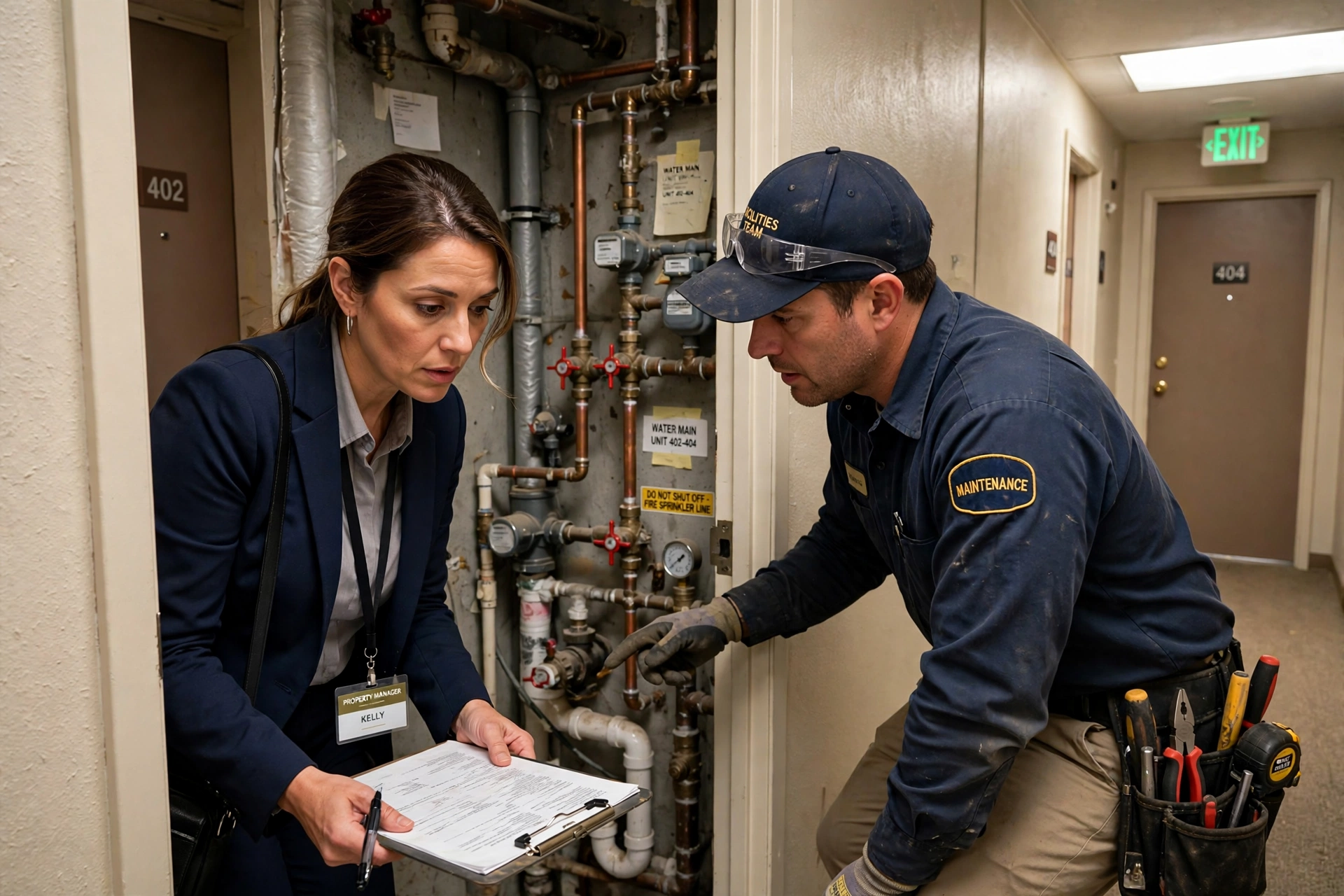
Finding the leak is only half the job in multifamily. The other half is doing it without a tenant revolt:
- 24-hour notice, in writing. Texas Property Code requires advance notice for non-emergency entry — and even when the law allows faster emergency entry, written notice keeps the relationship professional.
- Zone the work. Survey one stack at a time. Tenants in unaffected stacks shouldn’t even know it’s happening.
- Non-invasive methods first. Acoustic listening, thermal imaging, and tracer gas need no demolition and no unit turned upside down. Most source-unit identifications happen without opening a single wall.
- Schedule around tenants, not just staff. A 9 AM survey in a building full of remote workers is worse than a 6 PM one. Ask the property manager about occupancy patterns before booking.
- One point of contact. Tenants hear from the manager, not from three different technicians. The detection crew works; the manager communicates.
The buildings with the fewest leak complaints aren’t the ones with the newest pipes — they’re the ones where tenants trust that reports get handled professionally. Professional apartment leak detection with tenant-friendly scheduling is what separates systematic operators from patch-and-pray maintenance. Process is the product.
When It’s the Building’s Problem vs. the Tenant’s Problem
Quick responsibility framework (general guidance — check your leases):
- Supply lines in walls, risers, stacks, common-area plumbing: building’s responsibility, almost always.
- Tenant’s washing-machine hoses, overflows from tenant negligence: tenant’s responsibility — but the building still needs the source confirmed in writing before assigning cost.
- The gray zone (slow weep at a fixture the tenant uses daily): document first, assign later. A detection report stating the failure point ends the argument either way.
This is another reason the written detection report matters in multifamily: it’s the neutral third-party document that settles “your pipe vs. my negligence” without a fight.
Frequently Asked Questions
How do you find which apartment unit a leak is coming from?
By tracing the building’s plumbing logic, not the stain: isolate zones with meter/submeter readings, use acoustic and thermal equipment along risers and chases, and confirm with moisture mapping. The stain’s location is the starting clue, never the answer.
Can a leak be detected without entering every unit?
Often yes. Zone isolation, riser tracing, and thermal scans from common areas narrow the source dramatically. Entry is typically needed only in the suspect source unit and the affected unit below — not the whole building.
Why does the stain keep coming back after maintenance patches it?
Because the source wasn’t found. Patching the exit point while the entry point still leaks guarantees a recurrence — usually worse, because the water finds a new path. Source first, cosmetics last.
Does submetering really help find leaks?
Yes — it’s the fastest early-warning system in multifamily. A submeter spike identifies the leaking unit weeks before visible damage, turning a major incident into a minor repair.
How do I handle tenants during a leak investigation?
One written notice to affected units explaining the plan and timeline, 24-hour entry notice per Texas requirements, zone the work to minimize disruption, and communicate through the property manager only.
Stop Repainting, Start Detecting
Every callback on a patched stain is a signal: the source is still active, still damaging the building, and still waiting. Apartment leak detection replaces the patch-and-pray cycle with a located source, a written report, and a repair scope that ends the incident — for every unit in the stack.
Call Kyle Leak Detection Pros at (512) 729-5265. Multifamily surveys with tenant-friendly scheduling and documentation your owners and insurers can use. Start with commercial leak detection in Kyle TX. For the reporting side, see how to report a leak to your landlord.