
Why Is My Commercial Water Bill So High? 7 Leak Causes in Kyle TX (2026)
The utility bill landed on your desk and the number doesn’t make sense. Your Kyle TX office, retail, or restaurant building is using twice the water it used last quarter — and nothing about your operation changed. No new tenants. No new equipment. Just a bigger bill. Here’s the uncomfortable truth: a commercial water bill…
The utility bill landed on your desk and the number doesn’t make sense. Your Kyle TX office, retail, or restaurant building is using twice the water it used last quarter — and nothing about your operation changed. No new tenants. No new equipment. Just a bigger bill.
Here’s the uncomfortable truth: a commercial water bill high enough to notice almost always means water is going somewhere it shouldn’t. Commercial buildings don’t “just” use more water — and the bill is usually the first warning.
The good news: a commercial water bill high enough to investigate is diagnosable. This guide walks through the seven most common causes, a 4-step triage you can run before calling anyone, and the point where the bill itself becomes a detection job.
The short version: isolate irrigation, check submeters, run a 4-hour meter test. If water is moving with everything off, you have a leak — and professional commercial leak detection in Kyle TX finds it before the next bill. Call (512) 729-5265.
Why Commercial Bills Spike Differently Than Homes
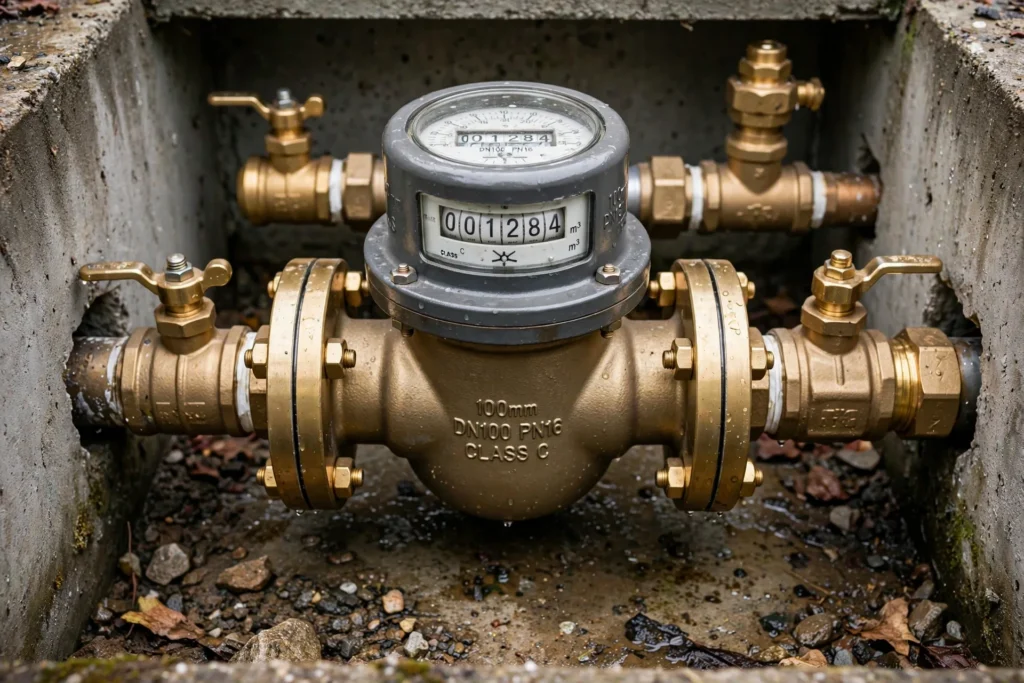
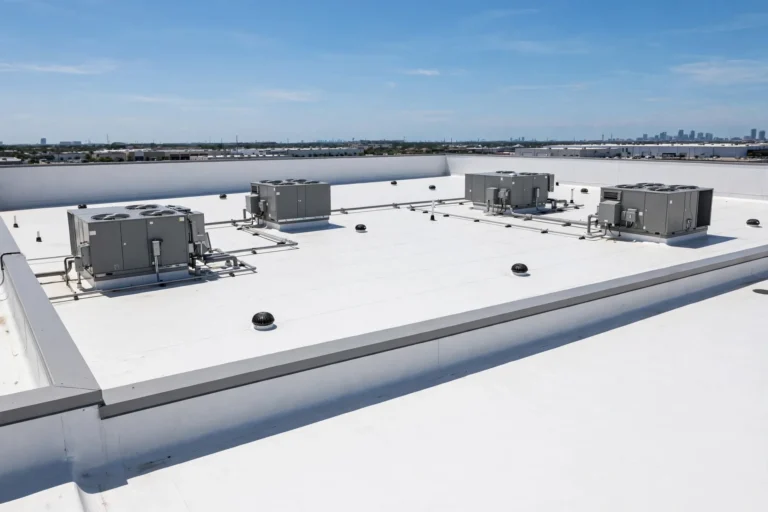
A commercial building has a master meter feeding submeters, irrigation zones, restroom banks, HVAC make-up water, and sometimes a cooling tower — any one of which can hemorrhage water silently for months.
That complexity is why a commercial water bill high enough to trigger an investigation is usually a bigger, later-discovered problem than its residential equivalent. A running toilet in a home adds maybe $50 to a bill and gets fixed in a week. A stuck-open irrigation valve on a Kyle retail strip can waste thousands of gallons a day for an entire billing cycle. And because commercial water rates in Texas typically climb in tiered blocks, the financial damage compounds: you’re not just paying for more water, you’re paying for it at higher per-unit rates.
The 7 Causes, Ranked by How Often We See Them
1. Irrigation Zone Stuck Open or Leaking
The single most common cause of a commercial water bill high enough to trigger an investigation. A single stuck irrigation valve or a broken lateral line can push 15–25 gallons per minute — that’s over 20,000 gallons a day, every day, until someone notices.
Why it happens: commercial irrigation runs at night and nobody walks the property at 2 AM. A torn valve diaphragm, a mowed-off head, or a cracked lateral keeps wasting water while the controller runs its program.
First check: run each zone manually during daylight and walk it. Look for misting heads, geysers, perpetually soggy turf, and water running down curbs or into drains.
2. Underground Service Line Leak
The pressurized line from the city meter to your building can crack, corrode, or separate at a joint — and because it’s buried, the only symptom for months is the bill. Kyle’s Blackland clay hides these longer than sandy soil — it traps water near the pipe, so you get a bill spike with no visible soggy patch for weeks.
First check: the meter test (see the 4-step triage below). If the meter moves with the building isolated, the leak is either the service line or inside the building — the test tells you which.
3. Restroom Banks: Running Toilets and Urinals
One running commercial toilet wastes 200+ gallons a day. A restroom bank with three of them — in a building where nobody reports it because “that’s maintenance’s problem” — can add 18,000+ gallons a month. Flushometer valves stick, flappers warp in Kyle’s hard water (260–315 mg/L), and sensor faucets fail open.
First check: walk every restroom, listen for running water, and look for toilets that cycle on their own. Put dye tablets in tanks if you have tank-style fixtures.
4. Cooling Tower or HVAC Make-Up Water
If your building has a cooling tower, evaporative cooler, or boiler make-up system, it’s a continuous water consumer by design — and a malfunctioning float valve or stuck fill can turn “continuous” into “catastrophic.” These systems are usually in mechanical rooms nobody visits daily.
First check: read the make-up water meter (if separately metered) or check the tower’s overflow. Water running to drain from a cooling tower is money running to drain.
5. Slab or Under-Floor Leaks
Commercial buildings on slab get slab leaks too, and the bigger the floor plate, the longer they hide. Warm floor spots, unexplained humidity, or a musty smell in one zone are the physical signs; the bill is often the first.
First check: compare against the meter test. If the building side is losing water with all fixtures off, an under-slab leak is on the suspect list.
6. Water Heater, Boiler, or Storage Tank Leaks
Commercial water heaters and boilers hold far more water than residential units, and their relief valves, drain pans, and condensate lines can fail quietly — especially in mechanical rooms with floor drains that swallow the evidence.
First check: inspect the mechanical room floor, drain pans, and the area around relief-valve discharge pipes for moisture, mineral staining, or active dripping.
7. Meter or Billing Errors (Rare, But Check)
Actual meter misreads and billing errors happen — estimated reads during meter swaps, a misplaced decimal, a new rate tier applied wrong. It’s the least likely cause, but the cheapest to rule out. Before assuming the worst about a commercial water bill high above last quarter’s, rule out the meter itself — it’s the cheapest check on the list.
First check: compare the bill’s read dates and meter numbers against the physical meter. If the building was unoccupied during the billing period and the bill still spiked, suspect the meter read, not the plumbing.
Commercial Water Bill High: Cause vs Symptom vs First Check
| Cause | Telltale symptom | Your first check |
|---|---|---|
| Irrigation leak | Soggy turf, water on pavement at night | Walk every zone in daylight |
| Service line leak | Bill spike, no visible signs | Meter test with building isolated |
| Restroom bank leaks | Hissing in restrooms, cycling toilets | Walk and listen in every restroom |
| Cooling tower/HVAC | Overflow at tower, humid mechanical room | Inspect float valves and overflow |
| Slab/under-floor leak | Warm floor spots, musty zone | Meter test, then thermal scan |
| Heater/boiler leak | Moisture in mechanical room | Inspect pans, relief discharge |
| Meter/billing error | Spike during vacancy | Verify read vs physical meter |
The 4-Step Commercial Triage
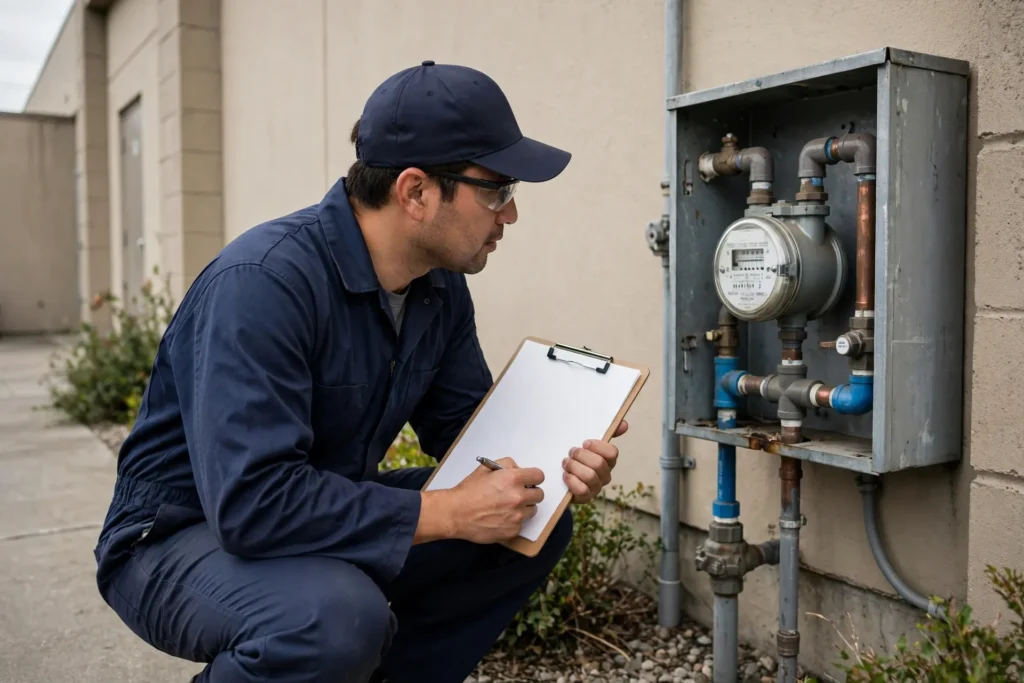
Run these in order before you call anyone. They take about half a day and they aim the entire investigation.
Step 1 — Read the submeters. If your building has submeters (tenant spaces, irrigation, cooling tower), read them all and compare against history. One submeter spiking while the others hold steady tells you exactly which system is driving the commercial water bill high. No submeters? That’s a finding in itself — consider adding them; submetering is the single best early-warning investment a commercial building can make. The EPA’s WaterSense program also publishes commercial water-efficiency best practices worth reviewing alongside your submeter data.
Step 2 — Isolate irrigation. Shut off the irrigation main (not the controller — the actual valve) for 48 hours and watch the master meter. If daily usage drops sharply, your leak is in the irrigation system. If it doesn’t move, the building or service line is the problem.
Step 3 — Run the 4-hour meter test. After hours or during a low-use window: shut off the building’s main valve, record the meter reading, wait 4 hours, read it again. Any movement means water is leaving the system between the meter and the building valve — a service line leak. No movement? Open the building valve with all fixtures off and repeat — movement now means an interior leak.
Step 4 — Compare seasonal patterns. Pull 12 months of bills. A spike that started in spring and grew through summer points to irrigation. A sudden step-change in one month points to a break or stuck valve. A slow, steady climb over many months points to a growing underground or slab leak. Whatever the pattern, a commercial water bill high for two consecutive cycles is a leak until proven otherwise.
When the Bill Itself Is the Detection Event
Sometimes the triage doesn’t isolate it — the meter moves, irrigation is off, restrooms are quiet, and you still can’t find the water. That tells you the leak is underground, under the slab, or inside a wall — somewhere equipment has to go. At that point, the commercial water bill high on your desk isn’t a billing question anymore — it’s a detection job.
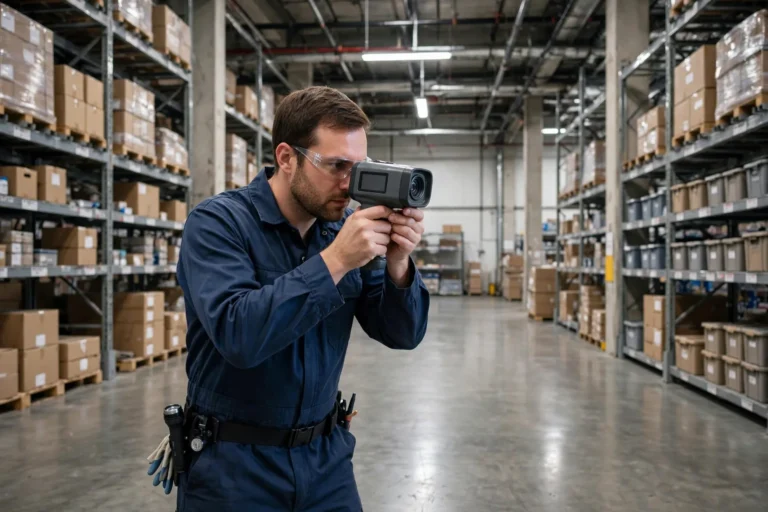
This is the exact moment to call for detection. A commercial detection visit traces the service line, acoustically pinpoints underground breaks, and thermally scans slabs — the same methods used on homes, scaled to commercial footprints. The visit costs far less than another month of the inflated bill, and it produces a marked location plus a written report that makes every repair bid comparable. (How the residential version of this test works: check your water meter for a leak — the commercial principle is identical, the scale is bigger.)
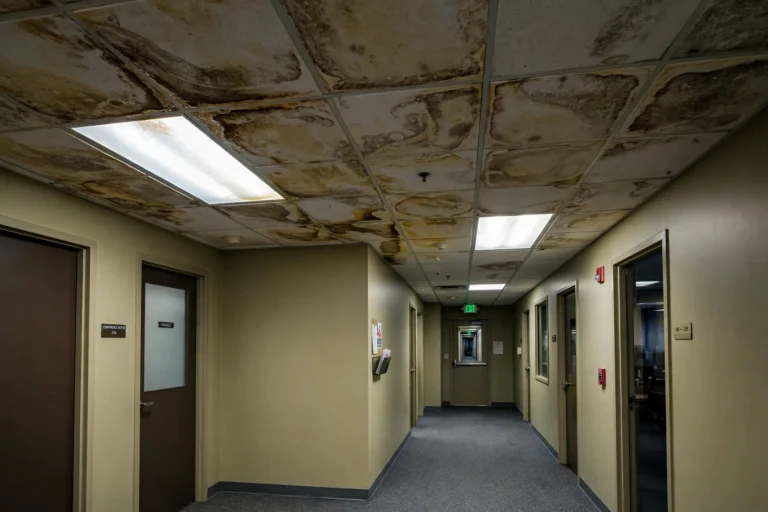
One more reason not to wait: in Texas commercial properties, every month of an unaddressed leak is also a month of potential property damage compounding — saturated soil against foundations, moisture inside wall assemblies, mold in concealed spaces.
Frequently Asked Questions
Why is my commercial water bill suddenly so high?
The most common causes are irrigation leaks (stuck valves, broken lines running at night), underground service line leaks, running restroom fixtures, and cooling tower malfunctions. A bill spike with no operational change almost always means water is escaping somewhere — run the 4-step triage above to isolate the system.
How do I know if the high bill is a leak or just higher usage?
Compare against the same months last year and against occupancy. If usage jumped with no occupancy or operational change, it’s a leak or a stuck-open device, not usage. The 4-hour meter test with the building isolated is the definitive check.
Can a running toilet really spike a commercial water bill?
Yes — one running commercial toilet can waste 200+ gallons a day, and restroom banks multiply the damage. Three running toilets across a building can add 18,000+ gallons to a monthly bill. Walk every restroom and listen.
Should I call the water utility or a leak detection company first?
Call the utility only if you suspect the meter itself or a main-line issue on the city’s side. For everything on your side of the meter — which is where bill-spike leaks almost always are — a detection company finds the actual source. The utility reads meters; it doesn’t hunt leaks on private property.
How fast should I act on a commercial bill spike?
Immediately. A moderate commercial leak can waste tens of thousands of gallons per billing cycle, and tiered commercial rates multiply the cost. Every month of delay is another inflated bill plus compounding property damage risk.
A Commercial Water Bill High Enough to Notice Is the Alarm — Answer It
A commercial water bill high enough to notice is your building telling you something is wrong. The triage above takes half a day and costs nothing. If it points to a hidden leak — or can’t rule one out — the next step is detection, not another month of hoping a commercial water bill high like this one goes back down on its own.
Call Kyle Leak Detection Pros at (512) 729-5265. Commercial detection for Kyle TX buildings: meter isolation, service-line tracing, acoustic pinpointing, thermal scanning — marked location, written report, scheduled around your operations. For the residential version of bill-spike diagnosis, see why your Kyle water bill is high.