Restaurant Leak Detection in Kyle TX: Kitchens, Restrooms & Health-Code Risks (2026)
There’s a musty smell near the dish pit that won’t go away. The floor drain gurgles at the dinner rush. A health inspector is due next quarter, and you’re wondering whether that damp patch behind the walk-in will become a violation. Restaurants are leak machines — and Kyle’s growing food scene, from the I-35 corridor…
There’s a musty smell near the dish pit that won’t go away. The floor drain gurgles at the dinner rush. A health inspector is due next quarter, and you’re wondering whether that damp patch behind the walk-in will become a violation.
Restaurants are leak machines — and Kyle’s growing food scene, from the I-35 corridor spots to the downtown square, runs on buildings where plumbing works harder than anywhere else in commercial real estate. Restaurant leak detection is the specialized version of commercial detection built around your reality: find the source without shutting down service, document it for the health inspector, and fix it between shifts.
Smell something? See something? Call (512) 729-5265 — off-hours detection that never touches your dinner rush.
Why Restaurants Leak More Than Other Commercial Buildings
It’s not bad luck. It’s physics and workload:
- 16-hour water days. A restaurant runs water from prep at 8 AM through close past midnight — dish machines, prep sinks, mop sinks, restrooms, ice machines, beverage stations. Residential plumbing gets maybe 3 hours of daily use. Restaurant lines never rest, so joints, seals, and supply lines age years faster.
- Grease + heat + chemicals. Hot water, degreasers, and sanitizers attack supply-line fittings and drain seals constantly. Grease buildup in drains creates back-pressure that stresses joints upstream — the leak and the clog are often the same problem wearing two masks.
- Thermal cycling. Dish machines dump near-boiling water, then the line goes cold. That expansion-contraction cycle, hundreds of times a day, loosens exactly the fittings you’d least want loose.
- Vibration. Walk-in compressors, ice machines, and HVAC units vibrate 24/7. Fittings near vibrating equipment fatigue and weep — slow leaks that run for months before anyone notices.
- Staff turnover. The person who knew the mop sink “always drips a little” quit in March. Institutional memory about a building’s quirks walks out the door with every departing manager.
The result: by the time a restaurant leak is visible, it’s usually been active for weeks. Detection-first isn’t a luxury in food service — it’s the only way to find problems while they’re still small. That’s why restaurant leak detection focuses on catching these slow failures before they become health-code issues.
The 7 Restaurant Leak Zones (Check These First)
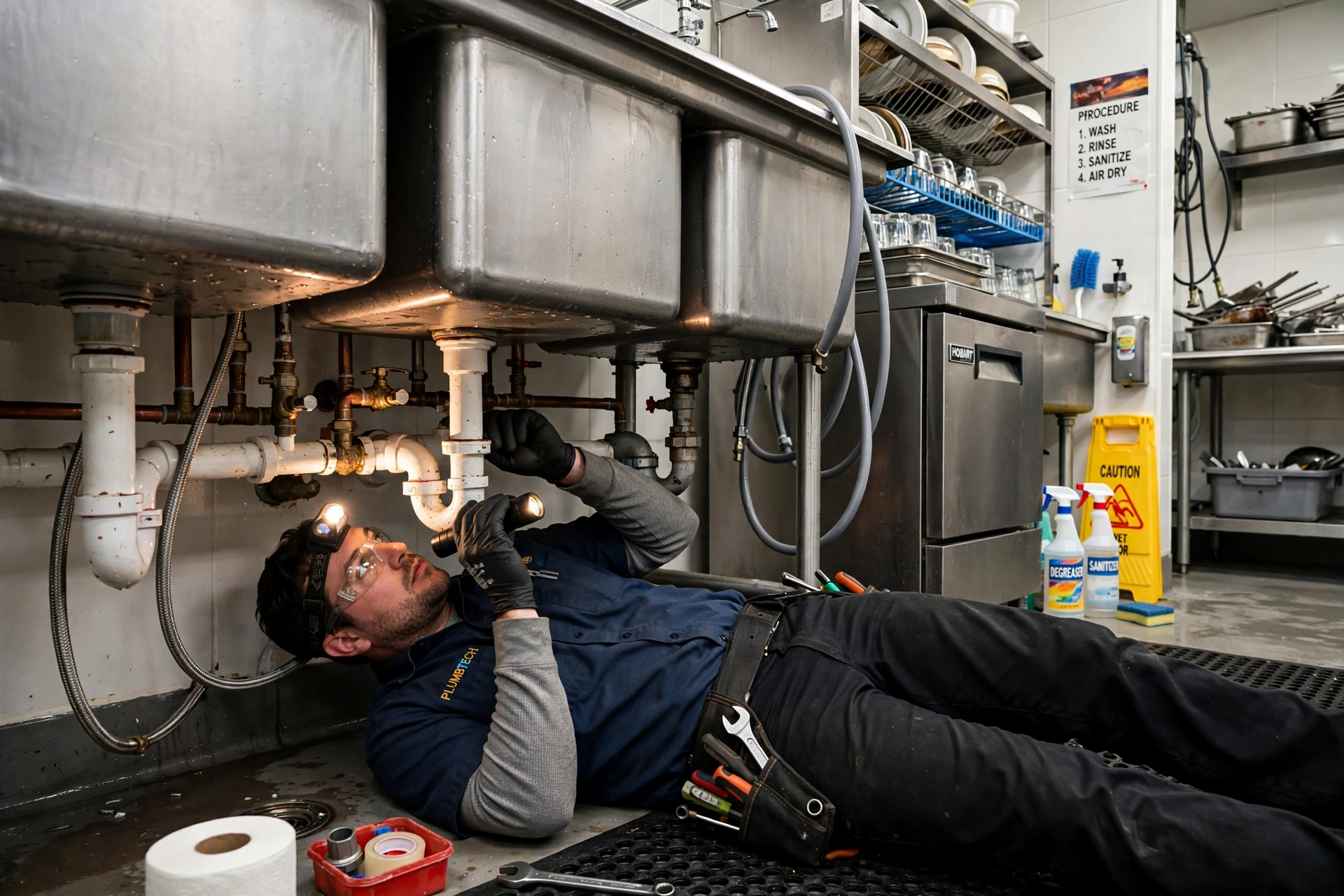
1. The dish pit and three-compartment sink
The hardest-working wet area in the building. Supply lines to the pre-rinse sprayer, the faucet base seals, and the drain tailpieces all fail here — and the constant splashing masks the early signs. Look for: soft or swollen base cabinetry, mineral crust on supply lines, and a floor that stays damp hours after close.
2. Grease-trap and interceptor area
Grease traps don’t just clog — their inlet/outlet seals and the surrounding piping weep when the trap is overdue for pumping. A neglected trap also pushes grease downstream, where it hardens and creates the back-pressure that bursts weaker joints. If your trap area smells worse than usual and the floor is damp, the trap isn’t just full — it may be leaking.
3. Ice machines and beverage stations
Ice machine supply lines are thin, often plastic, and frequently installed in a hurry behind the unit. They weep slowly, and the water hides under the machine until the subfloor rots. Beverage-station lines (soda guns, coffee brewers) have dozens of small compression fittings — each one a future leak. Pull every unit forward quarterly and look at the floor.
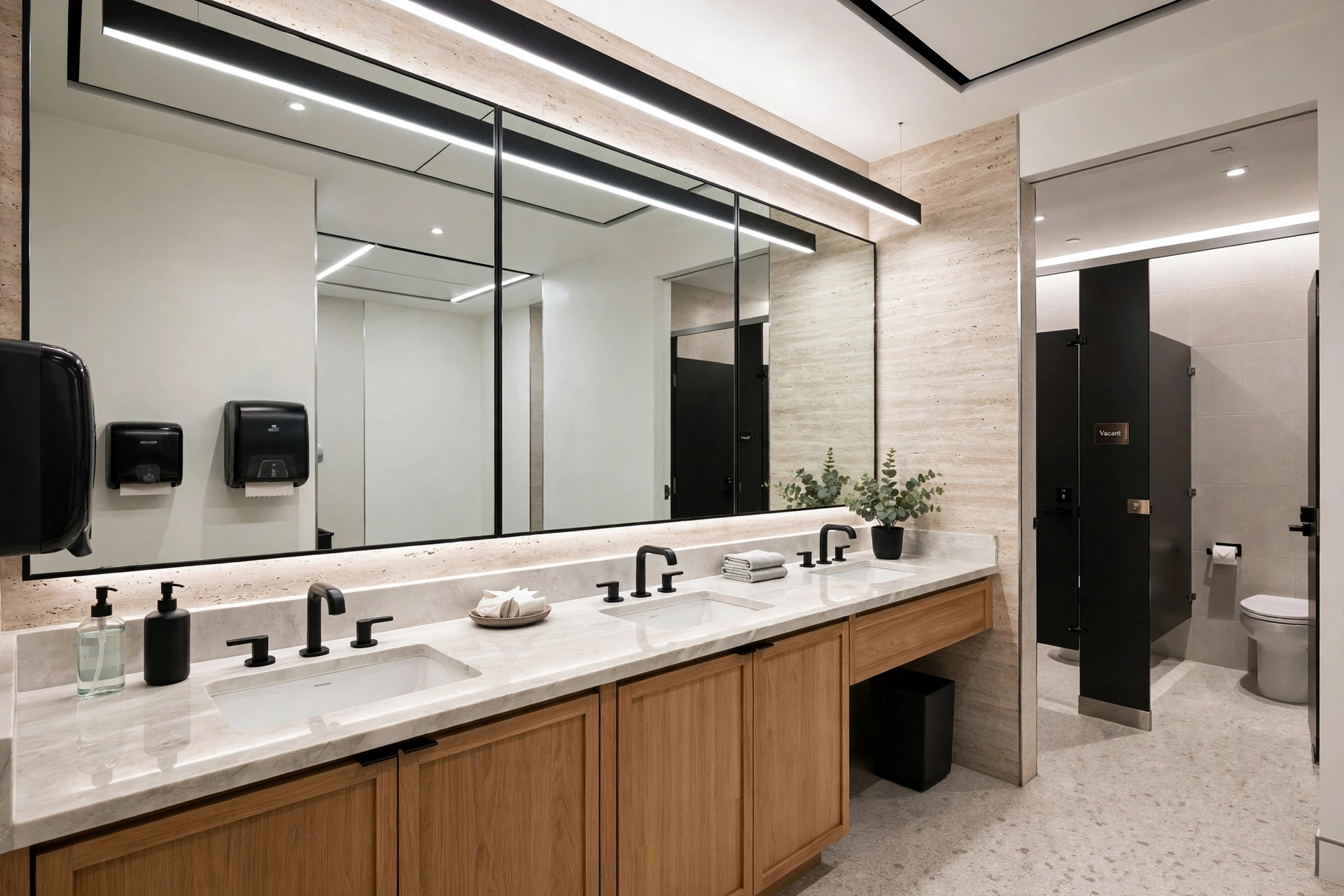
4. Restrooms (customer and staff)
Public restrooms take abuse: supply lines to toilets and urinals, flush-valve seals, and faucet connections fail under constant use. Staff restrooms get less attention and therefore leak longer. Check for: running toilets (a silent water-bill killer), damp baseboards, tile grout that’s darkened in one area, and unexplained low water pressure at taps that could signal a supply-line leak upstream.
5. Walk-in coolers and freezers
Condensate drains from walk-ins clog with alarming regularity, and when they do, water pools under and around the unit — warping floors and feeding mold in the wall cavity behind. The cooler itself hides the problem: you don’t see the floor under a walk-in during a normal shift. Add it to the quarterly pull-forward inspection.
6. Mop sinks and janitor closets
The most ignored plumbing in the building. Mop sink faucets drip for months, supply lines corrode in the damp closet air, and nobody reports it because “it’s just the mop sink.” Multiply one dripping mop sink across a year and you’ve paid for a detection visit several times over in water alone.
7. The water heater / boiler area
Commercial water heaters and booster heaters run hot and hard. Temperature-pressure relief valves weep, tank seams fail, and the surrounding floor stays damp enough to rot framing. Kyle’s very hard water (260–315 mg/L) scales commercial heaters aggressively, shortening their service life — check the install date on yours.
The Health-Inspection Angle (Why This Is Urgent)
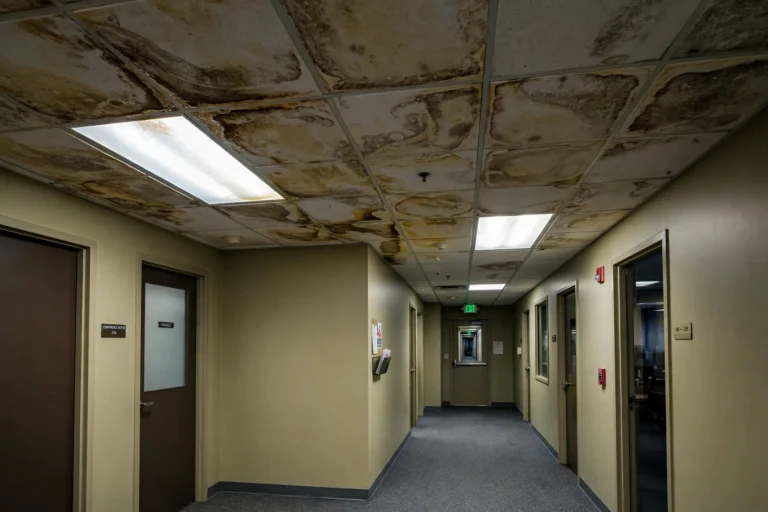
Here’s what turns a plumbing nuisance into a business threat: health inspectors notice moisture. Standing water, mold, musty odors, and deteriorated surfaces in food-prep or storage areas are inspection findings — and repeat findings escalate.
You don’t need a citation to lose money. A musty dining room, a restroom that smells like mildew, or visible water damage tells customers the kitchen they can’t see might look the same. In the review era, one “the bathroom was gross” comment does quiet, lasting damage.
The smart play: find and fix leaks between inspections, with documentation. A restaurant leak detection report showing the source, the repair, and the dry-verified result is the kind of record that turns an inspector’s question into a non-event.
Restaurant Leak Detection, Off Hours: Zero Service Disruption
The #1 reason restaurant owners delay leak work: “we can’t shut down.” You don’t have to.
Professional restaurant leak detection is scheduled around your service:
- Overnight surveys — the crew works 11 PM–5 AM, tracing lines and scanning with thermal equipment while the building is empty and quiet (quiet actually improves acoustic detection).
- Zone-by-zone — the dining room stays untouched while the kitchen line is traced; restrooms are surveyed one at a time.
- No demolition during detection — acoustic listening, thermal imaging, and tracer gas need no holes. The repair scope gets defined from the report, and the actual fix is scheduled for your slowest window.
The detection visit that finds three weeping fittings overnight costs a fraction of one health-inspection finding — or one Saturday dinner service lost to an emergency shutdown.
Restaurant Leak Costs: What the Numbers Look Like
| Leak type | Typical water waste | Business risk |
|---|---|---|
| Dripping mop-sink faucet | Hundreds of gallons/month | Water bill creep |
| Running toilet (public restroom) | Thousands of gallons/month | Major bill spike |
| Weeping dish-pit supply line | Slow but constant | Cabinet/floor rot, mold |
| Grease-trap area leak | Variable | Health-inspection finding |
| Walk-in condensate backup | Gallons per day | Floor/wall damage, mold |
| Burst supply line (after hours) | Thousands of gallons overnight | Flooded dining room, closure |
Water costs are the smallest line on this table. The right column is why restaurant owners call. The EPA’s WaterSense program highlights how commercial buildings waste significant volumes through undetected leaks — a reminder that professional restaurant leak detection typically pays for itself in avoided water waste alone, before you even count the business-risk column.
Frequently Asked Questions
How do I know if my restaurant has a hidden water leak?
Watch the water bill for unexplained jumps, check the seven zones above quarterly (pull equipment forward and look at floors), and note musty smells, damp baseboards, or grout discoloration. A professional detection survey finds what walk-throughs miss.
Can leak detection be done without closing my restaurant?
Yes — that’s the standard. Overnight or zone-by-zone surveys use non-invasive equipment, so service continues normally. The repair itself is then scheduled for your slowest window.
Will a leak fail our health inspection?
Standing water, mold, musty odors, and deteriorated surfaces in food areas are inspection findings. Finding and documenting repairs before the inspector arrives is the entire strategy.
Why does our restaurant’s water bill keep climbing?
Running toilets, dripping faucets, and weeping supply lines are the usual culprits — a single running commercial toilet can waste thousands of gallons a month. If fixtures check out, the leak is hidden and needs professional detection.
How often should a restaurant get a leak inspection?
Quarterly walk-throughs of the seven zones by your own staff, plus a professional detection survey annually — or immediately when the bill jumps or an inspector flags moisture. High-volume kitchens lean toward twice-yearly professional surveys.
Find It Overnight, Fix It Between Shifts
Restaurants don’t get to pause for plumbing. Restaurant leak detection exists so you don’t have to: the source found overnight, the repair scoped from a written report, the fix scheduled when it costs you nothing in lost covers.
Call Kyle Leak Detection Pros at (512) 729-5265. Off-hours commercial surveys with documentation your health inspector will appreciate. Start with commercial leak detection in Kyle TX.