

Leak Detection Report for Insurance: Commercial Claims Guide (2026)
The adjuster just asked for “documentation of the leak” — and what you have is a plumber’s one-line invoice that says “found leak, repaired pipe.” That’s not going to be enough. Here’s what property managers learn at the worst possible moment: a commercial insurance claim lives or dies on documentation, and a proper leak detection…
The adjuster just asked for “documentation of the leak” — and what you have is a plumber’s one-line invoice that says “found leak, repaired pipe.” That’s not going to be enough.
Here’s what property managers learn at the worst possible moment: a commercial insurance claim lives or dies on documentation, and a proper leak detection report for insurance is the single most important document in the file. It proves where the water came from, when the leak started, and what methods located it. Without it, you’re asking an adjuster to take your word on the most contested question in water claims: was this sudden, or was it gradual?
This guide covers what a commercial-grade detection report must contain, why adjusters deny seepage claims, the documentation checklist to run from the first sign of water, and the basics of trace-and-access coverage — general information, not legal advice.
The short version: document from day one — photos, readings, timeline. A professional leak detection report for insurance with methods, moisture mapping, and photos is what turns “we had a leak” into a supported claim. Call (512) 729-5265 for commercial leak detection in Kyle TX with insurance-ready reporting.
Why Adjusters Care About a Leak Detection Report for Insurance (Not Just the Repair)
An adjuster’s job is to determine three things: what happened, when it happened, and whether the policy covers it. The repair invoice answers none of these. It says a pipe was fixed — not where the water went, how long it ran, or what it damaged.
A detection report answers all three:
What happened: the leak’s precise location, the pipe or system involved, the failure mode (joint separation, corrosion perforation, puncture), and the full extent of moisture migration mapped across the building.
When it happened: the timeline — when symptoms appeared, when detection was performed, moisture readings showing active versus historic wetting. This is the evidence behind the sudden-versus-gradual determination.
Whether it’s covered: the report doesn’t decide coverage, but it gives the adjuster the facts the policy language operates on. “Sudden and accidental” needs a sudden event with a date. “Gradual seepage” exclusions need evidence of long-term wetting. The report supplies whichever the facts support.
Property managers who hand over a complete leak detection report for insurance get faster, cleaner claim decisions. Those who hand over an invoice get questions, delays, and often a reduced settlement.
Sudden vs Gradual: The Distinction That Decides Claims
Almost every commercial property policy treats these differently:
Sudden and accidental water damage — a pipe bursts, a joint separates, a fitting fails — is typically covered (subject to deductible and policy terms). The key elements: a discrete event, a date, and prompt discovery and reporting.
Gradual seepage — a slow leak running for months, moisture accumulating over time — is typically excluded or severely limited. Insurers view long-term seepage as a maintenance failure, not an insurable event.
The battleground is the middle: a leak that started suddenly but wasn’t discovered for weeks. This is exactly where the detection report earns its keep:
- Moisture mapping showing a concentrated wet zone consistent with a recent event supports “sudden.”
- Readings distinguishing active wetting from historic staining separate the current event from old damage.
- A documented discovery timeline — when the stain appeared, when the bill spiked, when detection was called — establishes prompt action.
None of this exists if the first professional on site is a repair plumber who fixes the pipe and leaves. Detection first creates the record; repair-only destroys the evidence.
The 7 Essential Elements of an Insurance-Ready Report
Not all detection reports are equal. When you’re hiring detection with a potential claim in mind, make sure the leak detection report for insurance will include:
1. Leak Location — Precise and Mapped
Not “bathroom area” but the exact point: which pipe, which floor, which room, marked on a floor plan. Photos of the marked location. For underground or under-slab leaks, surface markings plus measurements from fixed reference points.
2. Detection Methods Used
Which methods located the leak — acoustic listening, thermal imaging, tracer gas, pressure isolation, moisture meters — and what each one showed. Method documentation matters because it demonstrates a professional, verifiable process rather than a guess. “Technician listened and found it” is not a method description.
3. Moisture Mapping
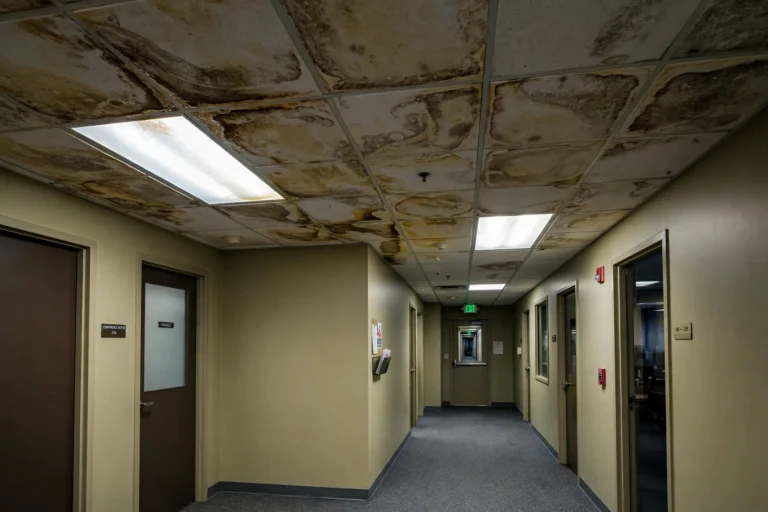
The full extent of moisture migration, not just the leak point: thermal images and moisture-meter readings across affected areas, showing what’s actively wet versus what’s stained but dry. This is the element adjusters ask for most often and receive least often.
4. Photographic Evidence
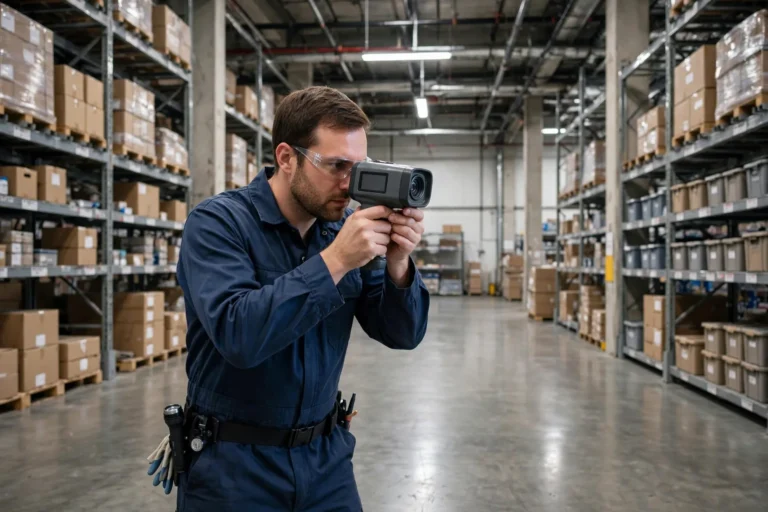
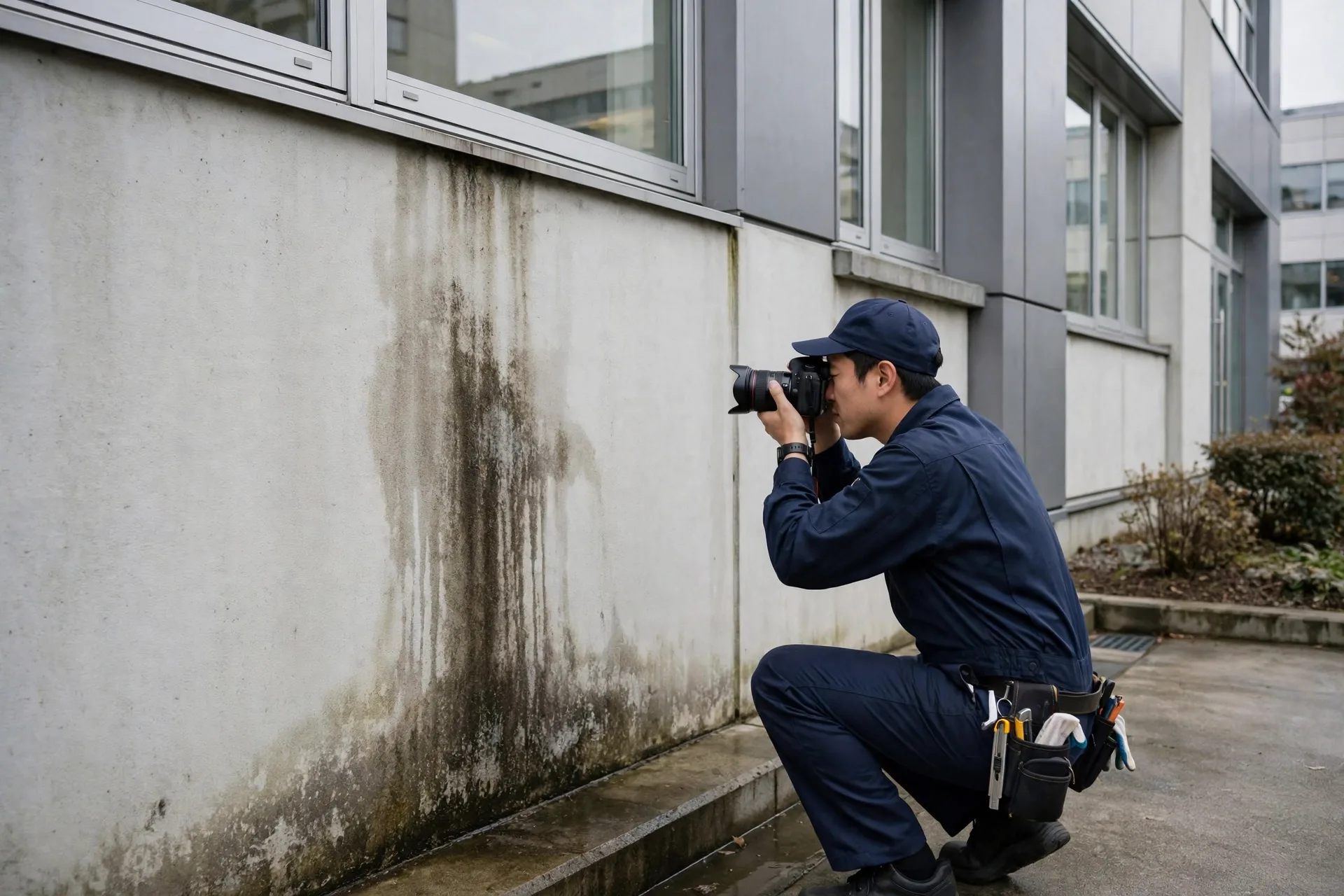
Dated photos of: the leak location, the moisture-affected areas, the detection process itself (equipment in use), and the building conditions around the leak. Photos taken during detection — before repair — are the ones that matter. After repair, the evidence is gone.
5. Timeline of Discovery and Response
When symptoms first appeared, when the bill spiked (if applicable), when detection was requested, when detection was performed, when the report was issued. A clean timeline showing prompt action is the backbone of a “sudden” characterization.
6. Pipe/System Condition Notes
The technician’s observations of the failed component: material, approximate age if determinable, failure mode, and the condition of adjacent pipe. This supports the “accidental” element — a corroded-through section reads differently from a separated joint, and the report should say which it was.
7. Recommended Next Steps (Not a Repair Bid)
The report should recommend the repair approach without being a sales document for the repair itself — separation between detection report and repair bid keeps it credible.
What a Strong vs Weak Report Looks Like
| Element | Strong report | Weak report |
|---|---|---|
| Location | Marked on floor plan + photos | “Near the bathroom” |
| Methods | Named methods + what each showed | “Used equipment to find leak” |
| Moisture extent | Thermal images + meter readings across zones | No moisture data |
| Photos | Dated, during detection, multiple angles | None, or after repair only |
| Timeline | Discovery → detection → report dates | No dates at all |
| Pipe condition | Material, failure mode, adjacent condition | Not mentioned |
| Independence | Assessment separate from repair bid | Report is a repair quote |
If your current leak detection report for insurance looks like the right column, it won’t carry a claim. Get a proper survey before the repair — once the pipe is fixed and the wall is closed, the evidence is unrecoverable.
The Property Manager’s Documentation Checklist
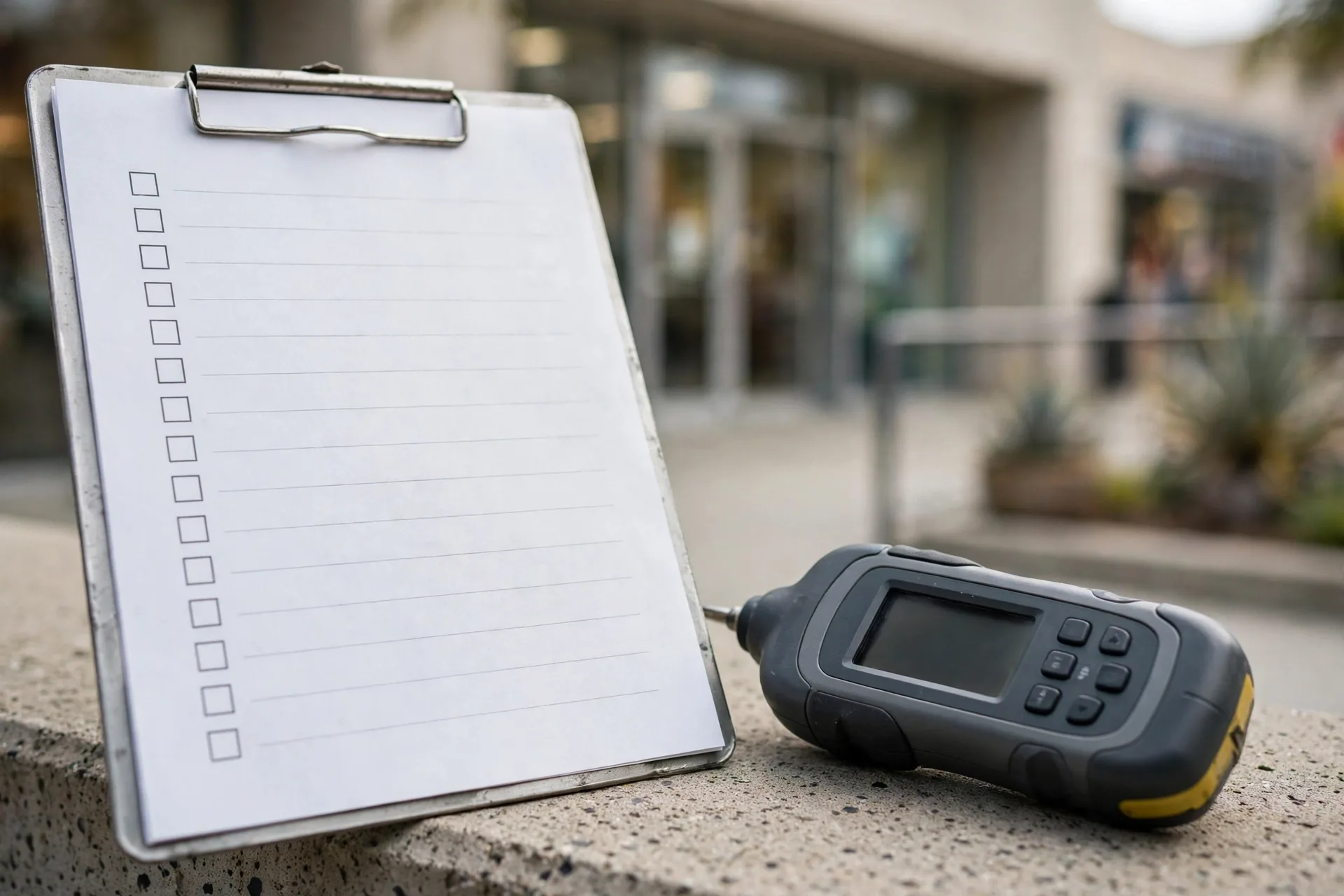
Run this from the first sign of water. Every item strengthens the file:
- ☐ Photo everything immediately — stains, drips, affected inventory, the surrounding area. Date-stamped. Before anyone touches anything.
- ☐ Note the discovery — who found it, when, what they observed. One paragraph, written the same day.
- ☐ Pull the water bills — 12 months. A spike corroborates the timeline and quantifies the loss period.
- ☐ Notify the insurer promptly — most policies require prompt notification; delayed reporting alone can reduce or void coverage. A phone call followed by written notice.
- ☐ Mitigate further damage — shut off water, move inventory, run drying equipment. Policies require you to mitigate; document what you did and keep receipts.
- ☐ Get detection before repair — the survey with the 7 elements above. This is the step most often skipped and most often regretted.
- ☐ Keep every document — the detection report, repair bids, the repair invoice, drying logs, correspondence with the insurer. One file, chronological.
Don’t discard damaged materials before the adjuster sees or photographs them — unless a health hazard; photograph first either way.
Trace-and-Access: The Coverage Most Managers Don’t Know About
Many commercial property policies include trace-and-access coverage — it pays for the cost of finding the leak (detection, exploratory work) even when the repair itself has separate terms. In other words, the policy may cover the detection survey as its own line item.
Key points, as general information:
- Trace-and-access typically covers reasonable costs to locate the source of water damage — which is precisely what a detection survey is.
- It usually does not cover the pipe repair itself or the full water-damage restoration — those fall under other coverage parts with their own terms.
- “Reasonable costs” is the operative phrase — a documented professional survey with a written report reads as reasonable; exploratory demolition without documentation does not.
- General information only, not legal advice. Check your specific policy language and talk to your agent — coverage parts, limits, and exclusions vary.
If your policy has trace-and-access, the detection report serves double duty: it’s both the claim documentation and the reimbursable expense’s justification.
Common Claim Mistakes That Cost Building Owners
- Repairing before documenting. The plumber fixes the pipe, the wall gets closed, and the evidence is gone. Always detect and document first.
- Waiting to notify the insurer. “We’ll see how bad it is first” becomes a coverage problem when “first” turns into three weeks. Notify promptly; you can always narrow a claim later.
- No moisture mapping. The adjuster asks “how far did the water go?” and the answer is a shrug. Thermal and meter data answer it definitively.
What should a leak detection report for insurance include?
Seven elements: precise mapped location, named detection methods and findings, moisture mapping with thermal/meter data, dated photos from during detection, a discovery-to-report timeline, pipe condition notes, and repair recommendations separate from any bid.
Will insurance pay for the leak detection itself?
Often yes, under trace-and-access coverage — many commercial policies cover reasonable costs to locate the source of water damage as a separate coverage part. Check your policy language and confirm with your agent; keep the detection invoice and report together.
How do insurers decide if a leak was sudden or gradual?
They look at the evidence: moisture mapping showing concentrated versus diffuse wetting, readings distinguishing active from historic moisture, the discovery timeline, and the pipe’s failure mode. A professional detection report supplies all of these; without it, the decision defaults to the adjuster’s interpretation of visible damage.
Should I file a claim for a small commercial leak?
Weigh the repair cost against your deductible and premium effects — your agent can advise. But document as if you’re filing regardless: photos, timeline, detection report. You can’t recreate documentation later.
How quickly must I notify my insurer about a commercial leak?
As promptly as your policy requires — most commercial policies demand prompt notification, and delays can reduce or void coverage. Notify by phone immediately, follow up in writing, and keep records of both. When in doubt, notify early.
The Report Is the Claim’s Foundation
Everything about a commercial water claim — the sudden-versus-gradual call, the scope of covered damage, the trace-and-access reimbursement — rests on what was documented before the repair. A leak detection report for insurance isn’t paperwork for its own sake. It’s the difference between a supported claim and an argument. Commissioning a leak detection report for insurance before repairs begin also preserves evidence that photos alone can’t capture — acoustic readings, moisture data, and the technician’s contemporaneous notes. On the prevention side, the EPA’s WaterSense program offers guidance for reducing the water waste that turns small leaks into big claims.
Call Kyle Leak Detection Pros at (512) 729-5265. Commercial leak detection in Kyle TX with insurance-ready reporting: the 7 essential elements, moisture mapping, dated photos, floor-plan documentation — the file your adjuster needs. For the coverage basics, see does insurance cover leak detection and slab leak insurance claims in Texas.