
Emergency Commercial Leak Detection in Kyle TX: What to Do Right Now (2026)
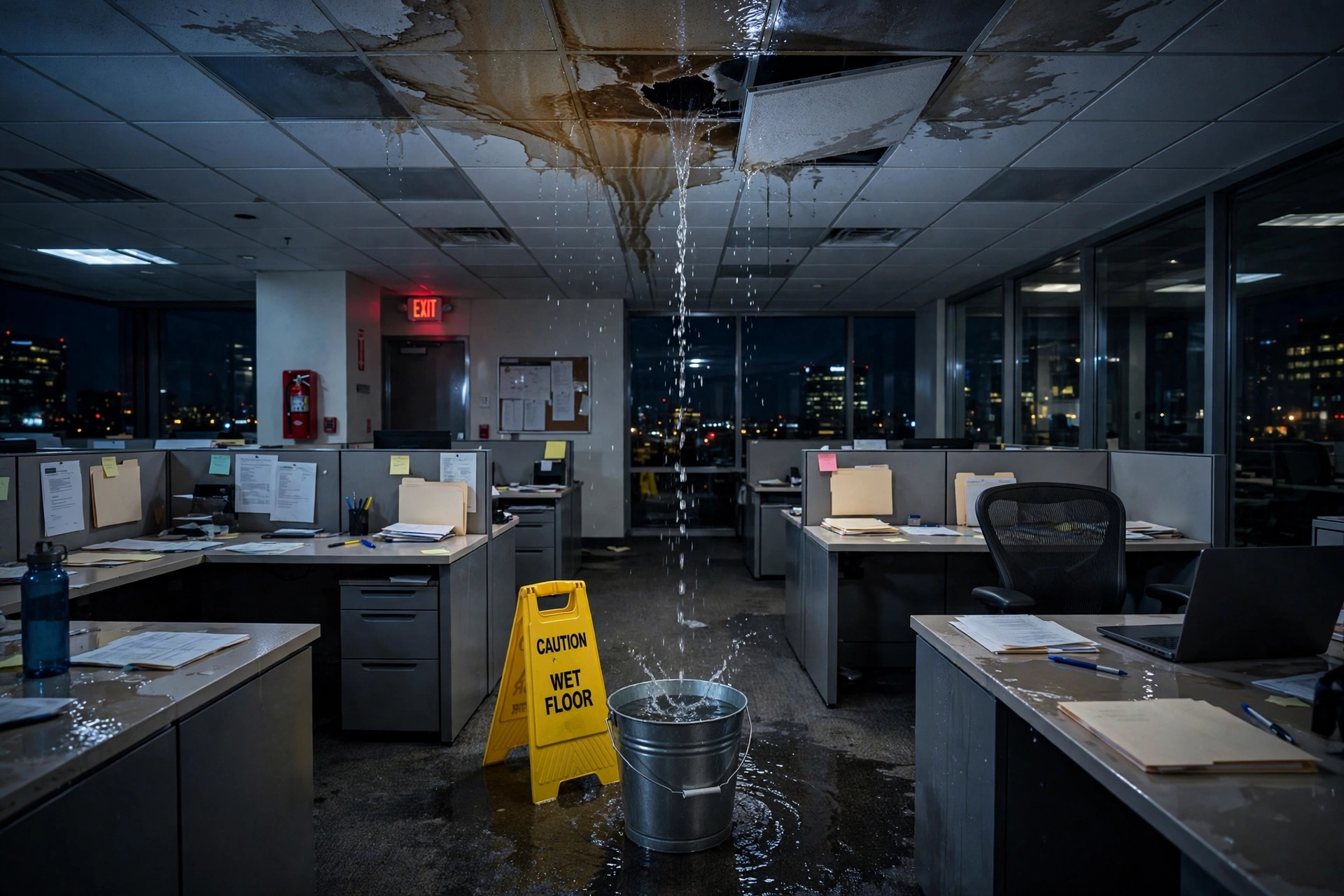
Water is coming through the ceiling at 9 PM. The restaurant dining room is flooding. Tenants are calling. This is not a residential leak with a bucket under the sink — this is a commercial emergency, and the playbook is different. Emergency commercial leak detection exists for exactly this moment: finding the source fast, after…
Water is coming through the ceiling at 9 PM. The restaurant dining room is flooding. Tenants are calling. This is not a residential leak with a bucket under the sink — this is a commercial emergency, and the playbook is different.
Emergency commercial leak detection exists for exactly this moment: finding the source fast, after hours, without tearing the building apart — so the repair crew, the insurer, and your tenants all get answers instead of guesses.
If water is actively damaging your building right now: work the playbook below, then call (512) 729-5265.
The Commercial Emergency Playbook: Isolate → Document → Mitigate → Call
Do these in order. Every step protects you legally and financially — not just physically. Homeowners dealing with a leak should start with these emergency steps for a found water leak.
Step 1: ISOLATE — Stop the water (0–15 minutes)
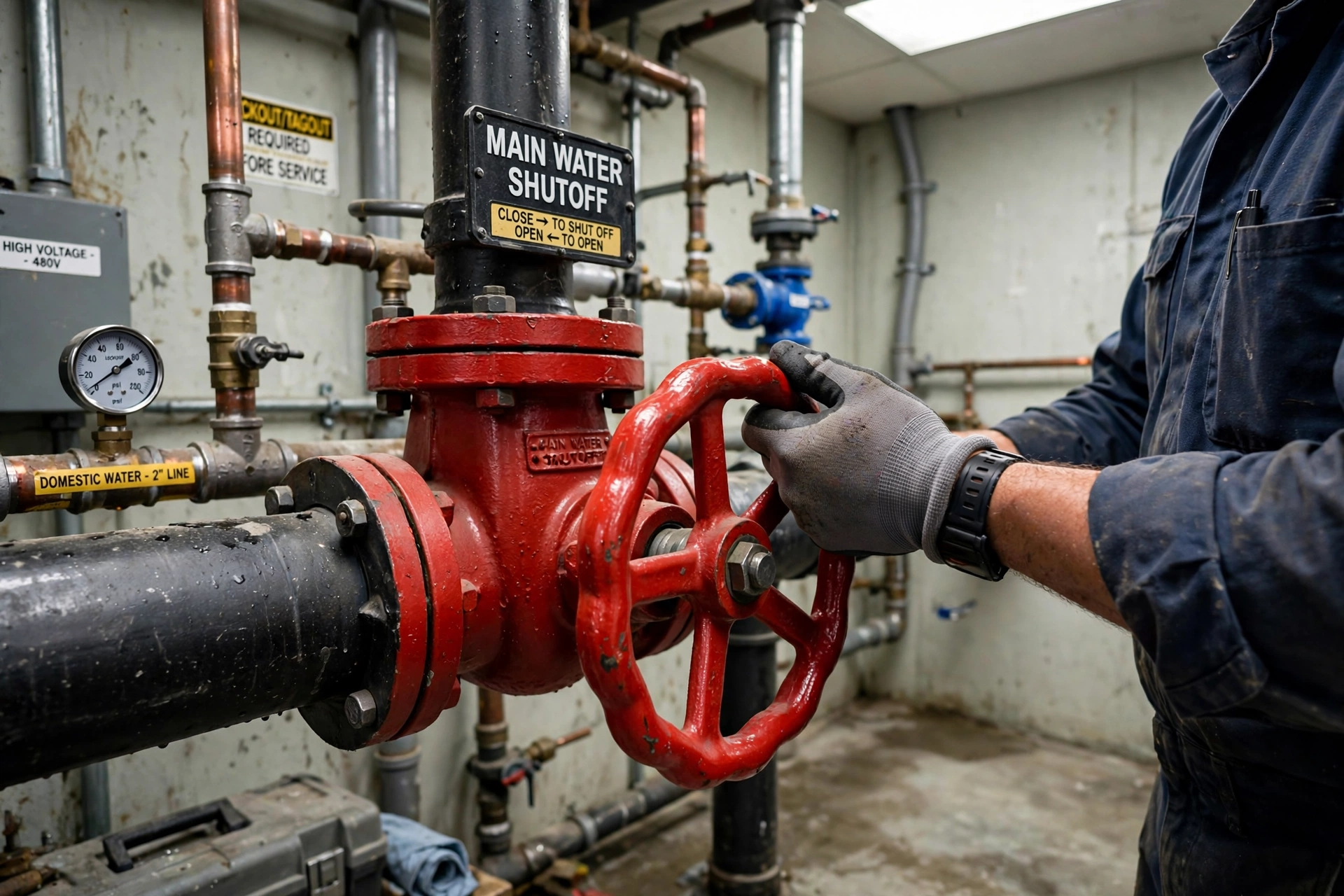
Find the building’s main shutoff and close it. In Kyle commercial buildings, it’s typically:
- A main valve in the utility/mechanical room, or
- A valve at the meter box / backflow preventer assembly near the street.
Know this before the emergency: walk your building this week and confirm the shutoff location, label it, and make sure every manager on every shift knows where it is. The most expensive commercial leaks share one trait — nobody on site knew how to stop the water.
If you can’t find the building shutoff, shut off the zone valve for the affected area. If there’s truly no accessible valve, call the City of Kyle’s utility emergency line for a curb-stop shutoff — and then call us.
Step 2: DOCUMENT — Build the evidence file (15–45 minutes)
Before cleanup changes the scene, photograph and note:
- The water source area and every affected space (wide shots + close-ups, timestamps on)
- The main meter reading (photo it)
- Which areas were occupied, what inventory/equipment got wet
- Who discovered it, when, and what was done in the first 15 minutes
This file serves three masters: the insurance adjuster, the repair scope, and — if a tenant’s property is damaged — your liability defense. Documentation done in the first hour is worth ten times documentation reconstructed a week later.
Step 3: MITIGATE — Limit the damage (first 1–2 hours)
Your commercial property policy almost certainly includes a duty to mitigate — you must take reasonable steps to limit damage, or the insurer can reduce the claim. Reasonable steps:
- Move inventory, equipment, and documents out of the water path
- Get water extraction started (wet vacs for small areas; extraction crew for large)
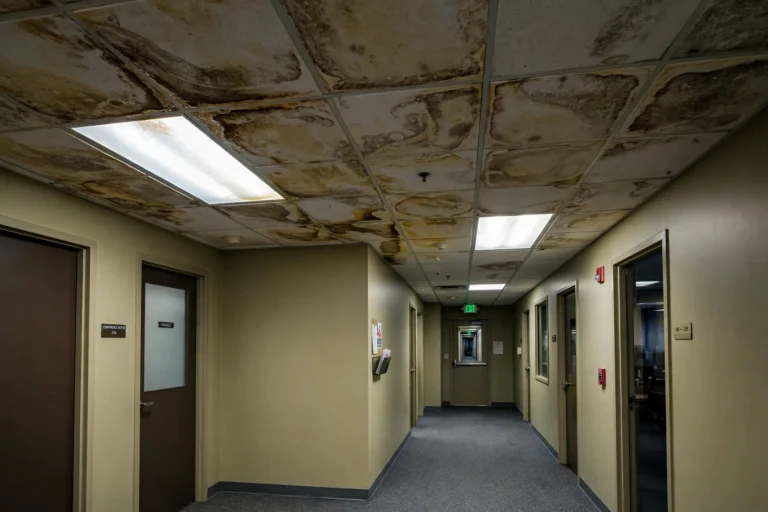
- Set fans and dehumidifiers running; pull wet ceiling tiles so trapped water drains instead of spreading
- If electrical systems are wet, kill power to the affected zone and call an electrician — water + commercial panels is not a DIY moment
Keep every receipt. Mitigation costs are typically reimbursable under the policy.
Step 4: CALL — Detection before repair (tonight, not tomorrow)
Here’s where commercial emergencies diverge from residential ones. A residential plumber at midnight patches the visible break. But in a commercial building, the visible break is rarely the whole story — water travels through plenums and chases, and there may be a second source feeding the same damage.
Emergency commercial leak detection pinpoints every active source with acoustic and thermal equipment — after hours, non-invasively — and delivers the written report the adjuster will ask for. Then the repair crew fixes known problems instead of exploring. Call (512) 729-5265. Our emergency leak detection in Kyle TX team runs this playbook nightly.
Why Commercial Emergencies Are Different (It’s Not Just Scale)
A burst pipe at 2 AM in an office building triggers a different chain of consequences than the same pipe in a house. Here’s what makes the commercial version uniquely urgent — and why emergency commercial leak detection is built for it.
Liability multiplies
A leak in your building that damages a tenant’s inventory, forces a neighboring business to close, or injures someone on a wet floor creates liability exposure that residential leaks never do. Your response timeline — when you were notified, when you acted, what professionals you engaged — becomes evidence. Detection with a timestamped written report is part of that defense.
Inventory and equipment losses
A restaurant’s walk-in cooler on a wet floor. A retail stockroom under a burst supply line. An office server room with water in the ceiling plenum. Commercial leaks threaten revenue-generating assets, not just drywall. Speed of source identification directly limits the loss — which is why detection comes before repair, not after.
Tenants need answers, not guesses
“We think it’s fixed” doesn’t satisfy a tenant deciding whether to reopen tomorrow. A detection report — source identified, location marked, repair scope defined — is what you hand the tenant, the property owner, and the insurer. It turns an incident into a managed event.
Insurance notification timelines
Most commercial policies require prompt notification of a loss — and some define “prompt” as 24–72 hours. Delayed action can reduce or even void coverage (borrowed general principle from commercial claims guidance — check your specific policy language). The playbook above gets you from discovery to professional engagement inside that window.
Emergency Commercial Leak Detection After Hours: How It Actually Works
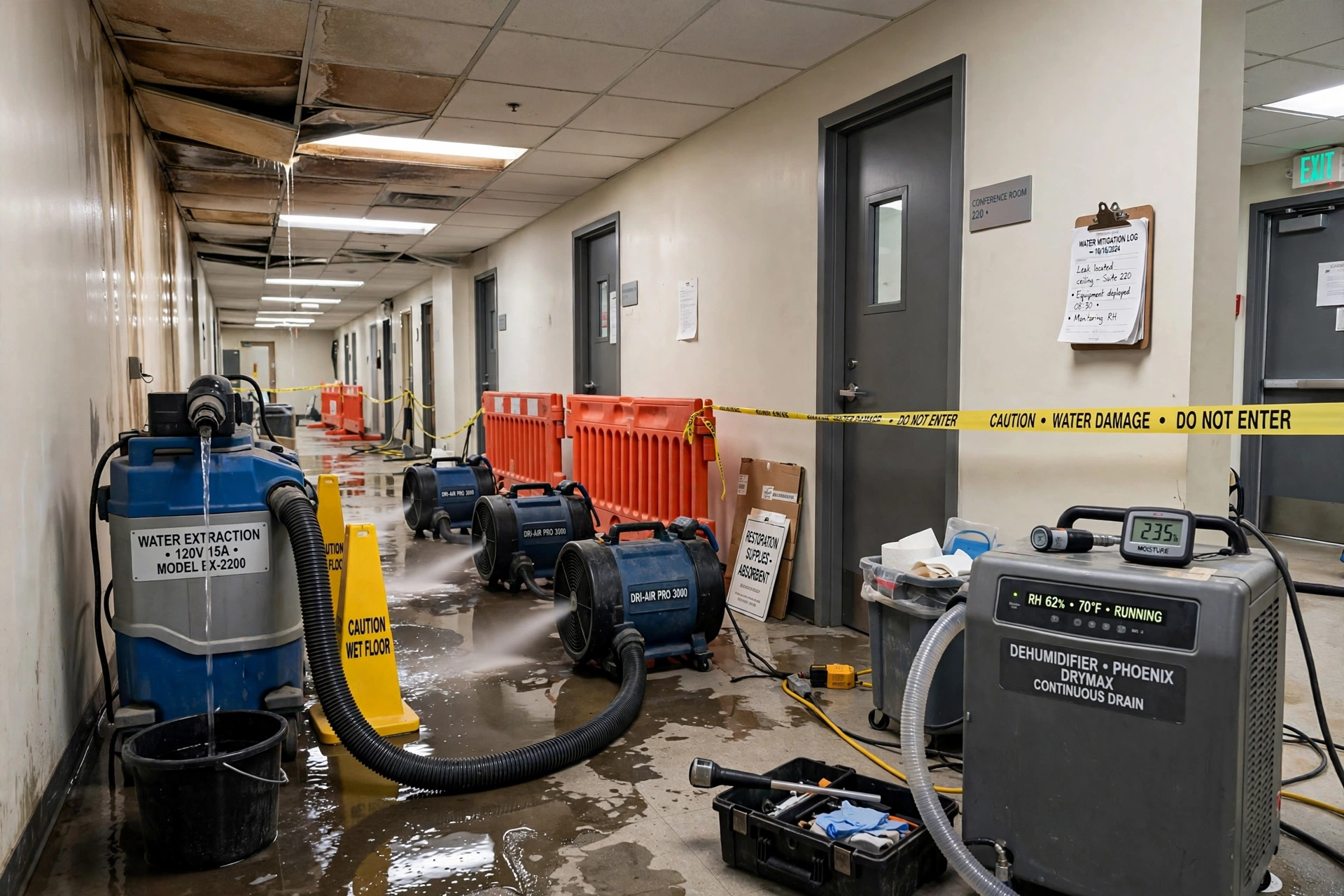
Worried that calling at 10 PM means a bigger mess? Emergency commercial detection is designed around your operations:
- Non-invasive first. Acoustic listening, thermal imaging, and tracer gas need no demolition — the dining room, lobby, or sales floor stays intact while the source is found.
- Zoned work. The crew isolates and surveys the affected zone while the rest of the building keeps operating. A hotel can keep renting rooms on unaffected floors; a restaurant can keep the bar open while the kitchen line is traced.
- Scheduled around trading hours. Detection that can’t finish overnight gets phased: survey tonight, confirm tomorrow during a low-traffic window. Working around your trading hours is the industry standard for commercial detection, not a luxury.
- Report by morning. The written report — methods, photos, marked location — lands in your inbox so the repair bids and the insurance notification go out the same day.
After-hours work costs more than business-hours work (typically a 25–75% premium — see our commercial cost guide). It costs far less than another night of unmitigated water damage.
The 5 Mistakes That Turn Emergencies Into Disasters
- Calling a repair plumber first. They fix what’s visible. The hidden second source keeps leaking, and you pay for two emergencies.
- Skipping documentation. No photos, no meter reading, no timeline — and the adjuster has nothing to work with. Claims die in the gaps.
- Letting staff “wait and see.” Night-shift staff who mop up and don’t escalate turn a 2-hour incident into an 8-hour flood. Every shift needs a leak escalation rule: who to call, in what order.
- Reopening before the source is confirmed. Drying the floor without confirming the source is fixed is how the same ceiling leaks again next week — in front of customers.
- Not notifying the insurer promptly. Check your policy’s notification window tonight, not after the adjuster asks. When in doubt, notify early; you can always withdraw a claim, but you can’t backdate notice.
Frequently Asked Questions
Who handles commercial water leaks after hours in Kyle TX?
A commercial leak detection specialist with after-hours capability — not a residential plumber. You need zone isolation, non-invasive location, and a written report for the insurer. Call (512) 729-5265.
What should I do first when water is flooding my business?
Isolate (shut off the building’s main water), document (photos, meter reading, timeline), mitigate (move assets, extract water, start drying), then call for emergency detection. In that order.
How fast can emergency commercial leak detection find the source?
Most commercial sources are pinpointed in a single after-hours visit — typically 2–4 hours on site depending on building size and zones involved. The written report follows the same night or next morning.
Will after-hours detection disrupt my business?
That’s the point of it — no. Non-invasive methods need no demolition, work is zoned so unaffected areas keep operating, and scheduling wraps around your trading hours.
Does my commercial insurance cover the detection cost?
Often the detection is covered as part of the loss investigation, especially when the report supports the claim — but policy language varies. Notify your insurer promptly, keep the detection invoice and report, and let the adjuster see the documentation. (General information, not policy advice — check your coverage.)
Tonight’s Checklist for Every Kyle Business Owner
Don’t wait for the 9 PM ceiling leak to discover your gaps. This week:
- ☐ Locate and label the building’s main water shutoff
- ☐ Confirm every shift manager knows the isolate → document → mitigate → call sequence
- ☐ Save (512) 729-5265 in the building’s emergency contacts
- ☐ Check your policy’s loss-notification window
- ☐ Photograph the current meter reading (your baseline)
Emergency commercial leak detection is the call that turns a flood into a managed incident. Make it tonight if you need it — (512) 729-5265 — or make the preparations this week so you never need it at 9 PM. Either way, start with commercial leak detection in Kyle TX.