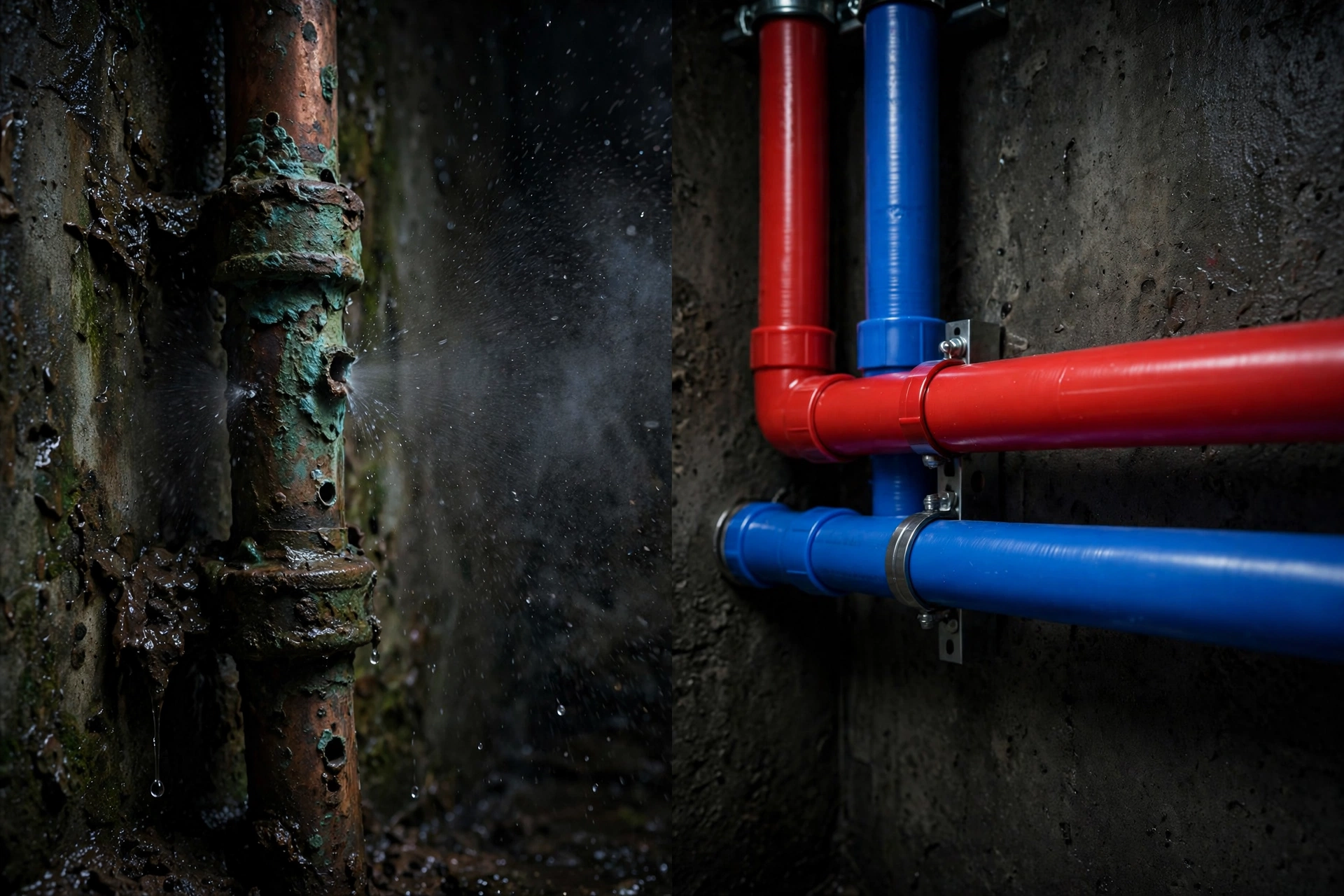
Why Do Slab Leaks Keep Coming Back? 5 Reasons (and How to Stop Them)
This is the second leak in two years. Or the third. Each time, someone fixes the spot, patches the concrete, and tells you it’s handled — and then the water bill climbs again six months later. If you’re asking why slab leaks keep coming back, here’s the uncomfortable truth about recurring slab leak causes: a…
This is the second leak in two years. Or the third. Each time, someone fixes the spot, patches the concrete, and tells you it’s handled — and then the water bill climbs again six months later.
If you’re asking why slab leaks keep coming back, here’s the uncomfortable truth about recurring slab leak causes: a repeat slab leak usually isn’t bad luck. It’s a systemic problem — something wrong with the whole piping system, the water running through it, or the ground around it. Fixing one spot doesn’t fix the system.
The 5 Most Common Recurring Slab Leak Causes
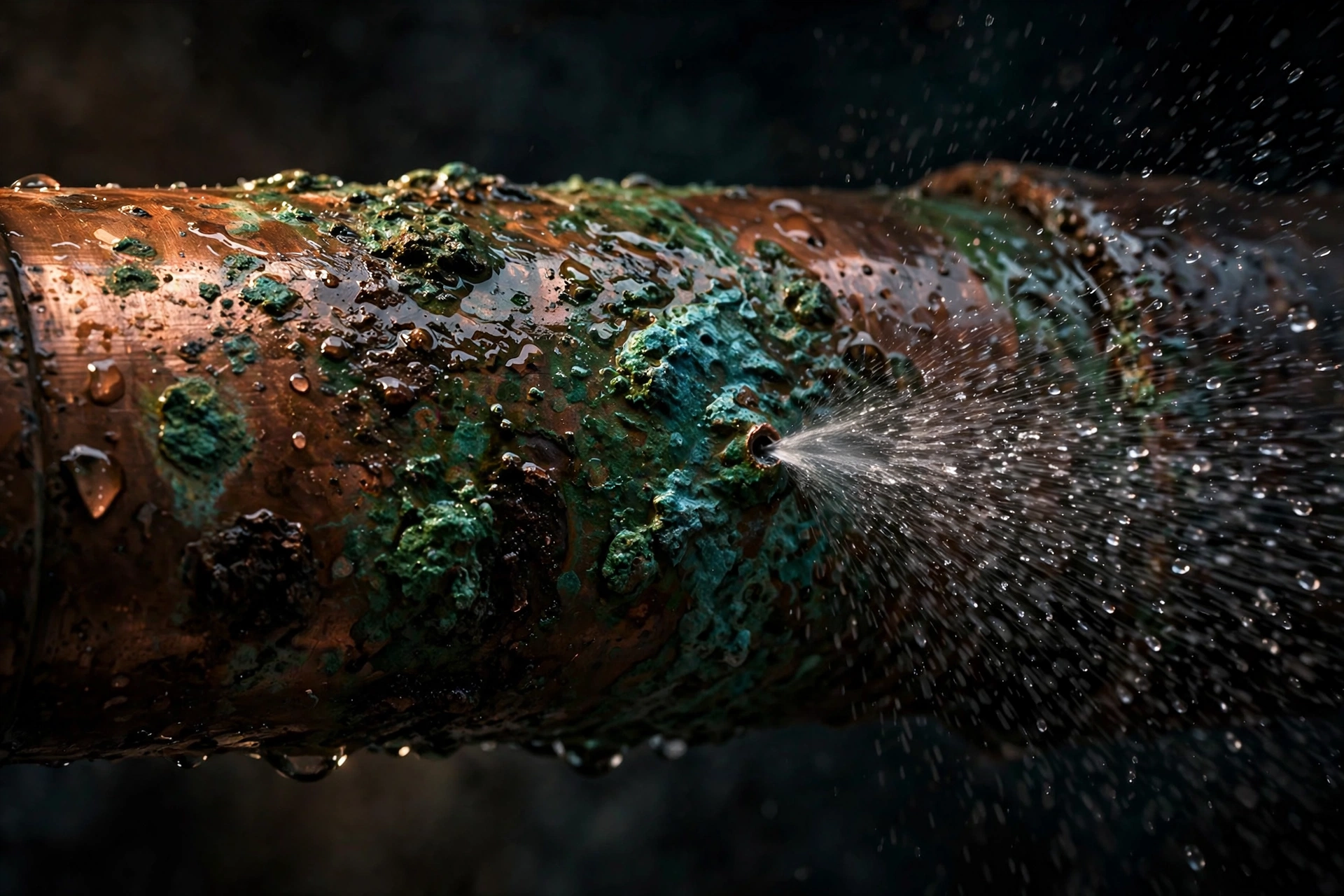
Here are the five recurring slab leak causes we see in Kyle homes, and what actually stops the cycle.
Reason 1: The Pipe Is Corroded Everywhere, Not Just Where It Leaked
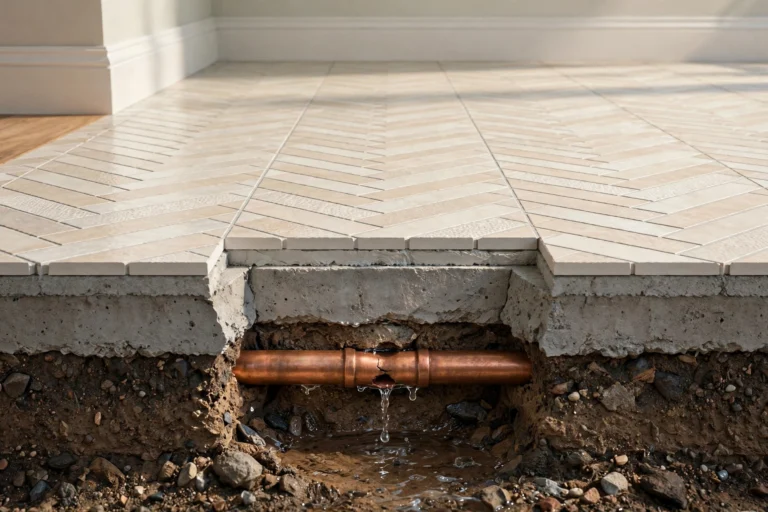
This is the #1 of the recurring slab leak causes, and it’s pure logic: if one section of copper pipe corroded through, the rest of the pipe — same age, same water, same soil — is on the same timeline.
Kyle’s municipal water runs 260–315 mg/L hardness — officially very hard. That mineral load attacks copper from the inside out, creating pinhole after pinhole. The first leak gets fixed. The second pinhole, six inches down the same line, was already forming when the plumber left.
The pattern: leaks appear in different spots along the same pipe run, months apart. Each individual repair is “successful” — and completely misses the point.
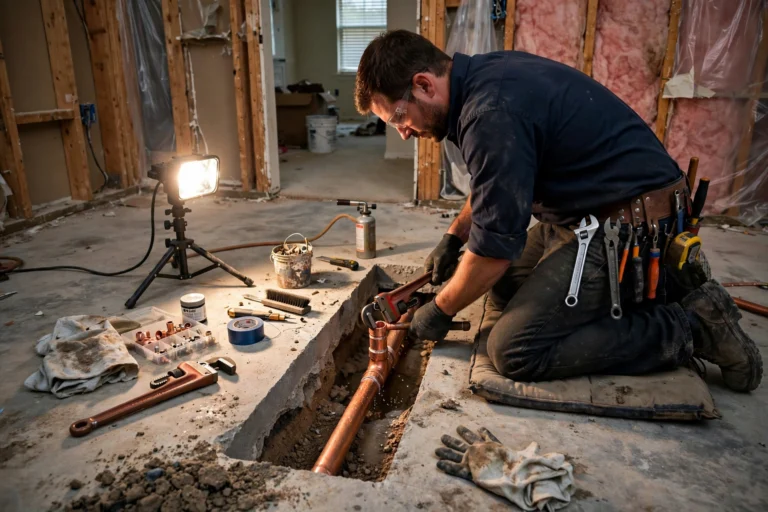
What stops it: when the pipe is systemically corroded, stop spot-fixing and reroute or repipe. Running a new PEX line through the attic abandons the entire failing run at once. It’s more money upfront ($2,000–$6,000+ for a reroute) than another $500–$2,000 spot repair — but it’s the last time you pay for that line.
Reason 2: High Water Pressure Is Still Hammering Your Pipes
Anything above 80 psi at your hose bib is too much pressure, and plenty of Kyle homes — especially on higher-elevation lots or near pumping stations — run 90–110 psi around the clock.
High pressure doesn’t cause a leak overnight. It accelerates everything: it stresses every joint, worsens water hammer, and turns small weaknesses into failures years early. Fix the leak without fixing the pressure, and you’ve repaired the symptom while the cause keeps working.
The pattern: leaks at joints and fittings rather than mid-pipe, sometimes accompanied by banging pipes, dripping faucets, or a water heater relief valve that weeps.
What stops it: a $10 pressure gauge on your hose bib tells you the truth in 30 seconds. If you’re over 80 psi, a pressure regulator at the main (around $150–$300 installed) is the cheapest slab-leak insurance you can buy. Every repeat-leak home should have its pressure checked — it’s the most overlooked of all recurring slab leak causes. (More: high water pressure in Kyle homes.) For ongoing monitoring, the EPA’s WaterSense program (epa.gov/watersense) offers household leak-detection tips that help catch the next pinhole early.
Reason 3: Kyle’s Clay Soil Keeps Moving the Pipes
Kyle sits on Blackland Prairie clay — the kind that swells dramatically when wet and shrinks when dry. Every summer-to-rainy-season cycle is a shrink-swell event, and each one puts shear stress on every pipe joint under your slab.
Here’s the vicious part: the first leak wets the soil, which makes the clay swell, which moves the slab, which stresses other joints — which then leak. The leak literally creates the conditions for the next leak. We call it the heave cycle, and of all the recurring slab leak causes, this one is the most Kyle-specific — it’s the reason slab leaks cluster in Kyle’s clay-soil neighborhoods.
The pattern: new leaks appearing after heavy rain seasons or drought-then-deluge cycles. Often in homes where the first leak was “fixed” but the soil moisture was never stabilized.
What stops it: you can’t change the soil, but you can reduce the swings — consistent foundation watering (soaker hose, 1–1.5 feet from the perimeter, May through October) keeps moisture stable instead of cycling between soaked and bone-dry. And when repairing, rerouting through the attic takes the pipe out of the moving soil entirely. (Deeper dive: slab leaks and Kyle’s clay soil.)
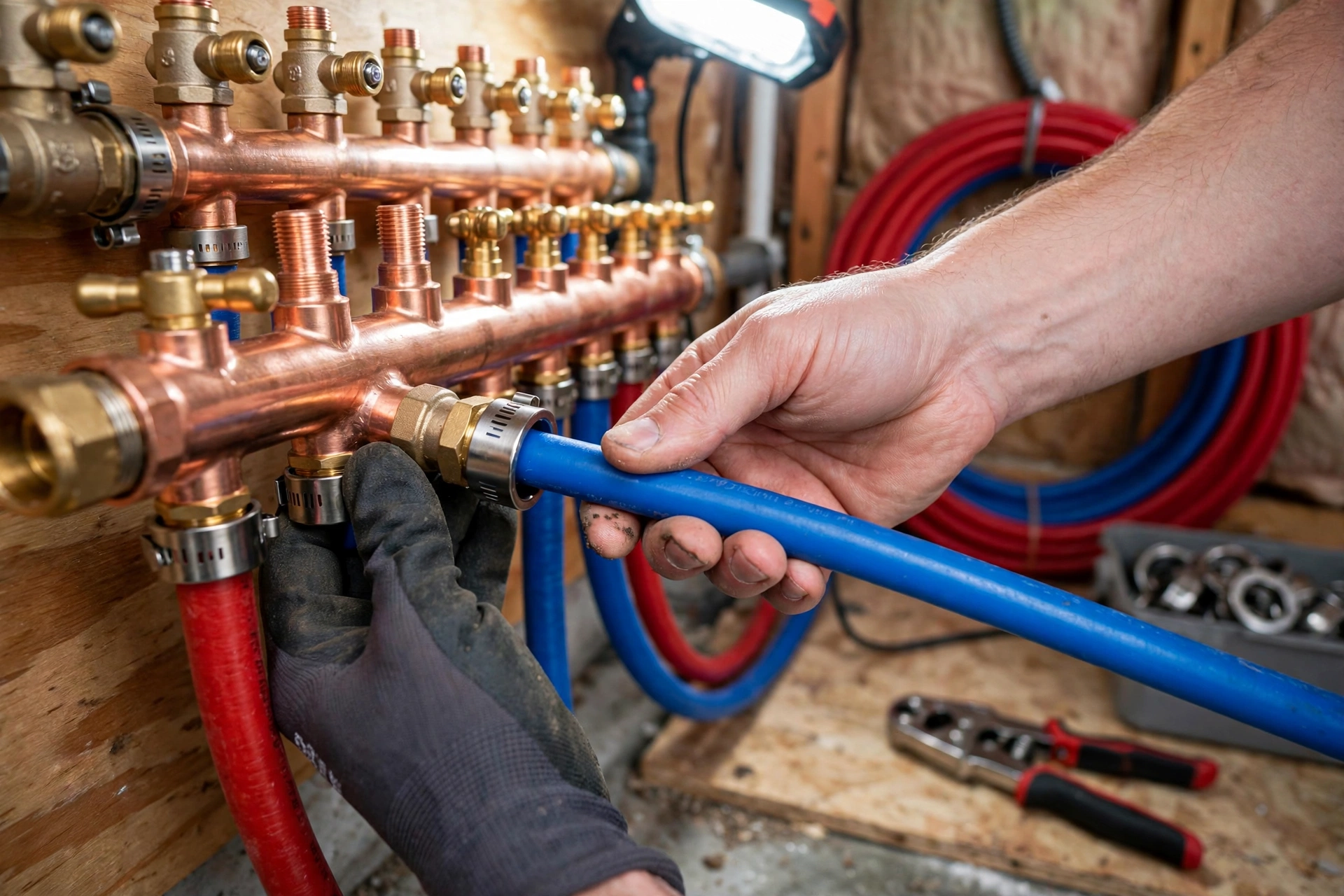
Reason 4: Electrolysis Is Eating Your Copper Underground
Electrolysis is the silent killer of copper pipe: tiny electrical currents flowing between dissimilar metals in damp soil literally dissolve copper atoms. It’s invisible, it’s constant, and it doesn’t care how new the pipe is. As recurring slab leak causes go, electrolysis is the hardest to spot without proper testing.
Common triggers in Kyle homes:
- Copper pipe in direct contact with concrete or rebar (no protective sleeve — common in rushed boom-era construction)
- Dissimilar metals joined without dielectric unions (copper to galvanized steel)
- Stray current from nearby electrical grounding issues
The pattern: pinhole leaks appearing in pipe that “shouldn’t” be failing yet — sometimes in homes under 15 years old. The leaks look like tiny green-crusted pinholes, often in clusters.
What stops it: proper dielectric separation at metal transitions, sleeving where pipe meets concrete, and — for a system already compromised — abandoning the copper run for PEX, which is immune to electrolysis entirely. A good detection visit can identify whether electrolysis is the culprit by the leak pattern.
Reason 5: The First Repair Was a Patch, Not a Fix
Sometimes leaks “come back” because the first repair never actually addressed the problem. The last of the five recurring slab leak causes is the most frustrating — because it was preventable:
- The wrong spot was opened. Without proper acoustic/thermal detection, someone jackhammered on a guess and missed the actual leak — or fixed a secondary leak while the primary kept running.
- A partial repair on a failing joint. Replacing 6 inches of a corroded 20-foot run.
- No pressure test after repair. The system was never verified, so a second weak point went unnoticed.
- Drain-side vs. supply-side confusion. A hydrostatic test finds drain leaks; a pressure test finds supply leaks. Running the wrong test “clears” a system that isn’t clear.
The pattern: the “same” leak returning within weeks or months of a repair — often in the exact same area.
What stops it: detection before repair, every time. A proper slab leak detection visit in Kyle TX ($150–$400) with the right equipment for the right pipe type, ending in a written report. If your last repair didn’t start with detection, that might be the whole story.
The 2-Leak Rule: When to Stop Spot-Fixing
Once you know which recurring slab leak causes are at work in your home, here’s the decision framework:
- First leak, healthy pipe: spot repair is fine. Fix it, verify with a pressure test, move on.
- Second leak within 2–3 years: serious warning sign. Get the whole system assessed — pressure test, pipe age/material review, water pressure check.
- Second leak + old copper + hard water + clay soil: stop spot-fixing. Reroute or repipe. You’re not repairing anymore, you’re subscribing.
The math: three spot repairs at $1,500 each is $4,500 — roughly the cost of a reroute that ends the problem permanently. Homeowners who keep patching usually spend more over five years than the reroute would have cost, plus they live with the disruption three times instead of once.
What a Systemic Assessment Looks Like
If recurring slab leak causes are at work in your home and you’re in repeat-leak territory, don’t just call for another spot repair. Ask for:
- Full-system pressure test — not just the repaired section.
- Water pressure reading at the hose bib (should be ≤80 psi).
- Pipe material and age assessment — copper from the 90s–2000s in Kyle’s hard water is prime repeat-leak territory.
- Water quality check — hardness and pH affect corrosion rates.
- A written recommendation: repair vs. reroute vs. repipe, with the reasoning.
This is a diagnostic visit, not a sales pitch. The answer might still be “spot repair” — but now it’s an informed spot repair.
Frequently Asked Questions
Why do slab leaks keep coming back?
The five most common recurring slab leak causes are: system-wide pipe corrosion (especially copper in hard water), uncorrected high water pressure, clay soil movement stressing joints, electrolysis dissolving copper, and incomplete first repairs. Repeat leaks are usually systemic, not bad luck.
How many slab leaks before I should repipe?
The practical rule: two leaks within 2–3 years in the same system means stop spot-fixing. At that point, rerouting or repiping is usually cheaper over five years than continued patching — and it ends the disruption cycle.
Does hard water cause repeat slab leaks?
Yes. Kyle’s very hard water (260–315 mg/L) accelerates pinhole corrosion in copper pipe from the inside out. A water softener slows future corrosion but can’t reverse damage already done — which is why corroded systems need rerouting, not just softening.
Can high water pressure cause slab leaks to recur?
Absolutely. Pressure above 80 psi stresses every joint 24/7 and accelerates failures. It’s one of the most overlooked causes of repeat leaks — a $10 gauge and a $150–$300 regulator can prevent the next one.
Is it worth fixing the same slab leak twice?
Rarely. If the same area leaks again, either the first repair missed the real problem or the pipe run is systemically failing. Get a full-system assessment before authorizing another spot repair.
Break the Cycle — Start With a Real Diagnosis
Repeat slab leaks aren’t a curse — they’re recurring slab leak causes telling you something. $150–$400 of professional detection — full-system pressure test, pipe assessment, water pressure check — tells you whether you’re dealing with one bad joint or a failing system.
Call Kyle Leak Detection Pros at (512) 729-5265. We’ll find the real cause — not just the latest symptom. For the full picture, see our complete slab leak guide for Kyle.