Hot Water Slab Leak Signs: 7 Ways to Tell in Kyle TX (2026)
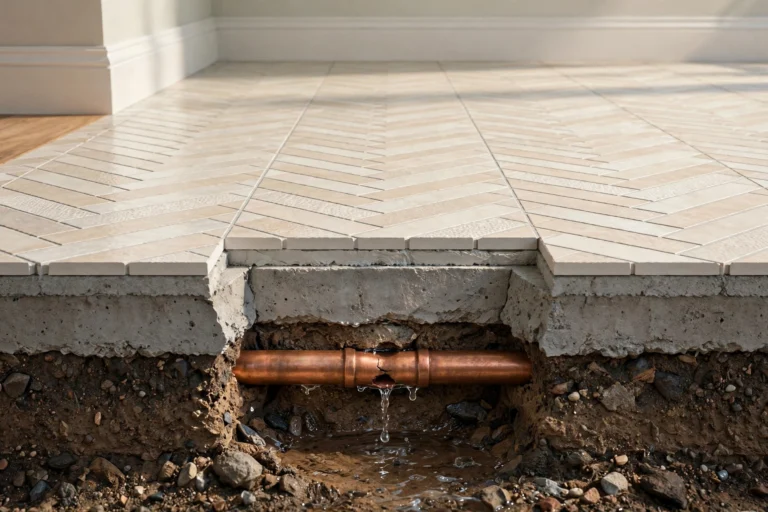
There’s a warm spot on your tile floor that wasn’t there last month. Is it a hot water slab leak, or just Texas heat radiating through the slab? Knowing the difference matters — because hot water slab leak signs point to a specific pipe, a specific repair, and a specific urgency level. Here’s how to…
There’s a warm spot on your tile floor that wasn’t there last month. Is it a hot water slab leak, or just Texas heat radiating through the slab? Knowing the difference matters — because hot water slab leak signs point to a specific pipe, a specific repair, and a specific urgency level.
Here’s how to tell whether your slab leak is on the hot-water line or the cold-water line, why hot lines fail first in Kyle homes, and what each type means for your repair bill. Recognizing hot water slab leak signs early can save you thousands in water damage.
Quick self-check: a warm floor spot + a rising gas or electric bill = hot-water line leak until proven otherwise. A spinning water meter with no warm spots = cold-water line leak. Either way, confirm it with professional slab leak detection in Kyle TX (1–2 hours, $150–$400) before authorizing any repair. Call (512) 729-5265.
Hot Water Slab Leak Signs: Why Hot Lines Leak More Often
Hot water lines fail first, and it’s simple physics: thermal expansion and contraction. Every time hot water runs, the pipe expands; when it cools, it contracts. That constant movement — hundreds of cycles a month — works pipe joints loose and wears copper against concrete. Cold lines sit at a stable temperature and mostly avoid this stress.
In Kyle, two local factors make it worse:
- Very hard water (260–315 mg/L). Mineral scale builds up faster in hot water lines, accelerating pinhole corrosion from the inside out. Your water heater and hot-water lines take the hardest hit.
- High water pressure. Kyle homes on elevated lots or near pumping stations often see 90–110 psi (anything over 80 is too high). Pressure + thermal cycling is the combination that kills hot-water lines early.
The practical upshot: when a Kyle homeowner finds a slab leak, it’s the hot-water line more often than not. The City of Kyle publishes water quality data confirming our hard water levels.
Hot Water vs Cold Water Slab Leak: Symptom Comparison
| Symptom | Hot-water line leak | Cold-water line leak |
|---|---|---|
| Warm spot on floor | Yes — the telltale sign | No |
| Water bill jumps | Yes | Yes |
| Gas/electric bill rises | Yes (heater runs constantly) | No |
| Sound of running water | Yes | Yes |
| Water meter spins (everything off) | Yes | Yes |
| Damp flooring / musty smell | Yes | Yes |
| Hot water runs out faster | Yes | No |
Notice that most symptoms overlap. The warm floor spot is the single symptom that separates them — everything else just confirms a leak exists. These hot water slab leak signs are your best early warning system.
7 Ways to Tell Which Line Is Leaking
1. Feel for the Warm Spot
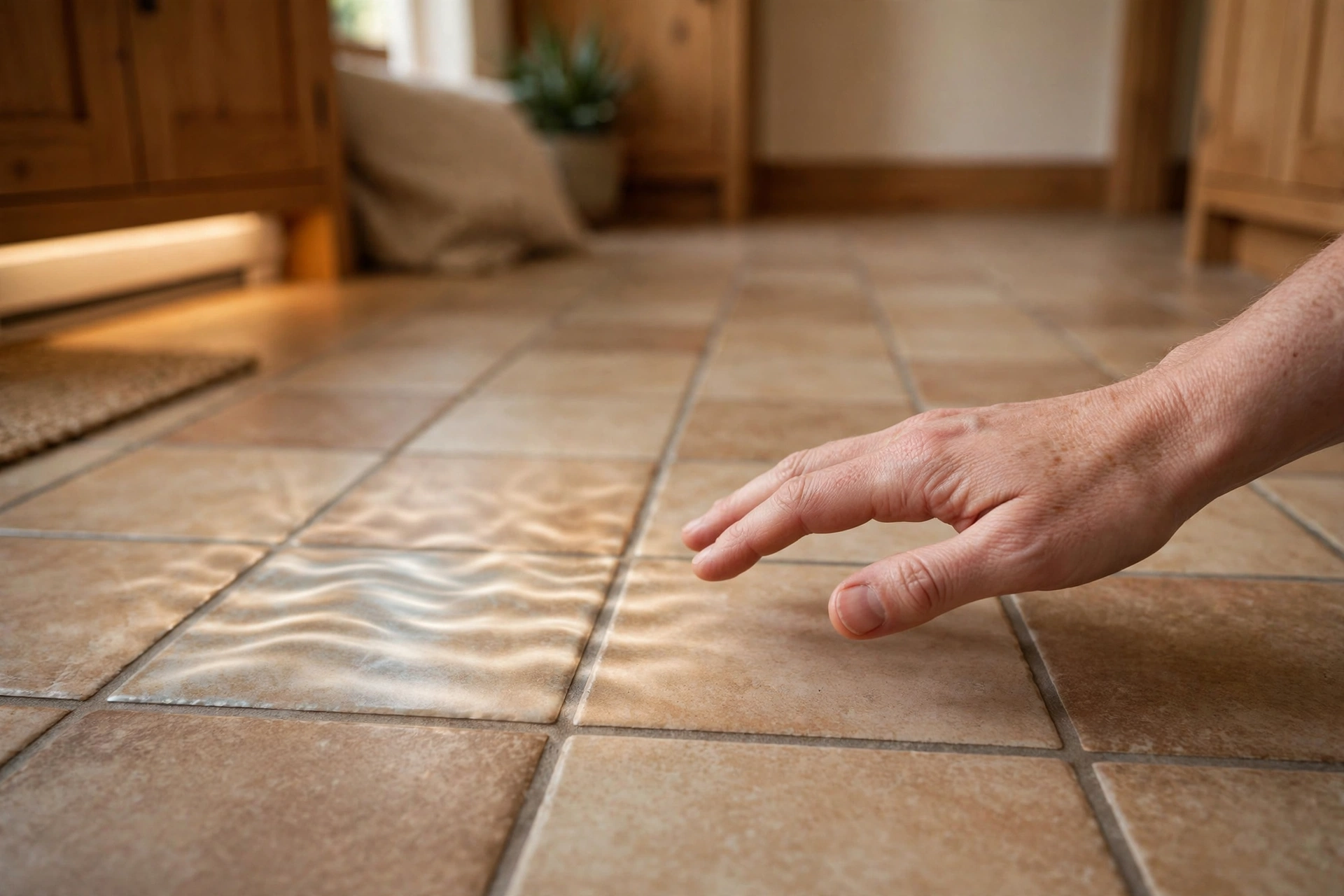
Walk barefoot across your tile or laminate floors, especially in hallways and near bathrooms. A hot-water slab leak creates a distinct warm patch — noticeably warmer than the surrounding floor, sometimes hot. Cold-water leaks never do this. If you find one, you’ve almost certainly got a hot-line leak.
2. Check Your Energy Bill, Not Just Your Water Bill
A hot-water leak forces your water heater to run constantly to replace the escaping hot water. If your gas or electric bill jumped alongside your water bill, that’s a hot-line leak signature. Cold-line leaks only move the water bill.
3. Run the Hot Water and Time It
Turn on a hot tap far from the water heater. If hot water takes much longer to arrive than it used to — or never gets fully hot — a leak may be bleeding heat (and water) under the slab before it reaches you.
4. Listen at Night
Stand quietly in the hallway late at night with everything off. A faint hissing or rushing sound suggests a pressurized leak. This works for both types — but combined with a warm spot, it confirms hot-line.
5. Do the 15-Minute Meter Test
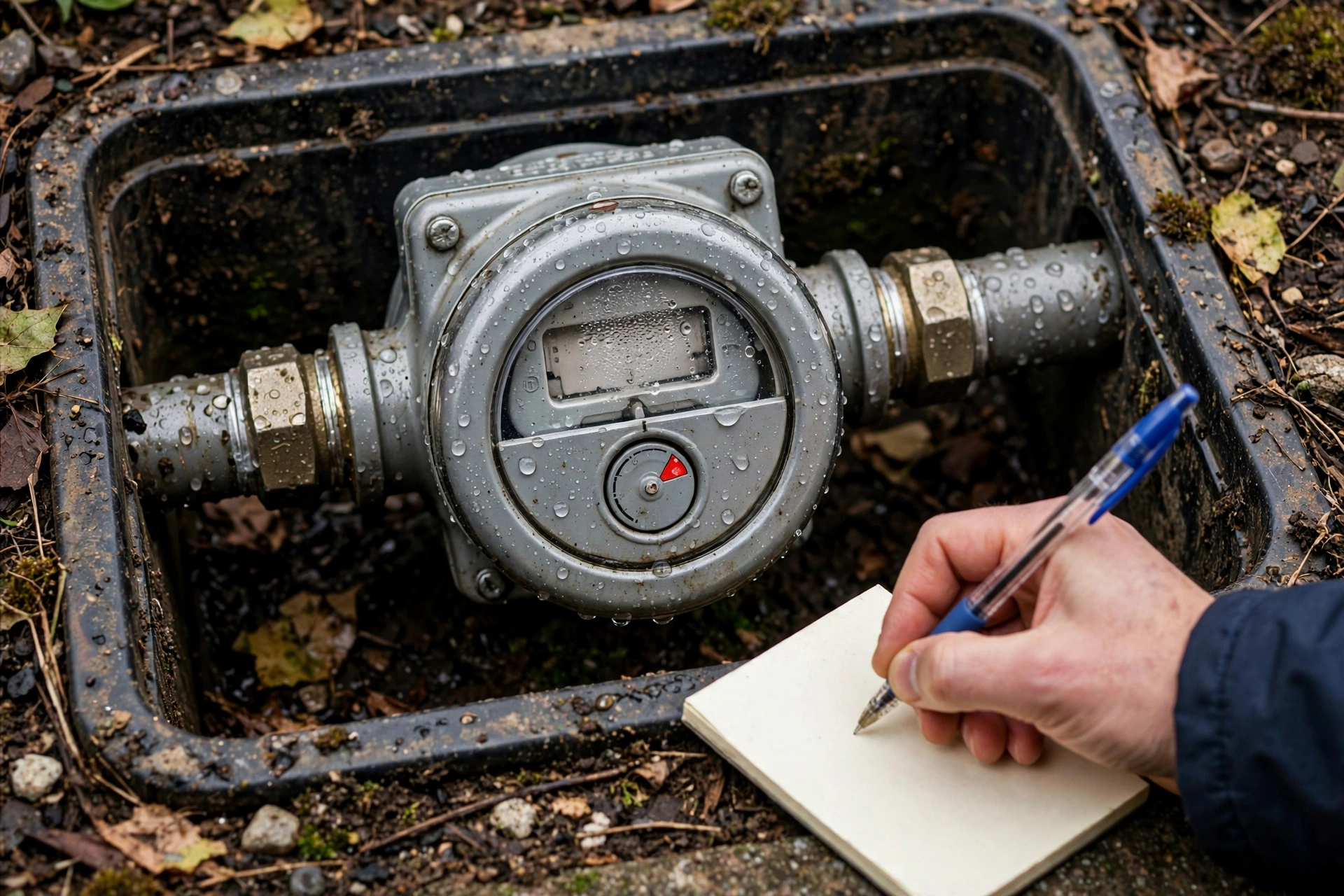
Turn off everything (ice makers, irrigation, softeners), note the meter reading, wait 15 minutes, check again. Any movement = a pressurized supply leak, hot or cold. This is the single most reliable homeowner test — it just doesn’t tell you which line.
6. Check for Damp Spots Without Warmth
Damp carpet, warped laminate, or a musty smell without any warm floor area points to the cold-water line. The water is still damaging everything it touches — it’s just not heated.
7. Get a Thermal Imaging Scan
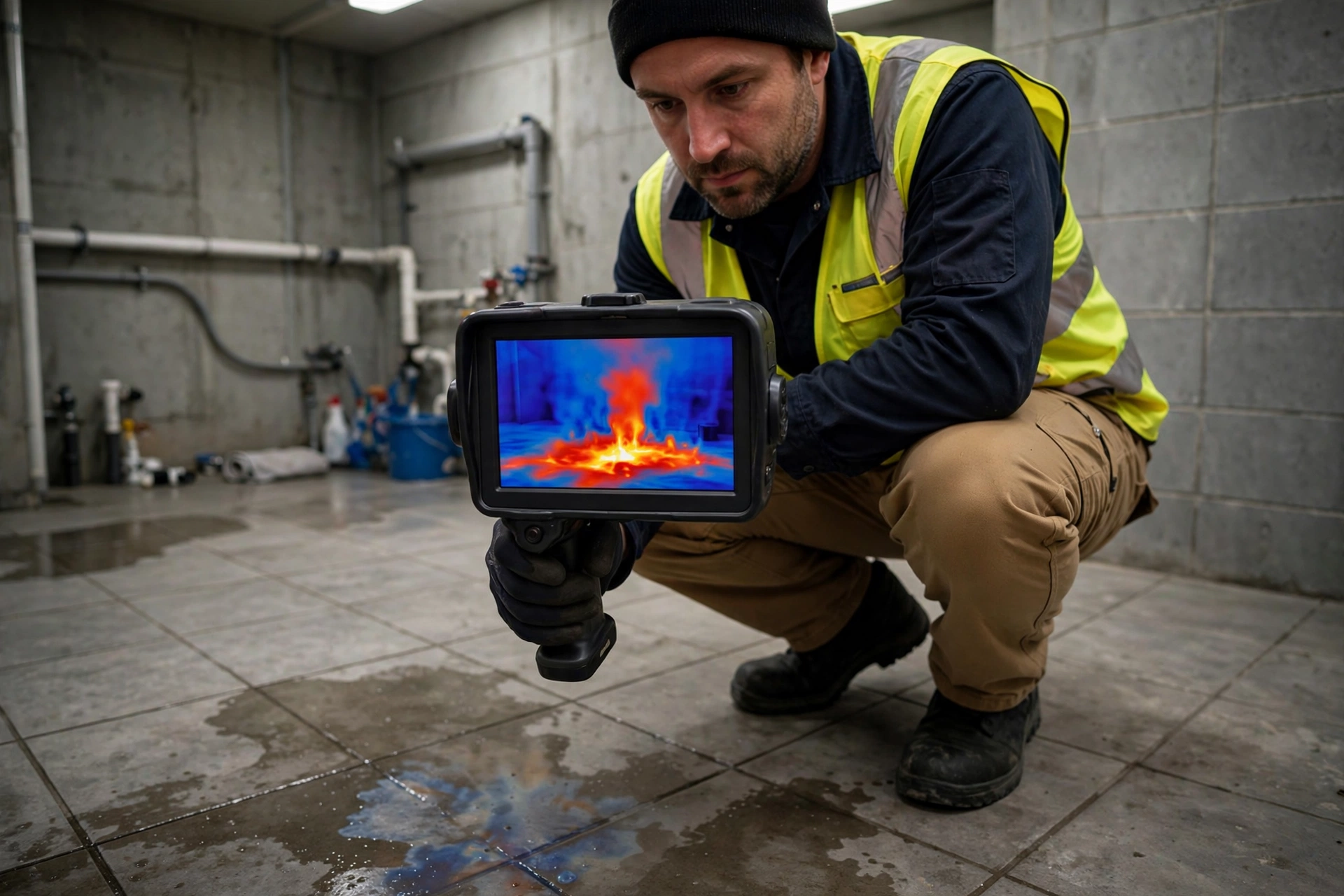
This is the definitive answer and exactly what professionals do: an infrared camera shows a hot-water leak as a bright heat plume spreading through the concrete. Cold-water leaks don’t show on thermal — which itself is diagnostic. A professional detection visit uses thermal plus acoustic listening to identify not just the location but which line is leaking. These advanced hot water slab leak signs confirm the diagnosis.
What Each Type Means for Repair
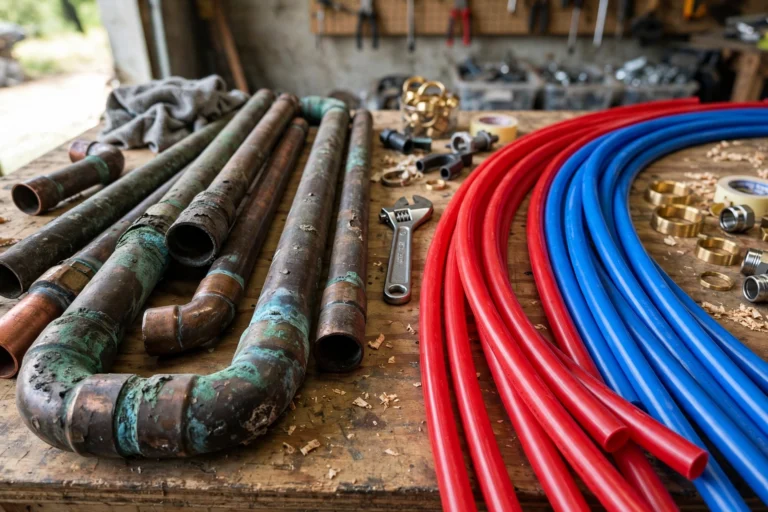
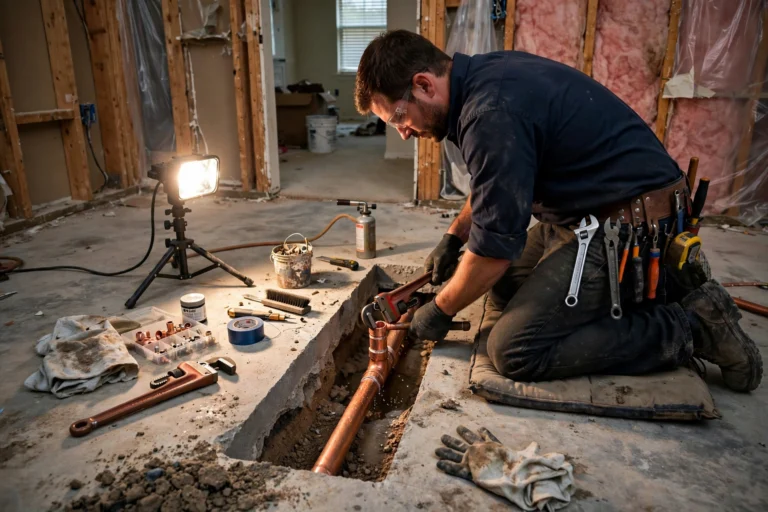
Hot-water line leaks are usually repaired by rerouting the hot line through the attic (new PEX) or spot-repairing the breach. Because hot lines fail from systemic stress (expansion + hard water + pressure), ask your plumber about the condition of the rest of the hot-water system — fixing one pinhole while three more are forming is a losing game. Spotting hot water slab leak signs early helps you address systemic issues before they multiply.
Cold-water line leaks are more often one-off events: a bad joint, a rock against the pipe, a single corrosion spot. Spot repair is frequently the right call — unless your home’s copper is old enough that cold lines are corroding system-wide too.
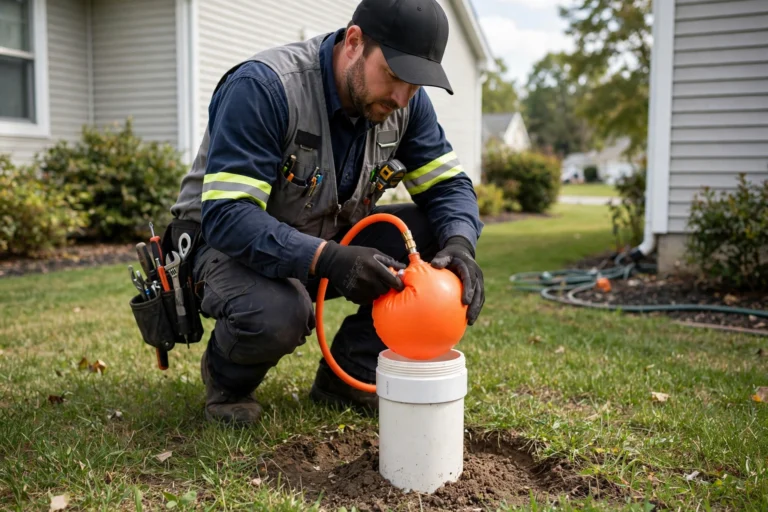
Either way, a pressure test during detection identifies which side is losing pressure (hot, cold, or both), cutting the search area dramatically. That’s standard in a proper detection visit. Recognizing hot water slab leak signs beforehand helps the technician focus the search.
Don’t Confuse These With Slab Leaks
Before you panic about a warm floor, rule out the lookalikes:
- Sun-heated slab. Tile near a sunny window or sliding door feels warm in the afternoon — but it cools by evening. A leak-driven warm spot is warm 24/7.
- In-floor heating. Rare in Kyle, but some upgraded homes have radiant floor zones. Check your thermostat.
- Water heater issues. A failing water heater can cause the “hot water runs out fast” symptom without any slab involvement — check the heater’s pan and T&P discharge line first.
- Irrigation leaks. A broken sprinkler head floods the same soil a slab leak would, but it won’t warm your floor.
The meter test settles it: if the meter spins with everything off, the leak is in your plumbing system. If there’s a persistent warm spot too, it’s the hot-water line. (More: 7 slab leak warning signs Kyle homeowners shouldn’t ignore.)
Frequently Asked Questions
Why do hot water lines leak more than cold water lines?
Thermal expansion and contraction: hot pipes expand when heated and contract when cooled, cycling hundreds of times a month. That movement loosens joints and wears copper against concrete. Kyle’s very hard water (260–315 mg/L) accelerates the corrosion on top of it.
Can a slab leak be on both hot and cold lines?
It’s possible but uncommon. Detection testing isolates each side with pressure gauges, so you’ll know exactly which line (or lines) is losing pressure before any repair is planned.
Does a hot water slab leak cost more to repair?
Not necessarily — the repair method depends on location and pipe condition, not water temperature. But hot-line leaks more often lead to rerouting (rather than spot repair) because the whole hot-water system may be stressed, which costs more upfront.
Will my water heater be damaged by a hot water slab leak?
It can be overworked: a constant leak forces the heater to run far more than designed, shortening its life and spiking energy bills. Fixing the leak promptly protects the heater too.
How do professionals tell hot from cold slab leaks?
Three ways: thermal imaging (hot leaks glow on infrared), pressure testing each side separately, and acoustic listening. A proper detection visit identifies the line as part of the standard process.
Know Which Line Before Anyone Digs
Guessing wrong wastes money: the wrong test, the wrong repair plan, the wrong spot opened. A 1–2 hour detection visit tells you exactly which line is leaking and precisely where — the foundation of every smart repair decision. Understanding hot water slab leak signs is the first step toward a smart repair.
Call Kyle Leak Detection Pros at (512) 729-5265. Detection first, written report, no jackhammer on a guess. For the complete picture, see our slab leak guide for Kyle TX.