Can a Slab Leak Be Fixed Without Breaking the Floor? 3 Methods That Save Your Floors
You just remodeled the kitchen. The tile is perfect, the grout lines are straight — and now someone tells you there might be a leak under the slab. The first question every Kyle homeowner asks is the same: can a slab leak be fixed without breaking the floor? The short answer is yes — in…
You just remodeled the kitchen. The tile is perfect, the grout lines are straight — and now someone tells you there might be a leak under the slab. The first question every Kyle homeowner asks is the same: can a slab leak be fixed without breaking the floor?
The short answer is yes — in most cases. There are three established methods to fix slab leak without breaking floor in Kyle homes, and which one fits yours depends on the leak’s location, your pipe’s condition, and what your floors are worth to you.
This guide walks through each method honestly: what it costs, when it works, and when breaking the floor is actually the smarter move.
Why Homeowners Fear the Jackhammer
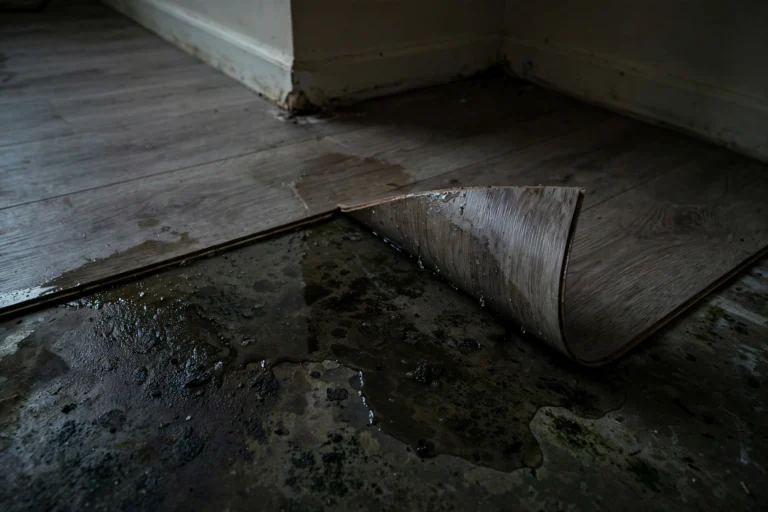
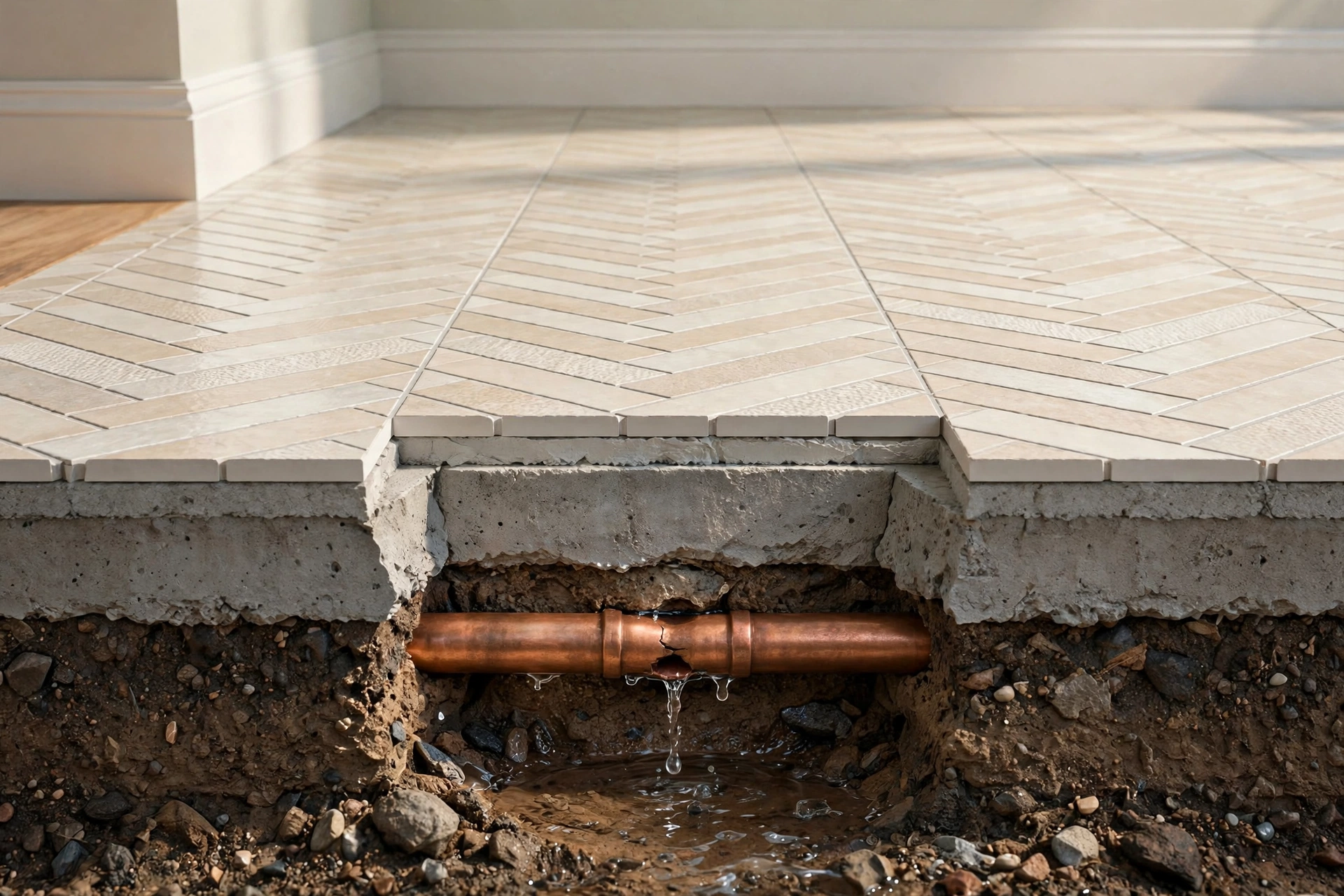
Let’s be honest about what “breaking the floor” really means. A traditional spot repair means cutting a hole through your tile, wood, or laminate, jackhammering 4–6 inches of concrete, fixing the pipe, then patching concrete and trying to match flooring that may be discontinued.
In Kyle’s newer subdivisions — Plum Creek, Six Creeks, Crosswinds — many homes have large-format tile or engineered hardwood that costs $8–$15 per square foot to replace. Opening even a 3×3-foot section can turn into a $1,500+ flooring restoration on top of the plumbing bill. And matching a 10-year-old tile? Good luck finding that exact dye lot.
That’s why the ability to fix slab leak without breaking floor isn’t just a preference — for many homeowners, it’s the difference between a manageable repair and a remodeling project they never planned.
Method 1: Pipe Rerouting (The Most Common Answer)
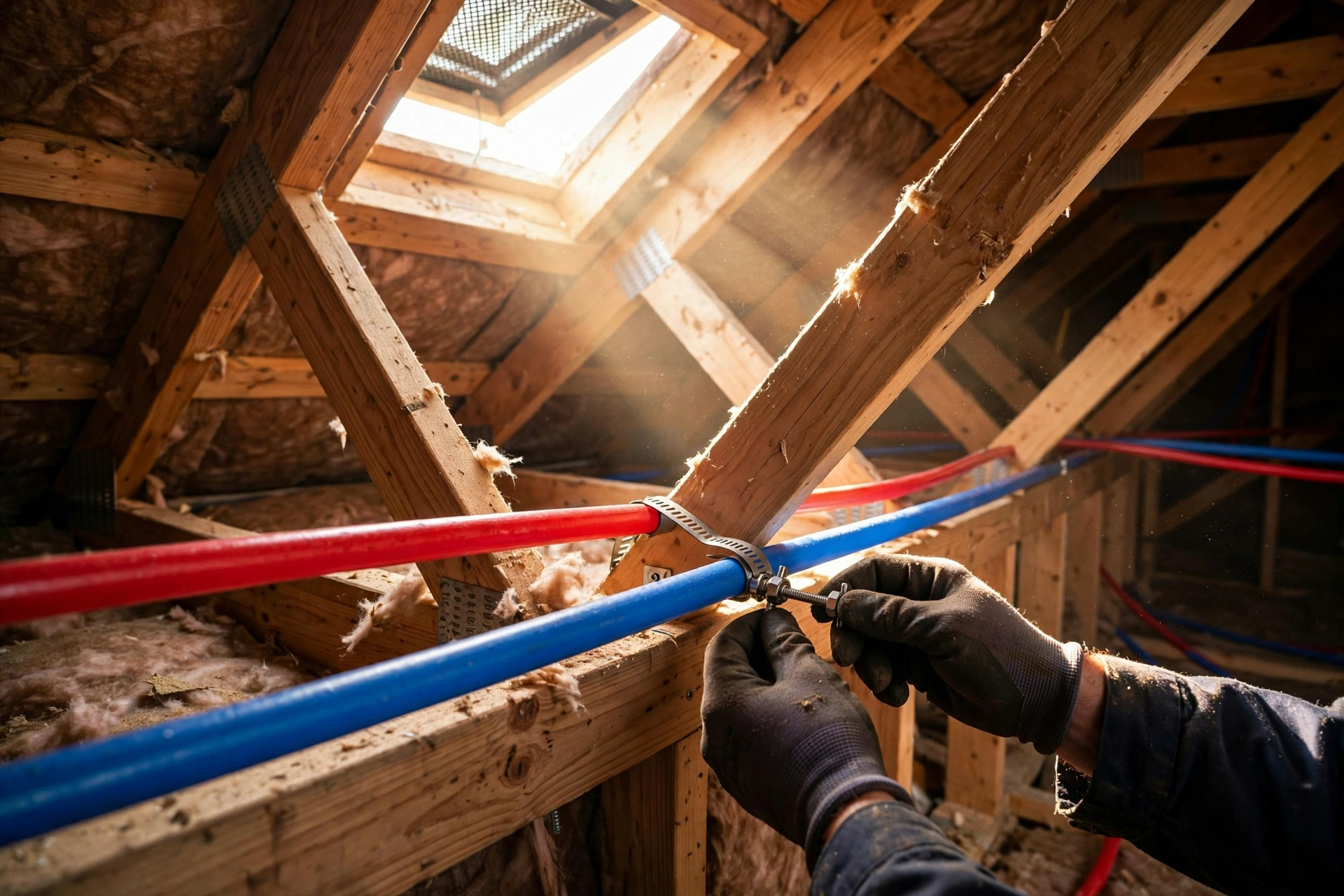
Rerouting is exactly what it sounds like: instead of fixing the leaking pipe under the slab, the plumber abandons it entirely and runs a brand-new water line through a different path — usually through the attic, inside walls, or along the exterior. For homeowners who need to fix slab leak without breaking floor, rerouting is usually the first option worth pricing.
How it works
- The leaking under-slab line is capped off and left in place.
- New PEX tubing is run from the water heater or manifold to the affected fixtures via the attic or wall cavities.
- Small drywall openings are made to route the pipe, then patched and painted.
When rerouting is the right call
- Your floors are expensive or irreplaceable. Tile, hardwood, or custom finishes you don’t want touched.
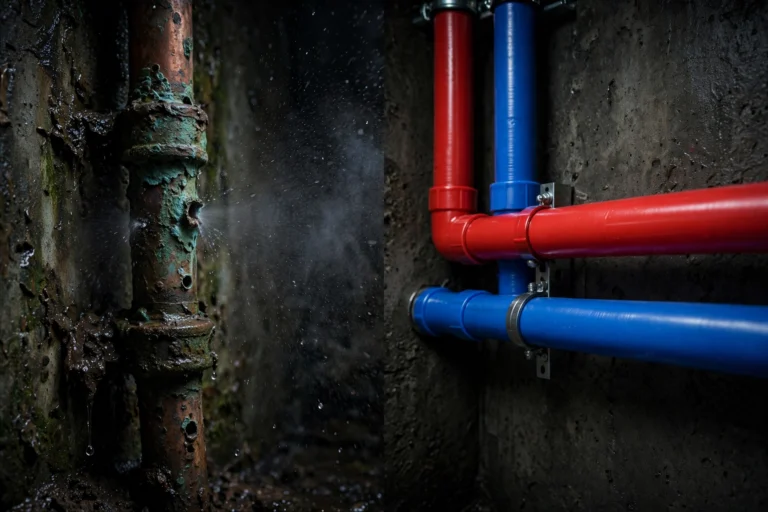
- The pipe is old or corroded. Kyle’s hard water (260–315 mg/L) eats copper from the inside out. If one section failed, the rest is on the same timeline — rerouting solves the whole run, not just one spot.
- You’ve had leaks before. A second leak in the same system is a strong signal the pipe is done.
- The leak is in an awkward spot. Center-slab leaks under kitchens or bathrooms are the hardest to reach from above.
Cost and timeline
Rerouting a single line typically runs $2,000–$6,000+ in the Kyle area (Angi 2026 national data), depending on how many fixtures the line serves and how far the new pipe has to travel. Most jobs finish in 1–3 days, and you keep full use of your home — the water is off only during the final switchover, usually a few hours.
Drywall patching and paint typically add a few hundred dollars. Compare that to jackhammering tile and you’ll see why rerouting wins for most flooring-conscious homeowners who want to fix slab leak without breaking floor.
Method 2: Tunneling Under the Slab
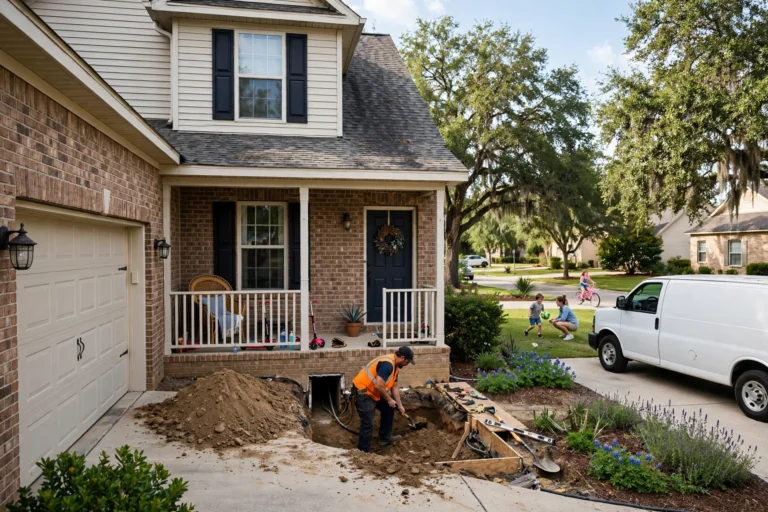
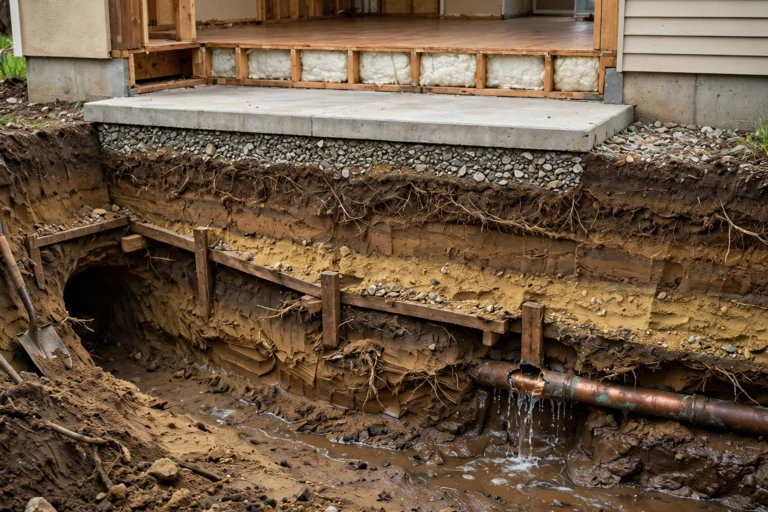
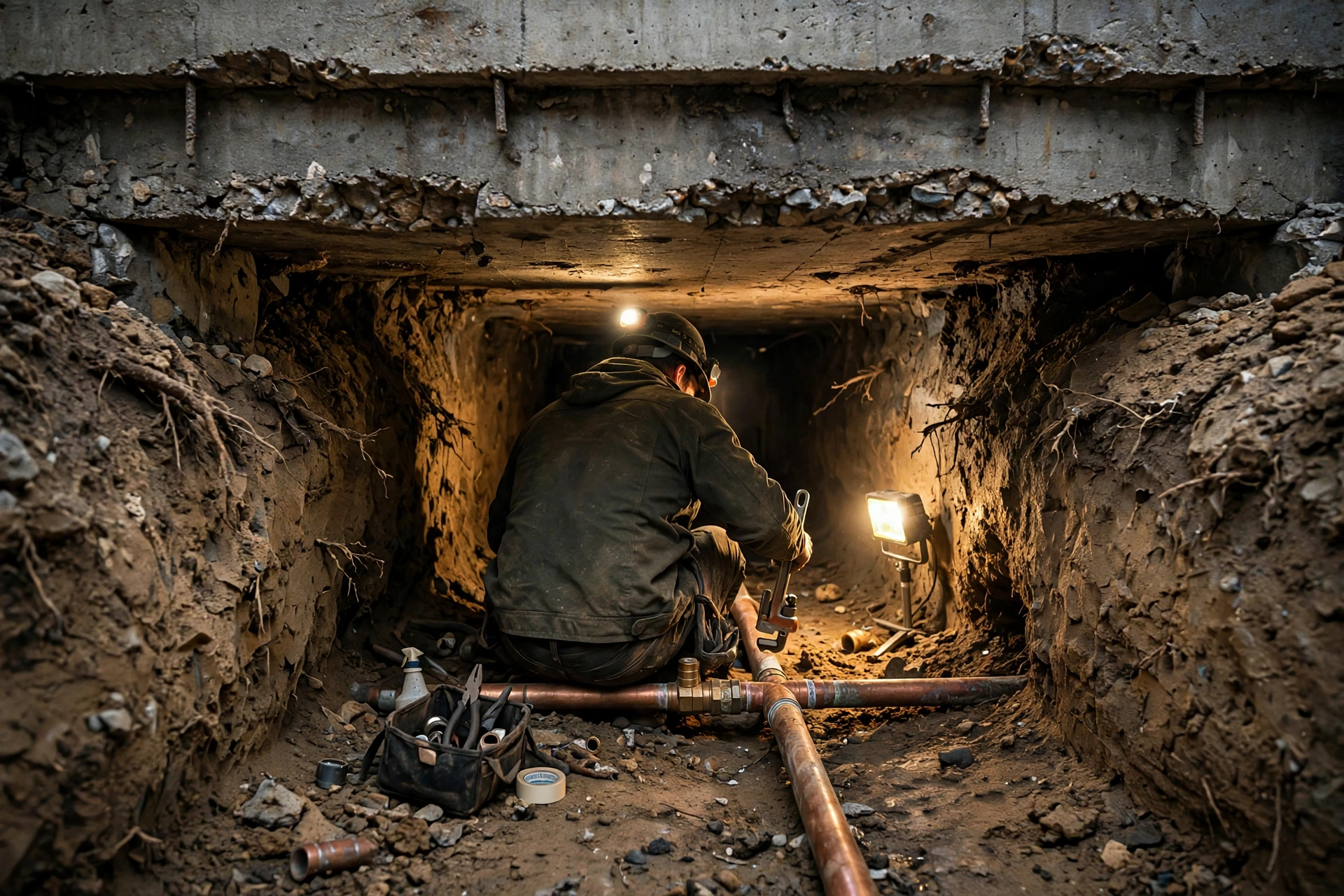
Tunneling takes the opposite approach: instead of going over the slab, the crew goes under it. Workers dig a tunnel from outside the home, beneath the foundation, and repair the pipe from below — your floors are never touched. It’s the premium way to fix slab leak without breaking floor.
How it works
- A crew hand-digs a tunnel (typically 3–4 feet deep) starting outside the foundation perimeter.
- They work their way under the slab to the leaking section.
- The pipe is repaired or replaced from beneath, the tunnel is backfilled, and the entry point is restored.
When tunneling is the right call
- Multiple leaks under the slab. If several sections need attention, one tunnel can reach them all.
- High-end flooring throughout. When the whole house has tile or hardwood worth protecting.
- Kyle’s clay soil cooperates. Central Texas clay holds a tunnel shape well — it’s one reason tunneling is popular here. (Sandy or unstable soils are a different story.)
Cost and timeline
Tunneling is the premium option: $4,000–$10,000+, and it takes 3–5 days. You can stay in the home the entire time — no jackhammer dust, no demolished rooms. For a detailed tunneling-vs-trenching breakdown, see our tunneling vs trenching comparison.
Method 3: Epoxy Pipe Lining — An Honest Take
Epoxy lining (also called pipe coating) involves cleaning the inside of the existing pipe and coating it with an epoxy resin that hardens into a “pipe within a pipe.” No digging, no demolition — it sounds perfect.
Here’s the honest take for Kyle homeowners: epoxy lining is rarely the right answer for under-slab lines in Central Texas.
- It needs a clean, structurally intact host pipe. Corroded, scaled, or partially collapsed copper — common in Kyle’s hard-water homes — doesn’t qualify.
- It doesn’t fix the external problem. If clay soil movement or abrasion against concrete caused the failure, a thin internal coating doesn’t address the cause.
- In expansive clay soil, ground movement keeps stressing the line. A coating can’t add structural strength the way a new PEX reroute can.
Epoxy has legitimate uses (vertical drain stacks in commercial buildings, for example), but for a residential slab leak in Kyle? Rerouting or tunneling almost always wins. Be skeptical of any company pushing lining as the universal way to fix slab leak without breaking floor — ask them specifically how it handles external corrosion and soil movement.
Fix Slab Leak Without Breaking Floor: Methods Compared
| Method | Breaks the floor? | Typical cost | Time | Best for |
|---|---|---|---|---|
| Pipe rerouting | No — new line through attic/walls | $2,000–$6,000+ | 1–3 days | Old/corroded pipes, expensive floors |
| Tunneling | No — dug from outside, under slab | $4,000–$10,000+ | 3–5 days | Multiple leaks, premium flooring |
| Epoxy lining | No — coated from inside | Varies (often $4,000+) | 1–2 days | Rarely ideal in TX clay (see above) |
| Spot repair (trenching) | Yes — one slab opening | $500–$2,000+ | 1–2 days | Newer pipe, single accessible leak |
Cost ranges: Angi 2026 national data; Kyle-specific quotes vary with flooring type, leak location, and pipe material.
When Breaking the Floor IS the Right Move
Not every leak should avoid the slab. Breaking the floor makes sense when:
- The pipe is otherwise healthy. A single leak in a 10-year-old PEX system? Open the slab, fix the spot, done. Don’t reroute a whole house for one bad joint.
- The leak is near the slab edge. Perimeter leaks are quick to access — a small opening, a fast repair, minimal flooring damage.
- Budget is the priority. Spot repair at $500–$2,000+ is the cheapest option today, full stop. If the flooring over the leak is basic carpet or vinyl, the restoration cost is minimal.
The key: get the leak located first. Professional slab leak detection in Kyle TX ($150–$400) pinpoints the exact spot before anyone decides on a method. Whether you want to fix slab leak without breaking floor or you’re open to a spot repair, you can’t choose a method until you know where the leak is and what condition the pipe is in.
Protecting Your Floors During Any Repair
Whichever way you fix slab leak without breaking floor, a few precautions save headaches:
- Photograph everything before work starts — floors, walls, baseboards. Dated photos are your baseline.
- Get the flooring plan in writing. If the contract says “no floor demolition,” make sure those words are in the contract.
- Ask about dust control. Even rerouting creates drywall dust. A good crew seals work areas and runs air scrubbers.
- Confirm the patch scope. Who patches drywall? Who paints? Who restores the tunnel entry landscaping? Get it itemized.
For the full range of options with pros and cons, see our slab leak repair options guide.
Frequently Asked Questions
Can a slab leak be fixed without breaking the floor?
Yes, in most cases. Pipe rerouting (new line through the attic/walls) and tunneling (digging under the slab from outside) both avoid floor demolition entirely. Epoxy lining is a third no-dig option but is rarely ideal for under-slab lines in Central Texas clay soil.
How much does it cost to fix a slab leak without breaking concrete?
Rerouting typically costs $2,000–$6,000+ and tunneling $4,000–$10,000+ in the Kyle area (Angi 2026 national data). Both are more than a basic spot repair ($500–$2,000+), but they eliminate flooring restoration costs — which can exceed $1,500 for tile.
Is pipe rerouting better than breaking the slab?
For older or corroded pipes, yes — rerouting replaces the failing run instead of patching one spot, and it protects your floors. For a single leak in otherwise healthy pipe, a spot repair through the slab is cheaper and perfectly fine.
Does tunneling damage the foundation?
When done by an experienced crew, no. Tunnels are dug carefully beneath the slab and backfilled properly. In fact, tunneling disturbs Kyle’s expansive clay less than jackhammering, which is one reason it’s popular here.
How do I know which method my home needs?
Start with professional detection ($150–$400 in Kyle). The detection report shows the leak’s location and pipe condition — that’s the information every repair decision depends on. Never authorize a repair method before the leak is pinpointed.
Save Your Floors — Start With Detection
A slab leak doesn’t have to mean destroyed tile and a month of construction. $150–$400 of detection tells you exactly what’s wrong and which no-demolition method fits your home. For general household leak-detection tips, the EPA’s WaterSense program (epa.gov/watersense) is also a useful resource.
Call Kyle Leak Detection Pros at (512) 729-5265. Detection first. Written report. Then choose the method to fix slab leak without breaking floor that fits your home.