
Pool Main Drain Leak in Kyle TX: How to Spot and Confirm It (2026)
If your pool water keeps falling past the skimmer, past the lights, and shows no sign of stopping, a pool main drain leak moves to the top of the suspect list. The main drain sits at the deepest point of the pool floor, and its line runs buried back to the equipment pad — out…
If your pool water keeps falling past the skimmer, past the lights, and shows no sign of stopping, a pool main drain leak moves to the top of the suspect list. The main drain sits at the deepest point of the pool floor, and its line runs buried back to the equipment pad — out of sight, under water, and impossible to inspect by eye. That combination is exactly why this leak type worries pool owners, and why it needs a proper test rather than a guess.
If your Kyle pool level will not hold no matter how often you top it off, call (512) 729-5265 to book pool leak detection. A drain-line suspicion is not a wait-and-see problem: every refill cycle sends more water into the ground beneath the pool. For the first checks that separate evaporation from a real leak, see our post on pool leak signs in Kyle TX.
What the Main Drain Is — and Why Its Line Leaks
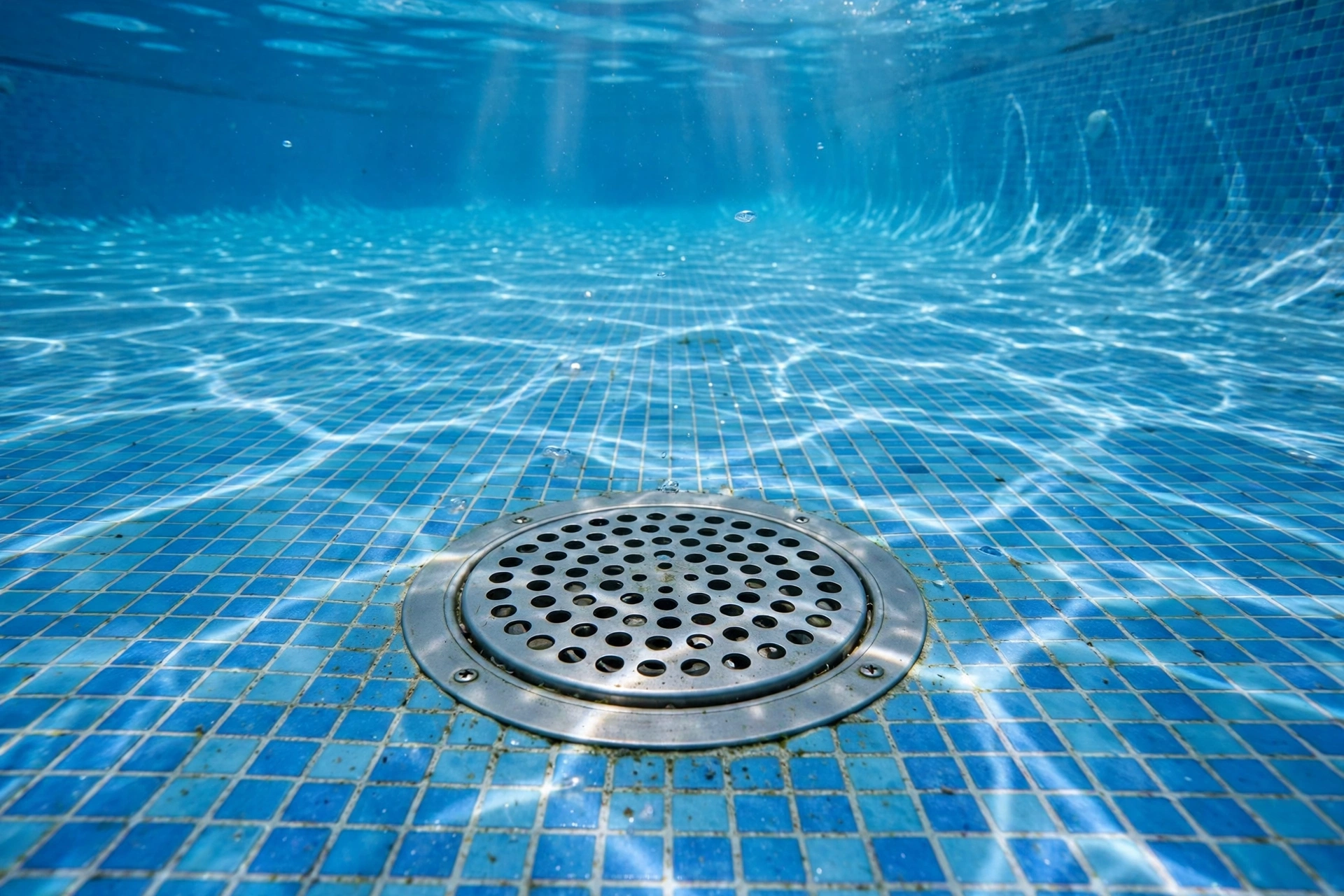
The main drain is the grate-covered opening at the bottom of the pool. Water is drawn through it into a buried suction line that runs to the pump, helping circulate water from the deep end. Most pools also have a hydrostatic relief valve fitted in or near the drain assembly: a one-way valve meant to relieve groundwater pressure under an empty pool so the shell is not pushed upward. Both the drain line and that valve can become leak paths.
A drain line can fail in several ways. Joints in the buried run can separate or crack, especially where ground movement stresses them. In Texas generally, expansive clay soils swell when wet and shrink when dry, and that movement is a known stress on buried pool plumbing — a general Texas factor, not a claim about any specific Kyle property. The drain cover and its frame can crack or loosen, and a hydrostatic relief valve can stick open or fail to seat, letting pool water drain steadily into the ground below. None of these failures is visible from the deck. That invisibility is the defining feature of a pool main drain leak. Any of those failures, hidden underground, is what makes a pool main drain leak so hard to spot from the deck.
The Signature: A Level That Keeps Falling Past Every Fitting
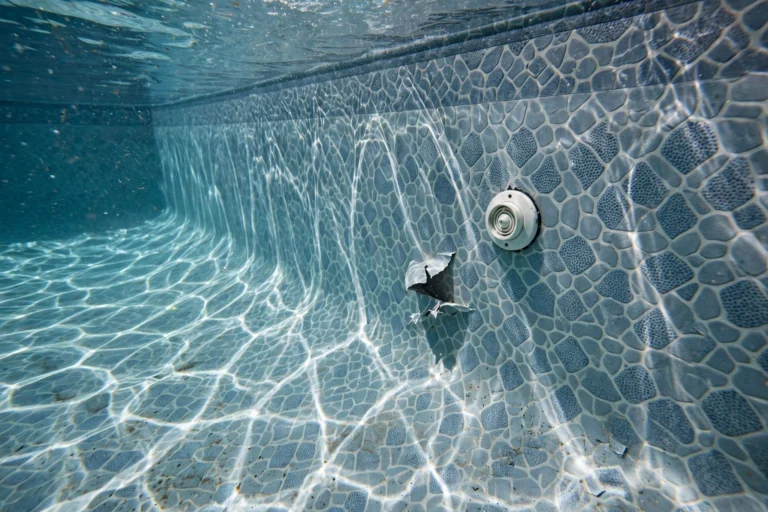
The level-stop clue is the most useful home diagnostic for any pool leak, and it points at the drain precisely by elimination. Water can only escape from a point that is under water. If the level drops to the skimmer mouth and holds there, the leak is at skimmer height. If it drops past the skimmer and holds at the lights, the leak is around light height. If it keeps falling past the lights and toward the floor, the remaining suspects are the lowest points in the system: the main drain and its line, or a low buried return run.
To read the clue properly, mark the level with the date and time, turn off the autofill, and recheck after 24 hours without adding water, backwashing, or swimming. A level that falls steadily through every fitting height and does not stabilise is telling you the breach is at or near the bottom. That pattern alone does not prove a pool main drain leak — a low pipe break can behave the same way — but it narrows the search to the deep end of the system, and it rules out the skimmer, lights, and upper fittings that dominate most other pool leak stories. A level that will not stabilise anywhere is the signature that points to a pool main drain leak.
Evaporation complicates the reading in hot, windy weather, but evaporation alone does not produce a level that falls past fitting after fitting. A bucket test helps here in its short form only: a bucket of pool water on a step loses water to evaporation alone, while the pool loses evaporation plus any leak, so a much larger pool drop confirms a leak rather than weather. Full steps are in our pool leak signs post. Once a leak is confirmed and the level keeps falling, the drain line is the prime suspect.
Why a Main Drain Leak Is Pro-Only
Do not dive to the drain, plug it, or try to seal it yourself. The main drain is part of the suction system, and working on it without knowing how the lines are valved risks both personal safety and damage to the pool. Plugging a drain line without isolating it properly can also mask the test a professional needs: a pressure test needs the line in its normal state, not altered by a home fix. A visual check from the surface is fine — look for a cracked, loose, or missing drain cover, and note whether the cover looks damaged — but anything beyond that belongs to a professional visit.
There is a second reason this leak type is pro-only: confirmation requires equipment a homeowner does not have. A drain line cannot be dye-tested the way a skimmer faceplate or light niche can, because the leak point is under several feet of water at the pool floor and the line itself is buried. The confirming test is pressure testing, described below, and it is the only reliable way to separate a drain-line leak from a low pipe break or a shell crack near the floor. That equipment gap is the second reason a pool main drain leak stays a professional job.
How Pressure Testing Confirms a Drain Line
Pressure testing is the industry method for buried pool lines, and the drain line is the classic case for it. In outline, the technician isolates the main drain line at the equipment pad, seals it, and applies air pressure, then watches whether the line holds that pressure over a set period. A line that holds is cleared. A line that loses pressure is leaking somewhere along its run, and further isolation work narrows the location.
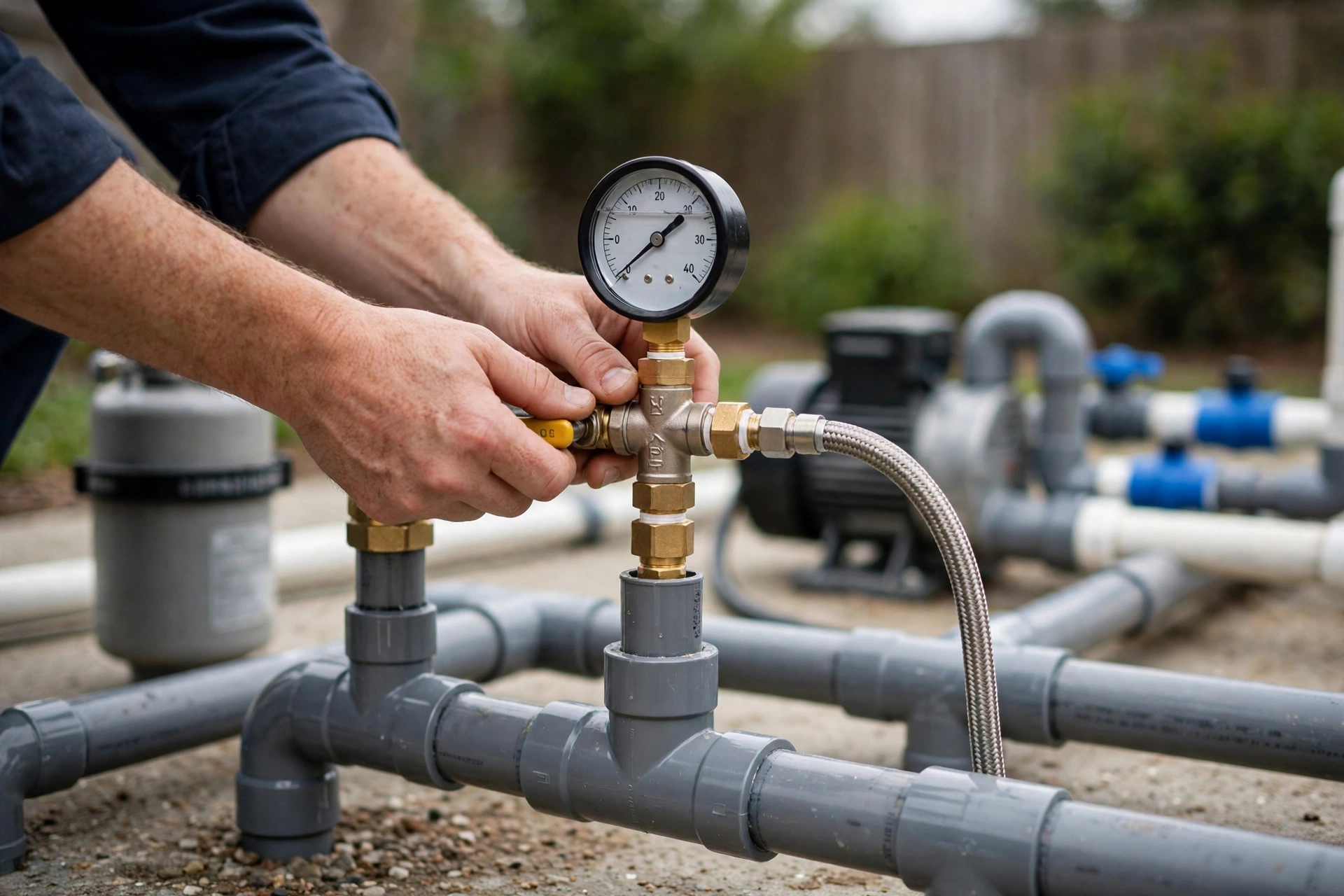
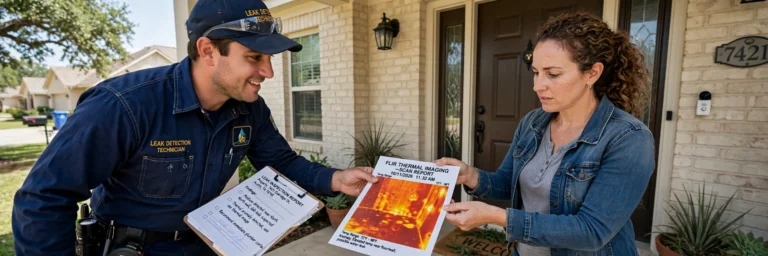
That isolation step is what makes the test diagnostic rather than guesswork. A pool has several lines — skimmer, main drain, and returns — and testing each one separately shows which line is at fault. If the drain line fails while the skimmer and return lines hold, the search is confined to the drain run. If every line holds, attention turns back to the shell and fittings, including the drain assembly itself and its relief valve. For a step-by-step picture of a full detection visit, see our guide on how pool leak detection works.
Pressure testing also protects you from the most expensive mistake in pool leaks: digging on a guess. Excavating above a buried line before the leaking line is confirmed risks opening the wrong section of deck or yard, paying for restoration, and still owning the leak. A confirmed line, by contrast, lets any repair be scoped to the right run and the right access point. That is why a pool main drain leak is diagnosed before it is repaired, never the other way around. For a homeowner-friendly walkthrough of the same pressure-and-dye methods, see Angi’s guide to finding a leak in a pool.
Drain Assembly vs Drain Line: Two Different Repairs
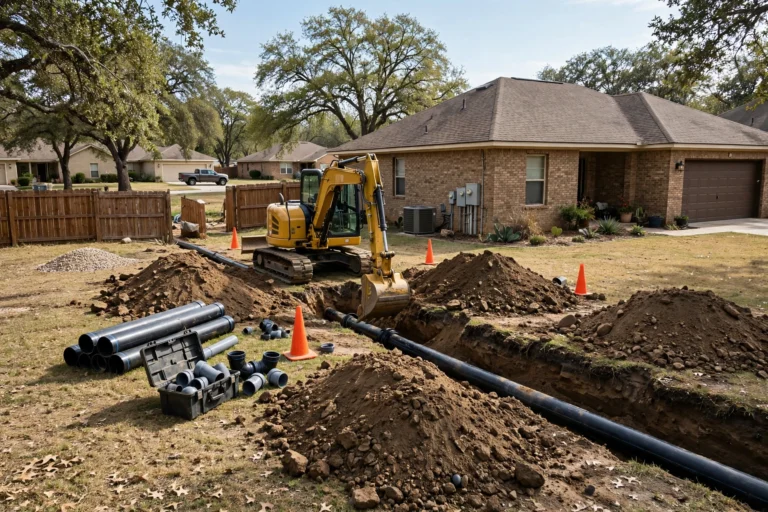
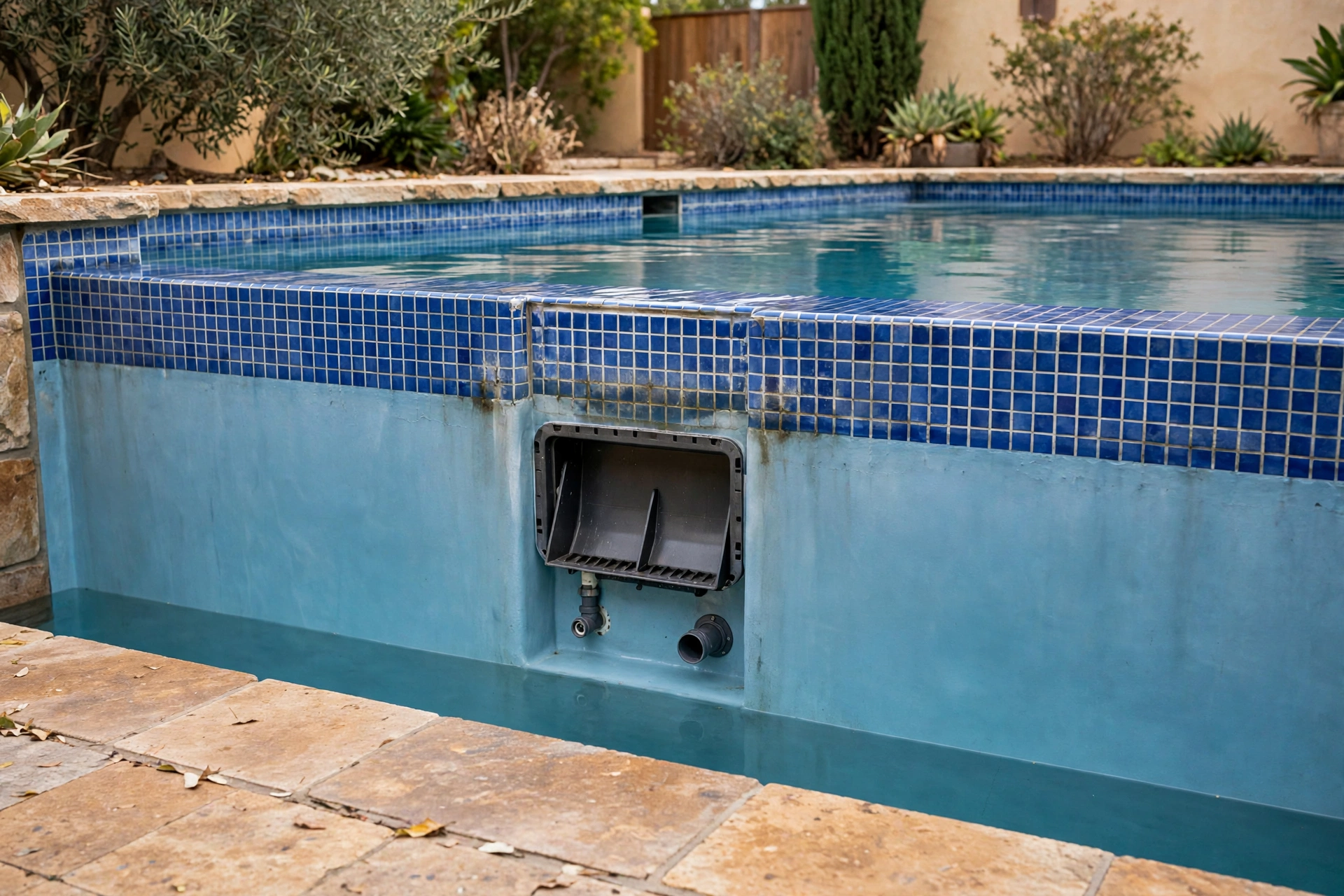
It matters which part of the drain system has failed, because the repairs are very different. A drain assembly problem — a cracked cover or frame, or a failed hydrostatic relief valve — is at the pool floor itself and is handled at the drain, usually without excavation. A drain line problem — a cracked or separated joint in the buried run — is in the ground between the pool and the pad, and reaching it may mean opening ground or deck above the line’s route.
Homeowners cannot reliably tell these apart from the surface, and the distinction matters for cost. As a borrowed general reference only, pool leak repairs are reported at $150–$5,000 by severity and location (lonestarpoolcleaning.com), with underground and excavation jobs at the high end. No drain-specific repair price is published or verified here, and none is offered: an assembly fix and a buried-line repair sit at very different points in that range. Your exact price is confirmed on the call, once the failure point is known. For the detection-side ranges that apply before any repair, borrowed Texas figures run $300–$550 in Tyler TX and $250–$400 generally — borrowed figures, not Kyle quotes.
What to Watch While You Wait for a Visit
Keep the autofill off and log the level daily with a tape mark and the date, so the technician can see the rate of fall and where, if anywhere, it slows. Note whether the fall is faster with the pump running or the same with it off: a suction-line leak often shows more with the pump running, while a shell or valve leak may continue regardless. Photograph the drain cover from the surface if it looks damaged, and note any soft, sunken, or unusually wet ground between the pool and the equipment pad — that can hint at where a buried line is losing water.
Do not drain the pool to “see better.” Draining a pool without professional advice can damage the finish and, in areas with high groundwater, risk shell movement — and dye and pressure testing do not need an empty pool. November is pool off-season in Central Texas, which suits this kind of diagnosis: still water, no swimmers, and a clear read on the level over several days. A leak confirmed now can be repaired on your own timetable before spring, rather than discovered when you want the pool back in use.
The Bottom Line
A pool main drain leak announces itself by what it is not: not a skimmer stop, not a light-level stop, but a level that keeps falling toward the floor. That pattern points to the deepest part of the system, and only pressure testing can confirm whether the failure is in the drain assembly or the buried drain line. Because the drain is a suction component and the line is buried, this is not a do-it-yourself diagnosis. That elimination pattern is how a pool main drain leak announces itself — by everything it is not.
If your level keeps falling past every fitting, call (512) 729-5265 to book pool leak detection and get the drain line tested before any digging or repair is discussed. A confirmed line is what turns a frightening, invisible leak into a scoped, priced repair. For the related buried-line picture, see our post on underground pool pipe leaks.
Frequently Asked Questions
How do I know if I have a pool main drain leak?
The strongest home clue is a water level that keeps falling past the skimmer and the lights without stabilising, pointing to a breach at or near the pool floor. Only pressure testing of the drain line confirms it, separating a drain-line leak from a shell crack or low pipe break.
Can I plug the main drain myself to stop the leak?
No. The main drain is part of the suction system, and plugging or sealing it without proper isolation risks personal safety and can mask the pressure test a professional needs. A visual check of the drain cover from the surface is fine; anything beyond that belongs to a professional visit.
What is a hydrostatic relief valve, and can it leak?
It is a one-way valve fitted in or near the drain assembly, meant to relieve groundwater pressure under an empty pool. If it sticks open or fails to seat, pool water can drain steadily into the ground below — one of the drain-assembly failure modes a professional checks.
How much does fixing a pool main drain leak cost?
No Kyle-specific or drain-specific repair price is published or verified, so this article does not quote one. As a borrowed general reference only, pool leak repairs are listed at $150–$5,000 by severity and location (lonestarpoolcleaning.com), with underground and excavation jobs at the high end. Your exact price is confirmed on the call, once pressure testing shows whether the failure is in the assembly or the buried line.
Should I drain my pool if I suspect a main drain leak?
No. Draining without professional advice can damage the finish and, where groundwater is high, risk shell movement — and pressure testing does not need an empty pool. Keep the autofill off, log the level daily, and let the visit confirm the line first.