
7 Plumbing Emergency Mistakes That Make Everything Worse (2026)
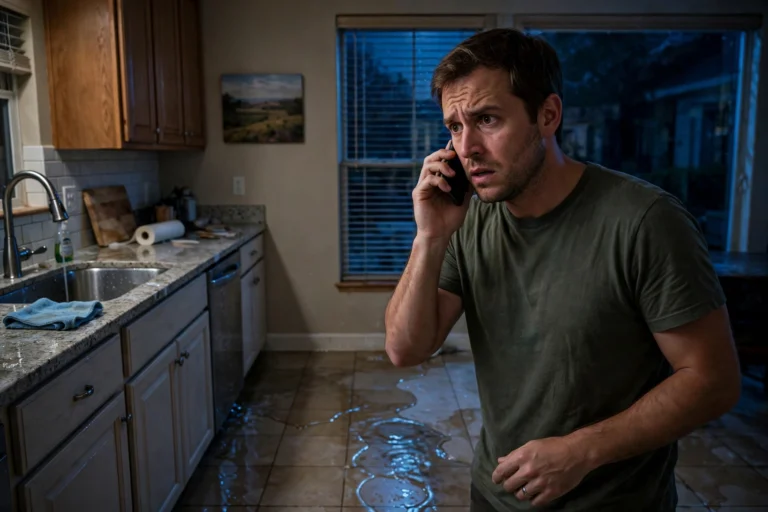
Panic makes people do expensive things. In the middle of a plumbing emergency — water spreading, the clock reading 2 AM — the difference between a bad night and a disaster is usually one wrong move. Not the leak itself. The response to the leak. These are the seven plumbing emergency mistakes we see turn…
Panic makes people do expensive things. In the middle of a plumbing emergency — water spreading, the clock reading 2 AM — the difference between a bad night and a disaster is usually one wrong move. Not the leak itself. The response to the leak.
These are the seven plumbing emergency mistakes we see turn manageable situations into expensive ones, over and over. Each one comes with the right move instead — so if you’re reading this with wet socks on, skip to the mistake you’re about to make and do the other thing.
In an active emergency right now? The correct first moves are: stop the water, check for electrical danger, photograph everything — then call (512) 729-5265 for emergency leak detection in Kyle TX.
Mistake 1: Touching Breakers or Switches While Standing in Water
This is the only mistake on this list that can kill you, so it goes first.
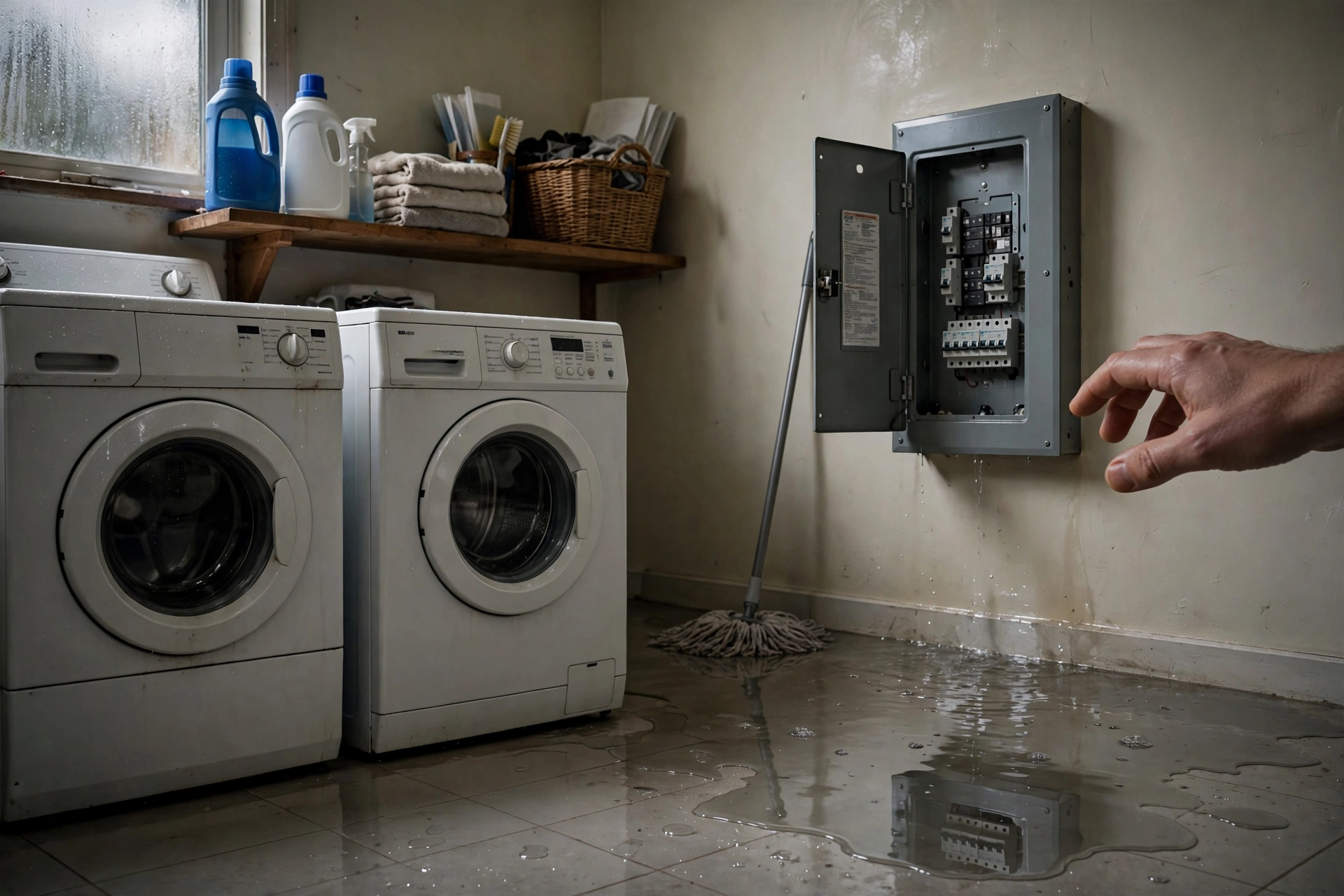
Water is coming through the ceiling near a light fixture, or pooling across the laundry room floor toward the breaker panel. Your instinct says kill the power. Your body says reach for the switch. Do not touch any electrical device while standing in water or with wet hands — a ground fault through standing water can electrocute you before the breaker trips.
The right move: if you can reach the breaker panel from completely dry ground with dry hands, flip the breaker for the affected area. If there’s any doubt — water on the floor between you and the panel, wet hands, sparks, buzzing — stay clear and call for emergency help. Electricity first, plumbing second, always.
Mistake 2: Forcing a Seized Shutoff Valve
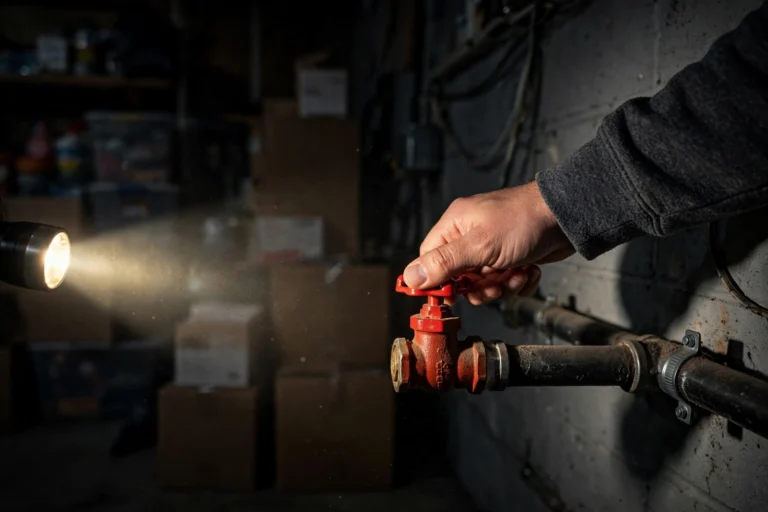
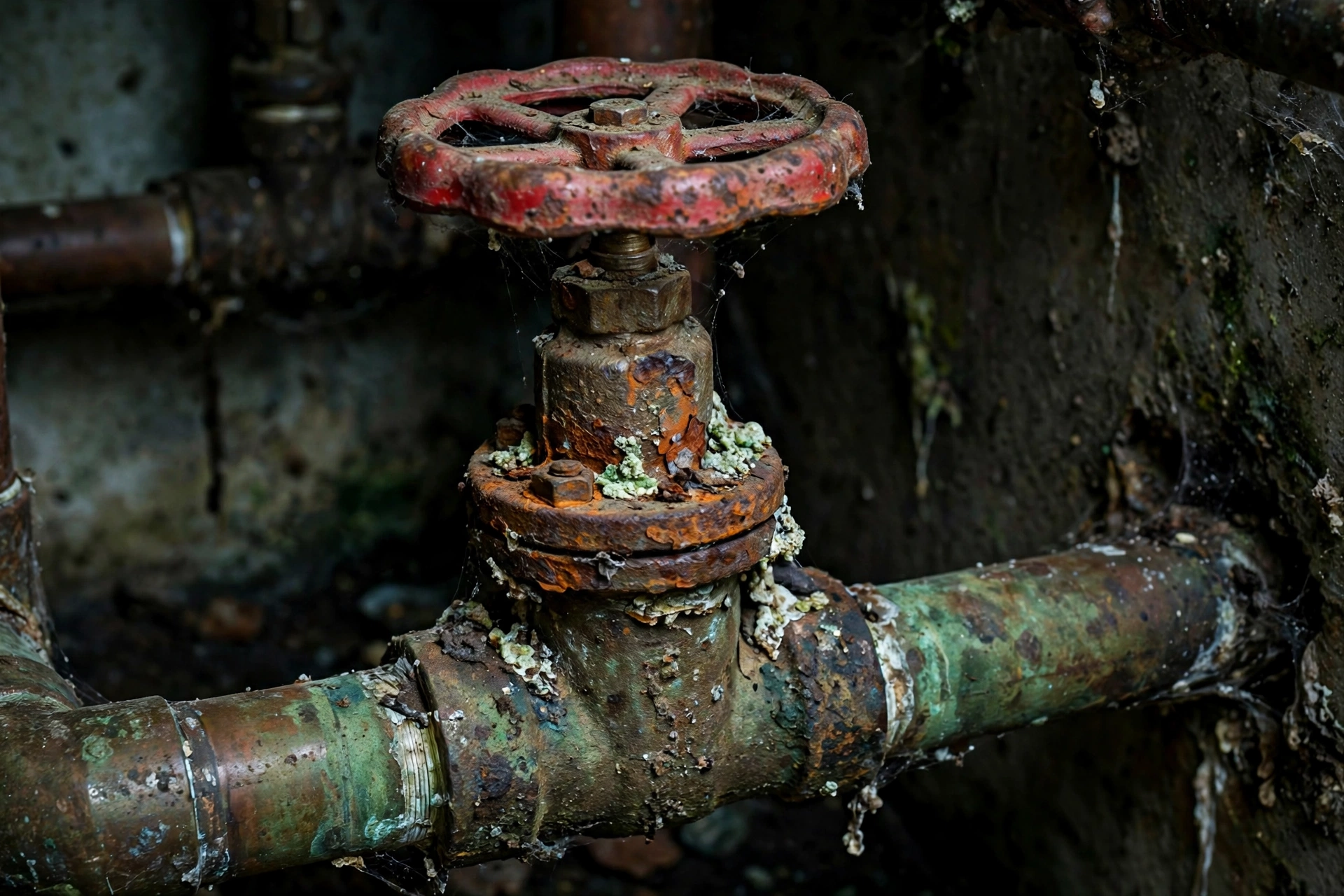
You found the main shutoff. It hasn’t moved in fifteen years. You grab it with both hands and heave — and the valve stem snaps, or the ancient gate valve breaks internally. Now the valve that was merely stuck is destroyed, the pipe is compromised, and what was a controllable leak is an uncontrollable one.
Old gate valves (the round-wheel kind common in older Kyle homes) seize with age and mineral buildup from our hard water. Forcing them is one of the most common ways a small emergency becomes a big one.
The right move: turn firmly but gently. If it won’t budge with moderate hand pressure, stop. Try the fixture-level valve instead, or the next valve upstream. If nothing turns, that’s your sign to call for emergency help rather than create a second emergency. And this weekend — not tonight — have a plumber replace seized gate valves with quarter-turn ball valves. A $150–$300 valve replacement (typical range, borrowed) is cheap insurance.
Mistake 3: Opening Walls or Ceilings to “Find It”
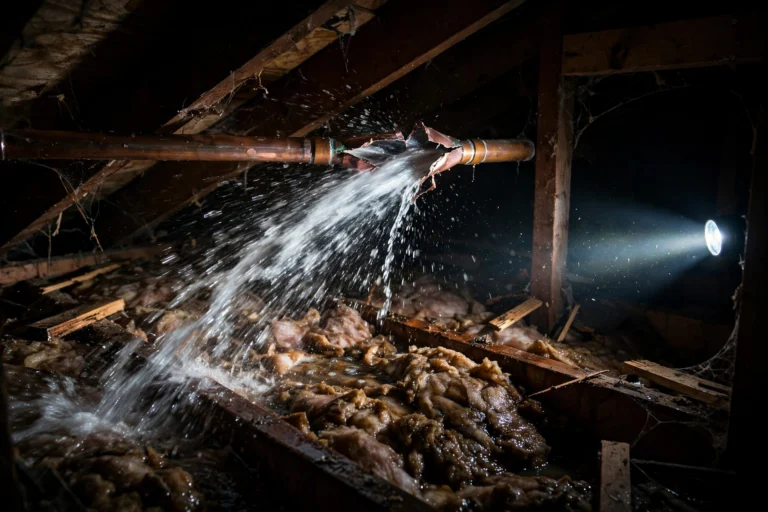
Water is dripping from the ceiling and you think: I’ll just cut a hole and see where it’s coming from. This is how a $500 leak becomes a $3,000 drywall, texture, and paint project — on top of the leak repair.
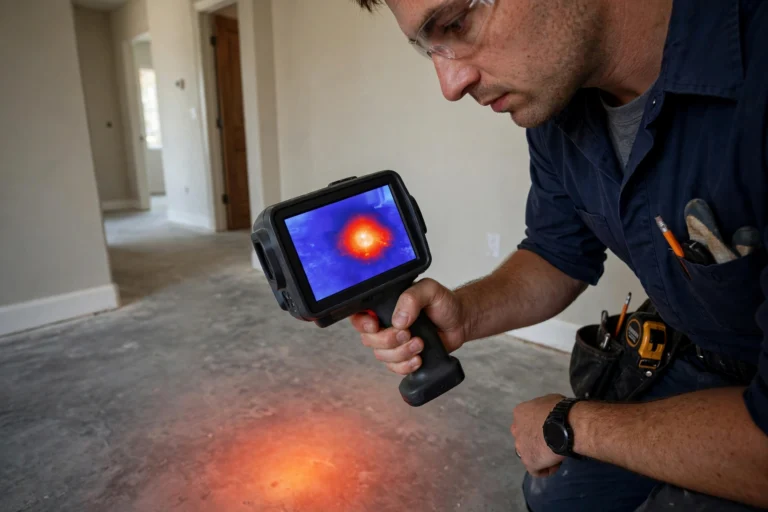
Here’s why it fails: water travels. It runs along pipes, across ceiling joists, inside wall cavities, and drips out far from where it entered. The hole you cut shows you wet drywall and tells you nothing about the source — which is often rooms away. Professional detection exists precisely because eyes and drywall saws can’t trace water; acoustic equipment and thermal imaging can.
The right move: contain the drip (bucket, towels), photograph it, and let detection find the source non-invasively. One precise opening after the source is marked beats five exploratory holes. (How it works: what happens when you call for 24/7 emergency leak detection.)
Mistake 4: Pouring Chemical Drain Cleaner on a Suspected Leak
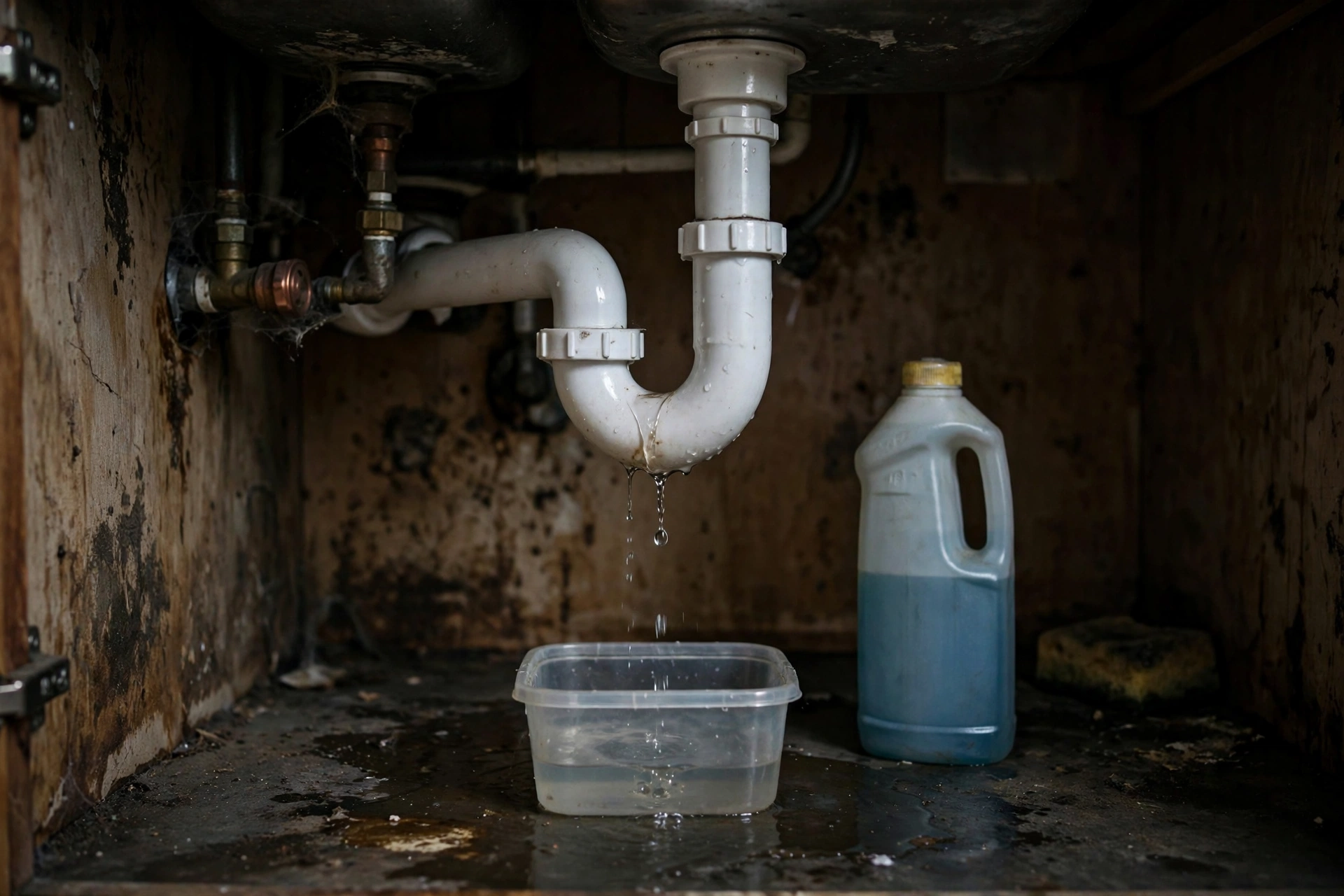
The drain is slow AND there’s water under the sink. Two problems, one bottle? No — one problem made worse.
Chemical drain cleaners (the caustic kind) generate heat and can soften or damage plastic pipes, corrode metal traps, and — critically — they don’t fix leaks. If the water under the sink is from a leaking trap or supply connection, you’ve now added a caustic chemical to the water that’s spreading across your cabinet floor. And if a plumber has to work on that drain later, they’re working in a chemical bath.
The right move: if you suspect a leak (water where it shouldn’t be, not just a slow drain), skip the chemicals entirely. Shut the fixture valve, put a bucket under the trap, and get the actual source diagnosed. Drain cleaners are for clogs; leaks need detection.
Mistake 5: Waiting Out Active Water Flow
“It’s probably not that bad. Let’s see if it stops.” It won’t stop. Pressurized supply leaks don’t self-heal, and every hour of active flow is:
- More water into drywall, subfloor, and framing
- More saturation in Kyle’s clay soil against the foundation (for slab or service-line leaks)
- Closer to the 24–48 hour window where mold colonizes damp materials in Texas humidity
- A bigger gap in your insurance “prompt action” record
This is the mistake with the quietest start and the most expensive finish. A leak that would have been a $500 fix at midnight becomes a $5,000 remediation by the weekend.
The right move: active flow gets action tonight — shutoff, containment, documentation, and a call if you can’t fully stop it. “Wait and see” is only for contained, non-spreading situations (see our wait-vs-call triage guide).
Mistake 6: Skipping the Photos (“I’ll Remember”)
In the chaos, documentation feels like the least urgent thing. It’s actually the most valuable — and the one thing you can never recreate later.
Without photos, you have no proof of the leak’s extent when it started, no “before” for the insurance adjuster, no timestamp showing you acted promptly, and no evidence if the landlord or the insurer disputes the timeline. “It was really bad” is not documentation. A timestamped photo of water pouring from the ceiling is.
The right move: before you touch anything, take 60 seconds of photos — wide shots of every affected area, close-ups of the source, the meter reading. Then keep photographing as you work. Your future self, filing the claim or fighting the deposit deduction, will thank you.
Mistake 7: Calling the Wrong Trade First
Water everywhere → call a plumber. That’s the reflex, and half the time it’s wrong:
- You can see the burst pipe and it’s accessible → plumber. Correct.
- Water is appearing but the source is hidden (inside walls, under the slab, ceiling drip with no visible pipe) → leak detection first, then the plumber. Calling the plumber first gets you exploratory demolition billed by the hour; detection first gets you a marked location the plumber can fix in one opening.
- Sewage backup → plumber (or the city, if it’s the main line). Not a detection job.
- Gas smell with the water → gas utility / 911 first. Not a plumber, not detection. Leave the building.
- The meter is spinning but nothing is visibly wrong → detection. There’s no burst pipe to fix yet — first someone has to find it.
Calling the wrong trade first doesn’t just waste the service fee — it wastes the hours when the damage is growing fastest.
The right move: match the trade to the situation using the table above. When the source is unknown, detection first is almost always the cheaper path — one $150–$400 detection visit (typical residential range) versus exploratory demolition at plumber’s hourly rates.
The Mistakes, Summarized
| Mistake | What it costs you | Do this instead |
|---|---|---|
| Touching electrical in standing water | Your safety — potentially your life | Kill power only from dry ground with dry hands |
| Forcing a seized valve | A broken valve + uncontrollable leak | Gentle pressure only; try the next valve upstream |
| Opening walls to find the leak | Exploratory drywall damage, still no source | Contain, photograph, call for non-invasive detection |
| Chemical drain cleaner on a leak | Damaged pipes + caustic water spreading | Shut the fixture valve; diagnose the real source |
| Waiting out active flow | Compounding water + mold damage | Act tonight on anything still spreading |
| Skipping photos | No evidence for insurance/landlord | 60 seconds of timestamped photos before touching anything |
| Calling the wrong trade | Wasted fee + wasted hours | Match the trade to the situation; unknown source = detection first |
The Panic-Proof Sequence
Tape this inside the cabinet under your kitchen sink:
- Water off — fixture valve, or the main shutoff (find yours here)
- Electrical check — water near power? Handle from dry ground only
- Photos — 60 seconds, timestamps on, before you touch anything
- Contain — buckets, towels, move valuables
- Right call — visible burst: plumber; hidden source: detection at (512) 729-5265; sewage: plumber/city; gas: leave and call the gas utility
Five steps, in order, no improvisation. That’s the whole difference between a bad night and a disaster.
Frequently Asked Questions
What is the biggest mistake people make in a plumbing emergency?
Touching electrical equipment while standing in water — it’s the only common mistake that risks life, not just money. After that, forcing a seized shutoff valve and opening walls to “find” the leak are the most expensive errors.
Should I try to find the leak myself before calling?
Contain it and photograph it — but don’t demolish anything to find it. Water travels far from its source; visual hunting fails far more often than it succeeds. Professional acoustic and thermal detection finds the source non-invasively.
Is it safe to shut off my own water main?
Yes — your home’s main shutoff valve is yours to operate. (The city’s curb-stop valve at the meter is the city’s — use your house valve.) If the valve is seized, don’t force it; try the next valve upstream or call for help.
Can I use drain cleaner if the drain is also leaking?
No. If you suspect a leak, skip chemical cleaners — they damage pipes, don’t fix leaks, and create a caustic mess for whoever repairs the drain. Shut the fixture valve and diagnose the actual source.
Who do I call if I don’t know where the water is coming from?
A leak detection specialist first — that’s exactly the situation detection exists for. Once the source is marked, the plumber fixes a known problem in one opening instead of exploring at hourly rates. (512) 729-5265.
Panic Is the Real Emergency
The leak is a plumbing problem. The panic is what turns it into a disaster — the forced valve, the cut drywall, the skipped photos, the wrong number called. Work the five-step sequence, avoid the seven mistakes, and the worst night of your plumbing life stays a bad night instead of becoming an expensive month.
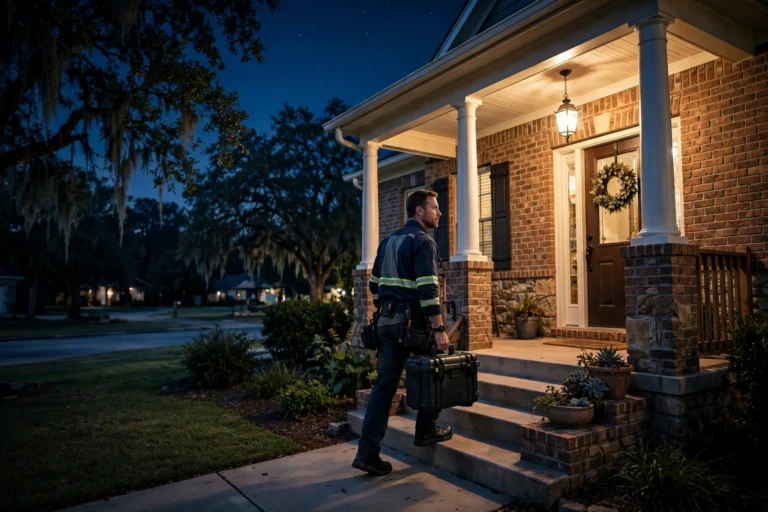
Need the source found tonight? Kyle Leak Detection Pros at (512) 729-5265 — emergency leak detection in Kyle TX. For the full first-response playbook, see what to do when you find a water leak.