
What Happens When You Call 24/7 Emergency Leak Detection in Kyle TX (2026)
It’s midnight, water is where it shouldn’t be, and you’re staring at your phone wondering what actually happens if you call. Will someone answer? How long until they get here? What will they even do in the dark? This is the full walkthrough of 24/7 emergency leak detection in Kyle TX — the triage call,…
It’s midnight, water is where it shouldn’t be, and you’re staring at your phone wondering what actually happens if you call. Will someone answer? How long until they get here? What will they even do in the dark?
This is the full walkthrough of 24/7 emergency leak detection in Kyle TX — the triage call, what affects the arrival window at night, what to do while you wait, and what the technician does from the moment they pull into your driveway. No surprises, no mystery. Just the process.
The short version: a real person triages your call, a tech is dispatched with night-ready equipment, and the visit follows the same detection science as daytime — adapted for the dark. For emergency leak detection in Kyle TX, call (512) 729-5265.
The Triage Call: What They’ll Ask You (2–5 Minutes)
The call starts with rapid triage, not a sales pitch. Expect these questions, roughly in this order:
- “Where is the water, and is it still flowing?” — Location and active-vs-contained. This single answer sets the priority of everything after it.
- “Have you shut off your main water valve?” — If yes, the emergency just got calmer. If no, they’ll walk you through finding it before anything else. (Don’t know where yours is? Read our main shutoff valve guide on a dry day — not at 2 AM.)
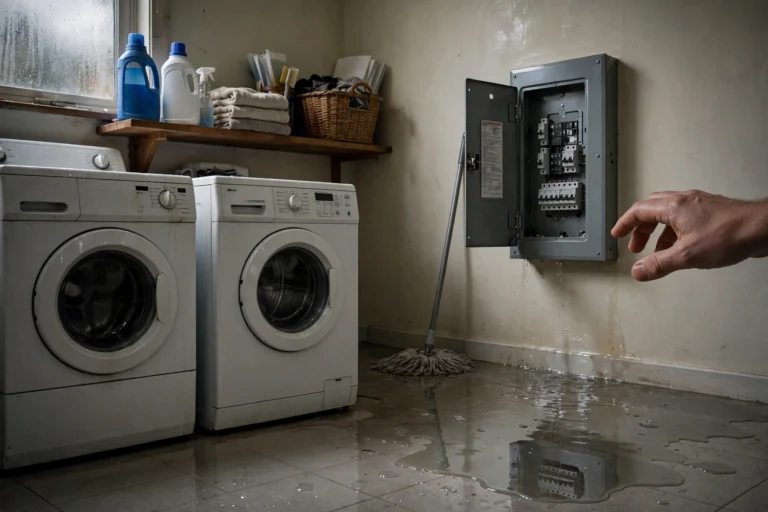
- “Is water near anything electrical?” — Outlets, the breaker panel, appliances, light fixtures. A “yes” escalates the safety priority and changes what the tech does first on arrival.
- “Is your water meter still spinning?” — With the house valve closed, a spinning meter means the leak is on the service line or the city’s side. Still water with a stopped meter means the interior flow is controlled.
- “Your address — and how do we get in?” — House number, gate codes, and whether someone will be there. At night, clear access instructions save real time.
Answer honestly and briefly. The triage isn’t an interrogation — it’s how the dispatcher decides what equipment the tech loads and how the visit gets sequenced. Vague answers get you a generic response; precise answers get you a targeted one.
What Affects the Arrival Window at Night
Nobody honest promises “we’ll be there in 30 minutes” — and you should distrust anyone who does. Arrival windows at night depend on real factors:
| Factor | How it affects the window |
| Where you are | Kyle, Buda, and San Marcos core are fastest; farther Hays County addresses take longer, especially at night |
| How many calls are stacked | Storm nights and freeze events create queues — one crew can’t be in three places |
| What you’re describing | Active flow near electricity jumps the queue over a contained drip; triage sets priority honestly |
| Access | Gated communities, locked doors with nobody home, and unclear addresses all add time |
| Weather and roads | I-35 at 2 AM is usually clear — but ice, flooding, or severe storms slow everyone equally |
A good dispatcher will give you an honest window — often 60 to 120 minutes at night on the I-35 corridor — and a call or text when the tech is on the way. If they can’t reach you tonight, they’ll say so and book the first morning slot rather than leaving you hanging. Honesty about the window is a quality signal: it means the same honesty will show up in the diagnosis.
You can also help the window. Have your address, gate code, and a description of the water ready before you dial. Move cars so the driveway is clear. If the shutoff is behind stored boxes, clear a path while you wait. Every minute the tech doesn’t spend hunting for access is a minute spent on your leak.
What to Do While You Wait (The Productive 30–90 Minutes)
The waiting period isn’t dead time. These steps protect your home and make the tech’s job faster:
Contain what you can
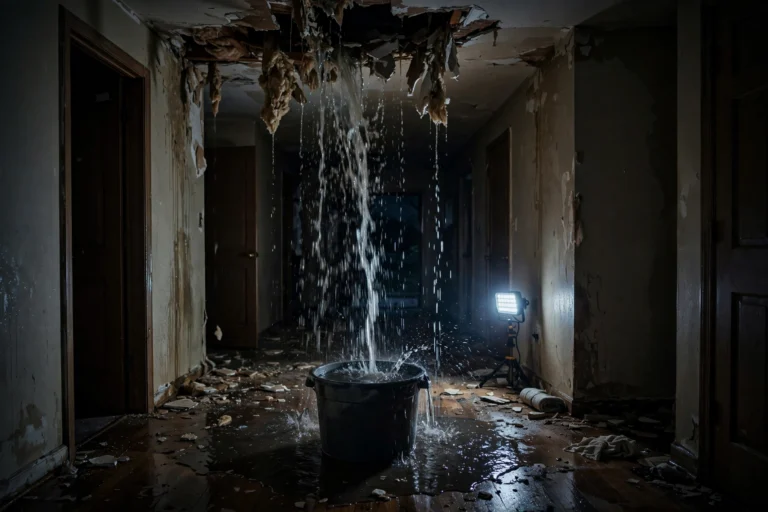
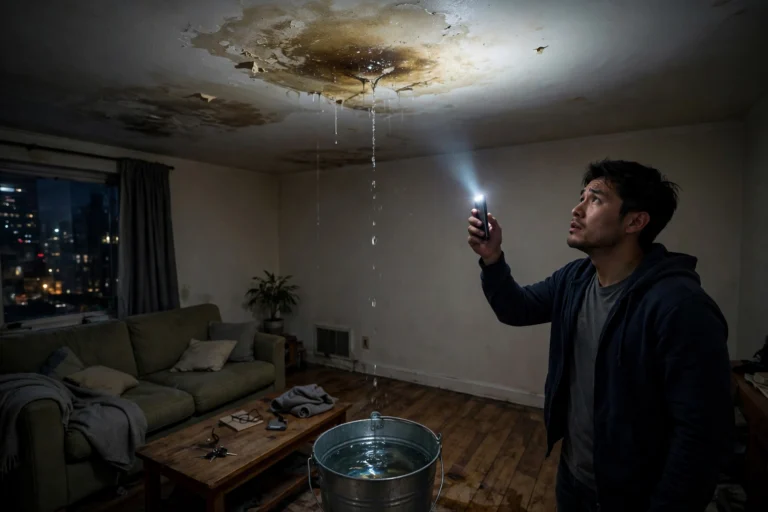
- Catch active drips — buckets, pots, trash cans under every drip point. Empty them before they overflow; a second bucket beside the first buys you sleep.
- Move valuables — electronics, documents, rugs, and furniture out of the water’s path. Water spreads; assume the affected area will grow.
- Towels at the edges — rolled towels along the perimeter of the wet area slow the spread across floors.
- Lift furniture — wood furniture legs on wet floors stain and swell. Aluminum foil or plastic under the legs works in a pinch.
Document everything
- Photograph the water — wide shots of each affected area, close-ups of the source if visible, timestamps on. Do this before you move anything, then again after containment.
- Photograph the meter — the reading right now, with a timestamp. If this becomes an insurance matter, contemporaneous meter photos are gold.
- Write down the timeline — when you first noticed it, what you did, when you called. One paragraph, written now, beats a reconstructed memory in two weeks.
Make the tech’s job faster
- Clear a path — move cars from the driveway, unlock gates, clear clutter from the utility room, attic access, and the area around the water.
- Know your shutoff status — be able to say “main valve is off, meter is stopped” or “meter still spinning.” That one sentence aims the whole visit.
- Keep pets secured — a loose dog and a technician with delicate acoustic equipment in the dark is a combination nobody wants.
- Leave lights on — porch light, hallway lights, the room with the water. The tech arrives faster and works better in a lit house.
What the Technician Does on Arrival (The Night Visit, Step by Step)
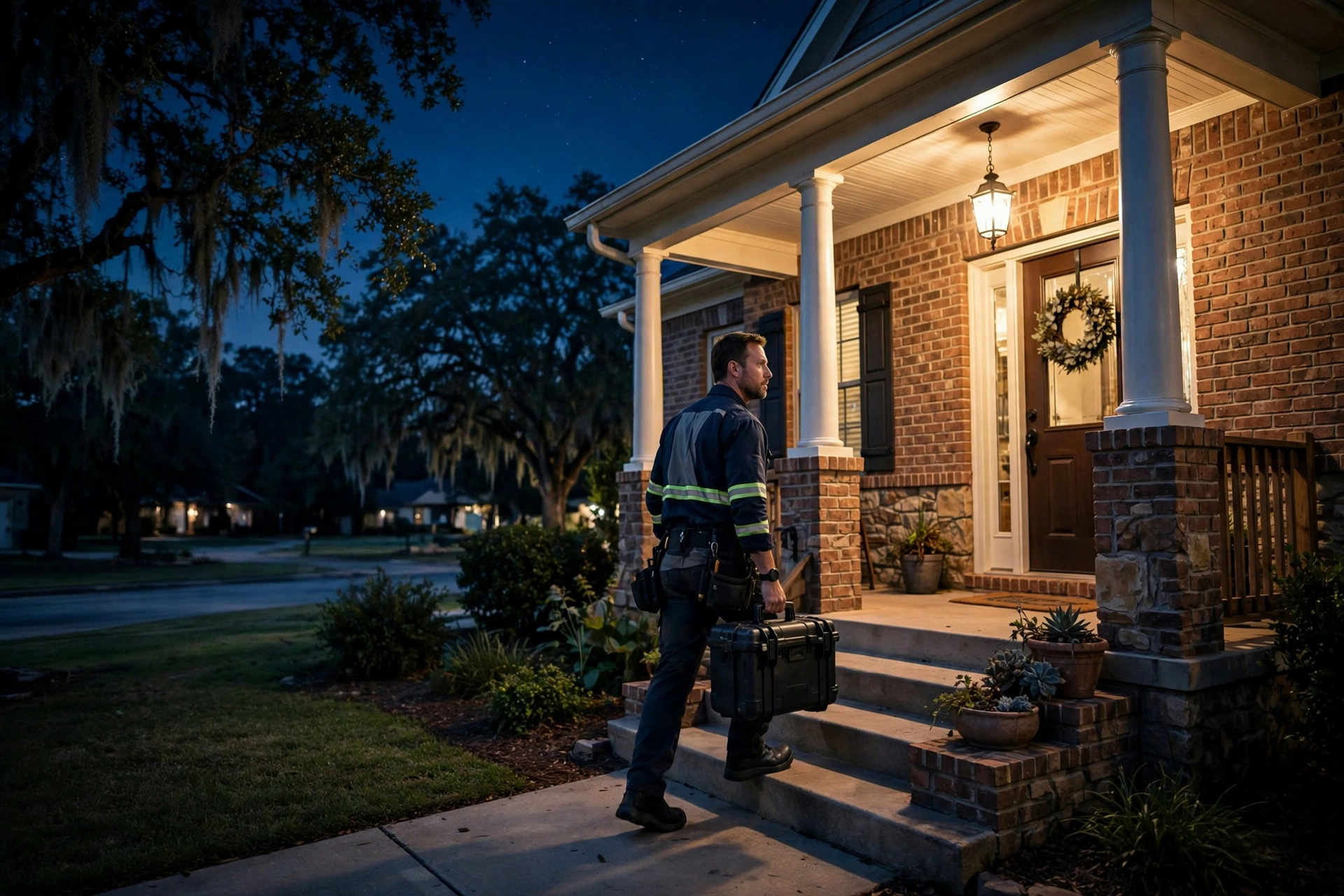
Here’s the visit itself — the same detection science as daytime, adapted for darkness on a 24/7 emergency leak detection call:
Step 1 — Safety sweep (5–10 minutes). The tech checks for electrical hazards first: water near panels, outlets, or fixtures. If breakers need to go off, that happens before any equipment comes out, following the same principle as federal flood-safety guidance: never touch electrical equipment when wet or standing in water. No reputable tech skips this in the dark.
Step 2 — Confirm the water status. Main valve position, meter reading, what’s flowing and what isn’t. This either confirms your triage answers or corrects them — both are useful.
Step 3 — Zone isolation. The tech narrows the search: which part of the plumbing system is losing water? Fixtures get isolated, zones get tested. On a big house this is the step that turns “somewhere in the house” into “the east bathroom run.”
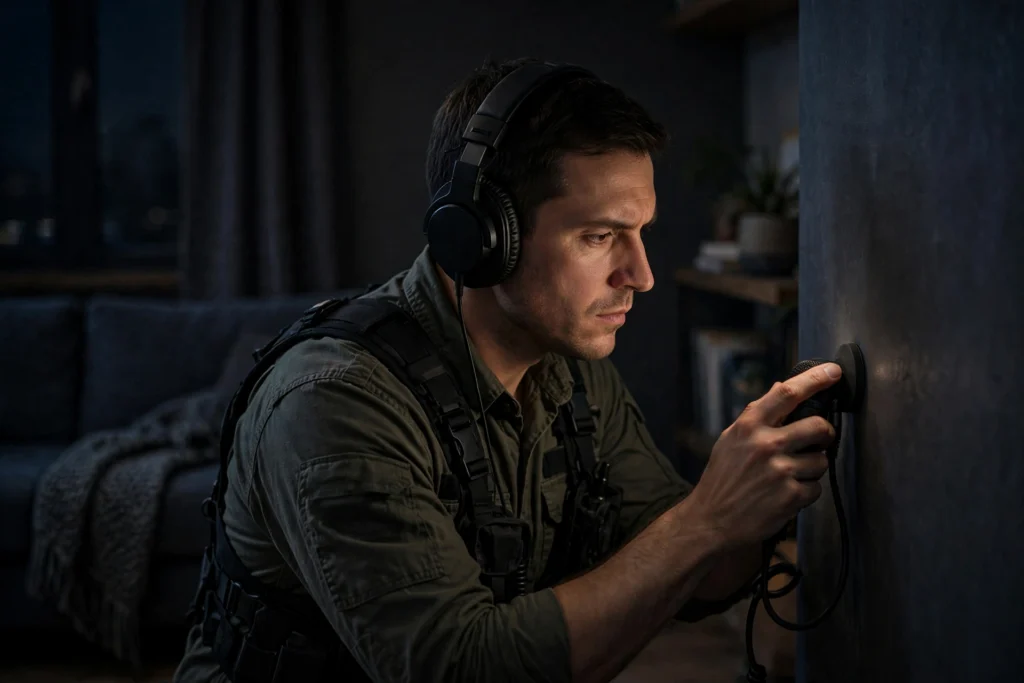
Step 4 — Acoustic listening. Ground microphones and listening equipment go on walls, floors, and pipe runs. Night is actually good for this — the ambient noise floor drops, and leak sounds stand out more clearly. The tech listens for the hiss or rush of pressurized water escaping.
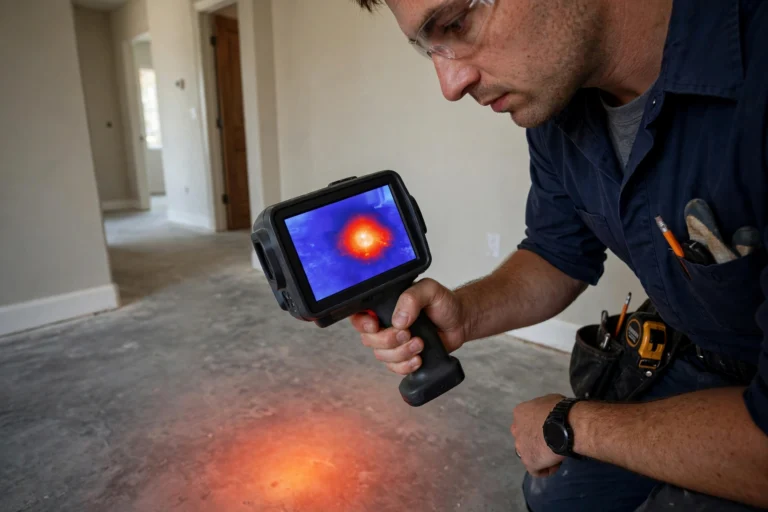
Step 5 — Thermal imaging. An infrared camera scans walls, ceilings, and floors for temperature anomalies — cool signatures where water is spreading behind surfaces. In the dark, with the HVAC cycled down, thermal contrast is often sharper than daytime.
Step 6 — Moisture mapping and marking. Pin and pinless moisture meters confirm what the camera sees and quantify it — active wetting versus old staining. The source gets marked: paint, tape, or flags, plus photos.
Step 7 — The report and next steps. You get the findings verbally on the spot: where the source is, what system failed, what the repair will involve, and whether it needs a plumber tonight or can wait for morning. A written summary with photos follows — the document your insurer and repair bidders need.
Total on-site time for a typical residential 24/7 emergency leak detection visit: 1–3 hours, depending on the size of the house and how hidden the source is.
Day vs Night Detection: What’s Actually Different
| Daytime visit | 24/7 emergency visit | |
| Scheduling | Booked in advance | Triaged live, dispatched now |
| Lighting | Daylight | Flashlights + work lights |
| Ambient noise | Higher (traffic, HVAC, activity) | Lower — better for acoustic listening |
| Thermal contrast | Variable (solar load) | Often sharper at night |
| Technician state | Fresh, scheduled | On-call — experienced night techs, but human |
| Price | Standard rates | After-hours premium applies |
| Documentation | Full report, unhurried | Verbal findings on-site + written report after |
The science behind 24/7 emergency leak detection doesn’t change. The conditions do — and in some ways (acoustics, thermal contrast), the night is the better laboratory. The premium pays for availability, not for compromised quality.
Will someone actually answer at 2 AM?
A genuine 24/7 operation answers live — that’s what the “24/7” means. If you get voicemail with a “we’ll call back in the morning” message, that’s not emergency service regardless of what the website claims. Call (512) 729-5265.
How long does emergency leak detection take at night?
The triage call is 2–5 minutes. Arrival depends on distance, call volume, and priority — reputable companies give you a realistic window and update you if it changes. On-site, a typical residential emergency survey runs 1–3 hours.
Is night detection as accurate as daytime?
Yes — and sometimes better. Lower ambient noise improves acoustic listening, and cooler nighttime conditions can sharpen thermal imaging contrast. The equipment and methods are identical.
What if the tech can’t find the source that night?
It happens — some leaks need daylight, dry conditions, or a second method to confirm. You still get value: a documented survey of what was tested, what was ruled out, moisture mapping of the affected areas, and a plan for follow-up. That’s not a failed visit; it’s a narrowed search.
Do I have to decide on repairs that night?
No. The emergency visit finds and documents the source. Repair decisions — plumber tonight vs morning, which repair method — can usually wait until you’ve seen the findings clearly. The one exception is active structural or safety threats, which the tech will flag explicitly.
The Call You’re Glad You Made
Nobody wants to need 24/7 emergency leak detection. But the homeowners who call describe the same relief: someone answered, someone came, and by 4 AM they knew exactly what was wrong instead of lying awake guessing. The unknown is what makes a water emergency terrifying. Detection replaces it with a marked location and a plan.
Call Kyle Leak Detection Pros at (512) 729-5265. Live triage, night-ready equipment, and a written report — the 2 AM call that ends with answers. For appointment logistics, see same-day leak detection appointments.