
Burst Pipe Emergency in Kyle TX: The First 15 Minutes (2026)
A pipe just burst. Water is spraying, pouring, or flooding — and the next 15 minutes decide whether this is a bad night or a catastrophic one. A burst pipe emergency is the most time-critical plumbing event a homeowner faces. A burst 3/4-inch supply line can release 20+ gallons per minute — that’s a bathtub…
A pipe just burst. Water is spraying, pouring, or flooding — and the next 15 minutes decide whether this is a bad night or a catastrophic one.
A burst pipe emergency is the most time-critical plumbing event a homeowner faces. A burst 3/4-inch supply line can release 20+ gallons per minute — that’s a bathtub every couple of minutes, an inch of water across a room in under half an hour. Speed is everything. This is the exact playbook: what to do in the first 15 minutes, where Kyle pipes actually burst (it’s not just freezes), and why detection still matters after the visible gusher is stopped.
Pipe burst right now? Shut off your main valve, then call (512) 729-5265 — emergency leak detection in Kyle TX.
Minutes 0–3: Stop the Water
Nothing else matters until the flow stops. Everything below waits for this.
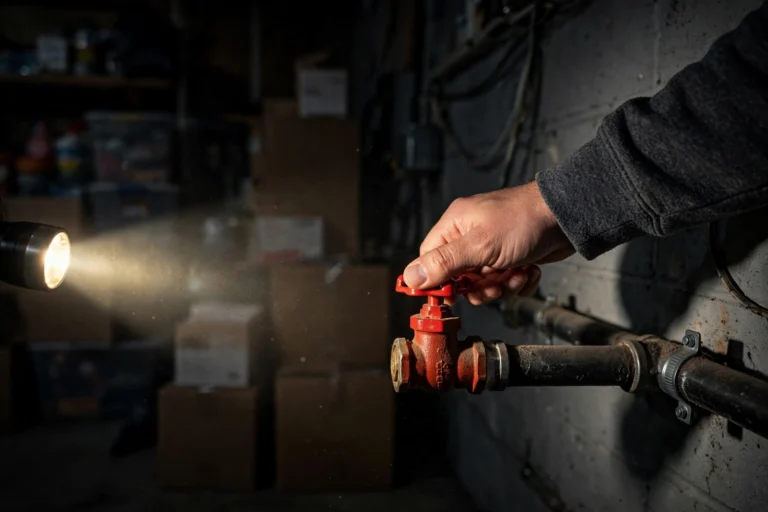
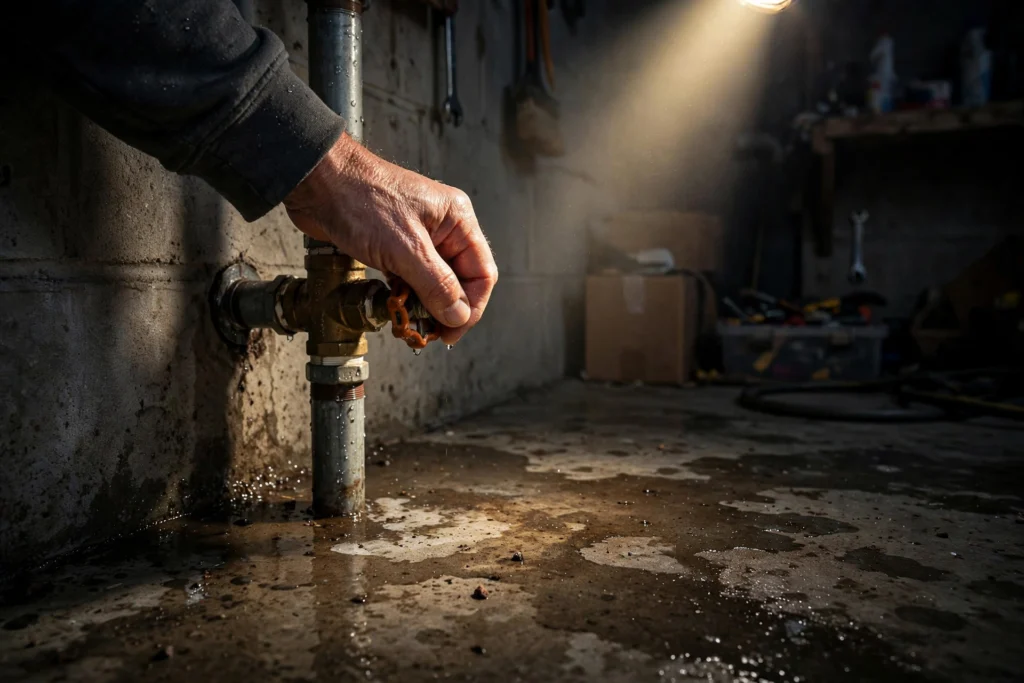
- Close your main water shutoff. Garage wall where the line enters, or the exterior street-facing wall — clockwise, all the way. Don’t know where it is? Check the meter box at the curb for the house-side valve as a backup. (Find and label yours on a calm day: main shutoff valve guide.)
- Verify at a faucet. Open any faucet — flow should die to a trickle within a minute as pressure drains. If it doesn’t, the valve isn’t fully closed or isn’t the right one.
- If you can’t stop it: call the City of Kyle’s utility emergency line for a curb-stop shutoff while you keep working the playbook. A burst pipe you can’t isolate is the city’s shutoff valve’s job.
Do not skip ahead. Documentation, buckets, phone calls — all of it waits until the water stops.
Minutes 3–7: Make It Safe
Water stopped? Now make the scene safe:
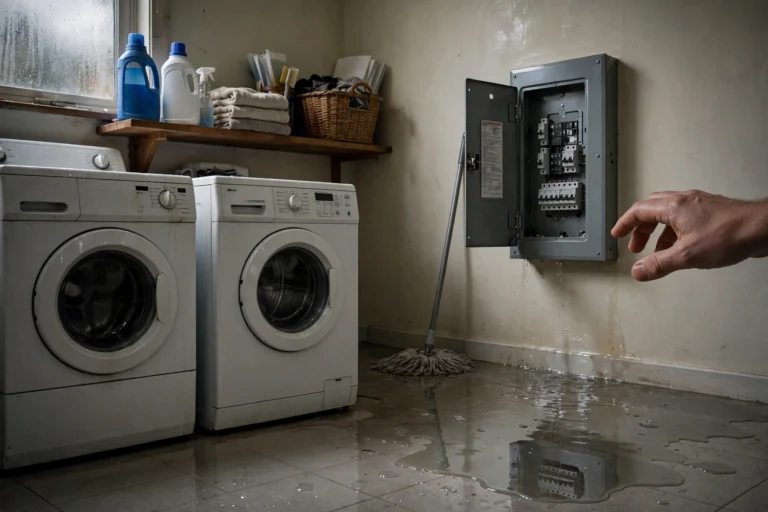
- Electricity check. Water spraying near the breaker panel, outlets, light fixtures, or appliances? Switch off those breakers. If the panel area is wet or you walked through water to reach it, stay out and call 911 — electrocution risk is the one thing worse than the flood.
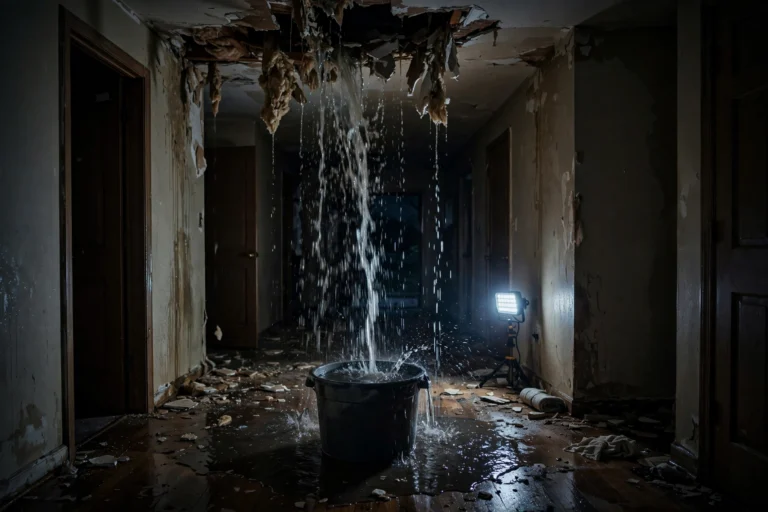
- Stop the spread. Towels at doorways, buckets under active drips from saturated ceilings, move electronics and valuables out of the water’s path. You’re not cleaning up — you’re containing.
- Open the lowest faucet. With the main off, open the lowest faucet in the house (usually an exterior hose bib or laundry sink) to drain residual pressure from the lines. Less water left in the pipes means less water finding its way out of the break.
Minutes 7–12: Document
Before cleanup changes anything, build the evidence file:
- Photograph the burst point — the split pipe, the spray pattern, the surrounding area. Close-ups and wide shots.
- Photograph the damage — every wet room, the water line on walls, soaked belongings. Timestamps on.
- Photograph the meter — the reading now. If the main is off and the meter is stopped, that photo proves when the flow ended.
- Write the timeline — when you heard/saw it, when you shut the valve, when you called. One paragraph, now.
This file serves your insurer, your repair plumber, and — if the burst affects a neighboring unit or tenant space — your liability record.
Minutes 12–15: Call
Now call, in this order:
- Emergency plumber — a visible burst needs hands and parts: pipe cut out, new section soldered or pressed in, system repressurized. This is repair work, and it’s urgent.
- Your insurer — most policies require prompt notification. A call now, written follow-up tomorrow. Don’t wait to “see how bad it is.”
- Leak detection — yes, even though you can see this burst. Read on for why.
Where Kyle Pipes Actually Burst (It’s Not Just Freezes)
Everyone associates burst pipes with winter freezes — and Kyle’s cold-snap burst guide covers that scenario. But in Central Texas, pipes burst year-round, and the causes surprise homeowners:
Summer attic heat
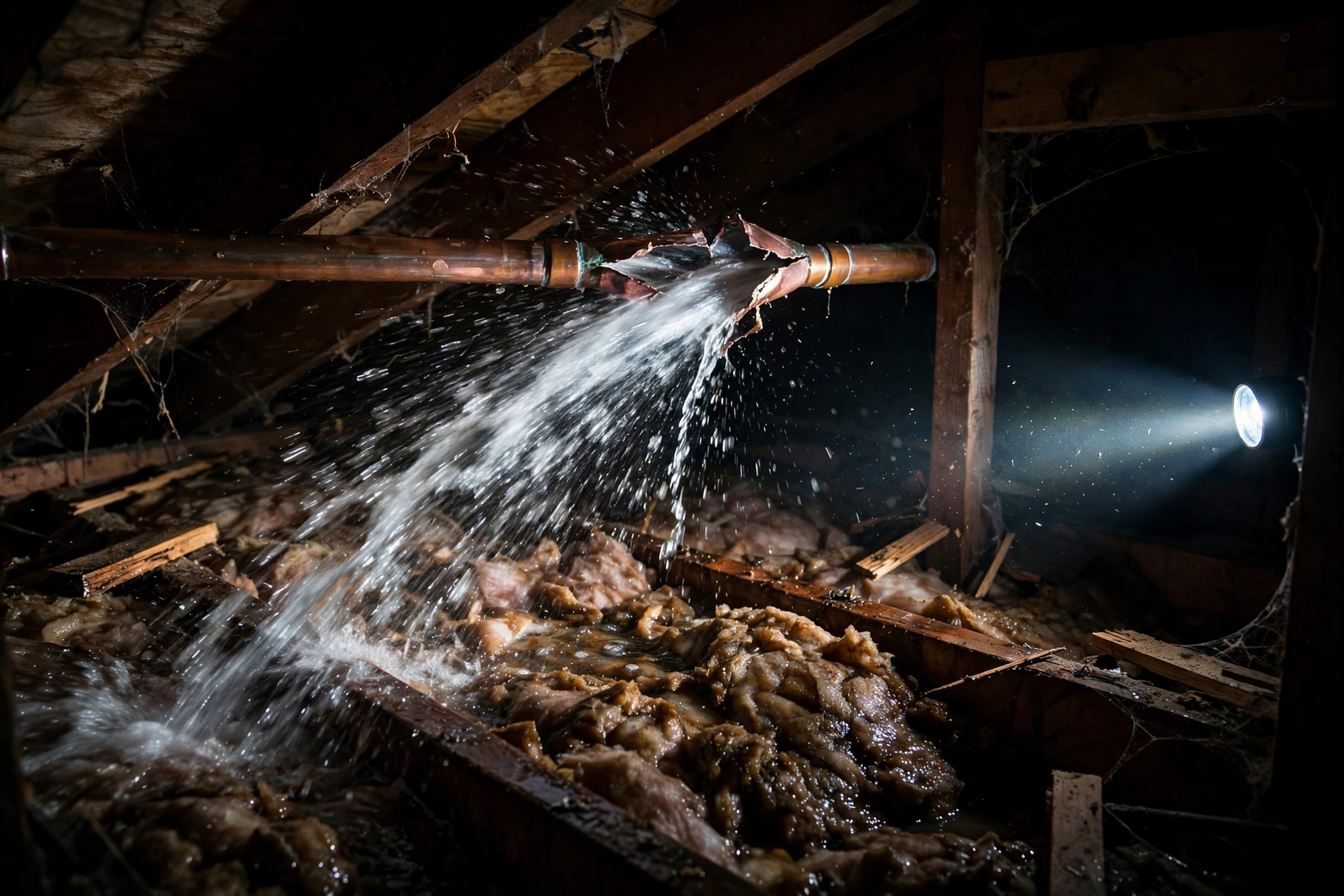
Kyle attics hit 140°F+ in August. PEX and CPVC lines run through those attics to feed upstairs bathrooms — and sustained extreme heat softens plastic pipe, weakens fittings, and accelerates aging. A fitting that would last decades at 75°F fails years early at 140°F. Attic bursts in July are a Kyle-specific reality that freeze-country advice never mentions.
High water pressure
Many Kyle homes run 80–100+ psi at the tap — well above the 40–60 psi plumbing is designed for. Every joint, valve, and flex connector in the house is being stressed 24/7. Pressure doesn’t cause a burst alone, but it turns every weak point into a future burst point. If you’ve never checked your pressure, a $10 gauge on a hose bib tells you in a minute.
Corrosion and age
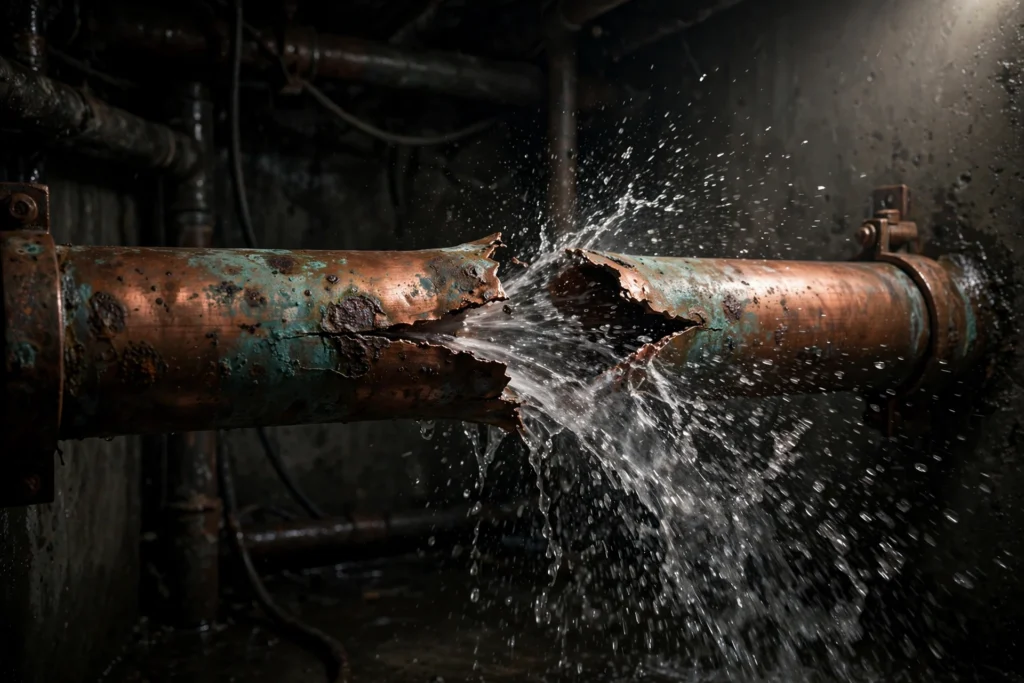
Galvanized steel and old copper don’t burst without warning — they thin from the inside for years (Kyle’s 260–315 mg/L hard water is brutal on metal pipe), then let go all at once. The “sudden” burst was actually a decade in the making. If your home has original galvanized plumbing, every remaining section is on the same timeline as the one that just failed.
Freeze events
The famous one. Texas cold snaps burst pipes in exterior walls, hose bibs, and uninsulated attic runs when temperatures drop and pipes aren’t protected. Our freeze-specific guide covers prevention — see also the American Red Cross frozen-pipe guidance; the playbook above covers response.
Physical damage
Nails through pipes during renovations, shifting slab stressing under-slab lines, lawn equipment hitting exterior risers. Not every burst is a materials failure — some are just bad luck with a nail gun.
Burst Pipe Damage: What the Water Does in the First Hour
| Timeframe | What’s happening | What to do |
|---|---|---|
| 0–15 min | Active flooding; water spreading across floors, into walls | Shutoff → safety → document → call (the playbook above) |
| 15–60 min | Water wicking up drywall, soaking insulation, pooling in low spots | Containment: towels, buckets, move belongings, lift furniture |
| 1–6 hours | Drywall saturating, wood swelling, water reaching subfloor | Professional extraction begins; dehumidifiers running |
| 6–24 hours | Mold risk window opens in Central Texas humidity | Drying equipment must be running; wet materials assessed for removal |
| 24–48+ hours | Mold growth likely on wet drywall/insulation | Remediation territory — far more expensive than drying |
The table tells the story: the first hour is containment, and everything after is a race against mold. A burst pipe handled in 15 minutes is a plumbing bill. A burst pipe discovered after a weekend away is a restoration project.
Why Detection Still Matters After the Visible Burst
“We can see the burst — why would we need detection?” Fair question. Three reasons:
- The burst had a cause, and the cause may have siblings. High pressure, corrosion, or heat didn’t attack just one section of pipe. The same conditions exist throughout the system. A post-repair detection survey — pressure testing the system, acoustic check of suspect runs — finds the next burst before it happens.
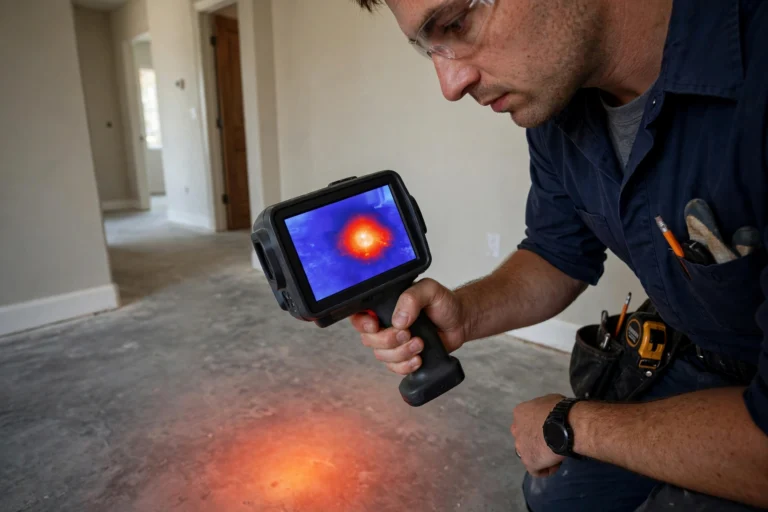
- Water went places you can’t see. The visible spray is the obvious damage. But water also wicked into wall cavities, under flooring, and into insulation — areas that won’t dry on their own and become mold. Moisture mapping with thermal imaging and meters finds the hidden wet zones so drying is complete, not cosmetic.
- The insurance file needs it. “Pipe burst, we fixed it” is a thin claim. A detection report with the burst location, system condition notes, moisture mapping of affected areas, and a timeline is the documentation that supports sudden-and-accidental coverage and the full scope of drying.
Detection after a burst pipe emergency isn’t about finding the obvious — it’s about finding everything the obvious was hiding.
What should I do first when a pipe bursts?
In a burst pipe emergency, shut off the main water valve immediately — nothing else happens until the flow stops. Then: safety check (electricity), containment, documentation, and calls (plumber, insurer, detection). The full 15-minute playbook is above.
How much water does a burst pipe release?
In a burst pipe emergency, a 3/4-inch supply line at typical Kyle pressures can release 20+ gallons per minute. That’s why the shutoff comes before everything — every minute of delay is tens of gallons.
Can pipes burst in summer in Texas?
Yes — a burst pipe emergency can happen in summer. Attic heat (140°F+ in Kyle summers) degrades plastic pipe and fittings, high water pressure stresses every joint year-round, and corrosion thins metal pipe regardless of season. Freezes get the headlines; heat, pressure, and age cause more bursts over a year.
Will insurance cover a burst pipe?
Burst pipes are the classic “sudden and accidental” claim — typically covered, subject to your deductible and policy terms. The keys: prompt notification, documentation (photos, timeline, detection report), and mitigation (you must act to limit damage). Gradual leaks are treated very differently — which is why documenting the suddenness matters.
Should I call a plumber or leak detection first for a burst pipe?
A visible burst pipe emergency needs a plumber first — it’s a repair job, not a diagnostic one. But call detection too: to check the rest of the system for the next weak point, map hidden moisture for complete drying, and build the insurance documentation.
Fifteen Minutes That Save Thousands
A burst pipe emergency is won or lost in the first 15 minutes. Shutoff, safety, containment, documentation, calls — in that order, without skipping. The homeowners with the smallest burst-pipe bills aren’t the luckiest ones; they’re the ones who knew where the valve was and what to do next.
Call Kyle Leak Detection Pros at (512) 729-5265. Emergency detection for Kyle TX — post-burst system checks, hidden moisture mapping, and the insurance-ready report. Know where your shutoff is before you need it: main water shutoff valve guide.