
Apartment Water Leak Emergency at Midnight: Kyle TX Renter’s Guide (2026)
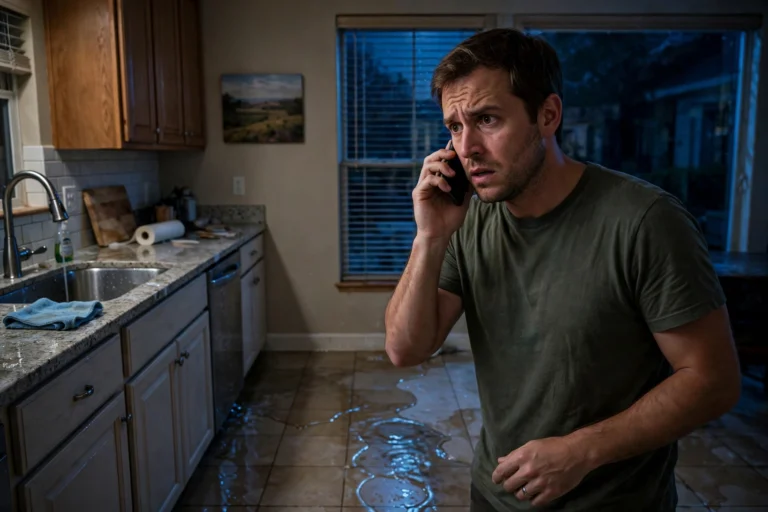
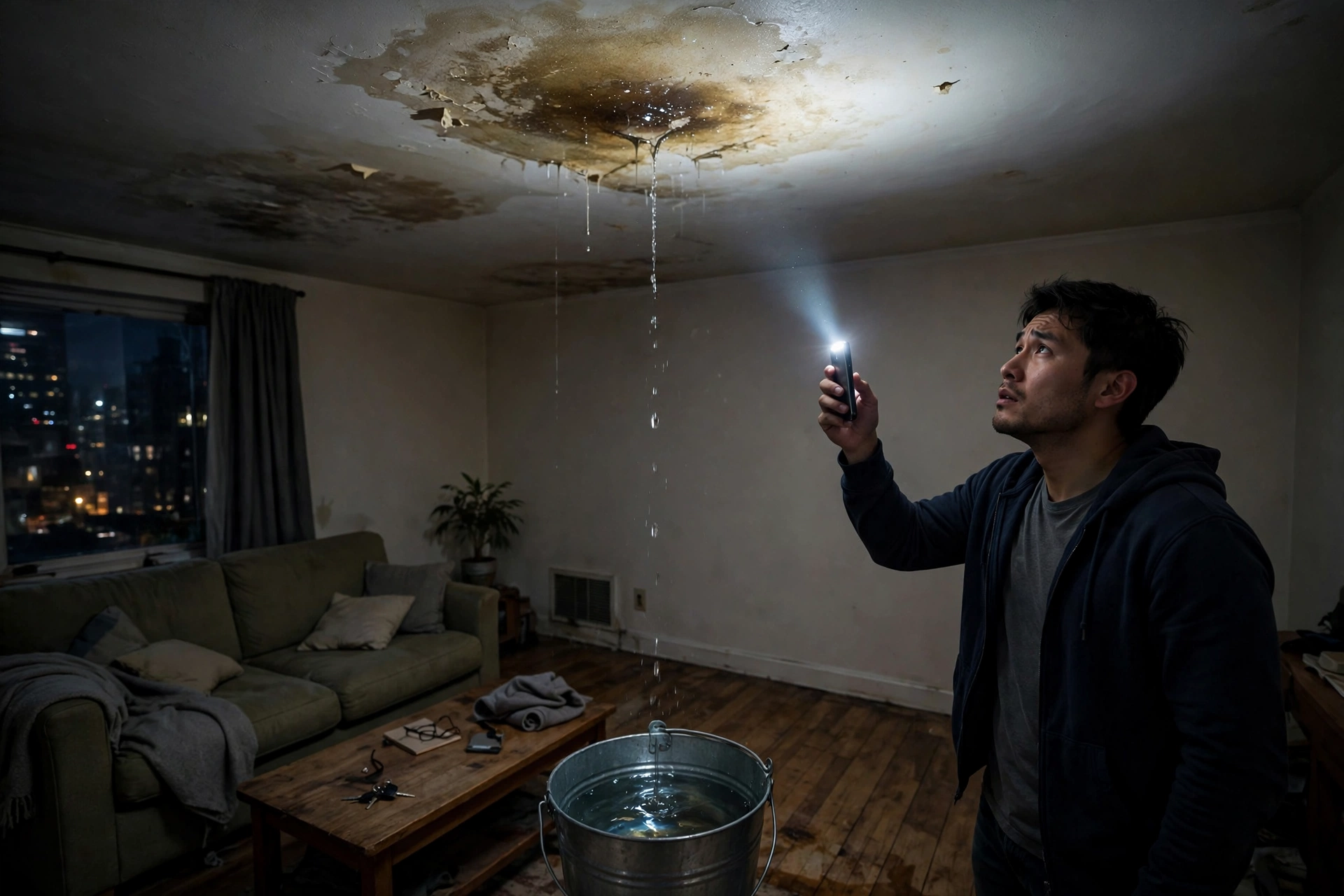
Water is dripping through your ceiling at midnight. You’ve called your landlord twice — straight to voicemail. The property manager’s “emergency line” is a recording. And you’re standing in your Kyle TX apartment wondering: what am I actually allowed to do right now? Here’s the straight answer: more than you think. An apartment water leak…
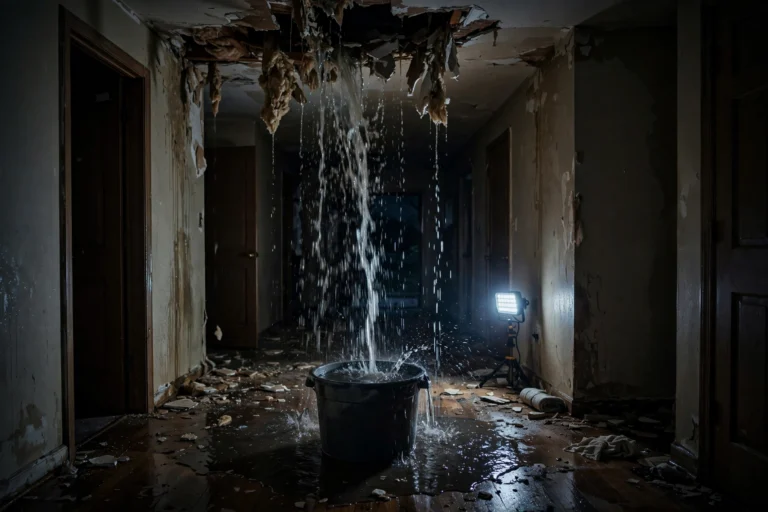
Water is dripping through your ceiling at midnight. You’ve called your landlord twice — straight to voicemail. The property manager’s “emergency line” is a recording. And you’re standing in your Kyle TX apartment wondering: what am I actually allowed to do right now?
Here’s the straight answer: more than you think. An apartment water leak emergency at night has a clear playbook — what you can touch, what you should document, and the line between handling it and waiting. This guide is for renters, written for the 2 AM version of this problem.
General information only, not legal advice — your lease controls the specifics, and Texas Property Code sets the framework. When in doubt, document everything and ask questions in daylight.
If water is actively flooding your unit right now: shut off your unit’s water if you can find the valve (see below), move your belongings, then call (512) 729-5265 for emergency leak detection in Kyle TX.
The First 10 Minutes: What Renters Can Do Right Now
You don’t need permission to protect your own belongings and stop obvious damage. Do these in order:
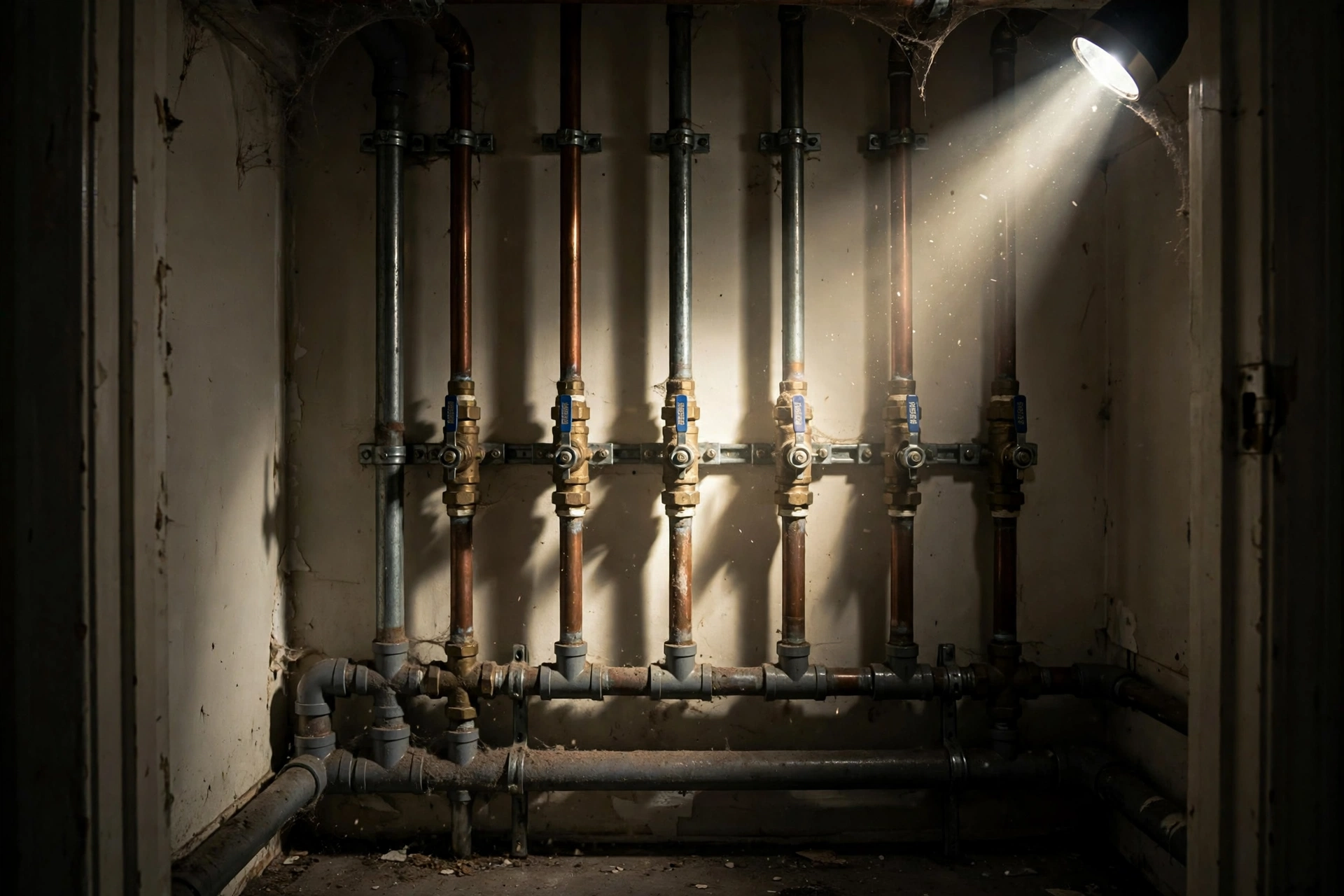
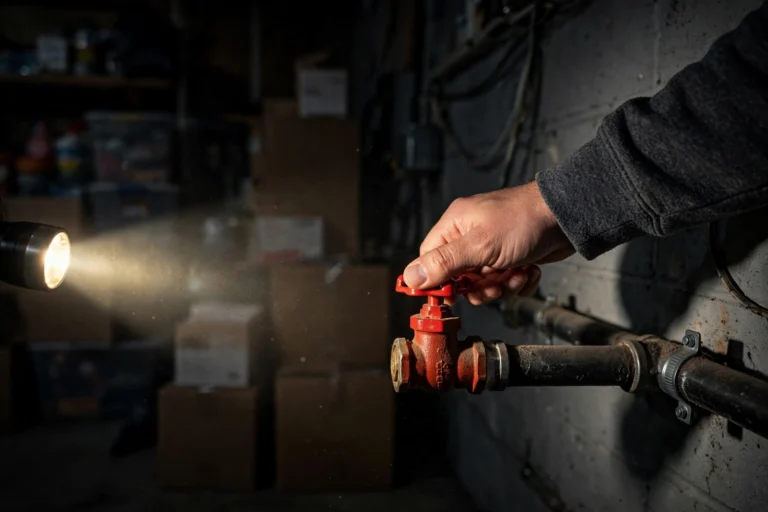
- Shut off the water if you can. Your unit’s fixture shutoffs (under sinks, behind toilets) are yours to use. If the leak is from your own fixture, close that valve. If water is coming from the ceiling or walls — someone else’s plumbing — look for your unit’s main shutoff (often in a utility closet, under the kitchen sink, or near the water heater closet). Closing your unit’s valve won’t stop an upstairs neighbor’s leak, but it rules out your own lines.
- Kill the electrical danger. If water is near outlets, light fixtures, or the breaker panel: don’t touch wet switches. If you can reach your unit’s breaker box from dry ground, flip the breaker for the affected room. Standing water + electricity is the one thing that outranks everything else tonight.
- Contain and protect. Buckets under drips, towels at the base of walls, move electronics, documents, and anything irreplaceable away from the water. Pull up the edge of wet carpet if it’s yours to pull — trapped moisture is what destroys flooring.
- Photograph everything — now. The active leak, the damage, the source area if visible, timestamps on. These photos protect your security deposit and document that you acted promptly. This is the single most valuable thing you can do at midnight.
- Notify in writing. Text, email, the tenant portal — whatever creates a timestamp. “Water leaking through bedroom ceiling, 12:40 AM, photos attached, shut off unit valve, need emergency maintenance.” Written notice starts the clock on the landlord’s response obligation.
What You Should NOT Touch
The line is real, and crossing it can cost you:
- Other units’ shutoffs and the building’s main valve. The building’s main water shutoff and other tenants’ valves belong to the property owner/manager. In a true flooding emergency where no manager is reachable and water is destroying your unit, shutting a building valve to stop active flooding is defensible — but do it gently, document that you did it and why, and report it immediately. Don’t go looking for valves that aren’t yours as a first resort.
- The unit above. Don’t knock on the upstairs neighbor’s door at 2 AM demanding they shut off their water — and definitely don’t enter another unit. Notify the neighbor if you see them, but the chain of responsibility runs through the landlord.
- Walls and ceilings. Don’t open drywall to “find the leak.” That’s the owner’s building, the owner’s decision — and opening the wrong wall can turn a leak repair into a drywall dispute over your deposit.
The Landlord Notification Rules (Texas, General Information)
Texas Property Code gives the framework, but your lease fills in the details. As general information:
- Emergency vs non-emergency matters. A flooding unit, sewage backup, or no-water situation is an emergency — landlords are expected to respond promptly. A slow drip or a stain with no active water is typically a next-business-day issue. Know which one you’re reporting.
- Written notice is what counts. Phone calls are fine for speed, but the timestamp that matters is the written one — text, email, or portal message. Always follow up a call with a written message the same night.
- Document the response (or the silence). If the landlord doesn’t respond overnight, your written notice plus your photos prove you did your part. That record matters for deposit disputes, repair-and-deduct questions, and any claim about the damage.
- Repair-and-deduct exists but has strict rules. Texas law provides a process for tenants to handle certain repairs and deduct costs in specific circumstances — but it has notice requirements, waiting periods, and limits, and it does not apply to every situation. Do not hire your own plumber at midnight and deduct it from rent without understanding the process — talk to a tenant rights resource or attorney first. This article is general information, not legal advice.
Emergency vs Next-Day: The Renter’s Triage
| Situation | Tonight or morning? | Your move |
| Active flooding in your unit | Tonight | Shut your valve, contain, document, call landlord + emergency detection |
| Water through ceiling, steady drip | Tonight | Same as above — ceiling water means someone’s supply line is open |
| Sewage backup in drains/toilet | Tonight | Health hazard. Don’t use the fixtures. Call now. |
| Stain on ceiling, no active water | Morning | Photo, written notice, monitor. Not a midnight emergency. |
| No hot water | Morning | Uncomfortable, not destructive. Report in the morning. |
| Drip under your sink, contained in bucket | Morning | Shut the fixture valve, notice in writing, sleep. |
| Musty smell, no visible water | Morning | Report in writing. Ask for an inspection within days. |
When to Call Leak Detection Yourself
This is the question renters ask most: the leak is the landlord’s responsibility — so why would I call anyone?
Usually, you shouldn’t — the property owner hires the trades. But there are two situations where calling for detection yourself makes sense:
- The landlord is unresponsive and damage is growing. If it’s been 24+ hours with no response to written emergency notice and water is still active, a professional assessment stops the damage from being blamed on your inaction, and the written report documents the source.
- You need proof the source isn’t yours. If the landlord hints the leak is your responsibility, a detection report is the neutral third-party document showing where the water actually came from — it has ended more deposit disputes than any argument.
Protecting Your Deposit: The Documentation File
Deposit disputes over water damage are among the most common renter complaints in Texas. Your defense is a file, built starting tonight:
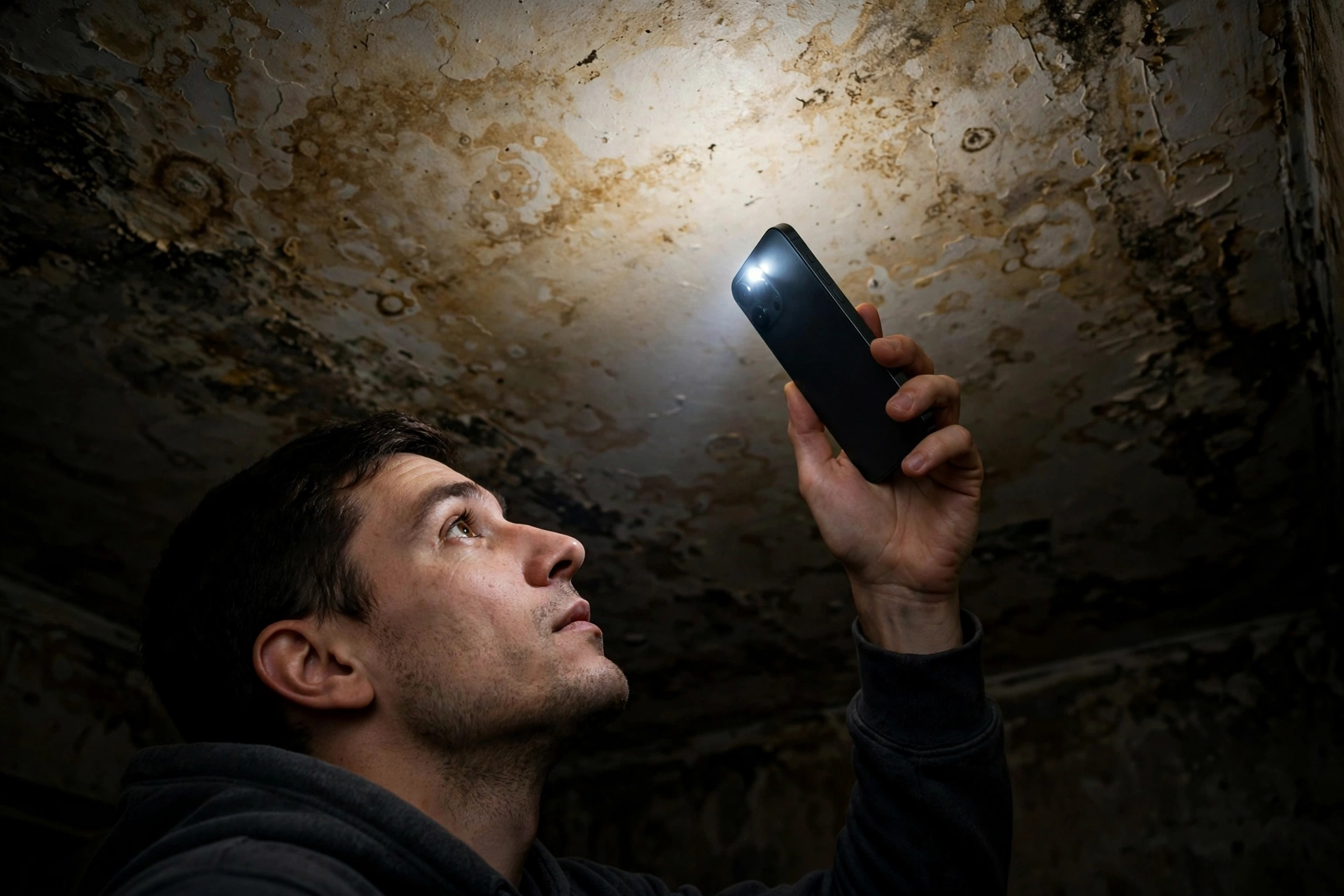
- Tonight’s photos — the active leak, every damaged area, wide shots and close-ups, timestamps on.
- Your written notices — every text, email, and portal message to the landlord, with dates and times. Screenshot the “delivered” status.
- The response log — when they answered, what they said they’d do, when maintenance actually arrived. Gaps in this log are your leverage.
- Your mitigation — photos of the buckets, the moved belongings, the fans. Proof you didn’t let it get worse.
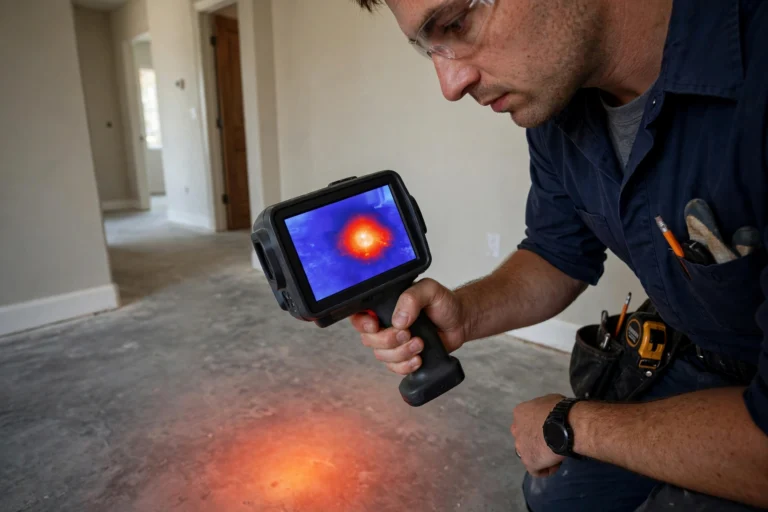
- The detection report — if you had to call for one. The professional, third-party source document.
Normal wear and the building’s own plumbing failures are not your financial responsibility — but without documentation, “not my fault” is just a sentence. With documentation, it’s a case.
The Morning After: Your Checklist
Once the sun’s up and the emergency is contained:
- Follow up the written notice — confirm the landlord received it and ask for the repair timeline in writing.
- Re-photograph in daylight — better light, better evidence of the full extent.
- Ask what the plan is — source found? Detection scheduled? Drying equipment coming? Get dates, not promises.
- Check your renter’s insurance — if you have it, your belongings may be covered even when the building isn’t your responsibility. If you don’t have it, tonight is the reason to get it.
- Keep living normally, but watch — a “repaired” leak that comes back needs a new written notice the same day.
For the full reporting process, see how to report a water leak to your landlord.
Call Kyle Leak Detection Pros at (512) 729-5265 — emergency leak detection in Kyle TX with written reports that document the source.
Frequently Asked Questions
What should I do first when water is leaking in my apartment at night?
Shut off your unit’s water valve if the leak is from your fixtures, contain the water, photograph everything with timestamps, and notify your landlord in writing immediately. Then assess using the triage table above.
Can I shut off the building’s main water valve?
The building’s main valve belongs to the property owner. In a true flooding emergency with no manager reachable, shutting it to stop active destruction is defensible — do it gently, document why, and report it immediately. Don’t touch other units’ valves as a first resort.
Is my landlord required to fix a leak at night?
For true emergencies — active flooding, sewage, no water — landlords are expected to respond promptly under Texas habitability principles. For non-emergencies, next business day is typical. Written notice is what starts the clock either way. (General information — your lease controls the specifics.)
Can I hire my own plumber and deduct it from rent?
Texas has a repair-and-deduct process, but it has strict notice requirements, waiting periods, and limits — it is not a midnight self-help remedy. Don’t do this without understanding the process; talk to a tenant rights resource first.
How do I prove a leak wasn’t my fault?
Documentation: tonight’s photos, your written notices, the response log, and — most powerfully — a professional detection report showing the water’s actual source. The report is the neutral evidence that ends “your fault vs building fault” arguments.
You Have More Power at Midnight Than You Think
An apartment water leak emergency at night feels helpless — it’s not your building, the landlord isn’t answering, and the water keeps coming. But the playbook is clear: shut off what you can, document everything, notify in writing, and know the line between tonight’s actions and morning’s follow-up.
The renters who come out of these situations whole are the ones with the file — photos, timestamps, written notices, and a professional report if it came to that.
Water still coming and no one’s answering? Call Kyle Leak Detection Pros at (512) 729-5265 — emergency leak detection in Kyle TX with written source documentation. And find your unit’s shutoff valve this weekend — before you need it at midnight.