
Trenchless Sewer Repair in Kyle TX: Pipe Lining vs Pipe Bursting (2026)
The camera found the problem in your sewer line. Now comes the question every Kyle homeowner dreads: "Do they have to tear up my yard — or my driveway — to fix it?" Often, the answer is no. Trenchless sewer repair fixes the pipe from the inside, through small access points, without digging a trench…
The camera found the problem in your sewer line. Now comes the question every Kyle homeowner dreads: "Do they have to tear up my yard — or my driveway — to fix it?"
Often, the answer is no. Trenchless sewer repair fixes the pipe from the inside, through small access points, without digging a trench along the whole line. But "trenchless" isn’t one method — it’s two main ones, lining and bursting, and they solve different problems. Picking the wrong one wastes money; knowing the difference protects you.
This guide explains both methods plainly, when each one works, when neither works and digging is unavoidable, and what borrowed Texas cost ranges look like. Kyle-specific trenchless pricing is not published, so all figures below are borrowed Texas-wide ranges with "confirmed on the call" caveats.
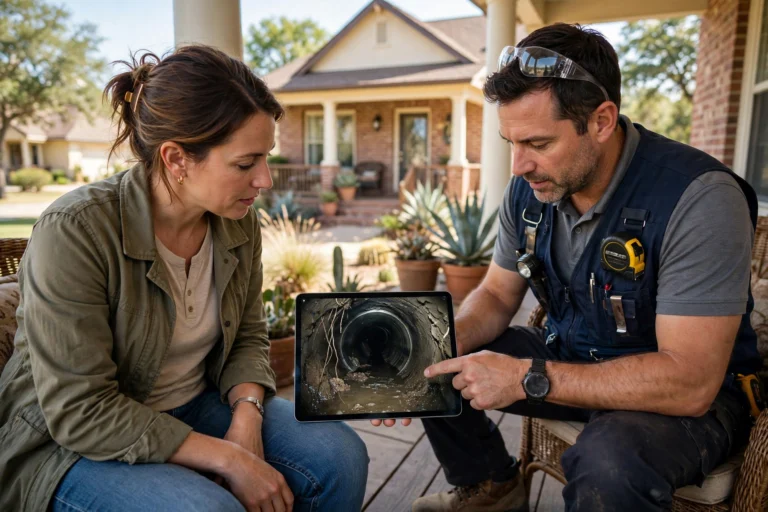
Before any repair decision, get camera evidence of the damage. If you don’t have it yet, call (512) 729-5265 for sewer leak detection in Kyle TX — a trenchless recommendation without footage is a guess.
What "Trenchless" Actually Means
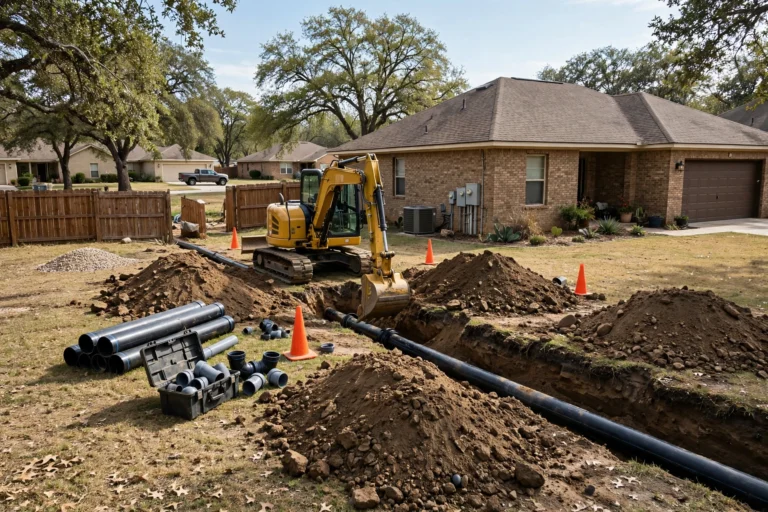
Traditional sewer repair means excavating a trench along the damaged section — sometimes the full length of the line — removing the old pipe, laying new pipe, backfilling, and then restoring whatever was on top: lawn, landscaping, sidewalk, driveway. The pipe work is only part of the bill; the digging and restoration are often the bigger part.
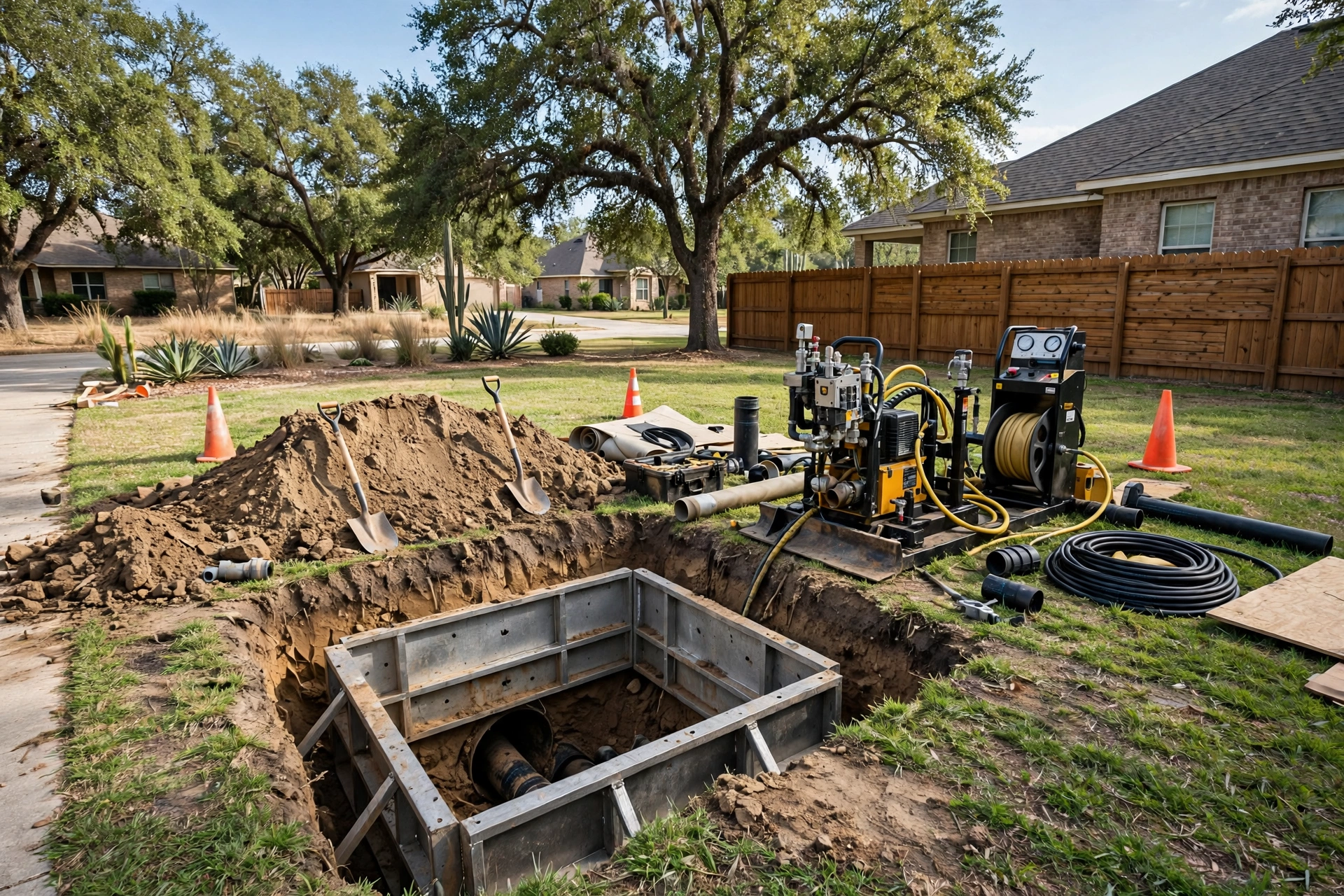
Trenchless repair works through the existing access points (usually the cleanout, plus one or two small pits at the ends of the section). The yard stays mostly intact, the driveway stays in place, and the job typically finishes faster. The trade-off: trenchless costs more per foot of pipe, but the total can be lower because there’s almost no restoration bill — and the disruption is incomparably smaller.
Trenchless is not magic, and it’s not always possible. It depends entirely on what the camera found. That’s why the two methods below matter: they have different requirements.
Method 1: Pipe Lining (CIPP — Cured-in-Place Pipe)
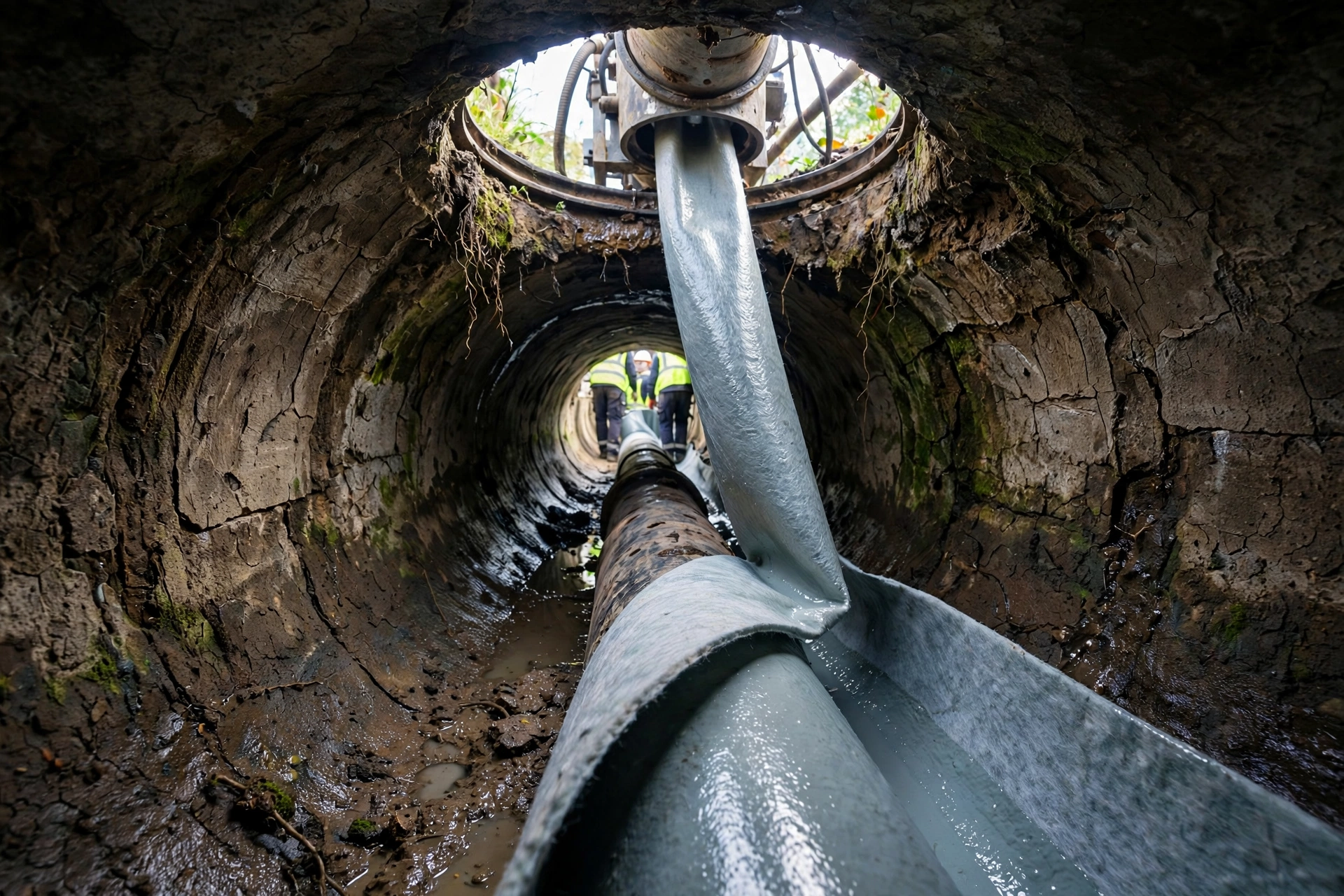
How it works. A flexible liner, saturated with epoxy resin, is inserted into the damaged pipe and inflated against its inner walls. The resin cures — usually with hot water, steam, or UV light — forming a hard, seamless new pipe inside the old one. The old pipe stays in the ground as a shell; the liner becomes the working pipe.
When lining is the right call:
- Cracks and small breaks in an otherwise intact pipe
- Separated joints that haven’t shifted far out of alignment
- Root intrusion points where the pipe structure is still sound
- Corrosion and rough interior surfaces that catch debris
When lining does NOT work:
- A collapsed pipe — there’s no shape left to line against
- A severely offset joint — the liner can’t bridge a big step
- A belly (sagging section) — lining follows the sag; it doesn’t correct the slope, so water still pools
- A pipe that has lost its structural shape entirely
Borrowed Texas ranges: CIPP lining around $3,800–$8,550(Houston guides) or roughly $90–$250 per linear foot. Lining is usually the cheaper trenchless option when it applies, and it’s the least disruptive — often a single day’s work with no excavation beyond the access points.
Method 2: Pipe Bursting
How it works. A bursting head is pulled through the old pipe, fracturing it outward, while a new high-density polyethylene (HDPE) pipe is pulled in right behind it, taking the old pipe’s place. The new pipe is a full replacement — same path, new material — installed without a trench.
When bursting is the right call:
- A pipe too damaged for lining but still following its original path
- Multiple damaged sections along a run
- Old, brittle material (clay, cast iron at end of life) that needs full replacement
- Situations where you want a brand-new pipe with a long service life, not a liner inside an aging shell
When bursting does NOT work:
- A collapsed section that blocks the bursting head’s path
- Lines with tight bends the head can’t navigate
- Situations where nearby utilities or structures are too close to the fracturing path
- Very shallow lines where the bursting force could disturb the surface
Borrowed Texas ranges: pipe bursting around $5,700–$11,400 (Houston guides) or roughly $60–$200 per linear foot for the bursting work itself, with total trenchless replacement jobs landing $4,500–$15,000+ depending on length and conditions. Bursting costs more than lining because it installs a complete new pipe — but the result is a new pipe, not a rehabilitated old one.
Lining vs Bursting vs Digging: The Honest Comparison
| Factor | Pipe lining (CIPP) | Pipe bursting | Traditional dig-and-replace |
|---|---|---|---|
| Yard/driveway disruption | Minimal — access points only | Small pits at each end | Full trench along the section |
| What it fixes | Cracks, joints, roots, corrosion | Damaged pipe needing full replacement | Anything, including collapses |
| What it can’t fix | Collapses, big offsets, bellies | Collapses, tight bends, shallow lines | Nothing — but costs the most in restoration |
| New pipe or rehabilitated? | Rehabilitated (liner inside old pipe) | Brand-new HDPE pipe | Brand-new pipe |
| Borrowed Texas total range | $3,800–$8,550 | $5,700–$11,400 | $3,800–$14,250 plus restoration $950–$4,750 |
| Typical duration | Often 1 day | 1–2 days | Several days plus restoration time |
The key insight: the cheapest option on paper isn’t always the cheapest total. A traditional dig can quote a lower pipe price and then add thousands in driveway, sidewalk, and landscaping restoration. A trenchless quote looks higher per foot but arrives with almost no restoration bill. Always compare totals, including restoration — and get the comparison in writing.
When Digging Is Unavoidable (and That’s OK)
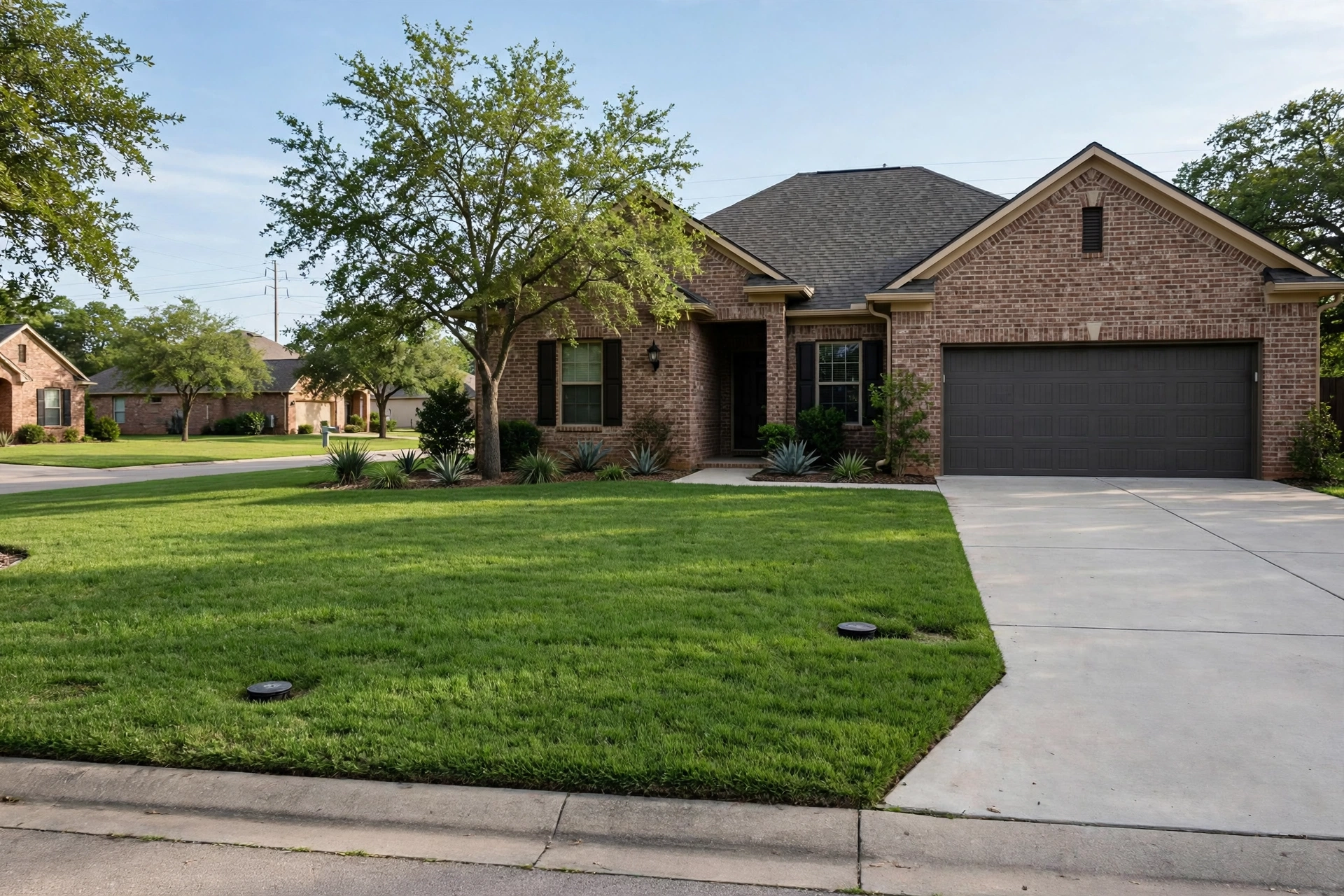
Trenchless marketing sometimes implies digging is obsolete. It isn’t. Digging is the right call when:
- The pipe has collapsed. Neither lining nor bursting can work through a collapse; the section must be excavated.
- There’s a belly. A sagging pipe needs re-grading — the slope itself must be corrected, which means exposing that section.
- The line’s path must change. If the original route is the problem (under a new structure, through root-dense soil), a new route means a trench.
- Access is impossible. Some lines have no usable access points for trenchless equipment, and creating them costs more than digging the repair.
A company that recommends trenchless for a collapse, or digging for a simple cracked joint, is telling you something about their equipment inventory, not about your pipe. The camera findings should drive the method — ask to see them.
How to Choose: The Decision Path
- Get the camera report first. No footage, no method decision. The report should name the damage type (crack, offset, belly, collapse, roots) and its extent.
- Match the damage to the method. Single-section cracks/joints/roots in a sound pipe → lining. Widespread damage or end-of-life pipe → bursting. Collapse, belly, or path change → digging.
- Compare total costs, not per-foot costs. Include restoration in every quote. A trenchless quote and a dig quote are only comparable when both include putting your property back.
- Ask about lifespan and warranty. A liner and a new HDPE pipe have different expected service lives; the warranty terms should reflect that. Get both in writing.
- Get a second camera opinion for big jobs. For a four- or five-figure repair, a second company’s camera run is cheap insurance against an oversized recommendation.
For the general pricing context behind detection and repair, see how much leak detection costs in Kyle TX.
Frequently Asked Questions
Is trenchless sewer repair really "no digging"?
Nearly, not literally. Lining usually needs only the existing cleanout access; bursting needs small pits at each end of the run. Compared with a full trench, the digging is minimal — but "zero digging" claims should be treated as marketing.
How long does trenchless repair last?
A cured-in-place liner and a new HDPE pipe are both long-life solutions — decades under normal conditions — but the exact lifespan depends on the installation, the soil, and the pipe’s surroundings. Ask the installer for the expected service life and warranty in writing rather than accepting a round number.
Can trenchless fix tree root damage?
If the pipe is structurally sound and roots entered through joints or small cracks, lining seals those entry points after the roots are cleared — that’s one of lining’s best uses. If roots have crushed or collapsed sections, bursting or digging is needed instead.
Does trenchless work on every pipe material?
Lining and bursting work on most residential materials — clay, cast iron, PVC, concrete — but the condition matters more than the material. The camera report, not the material label, decides.
Is trenchless always more expensive than digging?
Per foot, usually yes. In total, often no — because digging adds excavation labor and restoration (landscape, driveway, sidewalk) that trenchless mostly avoids. Compare complete written totals, not headline rates.
The Right Fix Is the One Your Pipe Actually Needs
Trenchless sewer repair is a genuine advance — it saves yards, driveways, and days of disruption — but it’s two different tools, not one miracle. Lining rehabilitates a sound-but-damaged pipe; bursting replaces a failing one; digging handles what neither can. The camera footage tells you which one your line needs, and any honest quote starts there.
Call Kyle Leak Detection Pros at (512) 729-5265 for sewer leak detection in Kyle TX — camera inspection, locate, and a written report, so your repair decision is based on evidence, not a sales pitch.
If you are still spotting warning signs, see sewer line leak signs in Kyle TX.