Slab Leak Repair vs Repipe: Which Is Worth It in Kyle TX? (2026)
You’ve got a slab leak, and the plumber just said the words every homeowner dreads: “We can fix this spot — but honestly, your pipes are in rough shape.” Now you’re stuck on the biggest decision in residential plumbing: slab leak repair vs repipe. Fix the one leak for hundreds, or replace everything for thousands?…
You’ve got a slab leak, and the plumber just said the words every homeowner dreads: “We can fix this spot — but honestly, your pipes are in rough shape.” Now you’re stuck on the biggest decision in residential plumbing: slab leak repair vs repipe. Fix the one leak for hundreds, or replace everything for thousands?
This is genuinely a math problem, not a guess — and for Kyle, TX homes, the math has some local variables (pipe age, hard water, clay soil) that change the answer. Here’s the slab leak repair vs repipe decision framework.
Rule of thumb up front: one leak in an otherwise healthy system → repair the spot. Two or more leaks, or visibly corroded pipe everywhere → stop spot-fixing and repipe. The most expensive option is paying for spot repairs and then a repipe two years later. Get the facts first with slab leak detection in Kyle TX — call (512) 729-5265.
Slab Leak Repair vs Repipe: The Cost Comparison
| Option | Typical Kyle cost | Timeline | Disruption |
|---|---|---|---|
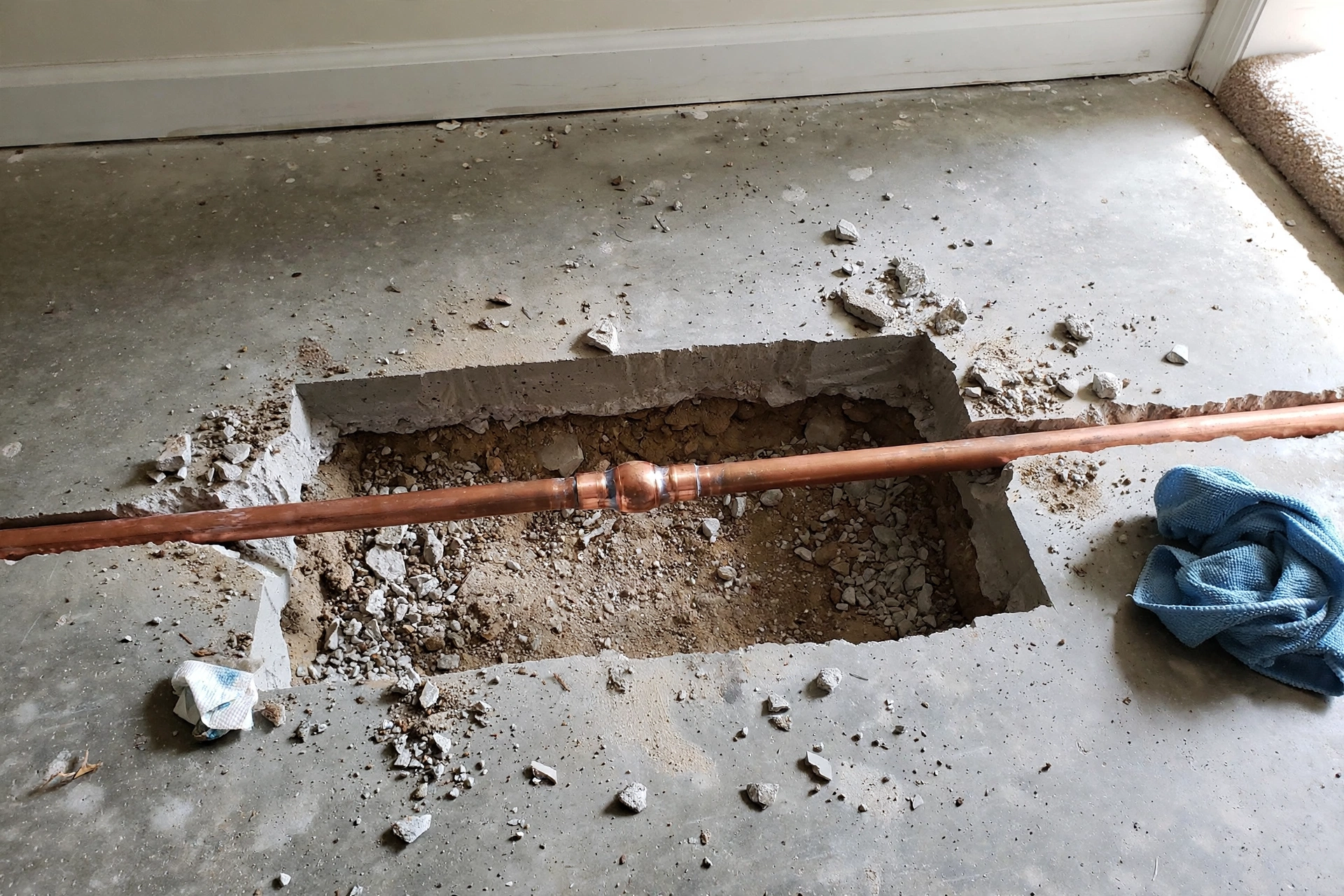
| Spot repair | $500–$2,000+ | 4–8 hours | One slab opening |
| Pipe rerouting (partial) | $2,000–$6,000+ | 1–3 days | Low — attic/walls |
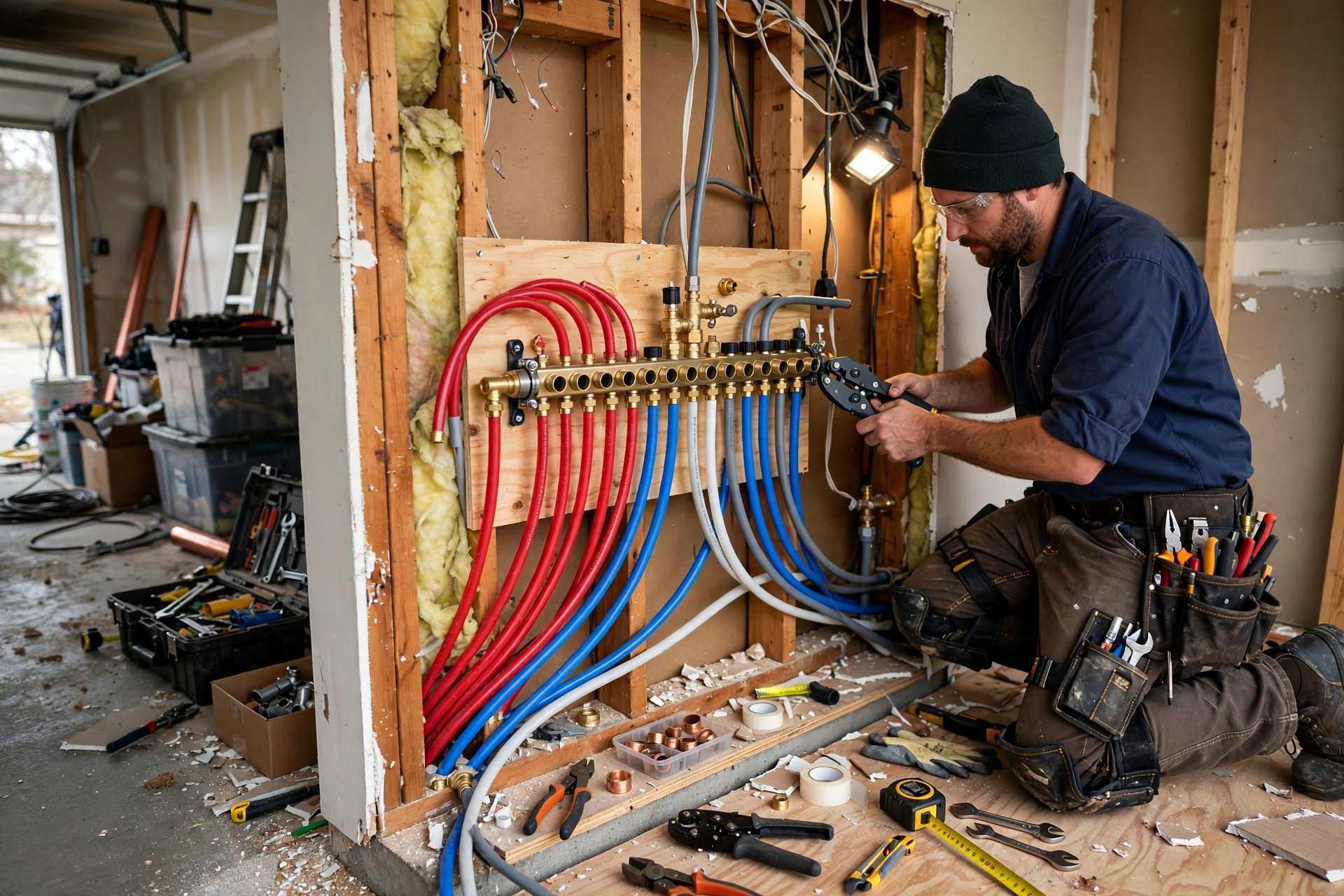
| Whole-house repipe (PEX) | $4,500–$15,000 | 2–5 days | Moderate — wall/ceiling openings throughout |
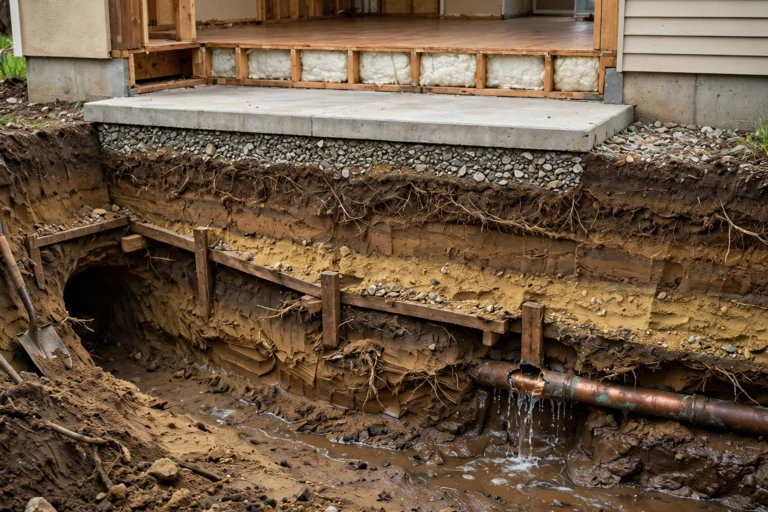
| Tunneling repair | $4,000–$10,000+ | 3–5 days | Low — exterior digging |
(National context: Angi’s 2026 data puts the average slab leak repair at $2,280. Repipe costs scale with home size, stories, and wall material.)
The repipe number looks scary until you do the real comparison: three spot repairs over five years ($1,500–$6,000, plus three rounds of disruption, three rounds of concrete patching, three rounds of time off work) versus one repipe that ends the cycle permanently. That’s the slab leak repair vs repipe math that matters.
When Slab Leak Repair Is the Right Call
In the slab leak repair vs repipe debate, repairing the spot (or rerouting the single line) is the right call when:
- It’s your first leak and the rest of the system tests healthy. One pinhole doesn’t condemn a plumbing system.
- Your home is under ~15 years old with copper or PEX in good condition. In Kyle’s newer subdivisions — Plum Creek, Six Creeks, Crosswinds, Anthem — a single leak is usually an isolated defect (bad joint, installation nick, a rock against the pipe), not systemic failure.
- The pipe is accessible and the surrounding pipe looks clean when exposed. A plumber who opens the slab and finds bright, solid copper around the breach is looking at a one-off.
- Budget is the constraint and the system doesn’t show red flags. A $500–$2,000 repair today is rational if the pipe has real life left.
When Repiping Is the Smarter Money
Repipe the house when:
- You’ve had 2+ leaks. This is the big one. The “2+ leaks = stop spot-fixing” rule exists because repeat leaks are never coincidence — they’re the system telling you it’s done. Every additional spot repair is money you’ll never get back.
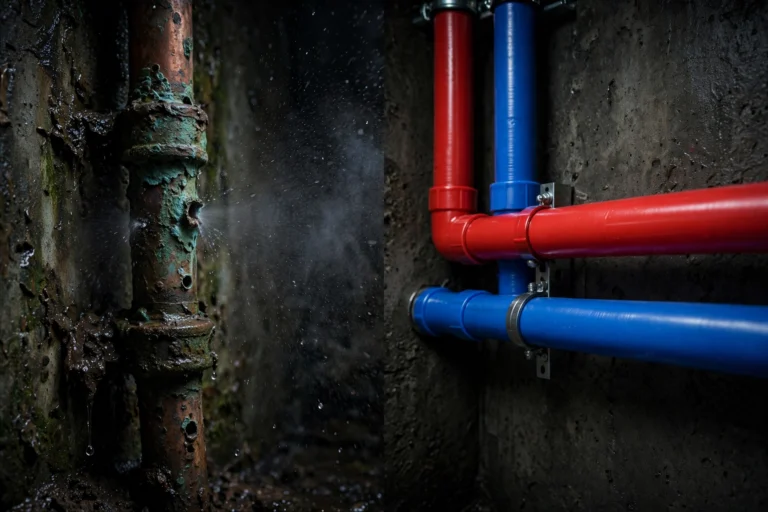
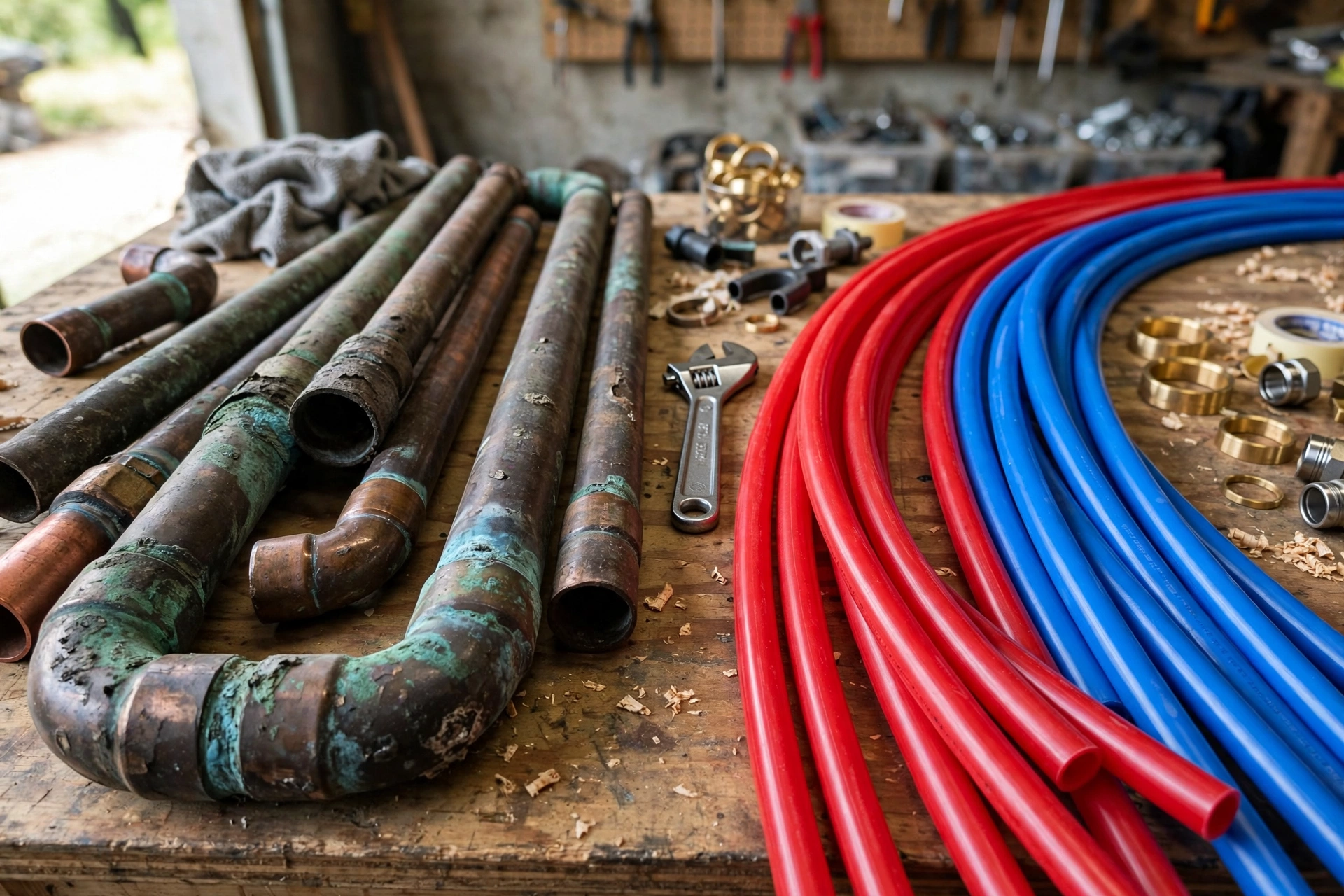
- The pipe is visibly corroded everywhere. Green patina, pitting, paper-thin spots, or copper that crumbles when touched means the whole system is on the same timeline. Fixing one section is rearranging deck chairs.
- Your home is 25+ years old with original copper. Kyle’s very hard water (260–315 mg/L) eats copper from the inside out. At 25–40 years, original copper in hard-water territory is living on borrowed time — and Kyle has plenty of 1990s–2000s homes hitting that window right now.
- Water pressure is high and unregulated. Homes running 90–110 psi (common on Kyle’s elevated lots) stress every joint simultaneously. If pressure was never regulated, the whole system aged fast together.
- You’re already opening walls or remodeling. If a renovation has walls open anyway, the marginal cost of repiping drops dramatically. It’s the cheapest repipe you’ll ever get.
The Kyle-Specific Factors
Three local realities tilt the slab leak repair vs repipe math:
Hard water shortens copper life. At 260–315 mg/L hardness, Kyle’s water is officially “very hard,” and hot-water lines corrode fastest. If your home still has original copper and you’re seeing your first slab leak at year 20+, budget mentally for the repipe conversation — the first leak is often the announcement, not the event. (The EPA’s WaterSense program has resources on understanding your home’s water.)
Clay soil punishes under-slab pipe. Every shrink-swell cycle stresses every joint under your slab. A repipe that reroutes lines out from under the slab (through the attic) doesn’t just replace old pipe — it removes the pipe from the hostile environment entirely. That’s a structural advantage spot repairs can never offer.
Newer neighborhoods change the calculus. In fast-built subdivisions, installation quality varies. A 10-year-old home with a slab leak from a bad joint doesn’t need a repipe — it needs that joint fixed and the rest of the system inspected. Age of pipe matters more than age of home.
Partial Repipe: The Middle Path
There’s a third option most homeowners don’t hear about: repipe just the failing system. In practice, this usually means:
- Hot-water repipe only. Hot lines fail first (thermal cycling + hard water scale). Repiping the hot-water system through the attic while leaving healthy cold lines alone cuts the repipe cost roughly in half.
- Reroute the under-slab lines only. Abandon everything under the slab, run new PEX overhead. You keep the in-wall plumbing, eliminate the slab-leak risk permanently, and skip the most disruptive part of a full repipe.
Ask for all three quotes — spot repair, partial reroute/repipe, and full repipe — and compare them against your leak history. An honest plumber will show you the math instead of pushing one option.
Slab Leak Repair vs Repipe: The Decision Framework
Answer these four questions in order:
- How many leaks have you had? One → lean repair. Two or more → lean repipe.
- How old is the pipe, and what condition is it in? Under 15 years and clean → repair. 25+ years or visibly corroded → repipe.
- What’s your water like? Tested pressure over 80 psi with no regulator + very hard water + original copper = the system is aging fast everywhere → repipe.
- What’s the 10-year cost? Add up: likely future spot repairs (ask the plumber for an honest estimate of remaining pipe life) vs. one repipe now. The repipe usually wins once you’re past leak #2.
Then get the same detection report into every bidder’s hands and get all options quoted in writing. (Full cost context: slab leak repair costs in Kyle TX and repair options compared.)
Frequently Asked Questions
Is it better to repair a slab leak or repipe the whole house?
It depends on leak history and pipe condition. First leak in a young system: repair. Two or more leaks, or corroded pipe throughout: repipe. The wrong choice is paying for repeated spot repairs and then repiping anyway.
How much does a whole-house repipe cost in Kyle TX?
Typically $4,500–$15,000 depending on home size, number of stories, wall material, and whether lines are rerouted through the attic. A hot-water-only partial repipe costs roughly half.
Does repiping increase home value?
New plumbing is a strong selling point, especially in Kyle’s older neighborhoods where buyers worry about original copper. It won’t always return 100% at resale, but it removes a major buyer objection — and it ends your leak cycle.
Can I repipe without tearing up my slab?
Yes — that’s the standard approach. Whole-house repipes run new PEX through attics and walls, abandoning the under-slab lines entirely. Your slab is never opened, which also permanently eliminates future slab leaks.
How long does a repipe last?
PEX piping is rated for 40–50+ years, and because it’s flexible and scale-resistant, it handles Kyle’s hard water and pressure far better than the copper it replaces. It’s a once-in-a-generation fix.
Don’t Pay Twice for the Same Problem
The tragedy in slab leak repair vs repipe isn’t choosing wrong — it’s choosing twice: spot repairs now, repipe later, paying full price both times. One honest assessment of your pipe’s condition, made before the next leak, is what separates a $1,500 fix from a $15,000 saga.
Call Kyle Leak Detection Pros at (512) 729-5265. Detection first — a written report showing your leak’s location and your system’s condition — so whatever you decide, you decide on facts. And read our complete slab leak guide for Kyle TX for the full picture.