Is a Slab Leak an Emergency? Kyle TX Triage Guide (2026)
Your floor is warm in one spot. The water bill jumped $90. You Googled it, and now you’re staring at the question at 11 PM: is slab leak an emergency? Do you need someone out here tonight, or is this a tomorrow problem? Here’s the honest answer, and it’s good news: most slab leaks are…
Your floor is warm in one spot. The water bill jumped $90. You Googled it, and now you’re staring at the question at 11 PM: is slab leak an emergency? Do you need someone out here tonight, or is this a tomorrow problem?
Here’s the honest answer, and it’s good news: most slab leaks are not midnight emergencies. They’re urgent — they need professional attention within days, not weeks — but the 2 AM call is rarely required. There are, however, three specific scenarios where a slab leak does need action tonight. This guide tells you which situation you’re in and exactly what to do.
If any of the three urgent scenarios below match: shut off your water at the main valve, then call (512) 729-5265 for emergency leak detection in Kyle TX.
Why Most Slab Leaks Can Wait Until Morning
A slab leak is a pressurized pipe leaking under your concrete foundation. That sounds terrifying — and it is serious — but consider what makes something a true middle-of-the-night emergency: active, uncontained water destroying your home right now.
Most slab leaks don’t do that. The water escapes under the slab, wicks slowly through concrete, and shows up as:
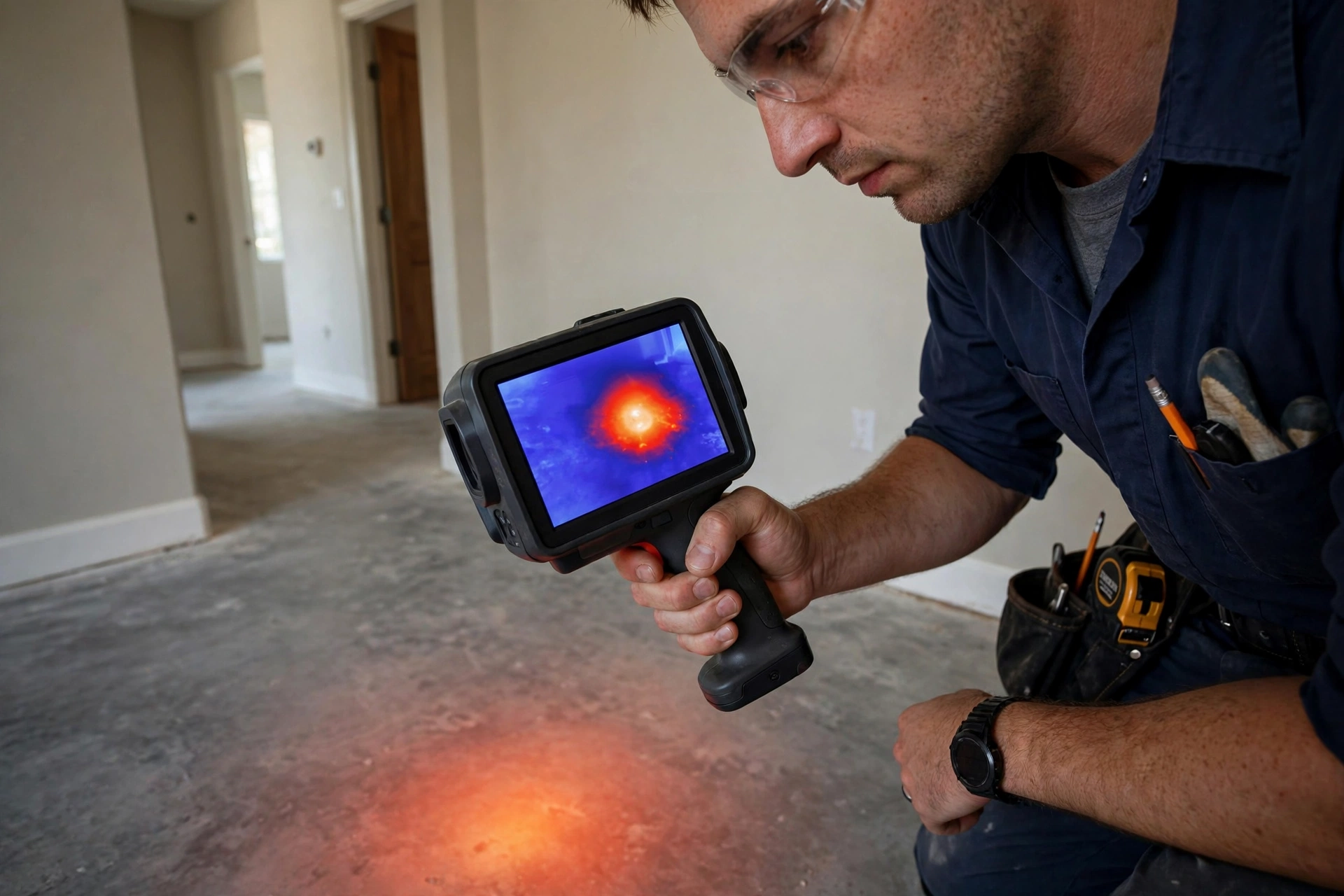
- A warm spot on the floor (hot-water line leak)
- A climbing water bill with no visible water
- A faint sound of running water when the house is quiet
- Damp carpet edges or musty smells near the slab
These are real symptoms of a real problem — but nothing is flooding, nothing is sparking, and nothing will collapse before morning. The leak has probably been running for weeks already; one more night changes nothing structurally. What it needs is a next-day detection visit, not a midnight one.
That’s the key distinction: urgent (days) vs emergent (tonight). Slab leaks are almost always the former.
The 3 Scenarios Where a Slab Leak IS an Emergency Tonight
1. Active hot-water loss with the heater running constantly
If your water heater is running non-stop, your hot water runs out unusually fast, and you have a hot spot on the floor — that’s a significant pressurized hot-water leak under the slab. The concerns: continuous water loss (your bill is bleeding by the hour), potential scalding-temperature water migrating where it shouldn’t, and accelerated soil saturation under the foundation.
Tonight’s move: shut off the water heater’s supply (or the house main), which stops the loss. Then this can usually wait for a morning detection call — but don’t let it slide past tomorrow. If you can’t get the water stopped, call tonight.
2. Structural movement happening now
New cracks appearing in walls or floors today, doors suddenly sticking that worked yesterday, a section of floor that’s visibly heaving or settling — these mean the soil under your slab is moving right now. Kyle’s Blackland clay expands dramatically when saturated, and a slab leak super-saturating one zone can move a foundation fast.
Structural movement in progress is different from old, stable cracks (which are common in Central Texas and usually not emergencies). New, active movement gets a call tonight — at minimum to stop the water feeding it.
3. Water near electrical systems
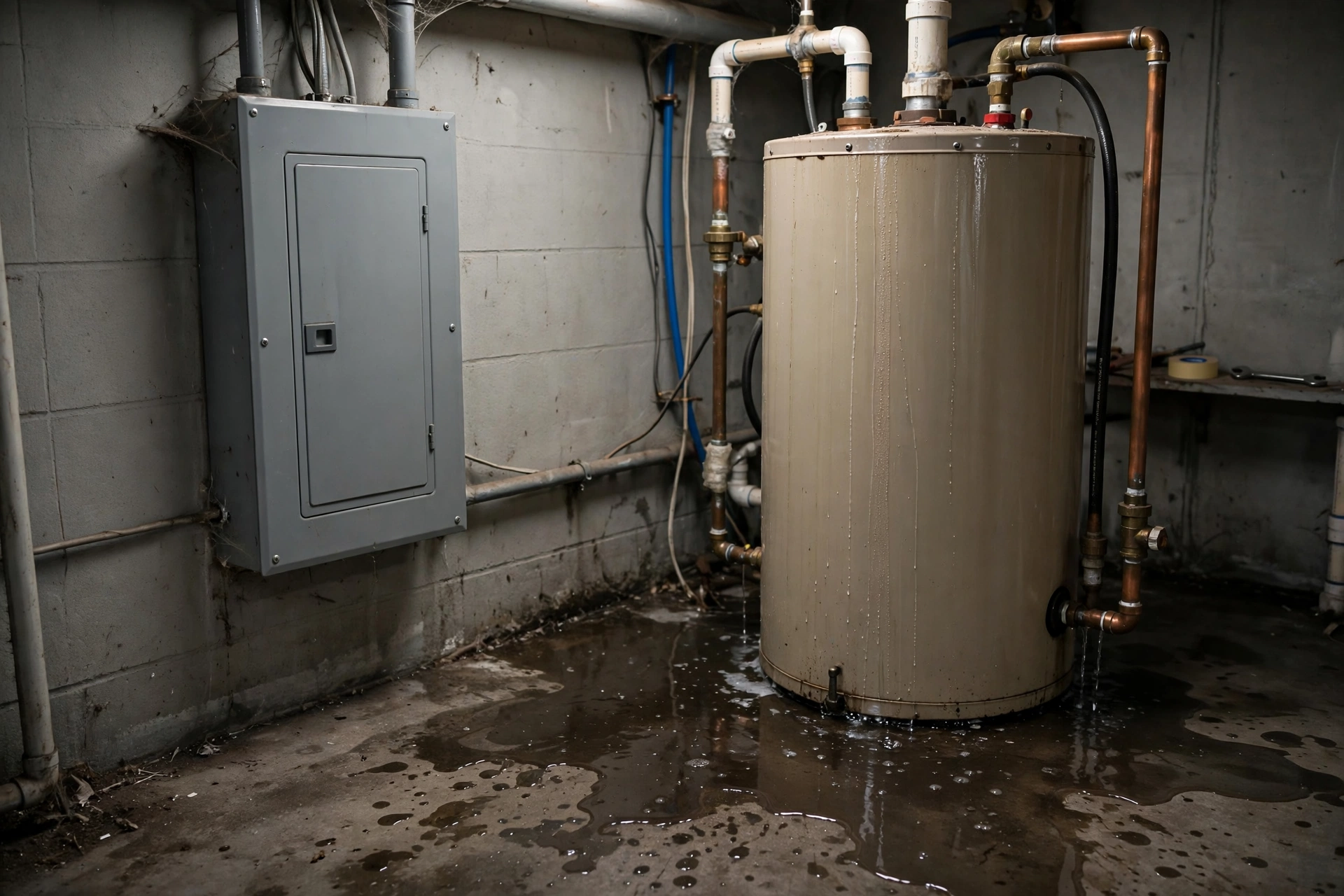
Water wicking up through the slab near the electrical panel, around floor-level outlets, or under the water heater next to the panel. Water + electricity doesn’t care that the leak is “just” a slab leak — it’s an electrical hazard first.
Tonight’s move: if you can kill the affected breaker from dry ground, do it. Keep everyone clear of the wet area. Call for emergency help — this is the one slab-leak scenario where the emergency isn’t about the plumbing at all.
The Common Case: What to Do Tonight (When It’s Not an Emergency)
Most likely, you’re in the common case: warm floor, high bill, no flooding, no sparks, no moving walls. Here’s your tonight playbook:
- Run the 15-minute meter test. Everything off, watch the meter. Movement confirms a pressurized leak — useful information, not a reason to panic.
- Note the symptoms. Where exactly is the warm spot? When did the bill jump? Any sounds? Write it down — this is the history the detection tech will want.
- Don’t jackhammer anything. Seriously. No exploratory concrete breaking at midnight (or ever, before detection). The leak’s location is unknown, and breaking the wrong section of slab is expensive and irreversible.
- Photograph the warm area with an infrared thermometer reading if you have one — even a phone photo of the spot helps establish the baseline.
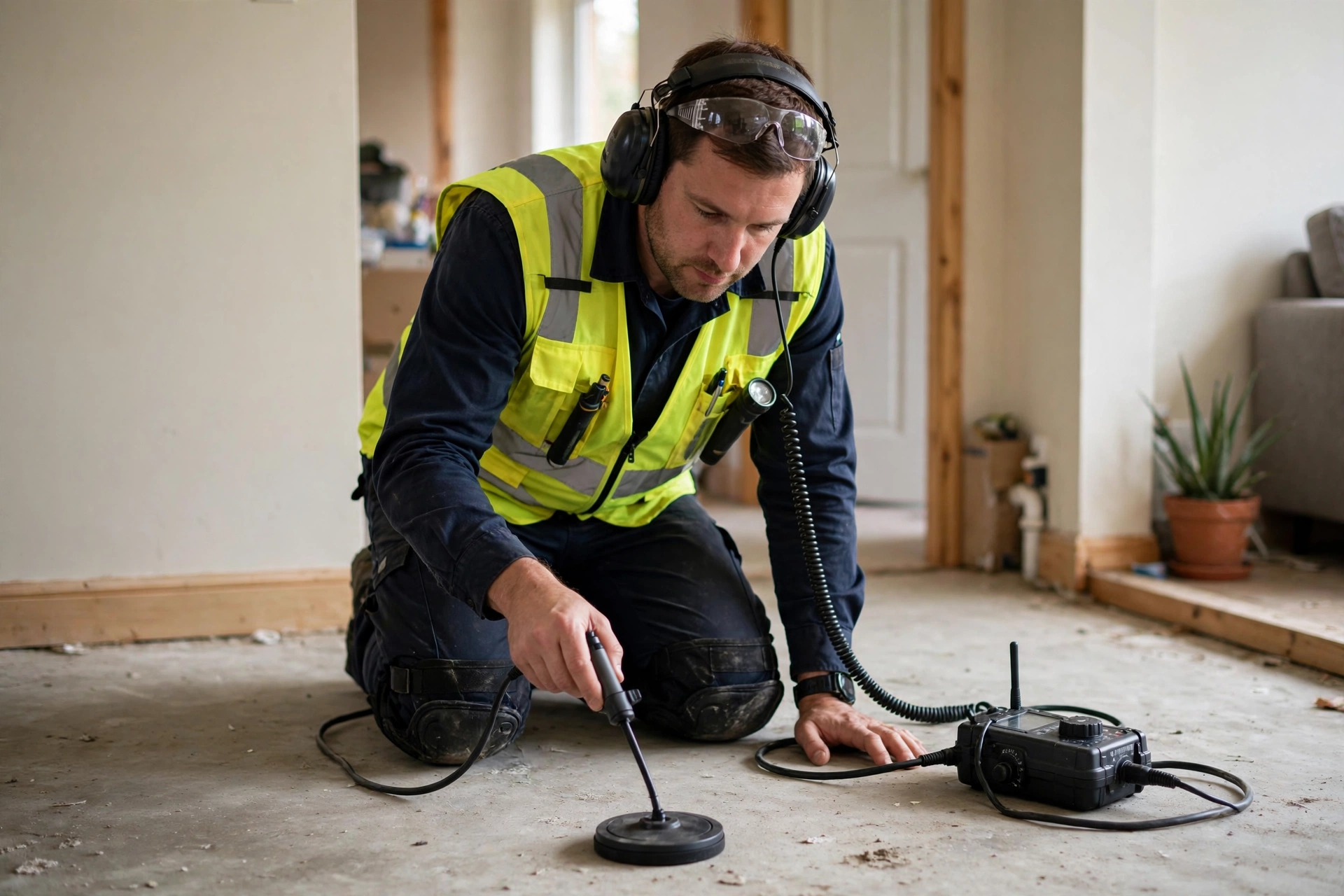
- Call in the morning. A next-day detection visit ($150–$400 typical residential range) pinpoints the leak with acoustic and thermal equipment — marked location, written report — and then the repair gets planned properly.
Call Kyle Leak Detection Pros at (512) 729-5265 — slab leak detection in Kyle TX. For the complete picture, read our slab leak guide.
Why “Wait a Week” Is the Real Danger (Not “Wait Until Morning”)
The risk with slab leaks was never the overnight wait — it’s the indefinite wait. Here’s what happens when a slab leak runs for weeks or months in a Kyle home:
- Foundation movement. Saturated Blackland clay expands, heaves the slab unevenly, and cracks follow — in the slab, then the walls, then the doors and windows. Foundation repairs dwarf leak repairs.
- Mold inside the home. Moisture wicking up through concrete feeds mold in flooring, baseboards, and wall cavities — often invisible until it’s extensive.
- Water waste and bills. A moderate slab leak can waste thousands of gallons a month. At Kyle’s tiered rates, the bill alone can exceed the detection cost within a billing cycle or two.
- Secondary pipe failures. The same water chemistry and soil conditions attacking one section are working on the rest of the under-slab plumbing.
So the correct urgency is: tonight, sleep; tomorrow, call; this week, detect. That’s the timeline that keeps a slab leak a plumbing job instead of a foundation job.
Slab Leak Emergency Triage: Quick Reference
| What you’re seeing | Emergency tonight? | Your move |
|---|---|---|
| Warm floor spot, high bill, nothing else | No | Meter test tonight, detection visit tomorrow |
| Water heater running constantly + hot floor | Usually not — shut off the heater supply tonight, call in the morning | Stop the loss tonight; detect tomorrow |
| Water heater running constantly and you can’t stop the water | Yes | Call tonight — uncontained pressurized loss |
| New cracks / sticking doors appearing now | Yes | Stop the water, call tonight |
| Old stable cracks, warm floor | No | Common Texas settling + leak; detect this week |
| Water near panel/outlets from slab moisture | Yes | Electrical hazard — breaker off from dry ground, call tonight |
| Damp carpet edge, musty smell, no other symptoms | No | Photo, monitor, detection visit within days |
Frequently Asked Questions
Is slab leak an emergency?
Usually not a midnight emergency — most slab leaks need professional attention within days, not hours. The three exceptions: uncontrollable hot-water loss, active structural movement, and water near electrical systems. Everything else is a next-day detection visit.
Can I wait until morning if my floor is warm?
Yes. A warm floor spot with no flooding, no electrical hazard, and no structural movement is the classic next-day scenario. Run the meter test tonight, note the symptoms, and schedule detection in the morning.
How fast do I need to act on a slab leak?
Within days, not weeks. The danger isn’t the overnight wait — it’s letting it run for weeks while clay saturates, foundations move, and mold grows. Tomorrow’s detection visit is the right urgency for the common case.
Will my house flood from a slab leak overnight?
Extremely unlikely. Slab leaks release water under the concrete, where it’s absorbed by soil — they don’t gush into living spaces like a burst supply line. Flooding-style emergencies come from above-slab plumbing, not under-slab leaks.
What does emergency slab leak detection cost?
Standard slab leak detection in Kyle typically runs $150–$400 for a residential visit (typical range). After-hours emergency visits carry a premium — usually 25–75% above standard rates (borrowed general industry practice). For the common next-day case, you pay standard rates. Your exact quote is confirmed on the call.
Tonight, Sleep — Tomorrow, Call
Is slab leak an emergency? For the vast majority of Kyle homeowners noticing a warm floor or a bill spike: no, not tonight. It’s a tomorrow-morning phone call and a this-week detection visit. The three exceptions above are the only reasons to lose sleep — and now you know exactly what they look like.
The slab leaks that become disasters aren’t the ones discovered at 11 PM. They’re the ones discovered at 11 PM and then ignored for two months.
Call Kyle Leak Detection Pros at (512) 729-5265 — slab leak detection in Kyle TX with acoustic and thermal pinpointing, marked location, and a written report. Start with our complete slab leak guide for Kyle TX.