Will Homeowners Insurance Cover a Water Leak in Kyle, TX?
You found the leak. Now comes the second shock: the repair bill. Naturally, the next question is whether your homeowners insurance will pay for it. In Texas, the answer is the classic insurance response — it depends. Specifically, it depends on what caused the leak, how long it went on, and how well you can…
You found the leak. Now comes the second shock: the repair bill. Naturally, the next question is whether your homeowners insurance will pay for it. In Texas, the answer is the classic insurance response — it depends. Specifically, it depends on what caused the leak, how long it went on, and how well you can document it.
This guide explains how a homeowners insurance water leak claim actually works in Kyle, TX: what is covered, what is routinely denied, and how to give your claim the best possible chance.
The Core Rule: Sudden vs. Gradual
Almost every Texas homeowners policy (typically an HO-3) draws the same line for a homeowners insurance water leak claim:
- Covered: sudden and accidental water damage — a pipe that bursts, a supply line that ruptures, a water heater that fails without warning.
- Not covered: gradual damage from wear, neglect, or a leak that dripped for months while nobody acted.
The clock starts when you discover the leak — what you do in the days after discovery matters enormously for a homeowners insurance water leak claim.
What Texas Policies Typically Cover
For a qualifying sudden leak, a homeowners insurance water leak claim generally covers:
- Resulting damage: ruined drywall, flooring, cabinets, and personal property damaged by the water.
- Tear-out costs: the expense of opening walls, ceilings, or slab to access the broken pipe.
- Mold remediation: usually capped — many Texas policies limit mold coverage to $5,000–$10,000 unless you bought additional coverage.
What Is Routinely Denied
The pipe repair itself is sometimes excluded under “wear and tear” provisions, even when the resulting water damage is covered.
- Gradual leaks: the slow drip under the sink or the slab leak nobody investigated despite a rising water bill.
- Flood and groundwater: standard policies do not cover flooding from outside the home.
- Neglect after discovery: finding a leak and waiting weeks to call anyone gives the adjuster an easy denial reason.
The Kyle-Specific Wrinkles
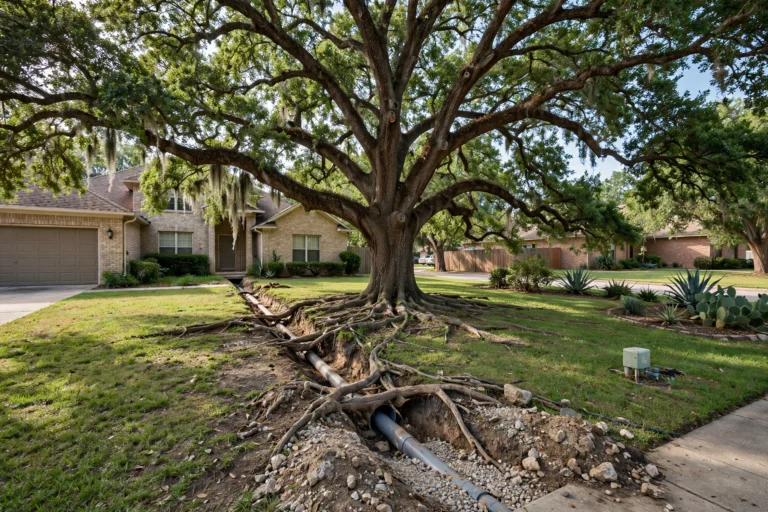
Slab leaks and clay soil: Kyle sits on expansive black clay that shifts with moisture changes, stressing under-slab pipes. A precise leak detection report that identifies a pipe failure rather than foundation shifting can matter for your homeowners insurance water leak claim.
- Deductibles: water-damage claims usually fall under the standard flat deductible (often $1,000–$2,500). Know which deductible applies before you file.
- Claim history: Texas insurers weigh claim frequency heavily. Two water claims in three years can trigger non-renewal.
How to Document Like an Adjuster Wants
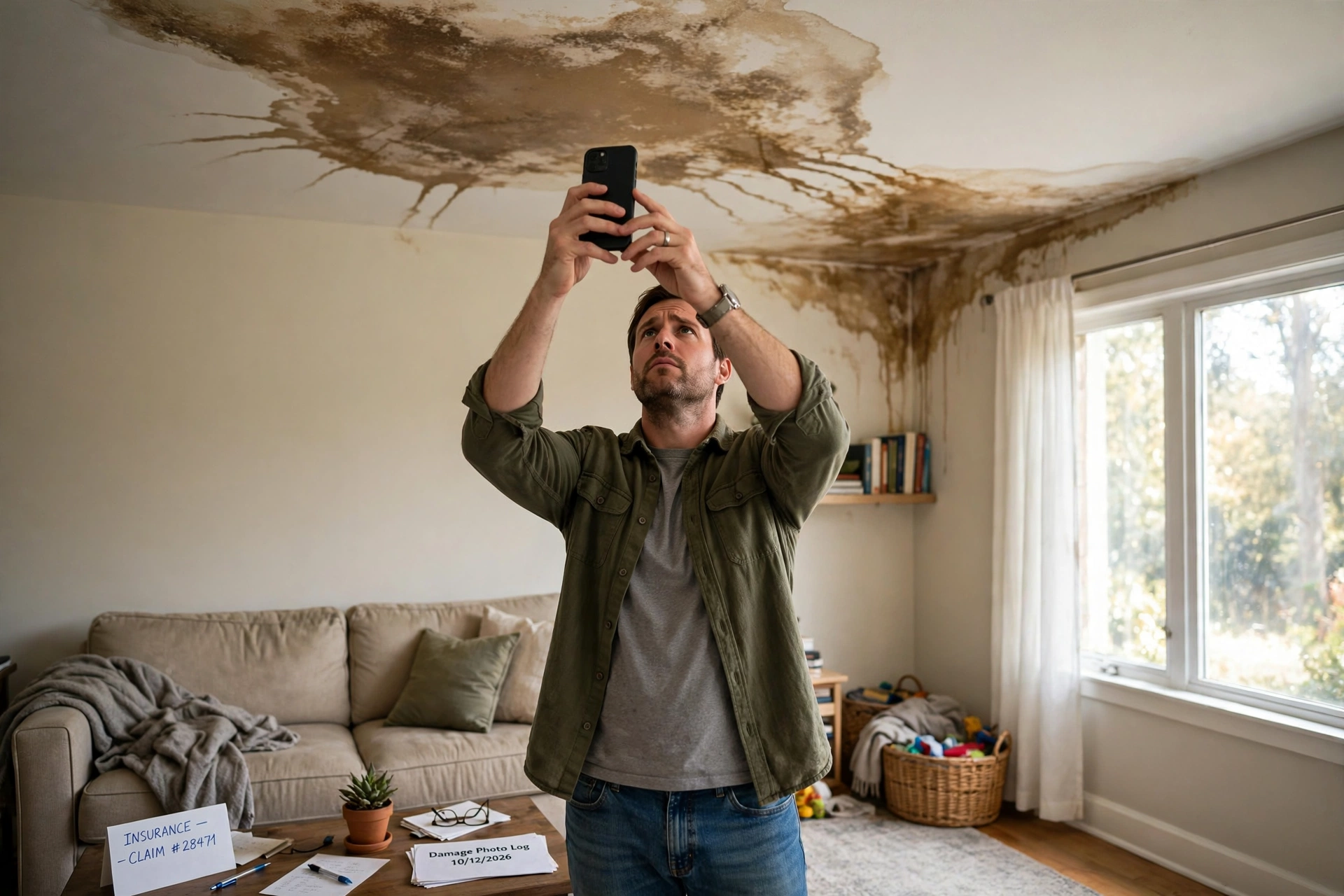
- Photograph everything immediately — wide shots, close-ups, date-stamped.
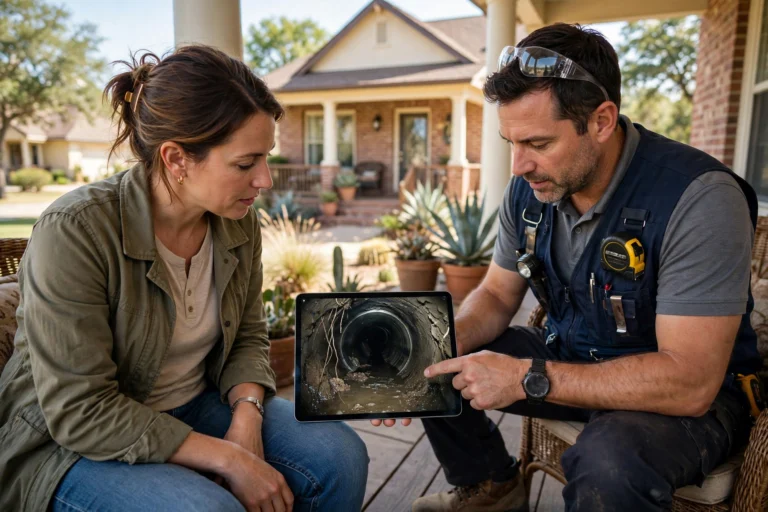
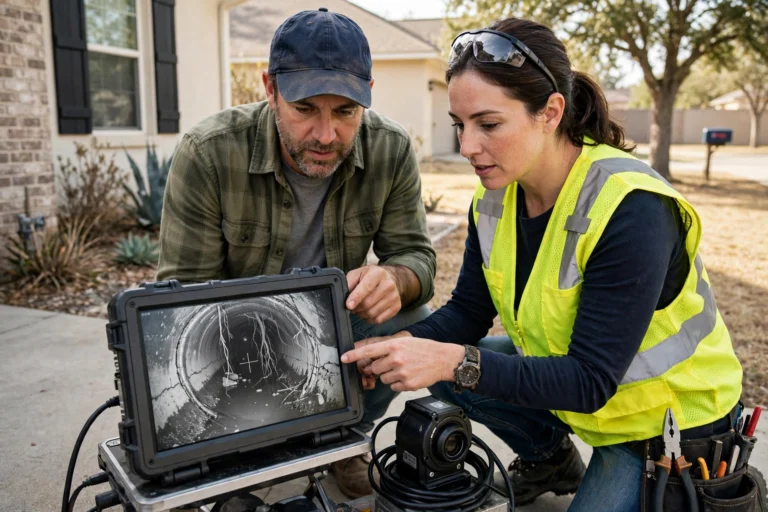
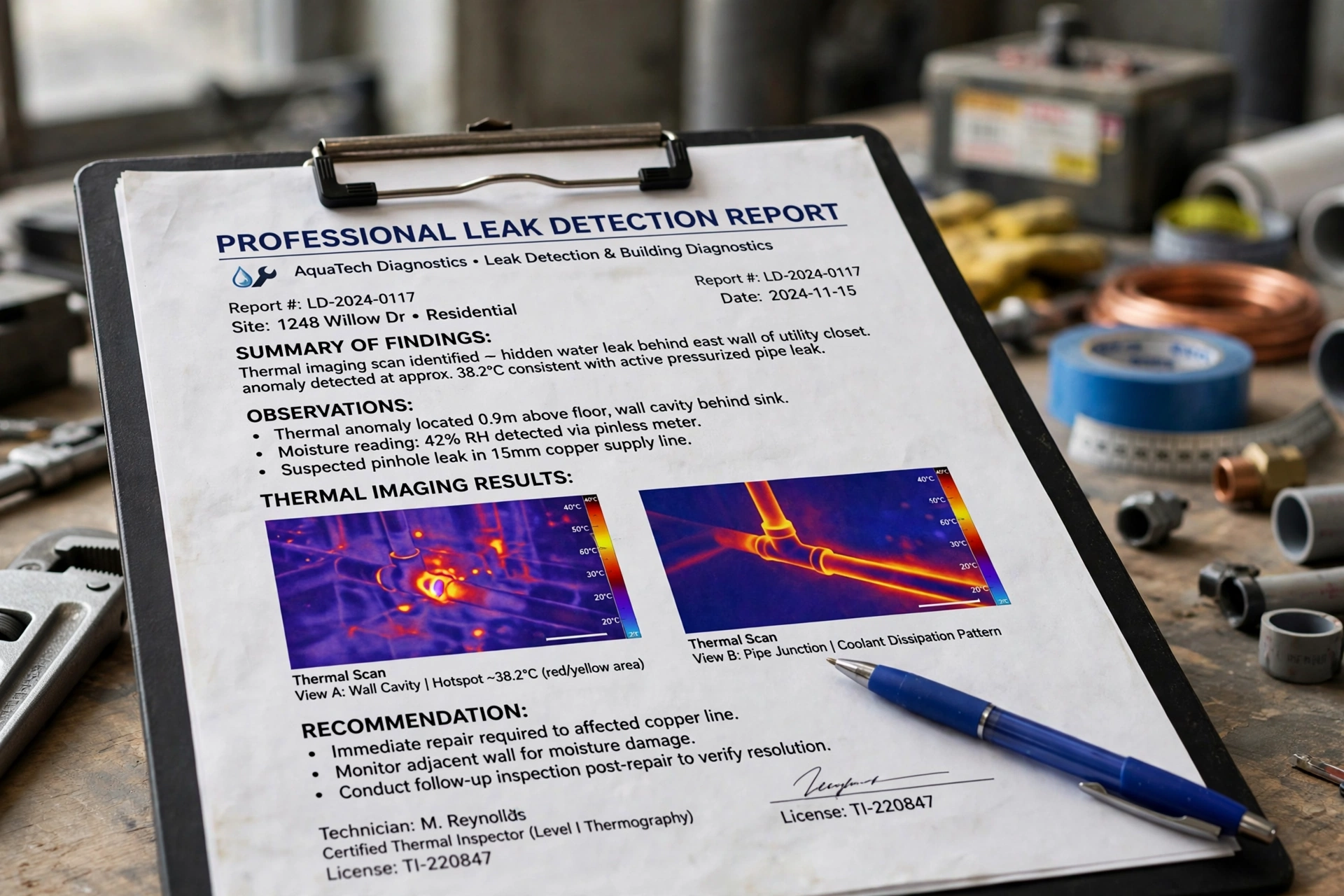
- Get a professional leak detection report: exact leak location, detection method, photos, and test readings. It converts your claim from “homeowner says there is a leak” to documented, third-party-verified evidence.
- Keep every receipt: mitigation, detection visit, temporary repairs.
- Write a timeline for your homeowners insurance water leak claim: when you first noticed signs, what you did, who you called.
- Mitigate promptly: shut off the water, move belongings — and check the water meter with everything off to confirm the leak is still active before the adjuster arrives.
Filing the Claim: Step by Step
- Review your policy first: deductible, mold sublimit, endorsements.
- Call your insurer’s claims line promptly to open a homeowners insurance water leak claim.
- Get the claim number and the adjuster’s name in writing.
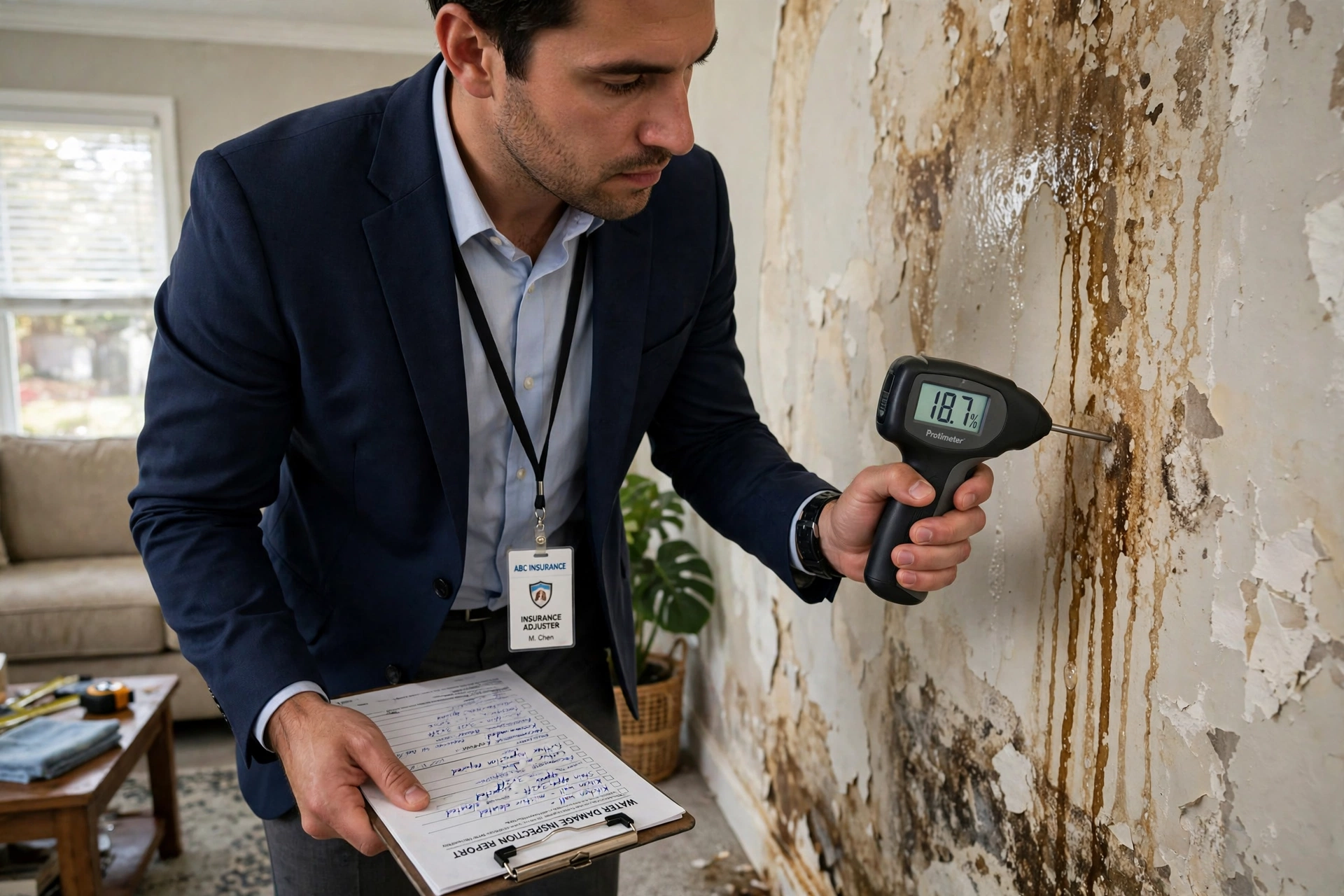
- Meet the adjuster with your documentation ready — walk them through the timeline and hand over the leak detection report and photos supporting your homeowners insurance water leak claim.
- Get your own repair estimates — two independent contractor quotes.
- If denied, read the denial letter carefully; many denials are reversed on appeal with better documentation. The Texas Department of Insurance publishes guidance for Texas policyholders on the claims process.
When It Makes Sense NOT to File
- The total damage is near or below your deductible.
- You have filed another claim in the last 2–3 years and this one is modest.
- The cause is clearly excluded.
A denied claim still sits on your CLUE report and can affect future premiums — another reason to think carefully before filing a homeowners insurance water leak claim.
Frequently Asked Questions
Does homeowners insurance cover slab leak repair in Texas?
It covers the resulting water damage from a sudden slab leak in most HO-3 policies, plus the cost to access the pipe. The pipe repair itself may be limited by wear-and-tear exclusions.
How long do I have to file a water damage claim in Texas?
Policies require “prompt” notice, generally days, not months. Waiting months to report a leak you knew about will likely get the claim denied.
Will filing a water leak claim raise my rates?
A single homeowners insurance water leak claim can raise premiums at renewal, and Texas insurers surcharge water losses more heavily than many other perils.
What if the adjuster says the leak was gradual and I disagree?
Ask for the denial in writing with the specific exclusion cited, then appeal with your documentation — especially a dated professional leak detection report.
Should I hire a public adjuster?
For large, complex, or denied claims (typically $15,000+), a licensed Texas public adjuster can be worth their fee.
Document First, Then Decide on Your Homeowners Insurance Water Leak Claim
The strongest homeowners insurance water leak claim starts before you ever call the insurer: photos the day you discover it, a professional leak detection report pinning down exactly what failed and where, receipts for everything, and a clear timeline. If you need the report — precise location, method, photos, test readings — Kyle Leak Detection Pros produces exactly the documentation adjusters ask for. Call (512) 729-5265.