
Water Stain on Your Ceiling in Kyle? What It Means and What to Do Next
Water Stain on Your Ceiling in Kyle? What It Means and What to Do Next You glance up one morning and there it is: a faint yellow-brown ring on the ceiling that was definitely not there last month. A water stain on ceiling Kyle TX homeowners notice usually starts small — a discoloured patch, a…
Water Stain on Your Ceiling in Kyle? What It Means and What to Do Next
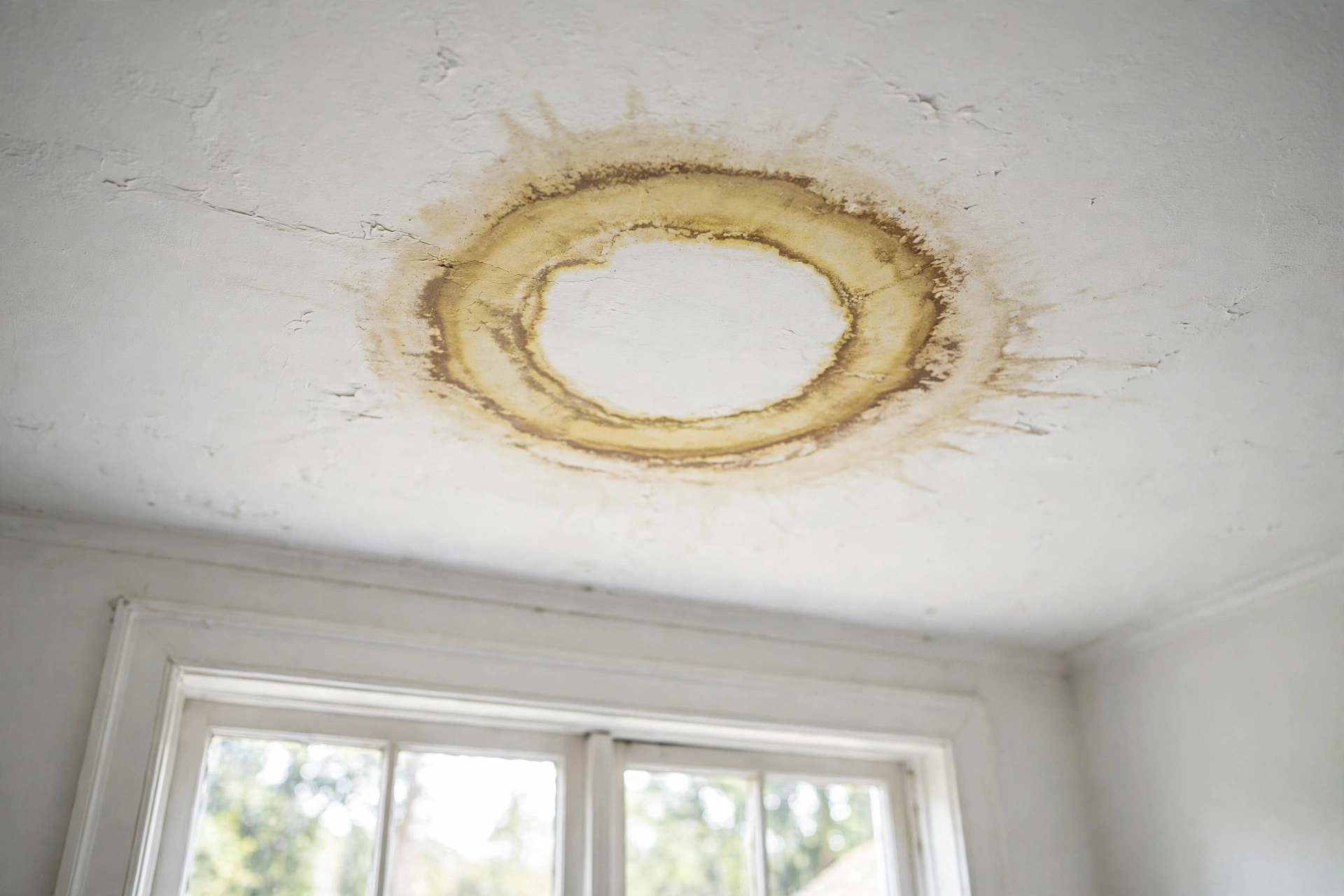
You glance up one morning and there it is: a faint yellow-brown ring on the ceiling that was definitely not there last month. A water stain on ceiling Kyle TX homeowners notice usually starts small — a discoloured patch, a slightly bubbled bit of paint — and it is tempting to tell yourself it can wait. It should not. That stain is a record of water travelling through your ceiling, and the cause above it is still active far more often than not.
Ceiling stains are the way hidden leaks announce themselves. Water from a failing pipe, a roof problem, or a sweating air-conditioning line runs along joists and drywall until gravity pulls it through, and by the time you see the mark, the water has already been moving for a while. The good news is that the stain itself carries clues — its timing, its shape, and where it sits all point at the source.
This guide explains what the common causes are, how to read the timing clues that separate a plumbing leak from a roof problem, what you can safely check yourself, and when it is time to call a leak detection professional. If you have a stain forming right now, start with the timing section below — it is the fastest way to narrow things down.

What Causes a Water Stain on Ceiling Kyle TX Homes?
Not every water stain on ceiling Kyle TX properties show comes from a burst pipe. There are four usual suspects, and telling them apart is the whole game. Each one behaves differently, leaves different timing clues, and needs a different fix — so identifying the right culprit before anyone opens a ceiling saves real money and mess.
Plumbing leaks from above
The most common cause in two-storey homes is a plumbing leak from the floor above: a supply line, a drain joint, a shower pan, or a toilet seal that has started letting water through. These stains often grow steadily rather than in bursts, because the leak runs every time the fixture above is used. A stain under an upstairs bathroom is a plumbing leak until proven otherwise.
Roof problems
Damaged shingles, failed flashing around vents and chimneys, or a valley that has started channelling water where it should not, all let rainwater into the roof deck. That water then travels — sometimes sideways along rafters for several metres — before it drops through the ceiling. Roof-driven stains appear or grow after heavy rain and then sit unchanged through dry spells.
Air-conditioning condensate
Kyle summers keep air conditioners running hard, and every system produces condensate that drains away through a small line. When that drain clogs — algae and sludge are the usual blockers — the overflow pan fills and spills into the ceiling below. These stains often appear in the cooling season, sometimes with a musty smell, and the area may feel cool and damp to the touch.
One-time overflows
Sometimes the cause is an event rather than a fault: an overflowing bath, a washing machine that walked across the laundry room, a spill that soaked through. These stains appear suddenly after a known incident and then stay exactly the same size. If you can point to the moment it happened and nothing has changed since, the cause may already be over — though the stain still deserves proper drying and repair.
Timing Clues: How to Tell Plumbing from Roof
The single most useful diagnostic tool you have is a calendar and your memory. When did the stain appear, and what was happening in the house or the sky at the time? The pattern below separates the suspects quickly:
- The stain appeared or grew after heavy rain. This points at the roof — failed flashing, a damaged shingle, or water finding a path through the deck. Note which storms it follows; a roofer or a leak professional will want that history.
- The stain grows after showers or baths upstairs. This points at plumbing — a shower pan, a drain joint, or a supply line in the wall or floor above. Run the fixture and watch: a leak-driven stain may darken within hours.
- The stain appeared during the cooling season with no rain. This points at the air-conditioning condensate drain, especially if the system sits above the stained area. A musty smell strengthens this theory.
- The stain appeared once, after a known spill or overflow, and never changed. This is likely a one-time event. The water source is gone, but the ceiling material still needs to dry properly and be repaired.
- The stain grows steadily with no link to rain or fixture use. This points at a continuous plumbing leak — a supply line seeping day and night. These are the ones that do the most hidden damage, because they never stop.
Write down what you observe over a few days. Does the stain darken after a shower? After a storm? Does it stay damp to the touch, or does it dry out between events? This diary becomes genuinely valuable evidence — it tells a professional where to look first instead of searching the whole ceiling.
What You Can Safely Check Yourself
There are a few checks any homeowner can do without opening anything up. Start in the room above the stain if there is one: look under sinks, around toilet bases, and along visible supply lines for dampness, corrosion, or water marks on the cabinet floor. Run the shower and feel the wall below it for cool damp patches. Small signs up there explain big stains down below.
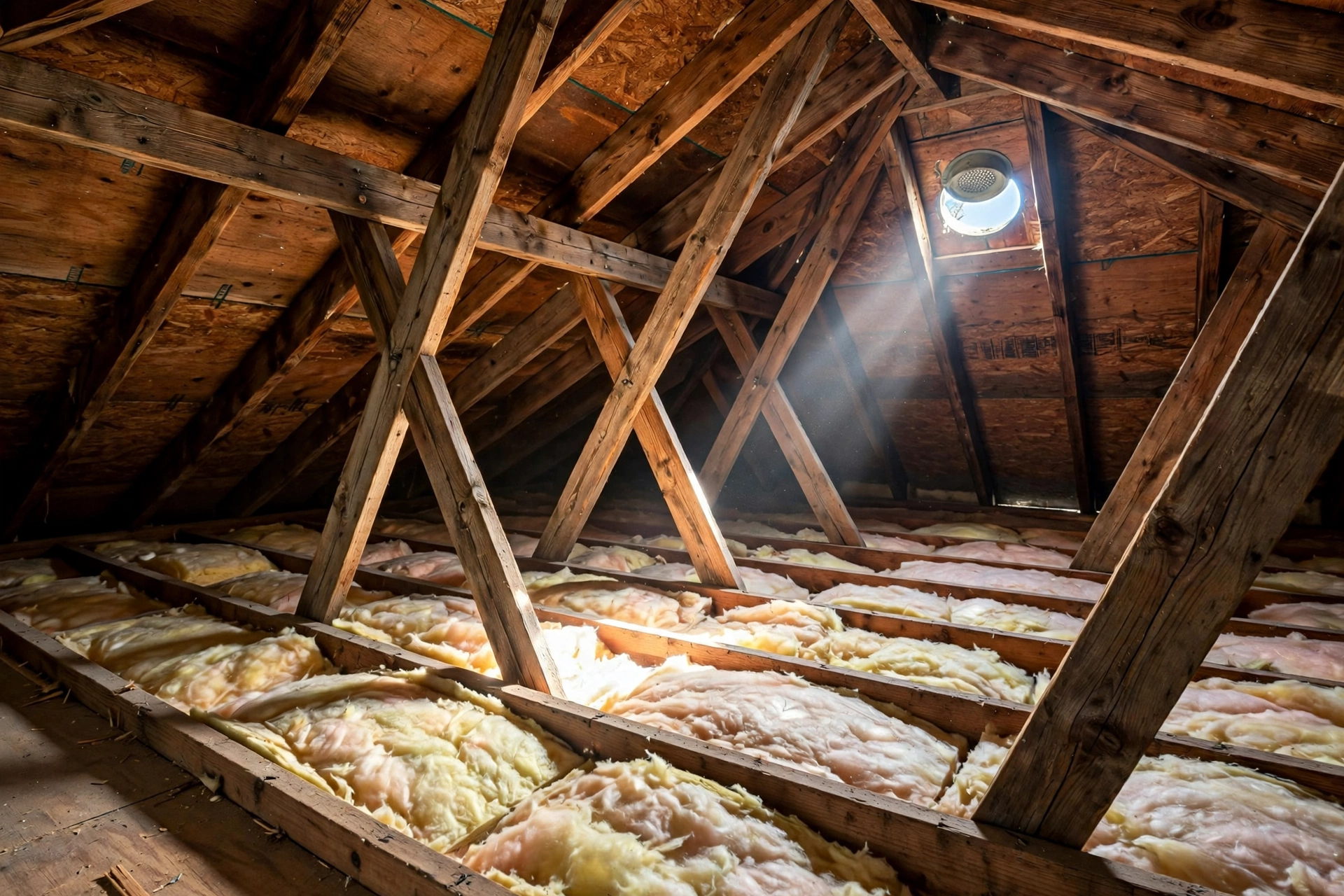
If you have attic access, take a torch and look — but walk only on the joists, never on the drywall between them. Trace uphill from where the stain sits below: water runs downhill along joists and rafters, so the entry point is often higher than the stain suggests. Look for darkened wood, damp insulation, or daylight showing through the roof deck where it should not. Take photos of anything suspicious; they are useful later.
For the air-conditioning theory, find the condensate drain line — usually a small PVC pipe near the indoor unit or exiting an exterior wall — and check whether it is dripping normally when the system runs. No drip on a hot day, plus a full overflow pan, means the line is blocked. Clearing a condensate line is often a simple maintenance task, but if water has already soaked the ceiling, the damage still needs assessing.
Why You Should Never Just Paint Over It
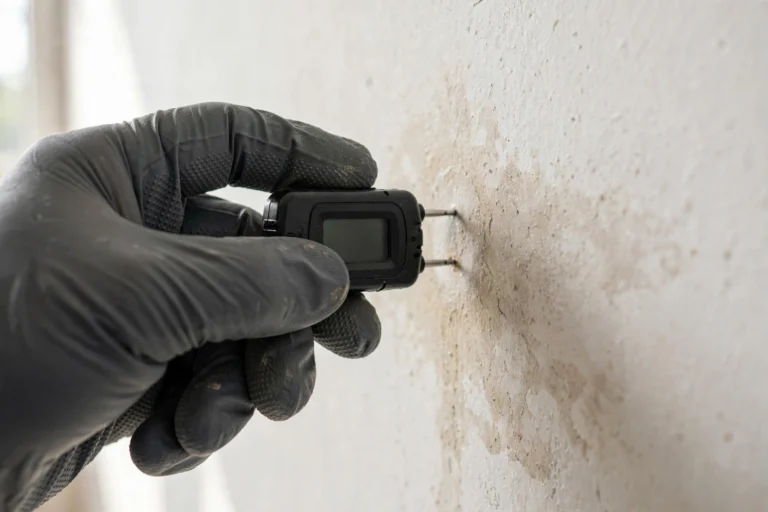
It is the most tempting shortcut in home maintenance: a coat of stain-blocking paint and the problem disappears from view. The problem is that it only disappears from view. The longer a water stain on ceiling Kyle TX homeowners ignore keeps growing underneath, the worse the hidden damage gets — saturated insulation, softened drywall, wood framing that stays damp, and eventually mould.
Painting over an active leak also destroys your best diagnostic evidence. The stain’s size, shape and growth rate are the clues that identify the source; cover them up and a professional loses the map. The EPA’s guidance on mould and moisture in the home makes the same point from the health angle: the moisture source has to be fixed first, and cosmetic cover-ups just let the underlying problem keep working unseen.
There is a right order of operations here, and paint is last, not first: find the source, stop the water, dry everything thoroughly, repair or replace damaged material, and only then repaint. Skip any step and you are simply scheduling a repeat performance.

When a Stain Means Calling a Leak Detection Pro
Some stains are clearly plumbing-driven and clearly beyond a visual check: the stain is directly below an upstairs bathroom, it grows after every shower, or it stays damp around the clock. In those cases the leak is inside a wall or floor cavity, and finding it by opening things at random is how a small repair becomes a renovation. This is exactly what professional water leak detection in Kyle exists for — locating the fault precisely before anything gets opened.
Call sooner rather than later if any of these are true: the stain is growing week over week, the ceiling feels soft or sags, you can smell mustiness, paint is bubbling or peeling, or water is actively dripping. A sagging ceiling is carrying real weight in trapped water — do not poke it to “let it drain”, because the release can be sudden and the water is often dirty. If water is coming through in volume, treat it as urgent and see our emergency leak detection guidance.
A professional assessment also answers the question paint cannot: how far has the water travelled? Leaks rarely damage only the visible stain. Moisture spreads sideways through insulation and along framing, and knowing the full extent is what keeps a repair complete instead of partial. Our guide to how leak detection works walks through the process step by step, so you know what to expect before anyone arrives.
Do Not Wait on That Stain
Every ceiling stain has a story, and the story is always water moving where it should not. If a water stain on ceiling Kyle TX property is showing — growing after rain, darkening after showers, or just sitting there getting slowly bigger — the cause above it deserves a proper diagnosis before the damage spreads any further.
Call Kyle Leak Detection Pros at (512) 729-5265 and tell us what the stain is doing — when it appeared, what makes it grow, and what is above it. We will locate the source precisely, so the repair fixes the cause instead of just covering the symptom.