
Running Toilet in Kyle? How to Check for a Silent Water Leak
Your water bill just jumped, yet nothing in your home feels different. No puddles, no damp patches, no hissing pipes — just a bigger number on the statement. If that sounds familiar, a toilet leak Kyle TX homeowners often miss could be the culprit. Toilets cause more silent household water loss than any other fixture,…
Your water bill just jumped, yet nothing in your home feels different. No puddles, no damp patches, no hissing pipes — just a bigger number on the statement. If that sounds familiar, a toilet leak Kyle TX homeowners often miss could be the culprit. Toilets cause more silent household water loss than any other fixture, and they do it without a single visible drip.
Most leaks announce themselves; toilet leaks do not. The lost water flows into the bowl and down the drain — exactly where water belongs — so nothing looks wrong. Many Kyle homeowners only notice after two or three high bills in a row.
This guide covers the checks any homeowner can do today: the dye test, the ripple check, phantom refills, and flapper and fill-valve inspection — plus what to do when the toilet is innocent.
Why the Toilet Is the Usual Suspect
The toilet is the most common silent leak in a Kyle home for a simple reason: a worn flapper or a tired fill valve can let water slip from the tank to the bowl around the clock. You never see it, you never hear it, and the only signal is a bill that keeps climbing.
Certain warning signs should make you check the toilet before suspecting anything more complicated:
- A water bill that climbs with no change in household habits
- The tank refilling on its own, sometimes in the middle of the night
- A faint trickle or hiss coming from inside the tank
- Ripples or slow movement on the surface of the bowl water
- A handle that needs a jiggle to settle the flush
If two or more of these sound familiar, start with the dye test below. It is free, takes five minutes, and needs no special tools.
The 5-Minute Dye Test for a Toilet Leak Kyle TX Homeowners Can Do
The food-colouring dye test is the simplest reliable way to find a silent toilet leak. If coloured water moves from the tank into the bowl without a flush, water is leaking between them. Test every toilet in the house — a spare bathroom nobody uses is a prime candidate for an unnoticed leak.
- Lift the tank lid. Set it somewhere safe; tank lids are heavy and chip easily.
- Remove anything in the tank. Take out bleach tablets or blue cleaners, which tint the water and would hide the test colour.
- Flush once and let the tank refill. You want a full, settled tank before you start.
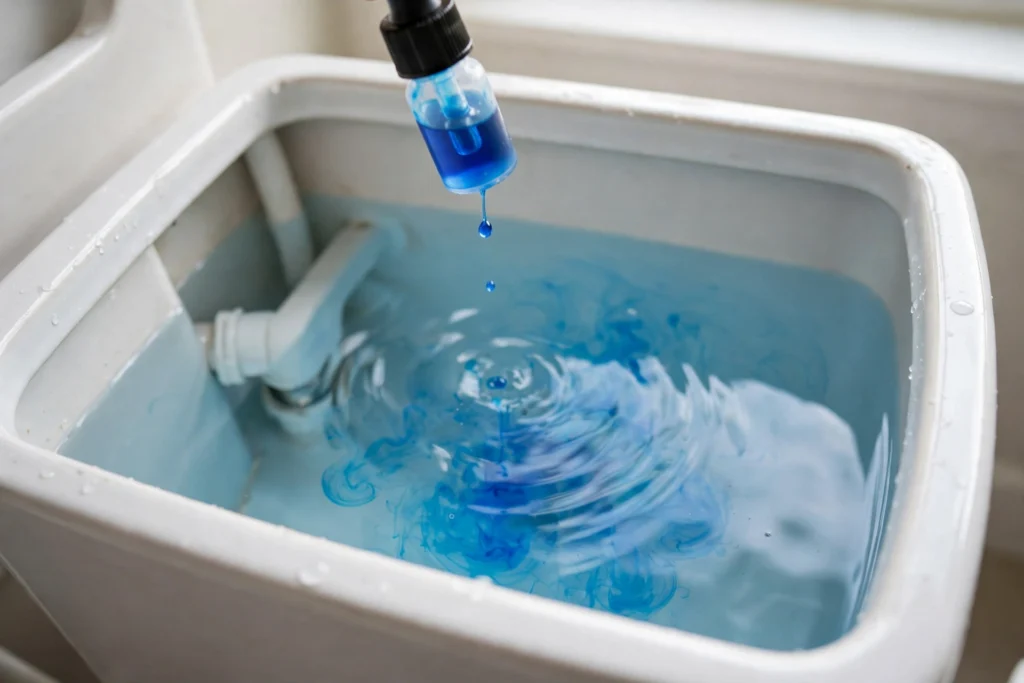
- Add the dye. Squeeze in enough food colouring to turn the tank water a deep, obvious colour — blue or red shows up best.
- Wait without flushing. Leave the toilet alone for 20 to 30 minutes.
- Check the bowl. If the bowl water has taken on the dye colour, water is leaking from the tank into the bowl.
- Note the result. Colour in the bowl means a leak; clear bowl water means this toilet is not the source.
A positive dye test usually means the flapper is worn or not seating properly, though the fill valve can contribute in some cases. Any suspected toilet leak Kyle TX homeowners can test themselves is worth ruling out this way before calling anyone.
Check for Ripples in the Bowl
Watch the bowl water for a minute or two. In a healthy toilet the surface sits perfectly still; faint ripples or water creeping from the rim jets mean the tank is feeding the bowl a steady trickle.
Treat ripples as a hint rather than a verdict, and run the dye test to confirm. The two checks together give you a solid answer with no tools at all.
Listen for Phantom Refills and Ghost Flushing
Phantom refills are one of the clearest signs of a toilet leak. The tank starts filling by itself, as though someone flushed — but nobody did. Enough water has leaked into the bowl to drop the tank level, and the fill valve kicks in to top it up. Many homeowners first notice it at night when the house is quiet.
Occasional phantom refills mean a slow leak; frequent ones mean faster loss. Note which toilet is doing it and how often — that helps a plumber narrow things down fast.
Inspect and Replace a Worn Flapper
The flapper is the rubber seal at the bottom of the tank that lifts on a flush and drops back to seal the tank afterwards. It is the single most common failure point in a toilet leak, because rubber degrades with age, minerals, and chemical cleaners. A warped flapper no longer sits flat, and water slips past it continuously.
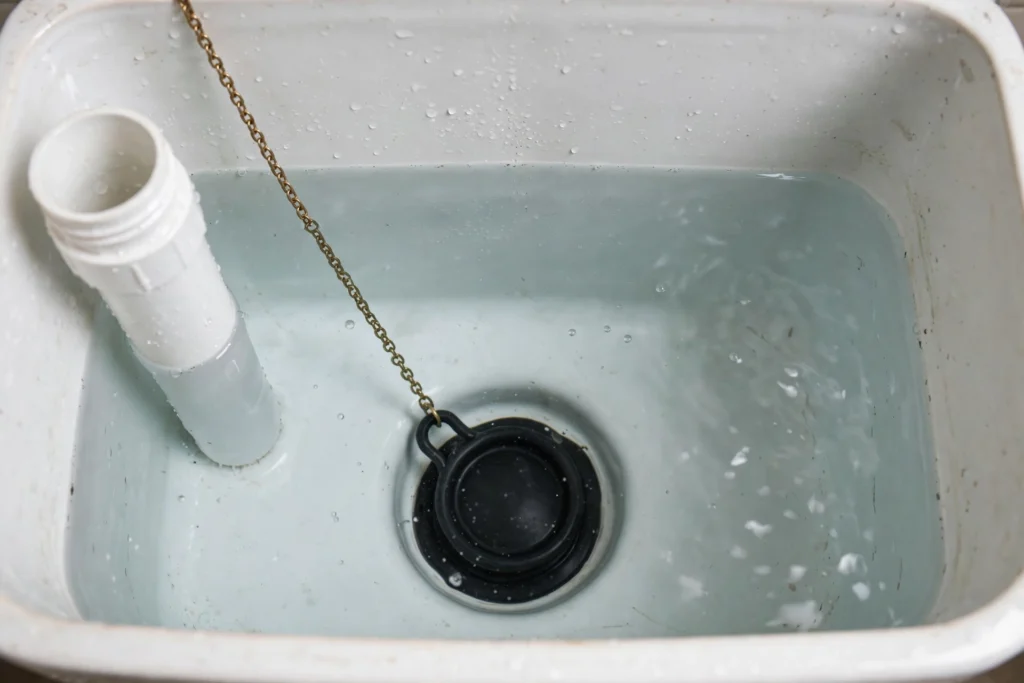
Turn off the supply valve behind the toilet, flush to drain most of the tank, and inspect the flapper. If its edge feels warped, cracked, sticky, or rough — or leaves black residue on your finger — it is worn out. Check the seat it rests on too; a smooth, clean seat matters as much as the flapper itself.
Replacing a flapper is a straightforward job with a universal replacement part from a hardware store:
- Match the flapper to your flush valve size — measure the old one before buying.
- Turn off the supply valve and flush to empty the tank before you start.
- Unhook the old flapper from the pegs on the flush valve and detach the chain.
- Fit the new flapper and reattach the chain with just a little slack — too tight holds it open, too loose and it tangles.
- Turn the water back on, let the tank fill, and run the dye test again to confirm the seal holds.
If a new flapper does not stop the leak, the flush valve seat itself may be cracked or corroded. That is a bigger repair and a good point to call a professional rather than keep swapping parts by trial and error.
When the Fill Valve Is the Problem
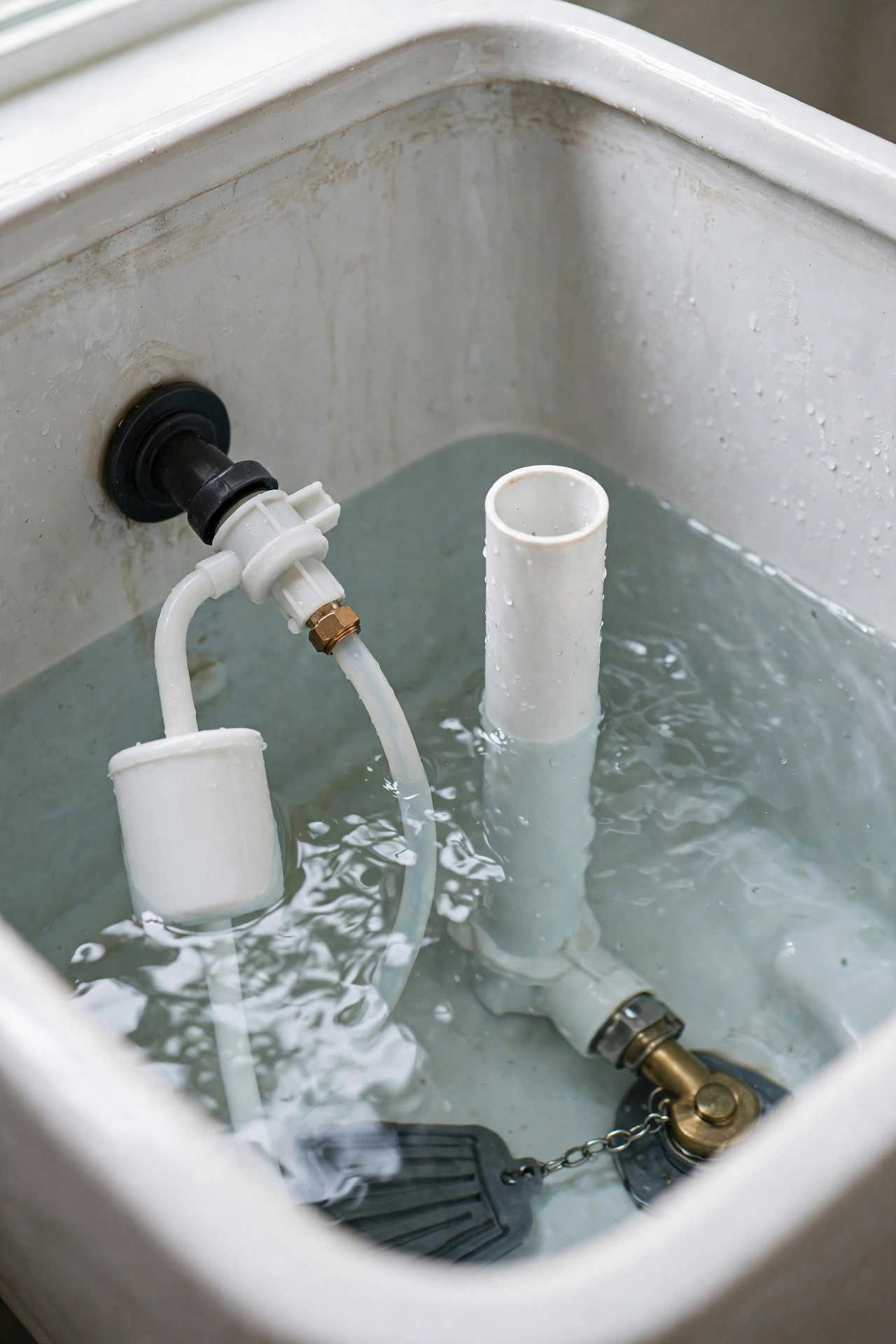
Not every toilet leak comes through the flapper. If the fill valve is set too high or worn out, water keeps flowing down the overflow tube — the tank looks full, yet water is draining away constantly.
Look into the tank after a flush finishes. If water is flowing into the overflow tube, or the level sits right at its top, try adjusting the float lower. If the valve hisses, fills slowly, or never goes quiet, replacement is the sensible fix — fill valves are inexpensive parts and the swap is a common do-it-yourself job.
When the Dye Test Passes but the Bill Stays High
If the dye test clears every toilet, a toilet leak Kyle TX bills sometimes get blamed for is off the table — the leak is elsewhere. Supply lines, slab lines, irrigation, and outdoor spigots can all lose water silently without showing up in a dye test.
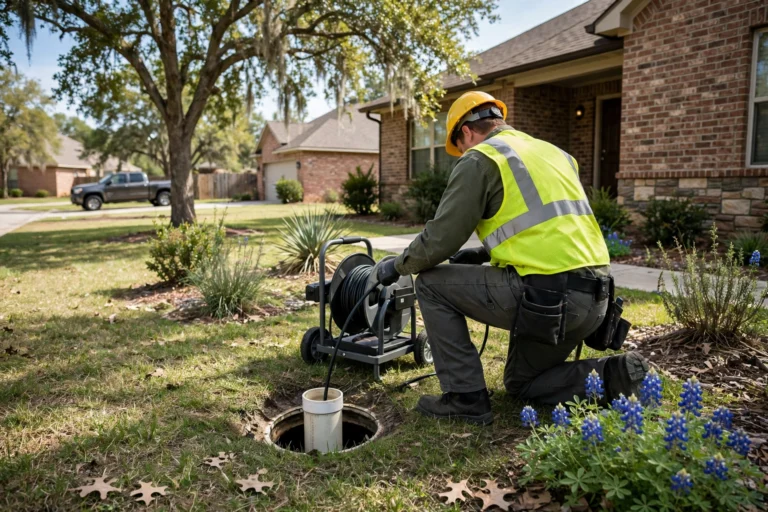
This is where a do-it-yourself investigation reaches its limit. Read our guide to diagnosing a high water bill in Kyle for the other usual suspects, and when you are ready, our water leak detection service in Kyle, TX can pinpoint hidden leaks without tearing your home apart.
WaterSmart Leak Alerts for Kyle Homes
Kyle’s water utility offers a WaterSmart customer portal where residents can view their usage and sign up for leak alerts. If you are enrolled, the system can flag unusual usage patterns — exactly the kind of early warning that catches a silent leak before it runs for months.
Alerts are a backstop, not a substitute for checking yourself — they arrive after unusual usage has already happened. Enrol for the alerts, and still run the dye test when a bill looks off.
What a Silent Toilet Leak Does to Your Bill
The cost of a silent toilet leak shows up in one place: your water bill, month after month. You pay for the leak every day it goes unnoticed, and the longer it runs, the more each statement climbs.
Five minutes with food colouring costs nothing, while months of undetected leaking compound on every bill. For the full picture, see our breakdown of high water bills and hidden leaks in Kyle.
Frequently Asked Questions
How do I know if my toilet is leaking silently?
Put dye in the tank, wait 20 to 30 minutes without flushing, and check the bowl — colour in the bowl confirms a leak. Phantom refills and ripples in the bowl are the other classic signs.
Can a running toilet really raise my water bill?
Yes. A toilet that leaks continuously uses water around the clock, and nothing looks broken — so many homeowners only connect the dots after several high bills in a row.
How often should I check my toilets?
Run the dye test once or twice a year. A toilet leak Kyle TX homes develop silently can run for months, so check spare bathrooms too — leaks there go unnoticed the longest.
Is a worn flapper always the cause?
Not always. The dye test catches flapper leaks, but a worn fill valve can also let water escape down the overflow tube — watch for water flowing into the tube to catch that.
When should I call a professional instead of fixing it myself?
Call one if a new flapper and a fill-valve adjustment do not solve it, if the dye test passes but your bill stays high, or if you hear water running behind walls. That is when professional leak detection in Kyle is the right move.
Get Your Toilet Leak Checked in Kyle, TX
A five-minute dye test can save you months of inflated water bills — but if the test passes and the bill stays high, or the toilet keeps misbehaving after new parts, do not guess. Kyle Leak Detection Pros can track down the real source, whether it is the toilet or a hidden leak somewhere else. Call (512) 729-5265 and get a clear answer on what is driving your water bill up.
For more background on what might be behind your rising usage, check these tips on checking your home for leaks from the EPA’s WaterSense programme.