

ROOF LEAK DETECTION KYLE TX
Find Where the Water Is Getting In.
A homeowner’s inspection guide from Kyle Leak Detection Pros. We provide roof leak detection Kyle TX homeowners trust: we trace roof leaks back to their source — mapping moisture, documenting entry points, and handing you a clear findings report. Inspection only: we find where water gets in; we don’t do roof repairs.

SIGNS OF A ROOF LEAK
Signs Water May Be Getting In Through Your Roof
Roof leaks rarely announce themselves at the entry point. Watch for these signs inside your Kyle home — each one is a clue pointing back toward the roof.
Brown or yellowish rings spreading across ceilings or upper walls, often growing after rain.
Wet insulation, damp rafters, or visible drips in the attic — check during or just after rainfall.
Paint bubbling or peeling on ceilings and upper walls where moisture collects beneath the surface.
A persistent musty smell in upstairs rooms or the attic, even when everything looks dry.
Active dripping or fresh wet spots that appear during storms and dry out between them.
COMMON ENTRY POINTS
Where Roof Leaks Usually Start

- Flashing — metal flashing around chimneys, skylights, and adjoining walls can lift, corrode, or separate.
- Roof valleys — valleys carry the heaviest water flow; worn or debris-filled valleys let water slip beneath the covering.
- Penetrations — every vent pipe, flue, and fixture passing through the roofline is a potential gap in the weather barrier.
- Shingles — cracked, curled, or missing shingles expose the layers beneath to direct rainfall and wind-driven water.
- Vents — roof vents and their seals wear with age and Texas heat, opening small paths for water during storms.
INTERIOR VS. SOURCE
The Damage You See Is Rarely Where Water Gets In
Water travels along decking, rafters, and insulation before it ever shows indoors — sometimes several metres from the entry point. That gap is exactly why tracing matters more than guessing.
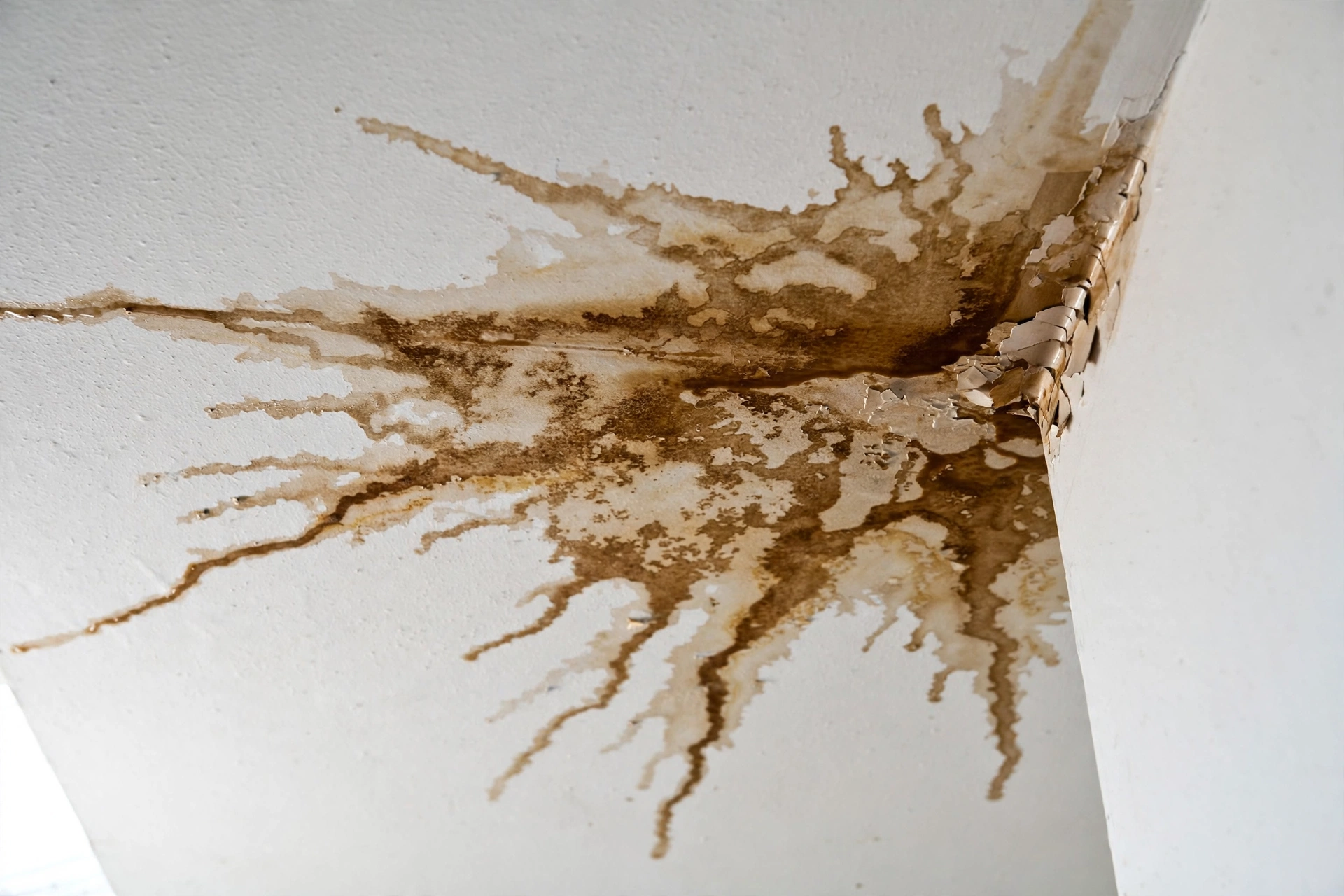
VISIBLE DAMAGE — Ceiling stain in the living room
→
ACTUAL SOURCE — Roof entry point, metres away

VISIBLE DAMAGE — Damp insulation and wall
→

ACTUAL SOURCE — Exterior entry point found on inspection
MOISTURE DETECTION
How Moisture Tracing Finds the Entry Point

Infrared scanning reveals temperature differences caused by trapped moisture, mapping water intrusion across ceilings and the attic — including areas that still look dry.
Pin and pinless meters confirm moisture levels in decking, insulation, and drywall, tracing the wettest path back toward the entry point.
Every assessment is non-invasive and documented with photos and readings. You receive a clear record of the entry point and the affected areas — useful for your roofer or your insurer. For broader context on household leaks, see the EPA WaterSense programme.
WHAT HAPPENS NEXT
What Happens During Your Roof Leak Inspection
1
Describe what you’ve noticed
Call (512) 729-5265 and tell us about the stains, drips, or odours — and when they appear. Photos help.
2
Interior assessment
We inspect ceilings, walls, and the attic, documenting visible damage and taking moisture readings throughout.
3
Exterior tracing
We examine the roof surface — flashing, valleys, penetrations, shingles, and vents — tracing moisture back to its entry point.
4
Findings report
You get photos, moisture readings, and a plain-language summary of where water is entering — ready to share with your roofer or insurer.
If water is coming in right now, see our emergency leak detection. Wondering about pricing? Read about the cost of leak detection in Kyle, TX.
FAQ
Roof Leak Detection Questions, Answered
Why does my ceiling stain appear far from where the roof looks damaged?
Because water travels. It enters at one point — a lifted shingle, failed flashing, a cracked vent boot — then runs along rafters, decking, and insulation before gravity finally pulls it through your ceiling somewhere else. That’s exactly why roof leaks need tracing: patching the stain’s location usually misses the real entry point.
How is the actual entry point found?
We map the interior stains, inspect the attic for water trails and wet materials that trace the water’s path backward, then examine the suspect roof area up close — flashing, shingles, boots, valleys, and penetrations. Thermal imaging and moisture meters confirm which materials are actively wet, separating the current leak from old stains.
What are the most common roof leak sources in Kyle?
Failed flashing around chimneys, vents, and valleys; cracked or dried-out pipe boots; hail-bruised or wind-lifted shingles; and clogged or damaged gutters that push water back under the eaves. Central Texas hail and windstorms are the top culprits locally — even one strong storm can create entry points that leak for months before showing inside. The Insurance Institute for Business & Home Safety publishes useful guidance on storm-related roof vulnerabilities.
My roof only leaks in heavy rain. Is it still a problem?
Yes — intermittent leaks still rot decking, feed mold in the attic, and ruin insulation every time they activate. Small entries also tend to grow: flashing gaps widen, shingle damage spreads, and the next storm drives water deeper. Tracing it now is cheaper than replacing rotted decking later.
Should I call a roofer or a leak detection company for a roof leak?
Call us to find out exactly where water is getting in. Our inspection traces the leak to its entry point and documents everything in a findings report — which you then take to the roofer of your choice for the repair. We don’t sell roofing work, so our findings are impartial. If you’re not sure whether the moisture is coming from the roof or from plumbing, call (512) 729-5265 to discuss your situation.
How do I know if the problem is my roof or my plumbing?
Roof leaks usually follow weather: stains appear or grow after rain or hail. Plumbing leaks show up regardless of weather — a climbing water bill is the giveaway. Run the meter test from our high water bill guide: shut off all water and watch the meter. If it moves, the leak is plumbing-side, and our leak detection services can help.
Not Sure Where the Water Is Coming From? Let’s Find Out.
Call Kyle Leak Detection Pros for a roof leak inspection in Kyle, TX. We’ll trace the water to its source and show you exactly what we find — no repair sales pitch, just answers. Serving Kyle, TX 78640 & Hays County.